Loading Admission Guardian content
Loading Admission Guardian content

Find a program, read its fee details and explore the admission requirements.
Summary of the programs shown below. Fee periods can differ by program. Check the note beside each amount before comparing costs.
| Course | Stream | Fees |
|---|---|---|
| Master of Business Administration [MBA] | Management | 66000 |
| Master of Computer Applications [M.C.A] | Computer Applications | 84000 |
| Master of Technology [M.Tech] | Engineering | 90000 |
| Bachelor of Technology [B.Tech] | Engineering | 116000 |
Specializations
Eligibility: Graduation
Eligibility: Graduation
Specializations
Eligibility: Graduation
Specializations
Eligibility: 10+2 with 50% + KEAM
 Axis Bank
 Cognizant
 CSS Corp
 Hindustan Copper Limited (HCL)
 IBM
IBM KEANE India Ltd( NTT DATA)
 Polaris
 Symantec
 Tata Consulting Engineers Ltd.
 Wipro
WiproChrist College of Engineering and Technology (CCET) in Pondicherry is a study in contrasts. It's a private, AICTE-approved institution that has built a reputation for discipline and decent university results since 2007, but it doesn't pretend to be a top-tier tech hub. If you're a student from Tamil Nadu or Puducherry looking for an affordable, no-nonsense engineering degree with a shot at campus placements, CCET is a practical option. But if your dream is a vibrant campus life with cutting-edge research and high-paying tech offers, you'll likely feel constrained. The data tells a clear story: average packages hover around 3.5 LPA, the campus is quiet, and the rules are strict. It serves a specific need in the regional education landscape without overpromising.
CCET offers a standard set of programs under the Pondicherry University curriculum. The B.Tech intake is around 600 seats, with Computer Science and Engineering (120 seats) and Mechanical Engineering (120 seats) being the largest. Information Technology, Electronics and Communication, Electrical and Electronics, and Civil Engineering round out the undergraduate offerings. For postgraduates, there are M.Tech programs in CSE, ECE, and related specializations, along with MBA and MCA courses.
The faculty strength is around 70, with about a quarter holding PhDs. Professors like Dr. M. Senthil (CSE) and Dr. S. Anandalatchoumy (ECE) are noted. The academic culture is described as supportive for navigating the university's semester exams, but the syllabus itself is the standard Pondicherry University fare—some students find it lags behind industry trends. The college has MoUs with bodies like the MSME and ICT Academy for skill development, but these are more for value-add workshops than deep academic integration. You'll get a solid, traditional engineering education here, not a frontier one.
This is where a dose of reality is essential. The college's official placement claim is 80-85%, but student reviews and alumni reports consistently peg the effective on-campus placement rate lower: around 60-65% for core branches like Mechanical or Civil, and maybe 75% for CSE and IT.
The highest package for the 2024 batch was a verified 6 LPA from companies like Mphasis or TCS. Ignore any marketing claims of 30+ LPA; those are unverified outliers. The average package sits in the 3.2 to 3.8 LPA range, which aligns with the NIRF 2024 reported median of 3.0 LPA for UG programs.
Recruiters are predominantly IT services firms. TCS, Infosys, Wipro, and HCL are the regulars. You'll also see Amazon (for customer support roles), Sutherland, and occasionally core companies like TVS or Renault Nissan Technical Centre. The split is telling: about 70% of offers are in IT services, 15% in core engineering, and another 15% in BPO or support roles. Internships are mandatory and usually arranged with local firms in Puducherry or Chennai.
The verdict? Placements are functional. You have a decent chance of landing a job if you're in CSE/IT, but temper your salary expectations. It's a pathway into the IT workforce, not a launchpad for top-dollar tech careers.
Affordability is CCET's strong suit, especially for students who secure a seat through the state's CENTAC counseling. For the 2024-25 academic year, the annual tuition fee for a B.Tech under the government quota is roughly ₹42,500 to ₹45,000. The management quota fee is higher, ranging from ₹75,000 to ₹95,000 per year.
Hostel and mess fees add another ₹60,000 to ₹65,000 annually for a non-AC room. When you tally it up, the total 4-year cost for a B.Tech as a day scholar under the government quota is about ₹1.8 lakhs. For a management quota student staying in the hostel, it's closer to ₹6.5 lakhs.
Financial aid is available. The college runs an internal "Helping Drops Scheme" for meritorious students from economically weaker backgrounds. There's also the Puducherry government's Perunthalaivar Kamarajar Scheme for students admitted through CENTAC. It's not a wide array of scholarships, but it provides crucial support for its target demographic.
Admissions are straightforward and centered on state-level processes. For B.Tech, the primary gateway is the Puducherry CENTAC counseling, which uses your Class 12 marks. JEE Main scores are considered for the Other State (OS) quota seats. The cutoffs aren't fiercely competitive. In 2023, the first-round closing rank for CSE (General) was 1294, and for ECE, it ranged between 2500 and 3500.
The selection is purely merit-based through the CENTAC counseling rounds. The application window typically opens in May or June after the Class 12 results are out. For those who miss the cutoff, about 50% of seats are available under the management quota, which requires a direct application to the college. For MBA and MCA programs, scores from TANCET or the Pondicherry University Entrance Exam are required.
The campus is compact, green, and quiet—located away from the main city bustle. It's a double-edged sword. The peace is good for studying, but the social life is described as "subdued." The annual fest, Cetafest, is the only major cultural event.
Infrastructure is a mixed bag. Labs for CSE and Mechanical are reported to be well-equipped, while Civil labs are seen as adequate but aging. The library has a decent collection and digital access. Sports facilities include a large ground and basic indoor options.
The hostel is a frequent topic in reviews. Separate blocks for boys and girls offer basic, shared accommodation (2-5 per room). Maintenance issues, particularly with water supply, are common complaints. The mess food is consistently rated as below average (around 2.5/5) for both variety and hygiene. Wi-Fi is available in hostels and the library, but speeds are just average. The campus canteen is considered cleaner but pricier. And yes, the famous "no phone" policy in academic blocks and a formal dress code are very much in effect.
Synthesizing feedback from platforms like Shiksha and CollegeDunia reveals a clear consensus. Parents often love CCET for its strict, disciplined environment—it feels like a secure extension of school. Students acknowledge that faculty are generally accessible and helpful in preparing for exams.
But the negatives are just as consistent. The strict rules (phones, dress code) are a major pain point for students. Placement quality is a concern; getting a job is possible, but getting a good job is less certain. Infrastructure, especially hostel facilities, needs better upkeep. The overall feeling is captured in a common online sentiment: "If you want a degree with strict discipline and decent university results, it's fine. But don't expect a 'high-tech' campus life or 10 LPA jobs on a platter."
Christ College of Engineering and Technology is a specific solution for a specific student. It's worth it if you are a cost-conscious student from the region, prioritizing an affordable, disciplined education and a stable (if not spectacular) pathway to an IT services job. Your goal is to get a recognized degree from Pondicherry University and enter the workforce with minimal debt. It's a pragmatic choice.
Look elsewhere if you crave a vibrant, autonomous campus life, want to work with the latest technologies, or are aiming for high-paying product-based company roles. The strict rules will feel oppressive if you value independence, and the placement ceiling is real. CCET doesn't rank in the NIRF top 200, and that's an honest reflection of its position. It's a functional, no-frills engineering college that does a few things reliably well. Just know exactly what you're signing up for.
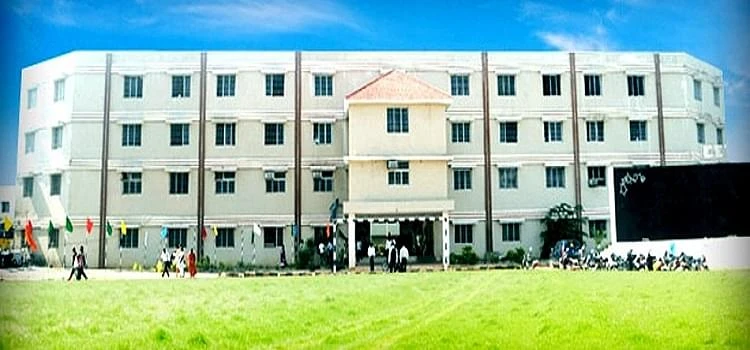
In this preview: 1 photo · 0 videos
No, Christ College of Engineering and Technology (CCET) is not the same as Christ University Bangalore. They are entirely different entities. CCET is a private engineering college affiliated with Pondicherry University.
The Computer Science and Engineering (CSE) program is the most popular branch at CCET and has the best placement record, with approximately 70% of students placed. However, the syllabus follows the standard Pondicherry University curriculum, which some students and reviewers find outdated.
Christ College of Engineering and Technology maintains a strict anti-ragging policy. There have been no major ragging incidents reported in the last five years, supported by a strong anti-ragging committee and high surveillance on campus.
Mobile phones are allowed in the hostel areas. However, they are strictly prohibited or restricted within academic blocks and classrooms to maintain a focused learning environment.
The quality of hostel food at CCET is consistently rated as "average" to "poor" by current and former students. This has led many day scholars to prefer bringing their own food from home.
Share what future students should know about Christ College of Engineering and Technology.
Student voices are not rewritten by colleges. We remove spam and abuse.
Wider admission question? Community PulseWhat should future students know?
Tell us which course you're considering. We'll help you work out the next step.
Get instant Partner access after mobile verification. Your public edits are reviewed before they go live.
Claim this college
 Auditorium
 Cafeteria
 Computer Labs
 Medical
 Science Labs
 Sports Complex
 Study Library