Loading Admission Guardian content
Loading Admission Guardian content

Find a program, read its fee details and explore the admission requirements.
Summary of the programs shown below. Fee periods can differ by program. Check the note beside each amount before comparing costs.
| Course | Stream | Fees |
|---|---|---|
| Bachelor of Technology [B.Tech] | Engineering | 40000 |
| Bachelor of Technology [B.Tech] {Lateral} | Engineering | 45000 |
| Master of Technology [M.Tech] | Engineering |
Specializations
Eligibility: 10+2 with 75% + JEE Main
Specializations
Eligibility: 10+3 with 75% + JEE Main
Specializations
Eligibility: Graduation
 Reliance Industries Ltd.
Christ Institute of Technology (CIT) in Pondicherry is a study in contrasts. It’s a private, self-financing college on a sprawling 60-acre suburban campus, offering a disciplined, no-frills engineering education at a price point that’s hard to beat in South India. But that affordability comes with a trade-off: a campus culture that many students describe as rigid, with rules that feel more like a strict school than a university. If you’re a student from Tamil Nadu or Puducherry looking for a budget-friendly B.Tech degree, decent labs, and a shot at IT placements, CIT is a pragmatic choice. If you’re dreaming of a vibrant campus life with big fests and freedom, you’ll likely find it stifling. The college, which rebranded from Dr. S.J.S. Paul Memorial College of Engineering and Technology around 2020, banks on its AICTE approval and Pondicherry University affiliation. Its real strength isn’t in national rankings—it’s not in the NIRF top 300—but in providing a functional, accessible technical education for a specific regional audience.
CIT’s academic portfolio is straightforward, centered on undergraduate engineering with a few postgraduate options. The B.Tech program, spanning four years, is the main draw. You can choose from Computer Science and Engineering (CSE), Information Technology (IT), Electronics and Communication Engineering (ECE), Electrical and Electronics Engineering (EEE), Mechanical Engineering (ME), and Civil Engineering (CE). Each branch has an intake of about 60 students. There’s also a lateral entry route for diploma holders. For postgraduates, the college offers an MBA with specializations in HR, Finance, Marketing, and Operations, a two-year MCA, and M.Tech programs in CSE and ECE.
Academically, it’s a tightly run ship. The college follows Pondicherry University’s Choice Based Credit System (CBCS) on a 10-point CGPA scale. The calendar is fixed: odd semester from July to December, even from January to May. Faculty strength sits around 80-100, and students often note that several department heads and the principal, Dr. D. Ommurugadhasan, hold PhDs. The teaching style is described as syllabus-focused and traditional. There are MoUs with local industries for “In-Plant Training,” but the academic culture is more about covering the prescribed material thoroughly than fostering groundbreaking innovation. It’s a system that works if you want clear structure.
This is where you need to read between the lines. The college’s official placement claim is 80-90%, but student reviews across platforms like Shiksha and CollegeDunia suggest a more grounded figure of 60-70% for on-campus opportunities, with CSE and IT faring better than core branches like Mechanical or Civil. The highest package touted ranges from 12 to 18 LPA, but that’s almost certainly an off-campus achievement or a rare CSE outlier. The working numbers for the average student are more modest: an average package of ₹3.5 to ₹4.5 LPA and a median around ₹3.2 LPA.
Recruitment is heavily skewed towards IT services. Top recruiters include the usual mass-hiring names: TCS, Wipro, Infosys, Accenture, Cognizant, and Zoho. For core engineering roles, companies like Reliance, Mitsuba, and Lucas TVS visit, but slots are fewer. A notable chunk of placements, as per student reports, come from off-campus pool drives or BPO/service sector firms like Sutherland Global Services. The takeaway? If you’re in CSE/IT and have realistic salary expectations for a Tier-3 college, you’ll likely get a job offer. If you’re in a core branch, be prepared to either hustle off-campus or pivot your skills towards the IT service sector that dominates the recruitment landscape here.
Affordability is CIT’s undeniable advantage. Fees are regulated by the Puducherry government’s Fee Committee, keeping costs low compared to private colleges in metropolitan areas. For B.Tech, annual tuition under the government quota is just ₹40,000 to ₹45,000. Management quota fees are higher, ranging from ₹75,000 to ₹1,00,000. MBA and MCA programs are similarly priced. Over four years, tuition alone for a government quota B.Tech student can be as low as ₹1.7 lakhs.
Adding hostel and mess fees changes the picture. Hostel accommodation costs between ₹55,000 and ₹70,000 per year, depending on room type. So, the total annual cost for a hostelite can land between ₹1 lakh and ₹1.7 lakhs. That’s still very reasonable. Financial aid is primarily through government schemes: the Perunthalaivar Kamarajar Financial Assistance for Puducherry residents and standard SC/ST post-matric scholarships from the Government of India. The college itself doesn’t appear to offer major merit-based scholarships, but the low base cost reduces the need for them.
Getting into CIT revolves around two main channels: the Puducherry government’s CENTAC counseling for residents and management quota for others. Roughly 50% of seats are filled through each route. For the government quota, your 12th standard marks are the key—CENTAC creates a merit list. Other State (OS) candidates can also use their JEE Main scores. For the management quota, the college accepts scores from CETPPEC, the Common Entrance Test for Pondicherry Private Engineering Colleges.
Cutoffs aren’t fiercely competitive, which aligns with the college’s positioning. For the 2023-24 cycle, the Round 1 closing rank for CSE under the general category was around 2110, and for ECE, it was about 4400. The application window typically opens in May or June, right after 12th-grade results are out. The process is fairly standard: apply through CENTAC for the government quota or directly to the college for management quota, submit your documents, and await counseling or a direct offer. It’s not a high-stakes admission game, which suits its target demographic of students seeking a solid, affordable option.
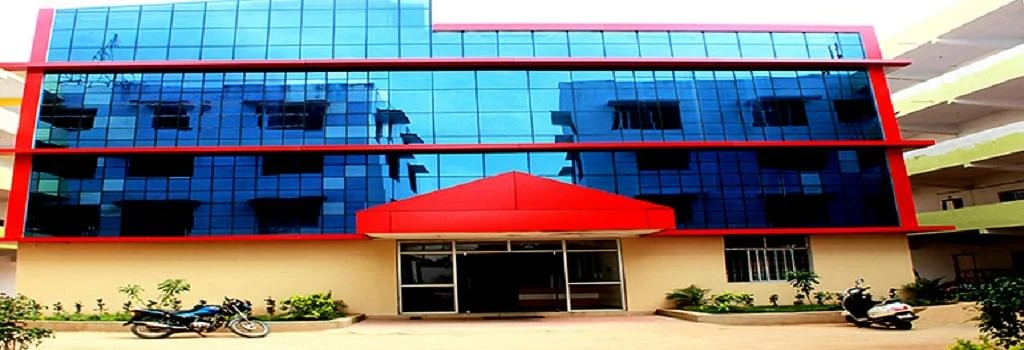
The 60-acre campus in Ramanathapuram is frequently praised for being green and well-maintained. Infrastructure is a relative strength. Labs for Robotics, VLSI, and Thermal Engineering are noted as being better equipped than those at many peer institutions. The library, named “Ananda Rangapillai,” provides digital access through the Pondicherry University network and holds over 25,000 physical volumes. Wi-Fi is available but confined to labs and the library, with students reporting average speeds.
Hostels are separate for boys and girls, with rooms typically shared by 3-4 students. Reviews rate them around 3.5 out of 5—functional but not luxurious. The canteen serves South Indian meals, earning a middling 3/5 rating for being “edible but repetitive.” Where CIT diverges sharply from the typical college experience is in its rulebook. The environment is notably strict. A formal dress code (shirts tucked in) is enforced, mobile phones are banned in classrooms, and hostel curfews are as early as 8:30 PM. The college operates a bus fleet covering Pondicherry city, Villupuram, Cuddalore, and Neyveli, which is essential given the suburban location. Social life is quiet; there are few major fests or events. The focus is squarely on academics and discipline.
Synthesizing feedback from CollegeDunia, Shiksha, Reddit, and Quora paints a consistent picture. The median consensus is that CIT is a “disciplined, mid-tier private college.” It’s not compared to top-tier national institutes but is seen as a reliable, strict backup for students who prioritize cost and a structured environment.
The positives are clear. Students consistently applaud the infrastructure and working lab equipment. Faculty are described as accessible and committed to completing the syllabus. The affordability, especially for Puducherry and Tamil Nadu students, is the biggest draw. It’s a college that delivers on its basic promise of a degree at a low cost.
And the negatives are just as consistent. The strict rules are the most common grievance, with many feeling the atmosphere is more like a high school. Placement realities are a sore point—the official statistics are viewed with skepticism, and core branch students express frustration at the lack of relevant recruiters. The campus is seen as socially dull, with minimal extracurricular or cultural activities. It’s a trade-off students are acutely aware of.
Christ Institute of Technology is a very specific proposition. It’s worth it if you are a budget-conscious student from the region, your primary goal is to secure an affordable B.Tech degree, and you’re aiming for an entry-level IT services job. Its low fees, decent infrastructure, and functional placement cell for CSE/IT make it a pragmatic, no-surprises choice for that purpose. The strict discipline might even be a plus for some parents and students who want a focused environment.
But you should probably look elsewhere if you value campus life, creative freedom, or are pursuing a core engineering branch like Mechanical or Civil with hopes of specialized placement. The rigid rules and limited social scene are real drawbacks. It’s also not the college for anyone seeking brand value or cutting-edge research. Think of CIT as a utilitarian tool: it does a specific job reliably and cheaply, but don’t expect it to be anything more. For the right student, with aligned expectations, it’s a viable path to an engineering career without a financial burden.
In this preview: 1 photo · 0 videos
No, Christ Institute of Technology (CIT) is not the same as Christ University. CIT is a private college located in Pondicherry and is affiliated with Pondicherry University. It has no connection to the Bangalore-based Christ University.
Yes, the Computer Science Engineering (CSE) department is considered the strongest at Christ Institute of Technology. It has the best placement record in the college, with major recruiters including companies like TCS and Wipro.
Both Christ Institute of Technology (CIT) and Christ College of Engineering and Technology (CCET) are under the same trust. CCET, located in Moolakulam, is older and often perceived as slightly higher in preference. CIT, located in Ramanathapuram, has a larger, more modern suburban campus.
The official policy at Christ Institute of Technology is strict regarding mobile phones. Phones are generally discouraged or banned for use during class hours.
Yes, Christ Institute of Technology operates college buses that provide transport to several nearby towns in Tamil Nadu, including Cuddalore and Villupuram, as well as across the Puducherry region.
Share what future students should know about CIT.
Student voices are not rewritten by colleges. We remove spam and abuse.
Wider admission question? Community PulseWhat should future students know?
Tell us which course you're considering. We'll help you work out the next step.
Get instant Partner access after mobile verification. Your public edits are reviewed before they go live.
Claim this college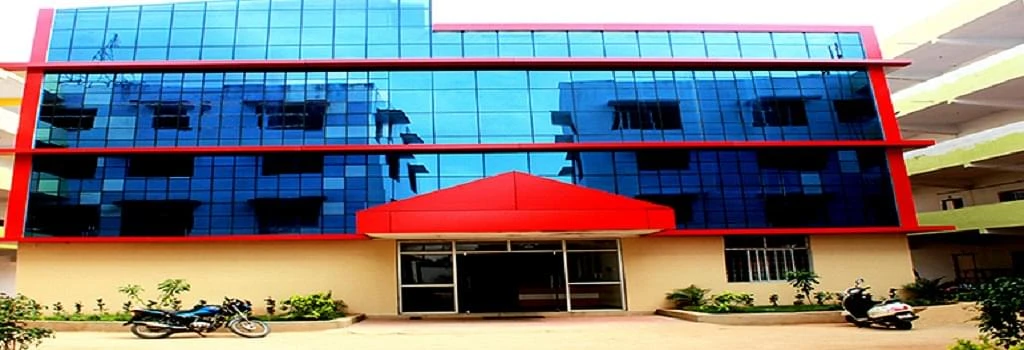
 Auditorium
 Bank & ATM
 Cafeteria
 Campus Shuttle
 Campus Wi-Fi
 Computer Labs
 Science Labs
 Sports Complex
 Study Library