Loading Admission Guardian content
Loading Admission Guardian content

Find a program, read its fee details and explore the admission requirements.
Summary of the programs shown below. Fee periods can differ by program. Check the note beside each amount before comparing costs.
| Course | Stream | Fees |
|---|---|---|
| Master of Technology [M.Tech] | Engineering | 66400 |
| Bachelor of Technology [B.Tech] | Engineering | 76900 |
| Bachelor of Technology [B.Tech] {Lateral} | Engineering | 76900 |
| Bachelor of Technology [B.Tech] {Lateral} (Electrical Engineering) | Engineering | 76900 |
Specializations
All accepted exams
Eligibility: Graduation
Specializations
All accepted exams
Eligibility: 10+2
Specializations
All accepted exams
Eligibility: Diploma
Specializations
All accepted exams
Eligibility: Diploma
2 exams with cutoff data available
 Amazon
 Capgemini
 HCL Technologies
 HDFC Bank
 IBM
IBM ICICI Bank
 Indian Army
 Indian Navy
 Infosys
 Maintec
 Persistent Systems Limited
 Symantec
 Syntel
 Tata Consulting Engineers Ltd.
 Tata Project Limited
 TCS
TCS Tech Mahindra
 Teradata
 Wipro
WiproChristian College of Engineering and Technology in Bhilai is a bit of an outlier. It’s a private, self-financing institution, but it holds a solid NAAC ‘A’ grade and operates with a clear Christian minority identity. That combination—a structured, accredited curriculum within a specific community framework—defines the experience here. Located on a surprisingly spacious 17.5-acre campus in Bhilai’s industrial belt, the college has been around since 1998, making it one of the older private engineering colleges in Chhattisgarh. Its affiliation with Chhattisgarh Swami Vivekanand Technical University (CSVTU) keeps the syllabus standard, but the on-ground execution has its own flavor. You’re not looking at a nationally ranked NIRF heavyweight, but for a regional player, it’s built a reputation that holds weight locally.
The academic portfolio is straightforward and leans heavily into contemporary demand. At the undergraduate level, the B.Tech in Computer Science and Engineering is the anchor program with an intake of 60. The other core branches—Electronics & Telecommunication, Electrical, and Mechanical—have 30 seats each. Where CCET shows it’s keeping pace is with the introduction of three new-age specializations, each with 30 seats: Artificial Intelligence & Machine Learning, Artificial Intelligence & Data Science, and Cyber Security. That’s a clear bet on the IT sector.
Postgraduate options are more niche. The M.Tech programs are small, with 18 seats each in specialized areas like CAD/CAM Robotics, Nanotechnology, High Voltage Engineering, and Computer Science. There’s also a sizable MCA program with 60 seats. For research, Ph.D. opportunities exist in core engineering departments and applied sciences.
The academic structure is the standard CSVTU semester-based credit system, graded on a 10-point scale. Where CCET tries to add value is through what it calls “add-on programs.” The college claims over 30 such programs in the last five years, with 70% student participation. They’ve also set up a National Assessment Centre (PARAKH) aligned with the NEP 2020. The faculty strength is 74, and the leadership includes experienced professors like Dr. Dipali Soren (Principal) and department heads with doctoral qualifications. It’s a decently staffed operation for its size.
This is where the college’s marketing meets the ground. The official numbers for 2024-25 are clear: a 90% placement rate, a highest package of ₹8.2 LPA, and an average package of ₹4.1 LPA. The median package, from available data, sits around ₹2.2 LPA. That spread tells a story.
The 90% figure is impressive, but it’s wise to note it’s “particularly strong for CS/IT streams.” For core branches like Mechanical or Electrical, the placement landscape is likely different. The average of ₹4.1 LPA is a realistic, middle-of-the-road figure for a regional private college. It’s not spectacular, but it’s not dismal either. It suggests most graduates are landing entry-level IT roles.
The recruiter list is telling. You’ve got the classic IT services mass recruiters: TCS, Wipro, Tech Mahindra, Accenture, HCL, and Persistent. Amazon’s presence is a notable highlight. The inclusion of the Indian Navy in the list is interesting and provides a non-IT avenue. The college also mentions internship-turned-job offers from local industries, which is a practical benefit of its location in Bhilai’s industrial area.
So, the reality check? If you’re in CSE or the new AI/CS specializations, you have a very good shot at an IT job with a package in the ₹3.5-5 LPA range. For other branches, you’ll need to be more proactive. The placement cell seems functional, but it’s not a powerhouse that commands premium salaries.
Let’s talk cost. The annual tuition fee for the B.Tech program is pegged at ₹2,75,000. Over four years, that’s roughly ₹11 lakhs just in tuition. You’ll need to add hostel and mess fees on top of that—the exact figure isn’t specified, but hostels are managed by the institution and fees are collected annually. There’s also an SBI ATM on campus and other incidental costs.
This is where the college’s minority status directly benefits students. They offer up to 50% scholarships for meritorious Christian students and those from economically weaker sections. There’s also the Bishop Mar Theodosius scholarship for students scoring over 75% in the college’s internal tests. For students from Bihar, the Bihar Student Credit Card Yojna facility is available. These schemes can significantly lower the financial barrier.
The admission process has two distinct channels, split right down the middle.
For the B.Tech program, 50% of all seats are reserved under the Christian Minority Quota. Admission for these seats is managed directly by the college based on JEE Main or CG PET scores. The other 50% of seats are filled through the state counseling process conducted by the Directorate of Technical Education, Chhattisgarh. This channel primarily uses the Chhattisgarh Pre Engineering Test (CG PET) and is meant for state domicile holders. JEE Main scores are also accepted.
In short: if you’re from the Christian community, you’re competing for half the seats through the college. If you’re a Chhattisgarh resident, you’re competing for the other half through the state. It’s a dual-track system. You can find application details and counseling schedules on the official college website.
For M.Tech, a valid GATE or CG PET score is required, followed by counseling. Ph.D. admissions involve an entrance test and interview conducted by the institute.
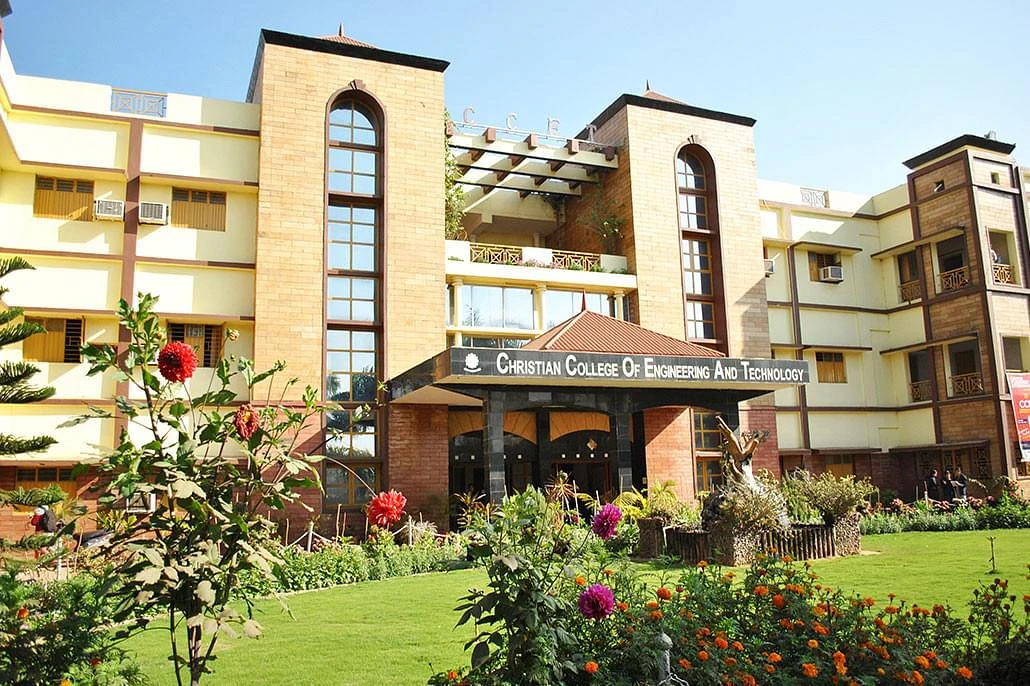
This is consistently highlighted as a strength. The 17.5-acre campus is described as lush, green, and eco-friendly. It’s a contained environment. Academically, there are well-equipped labs for each department, a central library with necessary texts, smart classrooms with digital boards, and a Wi-Fi enabled campus.
The sports facilities are a genuine standout. There’s a sports complex with a well-equipped Gymkhana, playgrounds for football, cricket, hockey, tennis, volleyball, and badminton, plus an indoor games complex and gymnastics facilities. For students inclined that way, it’s a major plus.
Living arrangements are in separate hostels for boys and girls, managed by priests and nuns, which students describe as peaceful and secure. The mess serves both vegetarian and non-vegetarian food. There are two canteens on campus, an auditorium, and basic amenities like a health centre with a part-time medical officer and college bus transport. The infrastructure, overall, is more than adequate.
Synthesizing the sentiment, students seem genuinely positive about the campus environment and facilities. The green space, the extensive sports infrastructure, and the annual fest “Symphonia” are repeatedly praised. Symphonia, in particular, is a big deal—it’s student-managed and seen as a key platform for developing non-academic skills.
Hostel life gets good marks for being clean, well-managed, and safe. The food options are considered satisfactory. Academically, the use of digital boards in classrooms is noted. There’s no major outcry in the available feedback about poor teaching or unfair assessments, which suggests a stable, if not extraordinary, academic delivery.
The notable gap in student reviews is a detailed critique of placements or management. The official placement stats aren’t directly contradicted, but you don’t find a chorus of alumni celebrating huge packages either. The silence on major administrative grievances is a positive sign, but it doesn’t necessarily mean they don’t exist. The overall picture is of a college that provides a comfortable, activity-friendly, and secure environment for its students.
CCET Bhilai occupies a specific niche. It’s a solid choice if you fit into one of its target groups. For Christian minority students from the region, the scholarship opportunities and reserved seats make it a financially and logistically sensible option. For Chhattisgarh domicile students looking for a reputable private college with good infrastructure and a track record of IT placements, it’s certainly in the conversation among the top self-financing institutes in the state.
You’re not coming here for cutting-edge research or national brand value. You’re coming for a stable, accredited engineering education on a pleasant campus, with a functional placement cell that can get you started in the IT industry. The average package of ₹4.1 LPA is about what you’d expect at this tier. If your JEE Main/CG PET scores align with this tier and you value a clean, active campus life over metropolitan buzz, CCET is worth serious consideration. If you have ambitions for top-tier NITs or IIITs, or are targeting core engineering roles at PSUs, your preparation should be aimed higher. But as a reliable regional institution, CCET does its job.
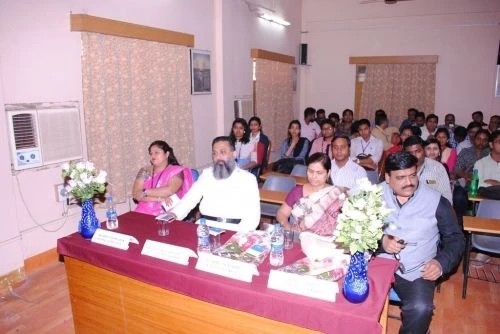
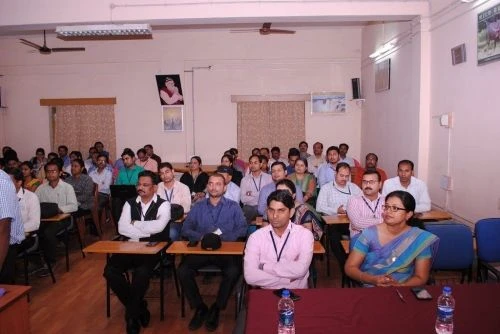
In this preview: 5 photos · 0 videos
CCET Bhilai offers seven B.Tech programs. Computer Science & Engineering has the largest intake with 60 seats. Electronics & Telecommunication, Electrical, Mechanical, Artificial Intelligence & Machine Learning, Artificial Intelligence & Data Science, and Cyber Security each have 30 seats.
Admission is based on JEE Main or Chhattisgarh Pre Engineering Test (CG PET) scores. The process is split: 50% of seats are filled under a Christian Minority Quota managed by the college, and the other 50% are filled through state counseling for Chhattisgarh domicile holders.
For the 2024-25 academic year, CCET reported a placement rate of approximately 90%, with the highest package at INR 8.2 LPA and the average package at INR 4.1 LPA. Top recruiters include TCS, Wipro, Tech Mahindra, Accenture, and the Indian Navy.
As a Christian minority institution, CCET offers up to 50% tuition scholarships for meritorious minority and economically weaker students. The Bishop Mar Theodosius scholarship is awarded based on internal test performance (75%+). The Bihar Student Credit Card Yojna is also available.
The campus spans 17.45 acres and features separate hostels, extensive sports facilities (gymkhana, multiple playgrounds), well-equipped labs, a central library, Wi-Fi, two canteens, an SBI ATM, and a health centre. It is consistently described as lush, green, and well-maintained.
Share what future students should know about CCET.
Student voices are not rewritten by colleges. We remove spam and abuse.
Wider admission question? Community PulseWhat should future students know?
Tell us which course you're considering. We'll help you work out the next step.
Get instant Partner access after mobile verification. Your public edits are reviewed before they go live.
Claim this college
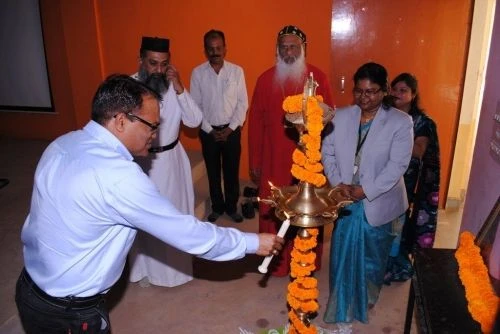
 Auditorium
 Cafeteria
 Computer Labs
 Hostel
 Medical
 Science Labs
 Study Library