Loading Admission Guardian content
Loading Admission Guardian content

Find a program, read its fee details and explore the admission requirements.
Summary of the programs shown below. Fee periods can differ by program. Check the note beside each amount before comparing costs.
| Course | Stream | Fees |
|---|---|---|
| Diploma in Engineering (Polytechnic) | Engineering | 44900 |
| Bachelor of Technology [B.Tech] | Engineering | 57000 |
| Master of Technology [M.Tech] | Engineering | 57000 |
Specializations
Eligibility: Pass in 10th + TS POLYCET
Specializations
All accepted exams
Eligibility: 10+2 with 45% + TS EAMCET
Specializations
All accepted exams
Eligibility: Graduation
2 exams with cutoff data available
Christu Jyothi Institute of Technology and Science (CJITS) is a study in contrasts. For a student with a mid-range TS EAMCET rank, it offers a legitimate, affordable B.Tech degree from JNTUH on a sprawling, quiet campus. But if you're dreaming of high-flying campus placements and a vibrant college life, you'll likely be disappointed. This private, Christian-minority institution in Jangaon has carved out a specific niche since 1998: it's a no-frills, disciplined environment where the onus for career success falls heavily on the student. The official placement average hovers around 3.5 to 4 LPA, a figure that aligns with its tier and location. It's a practical choice, not a glamorous one.
CJITS runs the standard gamut of engineering programs under the JNTUH umbrella. The B.Tech intake is dominated by Computer Science and Engineering (120 seats) and its newer Artificial Intelligence & Machine Learning specialization (60 seats). Electronics, Electrical, Civil, Mechanical, and the less common Mining Engineering round out the offerings with smaller intakes of 30 each. At the postgraduate level, M.Tech programs in areas like VLSI and Power Electronics are available, alongside three-year Diploma courses. The academic rhythm is strictly dictated by the JNTUH calendar, and grading follows the standard 10-point CGPA system. Faculty strength is around 130, with about 15-20% holding PhDs. The consistent feedback here is that professors are accessible—a notable advantage over larger, more impersonal colleges. You can get your doubts cleared. But the academic culture is described as traditional and exam-focused, not particularly innovative. It's a system that delivers a baseline degree effectively.
This is where the gap between brochure and ground reality becomes most apparent. The college's official placement cell claims a 70-80% placement rate. Talk to students and alumni on forums like Shiksha and CollegeDunia, and the working number they cite is closer to 40-50% for core branches like Civil or Mechanical, and maybe 60-65% for CSE and ECE. That's a significant discrepancy. The average package for the 2023-24 batch was in the 3.5 to 4.0 LPA range, with a median around 3.2 LPA. The "highest package" of 12 LPA that gets mentioned appears to be an off-campus or exceptional case; on-campus, top offers typically cap out around 6-7 LPA. Recruiters are a familiar list of IT service giants: TCS, Wipro, Infosys, Tech Mahindra, HCL, and Cognizant lead the pack. For a student in Jangaon, seeing these names on campus is a positive. However, the roles are overwhelmingly in IT services and support. Core engineering placements are sparse and usually with regional firms. The verdict from reviews is blunt: if you want a good tech job, you'll likely need to build skills independently and target off-campus drives. The college's placement cell provides a platform, but it's not a gateway to elite careers.
Affordability is CJITS's undeniable strength. The annual tuition fee for a B.Tech program is tightly regulated between ₹62,000 and ₹65,000. Over four years, that's a total tuition cost of roughly ₹2.5 lakhs—a fraction of what many private engineering colleges charge. Add in hostel and mess fees (₹35,000 - ₹45,000 per year), and the total annual cost of attendance can be kept under ₹1.1 lakhs. That's a decent value proposition. The college is also an active participant in the Telangana State Fee Reimbursement (RTF) scheme. Students from SC, ST, BC, and EBC categories admitted through the convener quota can have their tuition fees covered by the government. It's a critical financial aid mechanism that makes engineering education accessible for many. There's a transparency to the fee structure here that parents appreciate. You can find the official details on the college website.
Admission is entrance-exam driven and follows the standard Telangana state process. For B.Tech, you need a valid rank in TS EAMCET (now called EAPCET). The latest 2024 cutoff ranks for the general category tell the story of demand: CSE (AIML) was the most competitive, closing around 116,779, followed by regular CSE at 152,741. Branches like ECE and EEE had cutoffs in the 177,000-178,000 range. These are mid-to-lower tier ranks, which aligns with the college's positioning. Seventy percent of seats are filled through the state convener counseling process based on these ranks. The remaining 30% are management quota seats, where fees can be significantly higher—reportedly between ₹1 lakh to ₹1.5 lakh per year for sought-after branches like CSE. For lateral entry into B.Tech, TS ECET is the key. Diploma admissions require TS POLYCET, and M.Tech admissions are based on GATE or TS PGECET scores.
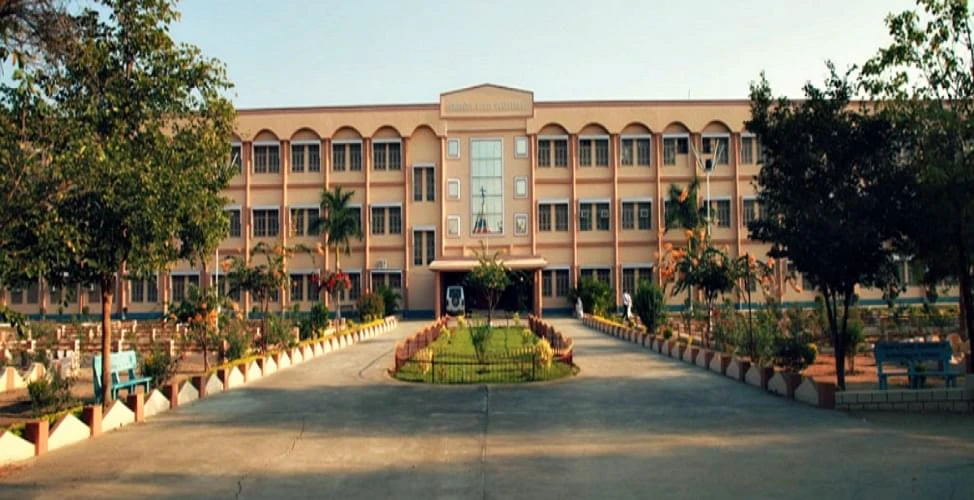
The 54-acre campus is consistently praised for being green, peaceful, and free from the chaos of a city. That's the biggest positive. The infrastructure is functional. Hostels for boys and girls are separate and considered safe, especially for women, though student reviews rate them a 3.5 out of 5 for amenities. Labs are department-specific and have the necessary equipment, though some students note older machinery. The library has a decent collection of over 28,000 books. Where campus life falls short, according to nearly every review, is in vibrancy. There are very few major cultural fests or technical symposiums. The atmosphere is often described as "strictly academic" or even "school-like," with a strong emphasis on discipline and 75% attendance rules. The canteen provides basic, repetitive South Indian fare. Sports facilities include a large playground and some indoor options. But the location in Jangaon, while peaceful, leads to a sense of isolation from the internship and social opportunities in Warangal city or Hyderabad. The college provides bus transport to mitigate this, but it's a factor.
Synthesizing the consensus from education portals and forums paints a clear, two-sided picture. On the positive side, students value the distraction-free environment for study, the approachable faculty, and the sheer cost-effectiveness of the degree. "If you want a peaceful place to study without distractions, CJITS is good," sums up one common sentiment. The strict anti-ragging policy is also a significant relief for parents and newcomers. On the negative side, the critiques are equally strong. Placement quality and a lack of campus culture are the top complaints. Many feel the "MNC" placements are for low-tier support roles, and that the management prioritizes discipline over student development or innovation. "Don't expect high-end placements here; you have to work on your own skills," is the recurring career advice from seniors. The food and limited social events are other frequent gripes. It's not a college students tend to be passionately loyal to, but many see it as a pragmatic stepping stone.
CJITS is a very specific fit. It's worth serious consideration if you have a TS EAMCET rank between 100,000 and 180,000, have a tight budget, and are seeking a sanctioned, disciplined environment to earn a JNTUH degree. For students eligible for state fee reimbursement, it's a financially sensible option. You'll get decent teaching, a safe campus, and a degree that has market validity. However, you must be a self-starter. The college will not hand you a dream career; its placement cell offers a baseline entry into the IT services sector. If you aspire for product companies, core engineering roles, or a dynamic college life full of fests and networking, you will likely feel stifled here. The isolation and lack of vibrant campus culture are real trade-offs. In short, CJITS is a practical, no-surprises institution for the pragmatic student. It's a tool, not a launchpad. Manage your expectations accordingly, and it can serve its purpose.
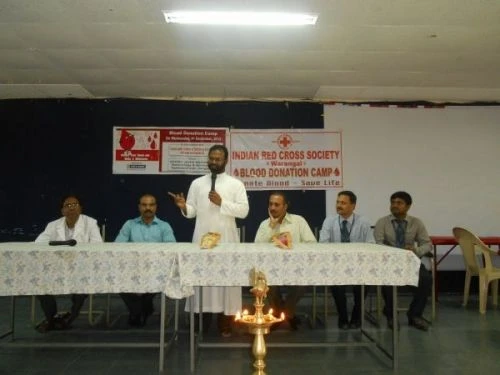
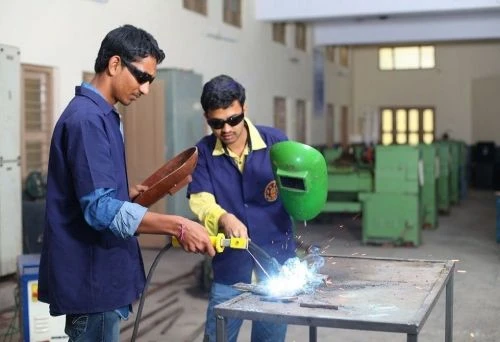
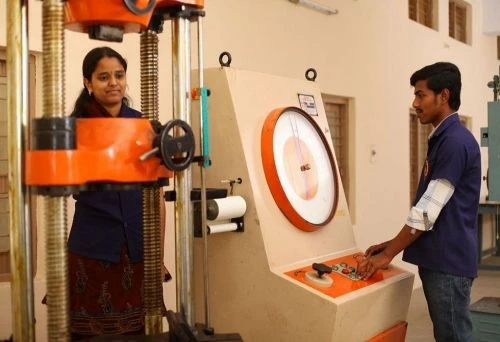
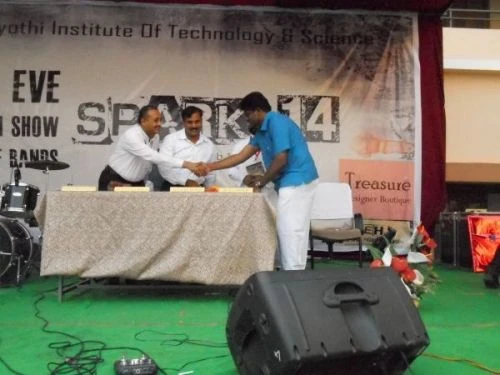

In this preview: 5 photos · 0 videos
The institute is considered average for CSE. While the faculty is supportive, students often need to rely on off-campus placement drives to secure positions at high-tier product companies.
There is a significant difference. NIT Warangal is a premier Tier 1 national institute, while Christu Jyothi Institute of Technology and Science is a private, affiliated Tier 3 college. They are not comparable in terms of national rankings or placement opportunities.
Yes, the college provides a dedicated bus service. The service covers areas including Jangaon, Hanamkonda, and surrounding villages.
No, there is not a prevalent ragging culture. College reviews and official reports indicate the institute maintains a strict anti-ragging policy supported by an active grievance cell.
Fees for the management quota typically range from ₹1 Lakh to ₹1.5 Lakhs per year. The exact amount depends on the demand for the specific branch, with Computer Science and Engineering (CSE) usually being the highest.
Share what future students should know about CJITS.
Student voices are not rewritten by colleges. We remove spam and abuse.
Wider admission question? Community PulseWhat should future students know?
Tell us which course you're considering. We'll help you work out the next step.
Get instant Partner access after mobile verification. Your public edits are reviewed before they go live.
Claim this college

 Auditorium
 Cafeteria
 Computer Labs
 Hostel
 Medical
 Science Labs
 Sports Complex
 Study Library