Loading Admission Guardian content
Loading Admission Guardian content

Find a program, read its fee details and explore the admission requirements.
Summary of the programs shown below. Fee periods can differ by program. Check the note beside each amount before comparing costs.
| Course | Stream | Fees |
|---|---|---|
| Diploma in Engineering (Polytechnic) | Engineering | 33400 |
| Post Graduate Diploma in Plastics Processing and Testing | Engineering | 40000 |
Specializations
Eligibility: 10th
Specializations
Eligibility: Graduation
 Amul
Amul Bajaj Allianz
 BASF
BASF Bharat Petroleum Corporation Limited (BPCL)
 BPL Ltd
 Caterpillar
 Electrolux Kelvinator Ltd.
 Esselgroup
 Gharda Chemicals Limited
 Godrej Infotech
 Heritage Foods
 IFB
IFB India Ozone
 Infosys
 Kelloggs
 Lucas TVS
 Mahindra & Mahindra
 Nestle India
 Nilkamal
 Nokia
Nokia OPAL India
 Pepsico Holdings (I) Pvt. Ltd.
 Pidilite Industries
 Preethi Appliances
![Reliance Industries Limited [RIL]](https://assets.admissionguardian.com/imgproxy/insecure/w:64/h:64/rt:fit/el:0/f:avif/q:82/sm:1/plain/local%3A%2F%2F%2Fimages%2Frecruiter_logos%2Freliance-industries-limited-ril-logo.webp) Reliance Industries Limited [RIL]
Reliance Industries Limited [RIL] Sintex BAPL
 Solvay Pharma
 Tata
Tata Tata Consultancy Services
 Thomson Digital
 UFlex
UFlex Videocon
 Wipro
WiproIf you're looking for a direct, no-frills path into India's core manufacturing sector, CIPET Amritsar is a name that comes up with stubborn consistency. Forget sprawling campuses and cultural fests. This government-run Centre for Skilling and Technical Support (CSTS) operates with a single-minded focus: turning students into job-ready technicians for the plastics industry. Established in 1989, its reputation isn't built on NIRF rankings or research papers, but on a near-guarantee of placement for those who can handle its disciplined, factory-floor approach to education. For a certain student—pragmatic, hands-on, and seeking immediate employment—this might be the most efficient ₹1.5 lakh investment they ever make.
First, a critical clarification: this is a CSTS centre, not an IPT. That means you won't find B.Tech or M.Tech degrees here. The academic portfolio is strictly vocational, built around three-year diplomas and a two-year post-graduate diploma. The intake is substantial, with 60-120 seats per diploma batch, reflecting the institute's role as a workforce pipeline.
The two main tracks are Diploma in Plastics Technology (DPT) and Diploma in Plastics Mould Technology (DPMT). The difference is crucial. DPT teaches you how to process plastic—operation of injection moulding, blow moulding, and extrusion machines. DPMT, often seen as the slightly more technical stream, focuses on designing and manufacturing the moulds and dies themselves, involving heavy CAD/CAM work. Industry whispers suggest DPMT grads might have a slight edge in starting packages. The PG Diploma in Plastics Processing & Testing (PGD-PPT) is for B.Sc. graduates looking to specialize.
Academically, it's a trade school model. The faculty, around 17-20 strong led by Director Mr. J. Bosco, are industry-seasoned technicians and engineers. The curriculum is semester-based and brutally practical. You'll spend more hours in the lab than in a lecture hall. That's the point. They've also formalized industry links, signing MoUs with NIT Jalandhar for R&D and the Indian Institute of Chemical Engineers (IIChE) in 2024.
This is the entire raison d'être. The placement record is what fuels CIPET's formidable reputation in industrial circles. The official claim is a staggering 90-100% placement for eligible students, and alumni reviews largely back up the core promise: if you pass without backlogs, you will likely get a job offer.
But let's talk numbers. The highest package cited for 2023-24 was ₹4.2 LPA. The average typically falls between ₹2.4 LPA and ₹3.5 LPA. Don't compare this to IT campus drives. This is the starting salary for a shop-floor technician or junior mould designer in core manufacturing. For a total course cost of ~₹1.8 lakhs, that's a solid return on investment, especially for students from modest backgrounds.
The recruiter list is a who's who of automotive and durable goods manufacturing: Tata Motors, Motherson Sumi, Havells, Godrej & Boyce, Supreme Industries, Nilkamal, and Reliance Industries. The sectors are clear—automotive components, packaging, consumer appliances, and quality testing. A mandatory 6-month industry training in the final year acts as a prolonged interview, often converting directly into a job.
The gap between official stats and student sentiment is narrow here, but it exists. The "100%" figure assumes academic eligibility. A few might opt out or seek opportunities elsewhere. But the consensus is overwhelming: as a placement machine for the plastics sector, CIPET Amritsar delivers.
The fee structure is transparent and, for a government institution, relatively affordable. Per semester, diploma students (DPT/DPMT) pay ₹16,700 in tuition, while the PGD-PPT fee is ₹20,000. Hostel room rent is an additional ₹10,000 per semester.
The variable cost is food. Mess charges are on actuals, running approximately ₹2,500 to ₹3,500 per month. Toss in one-time admission (₹1,500) and refundable caution money (₹1,000), and the total cost for a three-year diploma, including basic hostel stay, lands between ₹1.5 lakh and ₹1.8 lakh.
Financial aid is available through government channels. Students can apply for Post-Matric scholarships for SC/ST/OBC categories as per Punjab Government norms. Nationally, AICTE's Pragati (for girls) and Saksham (for differently-abled students) schemes are also applicable.
Admission is centralized through the CIPET Joint Entrance Examination (JEE). It's not the engineering JEE; this is a national-level test for all CIPET centres. The application window usually opens in February, with the exam in June.
Eligibility is straightforward: for the diploma programs, you need to have passed your 10th standard. For the PG diploma, a 3-year B.Sc. (with Chemistry) is required. Selection is purely based on your All India Rank in the CIPET JEE, followed by online counseling where you lock in your centre and branch choice.
Cutoffs vary by category and year. Using 2022 as a reference, General category candidates needed around 65% marks in the entrance for a good shot, with OBC around 58% and SC/ST in the 45-50% range. Competition is typically sharper for the DPMT branch. The application fee is nominal, ranging from ₹100 to ₹500 based on category.
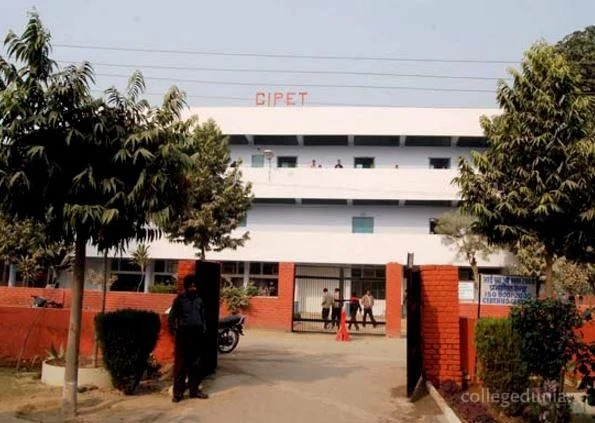
Manage your expectations. The 7-acre campus is functional, not picturesque. Its pride is its infrastructure, but that infrastructure is almost entirely geared towards industrial training.
The labs are exceptional. The processing lab is filled with operational injection moulding and blow moulding machines. The testing lab is NABL accredited, meaning it meets national standards for polymer analysis. The CAD/CAM lab is equipped with professional software like AutoCAD, Creo, and SolidWorks. The library is digital and RFID-enabled, though modest in size.
Student life is the biggest trade-off. The hostels (separate for boys and girls) are described as basic and stuck in a 1990s time warp—clean and secure, but no luxury. The mess food is a near-universal complaint, cited for monotony and average hygiene. Sports facilities are limited to a volleyball/badminton court and indoor games.
And then there's the discipline. This isn't a university. It's often described as "school-like" with strict 80%+ attendance rules, uniforms, and an authoritative management style. If you're seeking a vibrant campus life with fests and clubs, look at GNDU next door. CIPET is for work.
Synthesizing voices from CollegeDunia, Shiksha, and other forums paints a consistent, two-sided picture.
The positives are powerful and repeated: "Placement Machine." "Best ROI." "Hands-on learning is unmatched." Students feel the practical time on real machinery makes them immediately useful to employers. The government tag and the pan-India (and Middle Eastern) recognition of the CIPET brand are huge assets. As one paraphrase put it: "If you want a stable core industry job and are ready to work on a shop floor, this is the best place."
The negatives are equally consistent. The "school-like" discipline grates on some. The hostel food is a perennial grievance. The administrative rigidity can be frustrating, with a slow, top-down approach to problem-solving. Social life is virtually non-existent. This isn't a place to "find yourself" in a collegiate sense. It's a vocational bootcamp.
The verdict from students isn't about quality of life; it's about return on investment. And on that metric, most alumni give it a resounding thumbs-up.
CIPET Amritsar is a specialist tool, not a Swiss Army knife. It is unequivocally worth it for a specific student profile: those from middle-class backgrounds who have completed 10th or 12th standard, seek guaranteed employment in a stable industry, are hands-on learners, and prioritize financial ROI over campus experience. If you want to be a plastics technician, mould designer, or quality engineer, and you're willing to trade three years of "campus life" for near-certain job security, this is arguably one of the most efficient paths in North India.
However, look elsewhere if you dream of a broad engineering degree (B.Tech), want a vibrant college social scene, or are aiming for high-paying software roles. The discipline is rigid, the amenities are Spartan, and the academic scope is narrowly focused. CIPET Amritsar doesn't pretend to be anything else. It's a government-run skills factory, and by the metrics of placement and industry reputation, it's an exceptionally effective one. Just know exactly what you're signing up for.
No, CIPET Amritsar does not offer a B.Tech program. It provides only Diploma and Post Graduate Diploma courses. For a B.Tech in plastics/polymer engineering, candidates must apply to CIPET's Institute of Plastics Technology (IPT) centers, such as those in Lucknow or Jaipur.
The CIPET JEE entrance exam is considered to be of moderate difficulty. The syllabus primarily focuses on Science and Mathematics at the 10th and 12th standard levels. However, competition is high for certain specialized branches, and securing a very high rank is typically required for admission to the sought-after Mould Technology (DPMT) program.
The Diploma in Plastics Technology (DPT) focuses on the processing and production of plastic materials. The Diploma in Plastics Mould Technology (DPMT) focuses on the design, engineering, and manufacture of the moulds and dies used to shape plastic parts. In terms of career outcomes, DPMT graduates generally receive slightly better placement packages.
Yes, CIPET Amritsar has a dedicated and secure on-campus hostel exclusively for female students, ensuring a safe and convenient residential facility.
Yes, CIPET alumni frequently secure government and public sector jobs. Graduates are often placed in major Public Sector Undertakings (PSUs) like GAIL, ONGC, and BPCL, as well as in organizations like the Bureau of Indian Standards (BIS).
Share what future students should know about CIPET: CSTS Amritsar.
Student voices are not rewritten by colleges. We remove spam and abuse.
Wider admission question? Community PulseWhat should future students know?
Tell us which course you're considering. We'll help you work out the next step.
Get instant Partner access after mobile verification. Your public edits are reviewed before they go live.
Claim this college Auditorium
 Cafeteria
 Computer Labs
 Hostel
 Science Labs
 Study Library