Loading Admission Guardian content
Loading Admission Guardian content
Provisional score based on available data. It may change as more information is verified.
Selected ranking categories, with the recorded year beside each result. Open all records for the complete history.
2 published records · Lower numeric ranks are stronger
Find a program, read its fee details and explore the admission requirements.
Summary of the programs shown below. First-year fee. Check the note beside each amount for inclusions and exclusions.
| Course | Stream | Fees |
|---|---|---|
| Bachelor of Technology [B.Tech] | Engineering | 32680 |
| Diploma in Engineering (Polytechnic) | Engineering | 35650 |
| Post Graduate Diploma | Engineering | 42250 |
| Master of Science [M.Sc] (Polymer Science) | Science | 42680 |
| Master of Technology [M.Tech] | Engineering | 76210 |
Specializations
All accepted exams
Specializations
Eligibility: 10th
Specializations
Eligibility: Graduation
Specializations
Specializations
2 exams with cutoff data available
 Converteam (GE Energy)
 Panasonic India
If you want a guaranteed job in the plastics industry, and you're willing to trade a flashy campus life for serious lab time, CIPET Bhubaneswar is a unique proposition. It's not your typical engineering college. Operated by the Government of India's Ministry of Chemicals & Fertilizers, this institute has been feeding the country's polymer and petrochemical sector with skilled technicians and engineers since 1986. The brand carries weight on factory floors from Mancheswar to the Middle East. But that reputation comes with trade-offs—strict discipline, a no-frills campus, and a curriculum laser-focused on core manufacturing. For the right student, it's a direct pipeline to a stable career. For others, it might feel too narrow.
Think of CIPET Bhubaneswar as two schools under one brand. The Institute of Petrochemicals Technology (IPT) handles the degree programs: B.Tech in Plastics Engineering and Manufacturing Engineering & Technology (60 seats each), plus M.Tech specializations and an integrated M.Sc. The Centre for Skilling and Technical Support (CSTS) is where you go for hands-on, job-ready diplomas like the 3-year Diploma in Plastics Mould Technology (120 seats).
The academic culture is industrial. Every program includes mandatory in-plant training—you will work in a factory. The grading follows BPUT's 10-point CGPA system, which can feel rigid. Faculty expertise is a mixed bag. About 60% of the core IPT professors hold PhDs from good institutes, and their industry experience is real. But there's a known issue with vacant regular posts, leading to a reliance on guest lecturers. You'll learn from people who've actually done the job, but consistency can vary.
This is where the institute's value becomes clear. The placement cell works, especially for its core mission. The official website claims over 90% placement. Talking to alumni on forums like Shiksha and Quora, the working number for B.Tech is closer to 75-80%. For diploma holders, it's nearly 100%—there's immense shop-floor demand.
The 2024 highest package was 10.34 LPA from Reliance Industries. That's an outlier. The average for B.Tech grads sits between 4.5 to 5.5 LPA. For diploma students, expect 2.5 to 3.2 LPA as a starting salary. The median is likely around 4.2 LPA. Don't come dreaming of 20 LPA IT packages; 85% of jobs are in core plastics and manufacturing.
Top recruiters are a who's who of Indian industry: Reliance, Haldia Petrochemicals, Supreme Industries, Nilkamal, and automotive giants like Maruti Suzuki and Tata Motors. You get a job, but as one alum put it, "the starting salary might be low (15k-25k) unless you get into a top-tier firm." It's a launchpad, not a lottery ticket.
The fee structure is a major draw, especially for a government-run center. For the 2025-27 cycle, a B.Tech costs about ₹62,000 to ₹65,000 per year. Over four years, you're looking at a total tuition cost of roughly ₹2.5 to ₹2.6 lakhs. A three-year diploma is even more affordable, totaling around ₹1.05 to ₹1.15 lakhs.
Add hostel fees at ₹10,000 per semester for a basic, usually 4-seater room. Mess food runs ₹3,000-₹4,000 monthly—reviews call it repetitive but hygienic. Financial aid is available through state and central schemes like Odisha's Medhabruti scholarship, the Pragati Scholarship for girls, and standard post-matric scholarships for SC/ST/OBC students. The low base cost makes it accessible.
Admissions are 100% merit-based through entrance exams. There's no management quota. For the B.Tech programs, you need a valid JEE Main or Odisha JEE (OJEE) score. Cutoffs aren't fiercely high, which reflects the niche demand. In the 2024 OJEE counseling, general category ranks between 90,000 and 6,00,000 could secure a seat, with SC/ST ranks going up to 9,00,000. It's not about beating lakhs of students; it's about having a clear interest in the field.
For the diploma courses at CSTS, you must take the CIPET JEE, a national-level entrance for its skilling programs. M.Tech admissions consider GATE, OJEE, or CUET-PG scores. The application window typically opens in February and runs through June. You apply through the respective counseling bodies—JEE Main or OJEE—not directly to the institute.
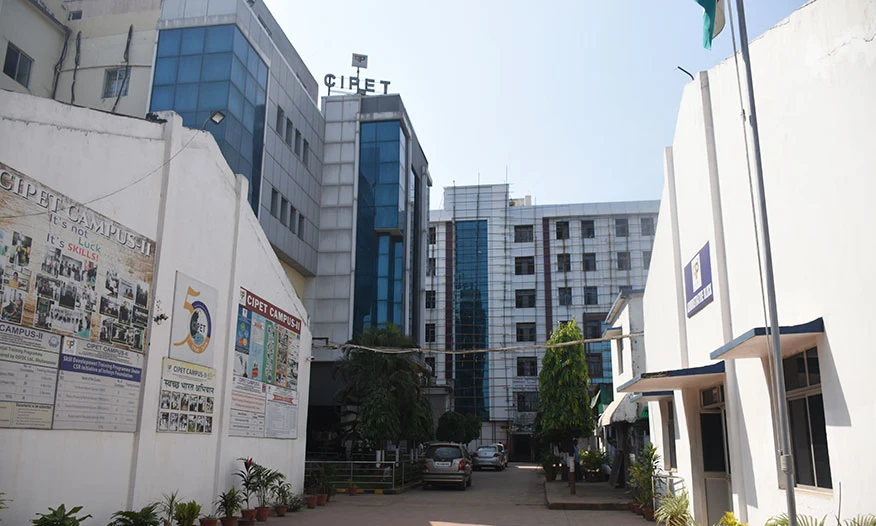
Manage your expectations. The IPT campus in Patia is about 15-20 acres; CSTS in Mancheswar is smaller at 5-10 acres. This isn't a sprawling university with lawns and lakes. Infrastructure is functional, not luxurious. The hostels (capacity ~500) are adequate—rooms are clean but basic. The food in the mess gets the job done, but you'll tire of it.
Where the campus shines is in its labs. They are, by all accounts, world-class for polymer engineering. We're talking advanced injection moulding machines from Arburg and Engel, and testing equipment like DSC and FTIR. The library has a decent collection with digital journal access. Wi-Fi is present but reported as average (10-20 Mbps).
Social life is the biggest compromise. There are very few major fests or cultural events compared to neighboring private colleges like KIIT. Sports facilities are limited to a small playground. The atmosphere is disciplined and professional. Attendance is strictly enforced at 75%. It's a place to work.
The consensus from platforms like Quora, Reddit, and Shiksha is remarkably consistent. The praise is focused and the criticisms are predictable.
The Good: The "CIPET Brand" is gold in the plastics industry. Alumni repeatedly say the practical, lab-heavy training makes them job-ready from day one. The low fee-to-placement ROI is highlighted as the top reason to choose it. Many feel the strict discipline prepared them for factory life. "Don't come here for the campus life; come here if you want a guaranteed core job at a low fee," sums it up.
The Not-So-Good: The bureaucratic, "typical government" management style frustrates students. The lack of a vibrant campus life and limited extracurriculars is a common complaint. Some feel the teaching quality suffers due to reliance on guest faculty. One Reddit user in r/Bhubaneswar noted, "The labs are better than most NITs, but the canteen food will make you miss home every single day."
CIPET Bhubaneswar is a specialist institution, and judging it like a broad-based engineering college misses the point. It's worth it if you are certain you want a career in plastics, polymer processing, or petrochemical manufacturing. The value proposition is straightforward: pay very low government fees, get unparalleled practical training in top-notch labs, and graduate with a brand name that opens doors in core industries. The near-100% placement rate for diploma holders is a powerful fact.
But you should probably look elsewhere if you crave a typical "college experience" with big fests, diverse peer groups, and a path into software or consulting. The campus is small, social life is quiet, and IT recruiters are rare. It's a trade-off. For a student from a middle-class family seeking a stable, skilled technical career without a massive education loan, CIPET Bhubaneswar is one of the most pragmatic choices in the country. It's a tool, not a playground. And for its intended purpose, it's an excellent one.
For a career specifically in plastics or manufacturing, CIPET CSTS can be a better choice than many private B.Tech colleges due to its significantly lower fees and strong core placement record in those industries.
The key difference is the level of education offered. IPT (Institute of Plastics Technology) is for degree programs like B.Tech and M.Tech, while CSTS (Centre for Skilling and Technical Support) focuses on diploma courses and short-term skill development training.
Ragging is strictly prohibited at CIPET Bhubaneswar. Student reviews indicate a very safe and professional environment, characterized by a healthy "Senior-Junior" culture rather than any negative ragging practices.
It is difficult to secure a software job directly through CIPET CSTS campus placements. Very few IT companies visit for recruitment, so students aiming for IT roles typically need to apply for jobs off-campus on their own.
Yes, the diploma courses from CIPET CSTS are highly job-oriented. They boast a nearly 100% placement record, with graduates being recruited by manufacturing units across India.
Share what future students should know about CSTS.
Student voices are not rewritten by colleges. We remove spam and abuse.
Wider admission question? Community PulseWhat should future students know?
Tell us which course you're considering. We'll help you work out the next step.
Get instant Partner access after mobile verification. Your public edits are reviewed before they go live.
Claim this college Auditorium
 Cafeteria
 Gym
Gym Hostel
 Science Labs
 Sports Complex
 Study Library