If you're searching for the Clinical Research Education and Management Academy (CREMA) in Bangalore in 2024, you'll find a ghost. Education portals still list it, but the reality is stark: the official website is down, there are no recent student reviews, and its Jayanagar office shows no signs of academic activity. This profile isn't a guide to a current college; it's a historical autopsy of a pioneer that helped shape India's clinical research education landscape before fading from view. We've pieced together its legacy from data frozen in time, circa 2008-2018, to answer one critical question: what was CREMA, and why does it matter to students today?
CREMA Bangalore — Quick Facts
- Established: 2007.
- Founder/Chairman: Dr. Vijay Moza (formerly of ICRI).
- Status (2024): Largely inactive/defunct. No functional website or recent student batches.
- Historical Affiliation: Degrees/diplomas were awarded through Dibrugarh University (Assam) and Jaipur National University (Rajasthan).
- Type: Private, autonomous training institute.
- Location: Commercial office spaces in Jayanagar, Bangalore (not a traditional campus).
- Flagship Programs: MBA in Healthcare Management, Post Graduate Diploma in Clinical Research (PGDCR).
- Historical Avg. Package (c. 2014-15): ₹3.5 – ₹4.5 LPA.
- Historical Total Course Cost: ~₹4.5 – ₹5.5 Lakhs for a 2-year MBA.
Courses and Academic Programs at CREMA
During its operational peak, CREMA wasn't a university. It was a specialized training academy. Its academic model was built on industry relevance, not traditional academia. The full-time MBA in Healthcare Management (2 years) and the Post Graduate Diploma in Clinical Research (PGDCR) (1 year, often weekend-based) were the main draws. Specializations focused on the nuts and bolts of the industry: Clinical Research Management, Pharmacovigilance, Clinical Data Management, and Medical Writing.
The faculty, historically numbering between 5 to 13, were its unique selling point. They were primarily industry practitioners from top Clinical Research Organizations (CROs) and pharma companies, not full-time PhDs. That meant the syllabus was heavy on practical, regulatory frameworks—exactly what companies like IQVIA or Cognizant wanted. Intake was small, around 60 for the MBA and 30-40 for diplomas, which allowed for a more workshop-style approach. The academic calendar typically started in July or August. It's crucial to understand the degree source: the MBA was awarded through an affiliation with universities like Jaipur National University, sometimes via distance education mode, which affected its perception compared to a regular university MBA.
CREMA Placements: Packages, Companies & Reality Check
This is where the official narrative and student experience most clearly diverged. The academy's marketing claimed "100% placement assistance." The historical data shows highest packages around ₹6-8 LPA and an average of ₹3.5-4.5 LPA, circa 2014-2015. The recruiter list was genuinely impressive for the niche: Cognizant, TCS, Accenture, Johnson & Johnson, Fortis, Manipal Accunova, and pharma giants like Pfizer, Novartis, and GSK.
But student reviews from the 2015-2018 period tell a different story. The consensus was that "100% assistance" often translated to forwarded job links and email blasts, not active, on-campus recruitment drives. The actual placement rate for on-campus offers was perceived to be closer to 60-70%. The takeaway for students then, and a lesson now, was clear: the course could make you industry-ready, but landing a job required intense personal proactivity.
Fees and Financial Aid at CREMA
For a training center operating out of a commercial building, CREMA's fees were on the higher side, reflecting its niche, industry-focused curriculum. Historical data points to an annual fee of approximately ₹1,16,000 to ₹1,80,000 for the two-year MBA in Healthcare Management. The one-year PG Diploma programs could cost between ₹1,10,000 to ₹2,00,000 for the entire course.
There was no on-campus hostel. The institute provided assistance in finding private paying guest accommodations or hostels in the Jayanagar and Basavanagudi areas, which historically added about ₹69,000 per annum. All in, a student could expect a total two-year cost of around ₹4.5 to ₹5.5 lakhs, including living expenses. There is no verifiable historical data on substantial scholarship programs or financial aid offered directly by the academy.
Admissions: Eligibility, Cutoffs & Selection Process
The admission process targeted a specific cohort: graduates aiming to pivot into the clinical research and healthcare management sectors. Eligibility required a background in Life Sciences (Biotech, Microbiology), Pharmacy (B.Pharm/M.Pharm), or Medicine (MBBS, BDS, etc.).
For the MBA, the institute historically accepted scores from national management entrance exams like CAT, MAT, XAT, or ATMA. They also conducted their own CREMA Entrance Test. The selection process was straightforward: a merit-based screening of graduation marks followed by a Personal Interview (PI). The application fee was around ₹1,000. It's important to stress that there are no known cutoffs or active admission cycles post-2018, and any portal listing "2024 Admissions" is likely displaying automated, outdated data.
Campus, Hostels and Student Life
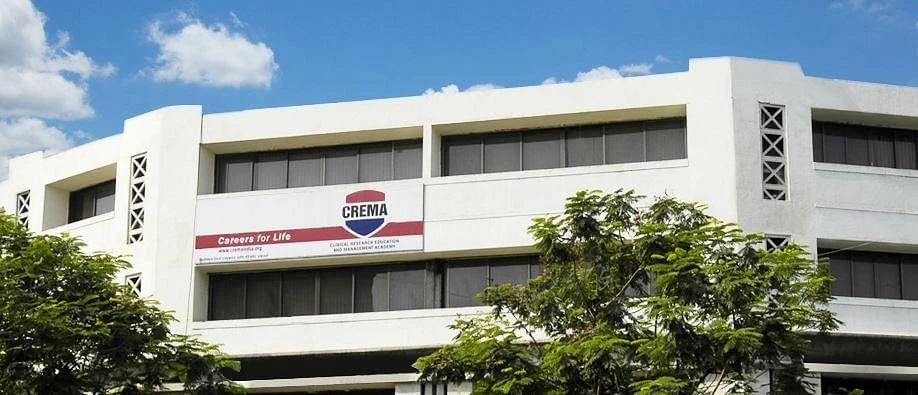
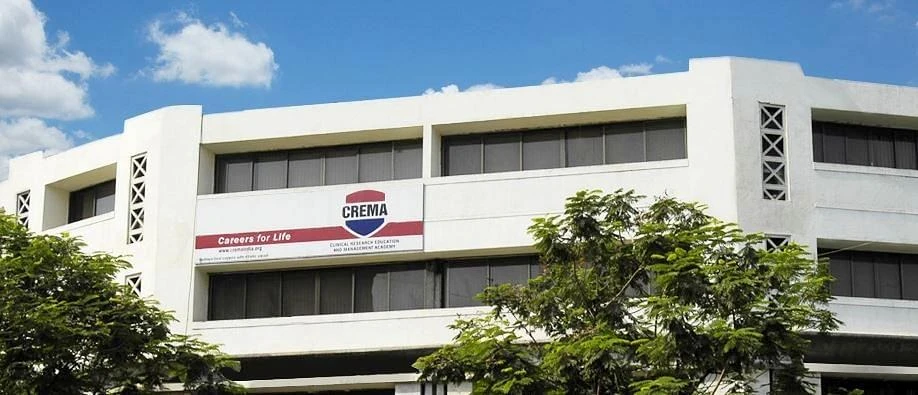
Expecting a typical college campus here led to the most consistent student complaint. CREMA operated from a commercial office space on the 2nd floor of a complex in Jayanagar. Descriptions of "8-acre campuses" on some portals were categorically false. The infrastructure included air-conditioned classrooms with projectors, a small computer lab for Clinical Data Management software training, and a specialized library for regulatory affairs. There were no biological wet labs; practical clinical exposure was arranged through hospital tie-ups.
Student life was non-existent in the traditional sense. There was no hostel, sports ground, or cafeteria. The social and geographic advantage was its location in a well-connected, vibrant Bangalore neighborhood like Jayanagar, close to the metro and bus stands. But if you wanted a "college experience" with fests, clubs, and a campus, this wasn't it. CREMA was, as alumni bluntly put it, a professional training center.
Student Reviews: What CREMA Alumni Really Think
Synthesizing reviews from 2012-2019 paints a clear picture of rise and decline. In its early years (2007-2012), CREMA was seen as a genuine pioneer. Alumni from that era often praise the "industry-ready" curriculum and the quality of visiting faculty from top CROs. The course content, especially in high-demand areas like Pharmacovigilance, was considered top-notch and directly applicable.
But the negatives were structural and grew over time. The disconnect between the marketed "campus" and the office-room reality was a constant sore point. Administrative issues, like delays in receiving degree certificates from the affiliating universities, were frequently reported. As the Indian clinical research sector faced regulatory challenges post-2013, the academy's placement prowess seemed to wane, making the high fees harder to justify. The most common piece of advice from alumni reviews? "The knowledge is excellent, but manage your expectations. You are here for a career certificate, not a college degree."
Verdict: Is CREMA Worth It?
In 2025, the question isn't about worth—it's about existence. The Clinical Research Education and Management Academy appears to be defunct. For historical context, CREMA served a specific purpose in its time: it provided focused, practical training for life science graduates to enter a niche industry when few other options existed. It was best for a highly motivated, career-focused individual who understood they were paying for specialized skill-building, not a campus life or a prestigious university brand. Its decline offers a lesson: in specialized education, the health of the parent industry and the institution's ability to adapt are critical. Today, students interested in clinical research are likely better served by robust M.Pharm or MSc programs from established universities or by newer, actively operating training institutes with current industry linkages and verifiable placement records. Always visit, always verify recent activity, and never rely on automated portal listings alone.

 Auditorium
 Cafeteria
 Computer Labs
 Hostel
 Medical
 Sports Complex
 Study Library