Loading Admission Guardian content
Loading Admission Guardian content
Provisional score based on available data. It may change as more information is verified.
Find a program, read its fee details and explore the admission requirements.
Summary of the programs shown below. First-year fee. Check the note beside each amount for inclusions and exclusions.
| Course | Stream | Fees |
|---|---|---|
| Bachelor of Science [B.Sc] | Science | 40175 |
| Bachelor of Physiotherapy [BPT] | Medical | 60100 |
| Master of Physiotherapy [MPT] | Medical | 101000 |
Specializations
Eligibility: 10+2
Eligibility: 10+2
Specializations
Eligibility: B.P.T.
If you're looking for a paramedical college in North Kerala that trades a sprawling campus for direct, hands-on hospital experience from day one, the Co-Operative Institute of Health Sciences (CIHS) in Thalassery is a serious contender. Established in 1999 and permanently affiliated with the Kerala University of Health Sciences (KUHS), CIHS operates under the Kerala Co-operative Hospital Federation. That's not just a management detail—it's the core of its identity. The institute is physically and academically integrated with the 250-bed Thalassery Co-operative Hospital, which means students aren't just learning theory; they're applying it in real clinical settings from the very start. It's a no-frills, highly disciplined environment focused squarely on producing job-ready allied health professionals. You won't find NIRF rankings or NAAC grades here, but you will find a strong regional reputation built on practical training and graduate employability.
CIHS doesn't offer a wide buffet of programs. It specializes. The focus is exclusively on paramedical and allied health sciences, with a curriculum that follows the annual system of its affiliating university, KUHS. The grading is on a 10-point scale, and the pass criteria are strict—you need a minimum of 50% separately in theory and practicals. That's a decent benchmark for a professional course.
The undergraduate lineup includes the 4.5-year Bachelor of Physiotherapy (BPT) with an intake of 50, and three 4-year B.Sc programs: Medical Lab Technology (32 seats), Medical Microbiology (24), and Medical Biochemistry (24). For postgraduates, there's a 2-year Master of Physiotherapy (MPT) with specializations in Musculoskeletal, Cardio-respiratory, and Neurology, and an M.Sc in MLT.
What really defines the academic experience here is the faculty and the clinical tie-ups. With a teaching staff of around 24-29, the student-faculty ratio allows for a fair bit of individual attention. Reviews consistently highlight the faculty as knowledgeable and supportive. But the real classroom is the hospital. Clinical training isn't an occasional field trip; it's a core part of the schedule, conducted at the attached Thalassery Co-operative Hospital and other major centers like AKG Hospital in Kannur and Aster MIMS in Calicut. You're not just observing; you're doing.
Let's be clear from the start: CIHS, like most paramedical colleges in Kerala, does not run a formal corporate placement drive with campus recruiters from big pharma. That's not the model. The placement story here is about reputation and readiness.
The institute's strongest placement asset is its network of affiliated hospitals. Graduates, especially from BPT and B.Sc MLT, are often absorbed directly into these clinical settings for internships and, subsequently, jobs. Top clinical postings for graduates come from the Thalassery Co-operative Hospital, AKG Memorial Hospital, and Aster MIMS. The pathway is well-established.
For entry-level roles in Kerala's private hospital and diagnostic sector, the starting salary range is modest, typically between ₹1.2 to ₹2.4 LPA. That's the local market reality for fresh paramedical grads. However, the curriculum and the KUHS affiliation are designed to meet international standards, which opens another door. A significant number of alumni leverage this to pursue higher studies or jobs abroad, particularly in the Middle East, UK, and Ireland, where compensation is substantially higher. So, while you won't get a placement letter handed to you on a stage, the institute provides the clinical pedigree that makes you employable. You have to do the legwork, but the foundation is solid.
The fee structure at CIHS is regulated by the Government of Kerala and KUHS, which keeps it relatively transparent and stable. For the 2024-25 academic year, the first-year tuition fee is approximately ₹91,743 for the BPT program and ₹85,385 for B.Sc MLT. Over the full course duration, the total estimated cost is around ₹3.37 lakhs for BPT and ₹4.64 lakhs for B.Sc MLT (the latter includes additional lab fees). The MPT program costs about ₹1.1 lakhs per year.
Living expenses are a separate calculation. The institute provides an on-campus hostel for girls, with rent around ₹1,000 per month. For boys, there is no on-campus hostel—a major point of feedback from students. They typically find private paying guest accommodations or rented rooms in Thalassery town. Mess fees, whether in the hostel or outside, generally range from ₹1,500 to ₹3,000 per month based on consumption. A one-time, refundable caution deposit is also required at admission. There's no prominent information on large-scale institutional scholarships, so financial planning should primarily rely on the stated fees and personal living costs.
The admission process is split cleanly down the middle: 50% of seats are filled through the Government Quota via the LBS Centre for Science & Technology, and the other 50% are Management Quota seats handled directly by the KCHF. The application window typically opens in June or July.
Eligibility hinges on your 10+2 marks (Physics, Chemistry, Biology) with a minimum of 50%. For now, admission to the B.Sc programs is purely merit-based on these marks. However, a big change is coming for aspiring physiotherapists. Starting from the 2026-27 academic year, NEET will be mandatory for admission to the BPT program at CIHS and across Kerala. This aligns paramedical education with other medical streams and will likely impact cutoff trends. For the current MPT program, admission is based on the candidate's BPT degree and relevant entrance criteria as per KUHS norms. It's a straightforward, quota-based system—just pay close attention to the impending NEET requirement for BPT.
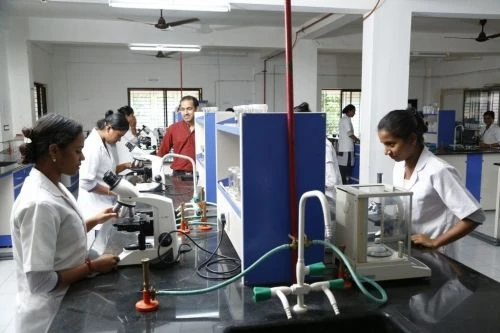
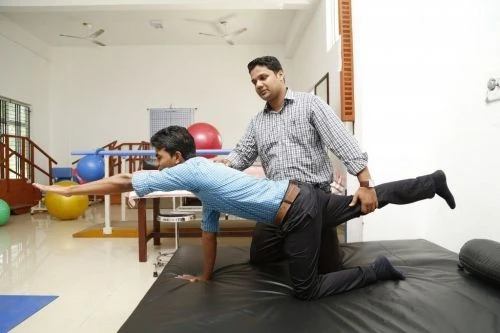
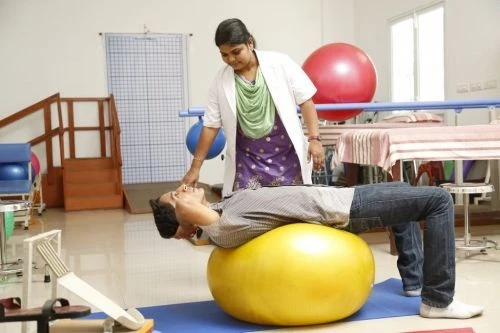
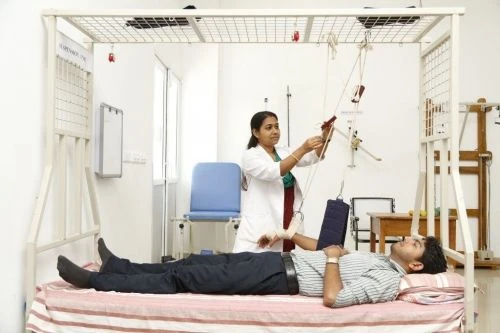
This is where student reviews get mixed. The infrastructure is functional and focused on academics. The labs for Microbiology, Biochemistry, and the physiotherapy gym are consistently praised as well-equipped and modern. The library is well-stocked and provides digital access through the KUHS consortium. The on-campus canteen gets nods for being affordable and hygienic.
But there are significant trade-offs. The campus itself is described as urban and compact, lacking a traditional "campus feel." The biggest recurring complaint, by far, is the complete lack of a dedicated playground or sports facilities. If you're into football, cricket, or any outdoor sport, this is a genuine drawback. Life is also highly structured. A strict uniform policy is enforced, and an 80% attendance rule is rigorously monitored. Classes can run until 4:30 PM. For some, this discipline creates a safe, focused environment, especially noted by female students. For others, it feels overly rigid and school-like. The hostel situation reinforces this divide: girls have an on-campus option (dorm-style for UG), while boys must arrange their own lodging in town, which adds cost and commute time.
Aggregating feedback from portals like CollegeDunia and Shiksha paints a consistent, nuanced picture. The praise is loud and clear in two areas: Teaching Quality (rated ~4.3/5) and Clinical Exposure (rated ~4.5/5). Students call the faculty "highly trained" and "approachable," and they value the immediate, hands-on training at major hospitals as the program's standout feature. "The clinical training at AKG and Co-operative hospitals is the best part of the course," is a common refrain.
The criticisms are equally specific. Beyond the sports infrastructure gap, the strict, rule-heavy environment is a frequent topic. The mandatory uniform and extended class hours are often mentioned as negatives. The absence of a boys' hostel is a major practical inconvenience that affects a large portion of the student body. The consensus? It's a college for those who are serious about the profession and willing to trade a vibrant campus social life for rigorous academic and clinical training. It's not for those seeking a typical "college experience."
CIHS Thalassery is a specialist's choice. It's best for students who are certain about a career in physiotherapy or medical lab sciences and who prioritize practical, hospital-based learning above all else. If your goal is to graduate with substantial hands-on experience that makes you immediately useful in a clinic or lab, this institute delivers that effectively through its co-operative hospital model. The disciplined environment and strong faculty support that mission. However, you should look elsewhere if a vibrant campus life, sports facilities, or a less regimented atmosphere are important to you. The lack of a boys' hostel is also a significant practical hurdle for many. Ultimately, CIHS is a pragmatic, no-nonsense launchpad for a paramedical career in Kerala or abroad. It provides the tools and the training; you provide the focus and the drive. For the right student, that's a solid deal.
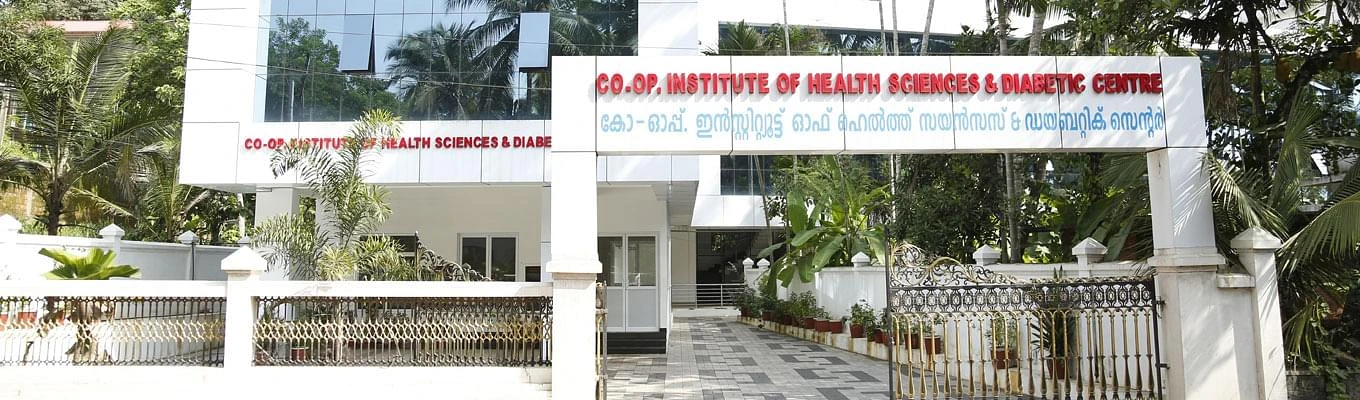
In this preview: 5 photos · 0 videos
Yes, starting from the 2026-27 academic batch, the National Eligibility cum Entrance Test (NEET) is mandatory for admission to the Bachelor of Physiotherapy (BPT) program at Co-Operative Institute of Health Sciences, Thalassery.
The total fee for the four-year Bachelor of Science in Medical Laboratory Technology (B.Sc MLT) program at CIHS Thalassery is approximately ₹4.64 Lakhs, as per the 2024-25 prospectus.
No, Co-Operative Institute of Health Sciences, Thalassery does not have an on-campus boys' hostel. Male students typically need to arrange accommodation in nearby paying guest (PG) facilities.
No, CIHS Thalassery is not a government college. It is a private, self-financing institution managed by the Thalassery Co-operative Hospital Society.
The college does not conduct formal campus placements. However, due to its strong reputation, students from the Physiotherapy program generally find it easy to secure jobs in top hospitals on their own merit.
Share what future students should know about CIHS.
Student voices are not rewritten by colleges. We remove spam and abuse.
Wider admission question? Community PulseWhat should future students know?
Tell us which course you're considering. We'll help you work out the next step.
Get instant Partner access after mobile verification. Your public edits are reviewed before they go live.
Claim this college
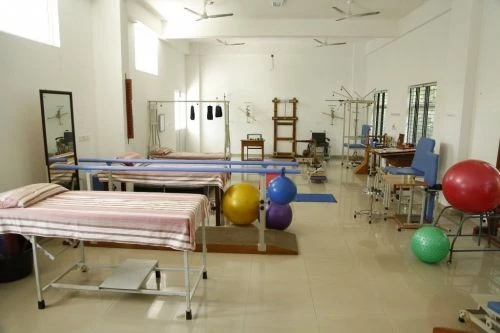
 Auditorium
 Cafeteria
 Campus Shuttle
 Communication Centre
 Gym
Gym Medical
 Science Labs
 Sports Complex
 Study Library