Loading Admission Guardian content
Loading Admission Guardian content
Provisional score based on available data. It may change as more information is verified.
Find a program, read its fee details and explore the admission requirements.
Summary of the programs shown below. Total course fee. Check the note beside each amount for inclusions and exclusions.
| Course | Stream | Fees |
|---|---|---|
| Master of Business Administration [MBA] | Management | 41000 |
| Master of Engineering [ME] | Engineering | 60000 |
| Bachelor of Architecture [B.Arch] | Architecture | 220000 |
| Bachelor of Engineering [BE] | Engineering | 220000 |
| Bachelor of Technology [B.Tech] | Engineering | 220000 |
Specializations
All accepted exams
Eligibility: Graduation
Specializations
All accepted exams
Eligibility: Pass in Graduation + GATE
Eligibility: 10+2
Specializations
All accepted exams
Eligibility: 10+2 with 50% + TNEA
Specializations
All accepted exams
Eligibility: 10+2 with 50% + TNEA
2 exams with cutoff data available - showing recent entries
 Adroit Financial
 Alpha Associates
 Aspire Systems
 Capgemini
 Cognizant
 CSS Corp
 Data Patterns
 Eureka Forbes
 Face
Face Flipkart
 Gemini Communication Ltd
 HCL Technologies
 Hinduja Global Solutions Company
 HP Enterprise
 IDBI Federal Life Insurance
 Infosys
 IVTL Infoview
 Larsen & Toubro Ltd.
 Neeyamo Technologies
 OFSS
OFSS Robert Bosch Engineering & Business Solutions Ltd
 Shriram Pistons
 SmartDV Technologies
 Tata Consultancy Services
 Tech Mahindra
 Vee Technologies
Coimbatore Institute of Engineering and Technology (CIET) sits in a quiet, green pocket about 25 kilometers from the city center. It’s a place that often gets confused with the more famous CIT, but that’s a mistake. CIET is its own thing—a private, autonomous college that’s carved out a solid reputation for delivering decent engineering education without the premium price tag of Coimbatore’s top-tier institutions. With an NAAC ‘A’ grade and autonomous status, it offers a curriculum that’s arguably more current than many affiliated colleges. For students with mid-range TNEA cutoffs who want a focused, no-frills academic environment, CIET is a pragmatic choice. Just don’t expect a bustling city campus.
CIET offers a standard spread of engineering programs under the Anna University umbrella, but with the crucial advantage of autonomy. That means they can tweak syllabi and conduct their own exams, which often leads to a slightly more updated curriculum compared to non-autonomous colleges. The seat intake tells you where the focus is: Computer Science and Engineering gets 120 seats, making it the largest department. The newer, in-demand programs like B.Tech in Artificial Intelligence & Data Science, AI & Machine Learning, and Cyber Security each have 60 seats, reflecting the market trend.
The college also runs B.Arch, several M.E. specializations, and an MBA program. Faculty strength hovers around 72-85 members, with many holding PhDs and decent industry experience. Students consistently describe them as approachable and supportive of projects, which is a significant plus. The academic culture is described as strictly professional—attendance rules (75% mandatory) and a formal dress code are enforced. It’s not a place where you can coast by.
A standout feature is the AICTE IDEA Lab, a facility for prototyping and innovation that’s not common in colleges of this tier. There are also MoUs with companies like Oracle Academy and Palo Alto Networks for certification programs, adding some industry relevance to the coursework.
This is where you need to separate the brochure from the ground report. The college’s official placement claim for 2024 was 87%. Talking to alumni and scanning reviews on platforms like Shiksha and CollegeDunia, the working number for on-campus offers seems more like 70-80%. That’s a decent, honest outcome for a mid-range private college.
The official highest package quoted is 9 LPA, but students mention specific peers landing roles at Amazon or Zoho in the 12-15 LPA range. Ignore any wild claim of 50+ LPA—that’s almost certainly data confusion with the other CIT. The average package for the 2024-25 cycle was between 4.0 and 4.5 LPA, with a median around 3.5-4 LPA.
Recruiters are a mix of IT mass recruiters and some core engineering firms. Top recruiters include TCS, Cognizant, Wipro, Infosys, Zoho, HCL, and Accenture. For core branches, companies like Bosch, L&T, Ford, and Lakshmi Machine Works (LMW) visit. A common student refrain is that while CSE and IT students have a relatively straightforward path to these IT jobs, students from Mechanical or Civil engineering often have to work much harder to secure core roles; many end up in IT companies as well.
Internships are mandatory from the third year, with stipends ranging from ₹5,000 to ₹15,000 per month. The placement cell is active, but your branch and your individual skill set will heavily dictate your outcome.
CIET’s primary appeal is its value proposition. For a B.E./B.Tech under the government quota, annual tuition is remarkably affordable, ranging from ₹55,000 to ₹65,000. Management quota seats are higher, between ₹85,000 and ₹1.1 lakhs per year.
Add to this hostel and mess fees, which run from ₹60,000 to ₹75,000 annually depending on room type. Factor in semester exam fees (around ₹5,000) and a one-time placement training fee (approx. ₹10,000), and the total four-year cost, including hostel, lands between ₹5.5 and ₹7.5 lakhs. That’s significantly lower than many private engineering colleges in Tamil Nadu.
Financial aid is available. There’s a ‘First Graduate’ concession that knocks off about ₹25,000-₹27,500 from the fees. Students can also apply for BC/MBC/SC/ST government scholarships. The college itself offers merit-based fee waivers for students entering with high TNEA cutoffs.
Admission to the B.E./B.Tech programs is governed by the Tamil Nadu Engineering Admissions (TNEA) counseling process. It’s based purely on your Class 12 marks (or equivalent). For 65% of the seats, admission is through this single-window counseling. The remaining 35% are filled under the management quota.
The 2024 TNEA cutoff ranks for the General Category give a clear picture of demand:
For B.Arch, you need a valid NATA or JEE Main Paper 2 score. MBA admissions require TANCET, MAT, or CAT scores, while M.E. programs consider GATE or the university’s own CEETA-PG exam.
The 26.5-acre campus is CIET’s defining characteristic—for better and worse. Located at the foothills of the Vellingiri range, it’s undeniably peaceful and scenic. It’s also undeniably remote. The nearest major hub, Coimbatore Junction, is about 25 km away, a 45-60 minute drive. For day scholars, this commute is a major daily grind.
Infrastructure is adequate. Labs for CSE and ECE are well-equipped, and the Mechanical department has CNC machines. The library has a digital setup and over 30,000 volumes. Wi-Fi is available but students note it can be patchy in hostel areas. Sports facilities include a large ground for cricket/football and courts for volleyball and basketball.
Hostels are separate for boys and girls, with a capacity for over 1000 students. Rooms are basic—typically 2 or 4 sharing. The quality is functional, rated around 3.5/5 by students. The mess food gets a similar rating: edible South Indian fare that can become repetitive. College buses ply routes across Coimbatore and to nearby towns like Pollachi and Tirupur.
Social life is the biggest trade-off. The atmosphere is strictly academic. There are few major cultural fests or events. If you’re looking for a vibrant, happening campus life, you’ll be disappointed. As one student put it, it’s a place to study without city distractions.
Synthesizing feedback from Shiksha, CollegeDunia, Quora, and Reddit paints a consistent picture.
The good: The scenic, distraction-free environment is a big plus for many. Faculty are repeatedly praised for being helpful and knowledgeable. The autonomous curriculum is seen as an advantage. And almost universally, students feel the education offers good value for the money paid.
The not-so-good: The remote location is the top complaint. The strict enforcement of dress code (formal shirts, tucked-in) and 75% attendance feels oppressive to some. Social and cultural activities are minimal. Some infrastructure, particularly in older blocks, is reported to need maintenance.
A Reddit user highlighted the IDEA Lab as a major asset for hands-on learners. Another on Shiksha offered pragmatic advice: placements are good for CSE/IT, but core branch students need to hustle extra hard. The consensus? It’s a serious college for serious students.
CIET is a straightforward, no-nonsense institution. It’s best for students with TNEA ranks between 20,000 and 70,000 who prioritize a affordable, accredited engineering degree from an autonomous college over a glamorous campus life. If you’re in CSE, IT, or a newer tech branch, you’ll likely find decent placement opportunities with the standard IT recruiters. The peaceful setting can be a boon for focus.
You should probably look elsewhere if you crave an active social scene, want to be in the heart of the city, or are aiming for top-tier core engineering placements from a mechanical or civil degree. The college’s NIRF ranking in the 151-200 band reflects its solid mid-tier position. Ultimately, CIET is a practical choice. It delivers competent education and fair outcomes at a reasonable cost, as long as you know exactly what you’re signing up for.
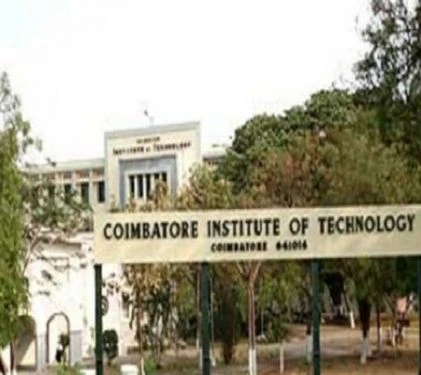
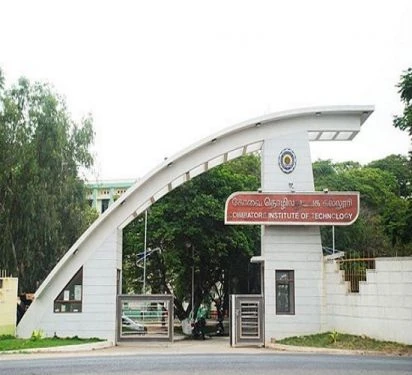
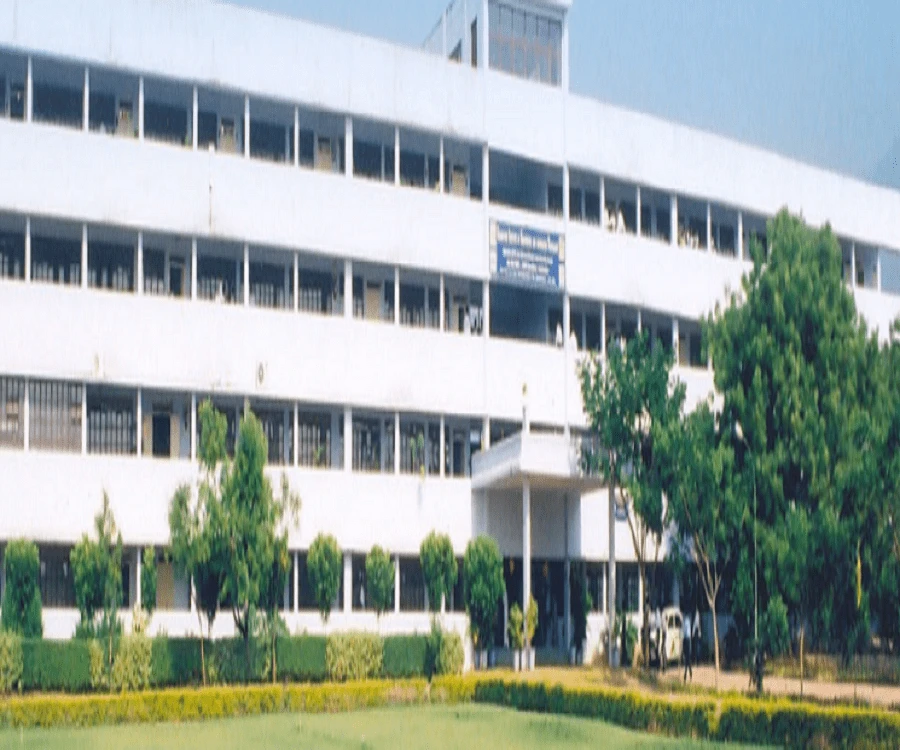
In this preview: 3 photos · 0 videos
No, CIT is a much older, government-aided institution with higher cutoffs and better prestige. CIET is a good alternative for students with mid-range cutoffs.
The dress code at CIET is strict. During official hours, formal attire is mandatory for boys, while sarees or salwars are the norm for girls.
Placements for Mechanical Engineering at CIET are decent. However, many students secure positions in IT companies like TCS and Infosys. Securing roles in core mechanical companies like Bosch or LMW typically requires high technical skills.
Yes, CIET is an autonomous institution. This means it sets its own syllabus and conducts its own examinations.
Yes, a cutoff of around 150 in TNEA is usually sufficient for admission to branches like Electrical and Electronics Engineering (EEE), Civil, or Mechanical at CIET. For Computer Science Engineering (CSE) or Information Technology (IT), you may need a cutoff of 165 or higher.
Share what future students should know about CIET.
Student voices are not rewritten by colleges. We remove spam and abuse.
Wider admission question? Community PulseWhat should future students know?
Tell us which course you're considering. We'll help you work out the next step.
Get instant Partner access after mobile verification. Your public edits are reviewed before they go live.
Claim this college
 Auditorium
 Bank & ATM
 Cafeteria
 Campus Security
 Campus Shuttle
 Computer Labs
 Gym
Gym Medical
 Science Labs
 Sports Complex
 Study Library