Loading Admission Guardian content
Loading Admission Guardian content

Find a program, read its fee details and explore the admission requirements.
Summary of the programs shown below. Fee periods can differ by program. Check the note beside each amount before comparing costs.
| Course | Stream | Fees |
|---|---|---|
| Master of Technology [M.Tech] (Mechanical Engineering) | Engineering | 82150 |
| Bachelor of Technology [B.Tech] | Engineering | 84750 |
| Master of Business Administration [MBA] | Management | 84750 |
| Bachelor of Technology [B.Tech] {Lateral} | Engineering | 95500 |
| Diploma in Engineering (Polytechnic) | Engineering |
Specializations
All accepted exams
Eligibility: Pass in Graduation + GATE
Specializations
Eligibility: 10+2
Specializations
All accepted exams
Eligibility: Graduation with 50% + CAT
Specializations
Eligibility: 10+3
Specializations
 Accenture
 Airtel
 Asian Paints
 Dell
Dell Google
 HDFC Bank
 Hindustan Copper Limited (HCL)
 IBM
IBM Infosys
 ITC
ITC Mahindra & Mahindra
 Microsoft
 Nvidia
 Oracle
 Pepsico Holdings (I) Pvt. Ltd.
 Reliance
 SAP
SAP Tata Motors
 Tech Mahindra
 Texas Instrument
 Vodafone
 Wipro
WiproThe Continental Institute of Engineering & Technology (CIET) sits on a sprawling 60-acre campus along National Highway 1 in Fatehgarh Sahib, Punjab. Established in 2001, it’s a private college that has built a reputation for solid infrastructure and a practical approach to teaching. Affiliated with I.K. Gujral Punjab Technical University (IKGPTU), its story is one of steady growth rather than overnight fame. The placement numbers—an average of ₹4.5 LPA and a high of ₹10 LPA—tell you it’s not a top-tier destination, but for students in the region looking for a functional, AICTE-approved campus with decent facilities, it’s a contender. The feedback from students is consistent: the labs are good, the faculty focuses on hands-on work, and the hostels are better than many peers. But they’re also clear that the placement hype doesn’t always match the on-ground reality for core engineering roles.
CIET offers a standard set of programs you’d expect from a PTU-affiliated engineering college. The B.Tech lineup includes Computer Science & Engineering, Mechanical Engineering, Electronics & Communication Engineering, Civil Engineering, and Information Technology. There’s also a lateral entry option for diploma holders. For postgraduates, choices are narrower: an M.Tech in Mechanical Engineering and a general MBA. The institute also runs a polytechnic (diploma) wing for Mechanical, Electrical & Communication, Civil, and Computer Science engineering.
Intake numbers are specific for the diploma programs—60 seats each for Mechanical and Electronics & Communication Engineering. For the degree courses, they follow the university and AICTE norms. Academically, the college emphasizes a curriculum “regularly updated in consultation with industry experts,” a common claim that often translates to following university syllabi with occasional guest lectures. Where CIET seems to get consistent positive marks from students is in practical execution. Reviews mention well-equipped labs and teachers who focus on hands-on work. With a faculty count of 106, the student-teacher ratio is likely manageable, though the claim of all holding master’s and doctorates from top institutions should be taken as an aspiration rather than a verified fact.
This is where you need to read between the lines. The official data for 2023 cites an 85% placement rate, a highest package of ₹10 LPA, and an average of ₹4.5 LPA. The recruiter list is a mix of IT service giants and some smaller firms: Infosys, Wipro, TCS, Tech Mahindra, HCL, L&T, Capgemini, Amazon, ICICI Bank, and companies like Coatec India and Pact Solution.
That’s the brochure version. Student sentiment adds crucial context. The consensus is that placements are “good but not that level.” The ₹10 LPA is almost certainly an outlier. The more common outcome for an average student is likely clustered around that ₹4.5 LPA mark, primarily in IT services. A recurring note in reviews is that “few students land in core companies.” If you’re a Mechanical or Civil engineering student dreaming of a design or R&D role at a manufacturing giant, CIET’s placement track record suggests you might have to hustle off-campus. One alum’s story is telling: placed at a Pune-based company but didn’t join due to family issues, later finding work as a project engineer at Bharti Airtel. It underscores that placement here is often a starting point, not a guaranteed career launchpad. The 85% figure likely includes a broad range of offers, and success is heavily tied to being backlog-free and having a clean record.
CIET’s fee structure is transparent and, for a private institute in Punjab, sits in the mid-range. For the 2025-2026 academic cycle, the total fee for the entire 4-year B.Tech program is ₹3.66 Lakhs, with tuition making up ₹3.58 Lakhs of that. That breaks down to roughly ₹91,500 per year in tuition, plus other nominal fees. The B.Tech lateral entry total is ₹2.77 Lakhs. For postgraduates, the 2-year MBA totals ₹1.89 Lakhs, and the M.Tech in Mechanical is ₹1.6 Lakhs. Diploma fees are around ₹84,920 for the program duration.
Additional costs include exam fees (₹6,000 for B.Tech lateral) and “other fees” which can be around ₹24,400 for the same program, covering library, development, etc. Hostel and mess fees aren’t detailed in the available data, so that’s a significant add-on to budget for.
The college promotes a range of scholarship schemes. These include mandated scholarships for SC/ST students, special schemes for students from other states (J&K, Bihar are mentioned), and merit-based awards. They claim to offer “up to 100% scholarships” based on academic excellence and extracurriculars, though the criteria and number of such full rides are unspecified. Loan facilitation is also available. It’s worth contacting the admission cell directly for the latest, detailed scholarship application forms and deadlines.
Admissions follow the standard entrance-exam route for the region. For B.Tech, JEE Main scores are accepted. M.Tech admissions consider GATE scores. For the MBA program, they accept CAT and MAT scores. The polytechnic (diploma) admissions are based on merit in the qualifying exam: matriculation for first-year entry, or ITI/10+2 (Vocational or PCM) for direct second-year entry.
Specific cutoff ranks or percentiles for JEE Main aren’t published, which is typical for many institutes under IKGPTU that fill seats through centralized counseling after the initial top-tier colleges have picked. Admission often becomes more about seat availability and basic eligibility as the counseling rounds progress. The application fee ranges from INR 1,000 to 2,500 for Indian applicants, depending on the course. As of the latest data, admissions for the 2024-25 session were listed as “ongoing,” so checking the official website for current deadlines is essential.
The 60-acre campus is frequently described as “green” and “environment-friendly.” Academically, the infrastructure gets good marks. The computer lab is noted for having a substantial number of “highly configured” systems, including Core 2 Duo desktops. The library houses over 10,000 books with reading space for 100+ students. Wi-Fi is available campus-wide, reportedly via a dedicated leased line.
Hostels are a clear positive. There are separate facilities for men and women, each with a capacity for 400 students. Rooms are typically shared (two beds), and students say the infrastructure is “good compared to other colleges.” Common rooms with TVs and indoor games are provided. A mess/dining hall is available, though food quality isn’t explicitly rated in the available reviews.
Where CIET has invested recently is in sports. A new “state-of-the-art sports complex” inaugurated in March 2025 includes badminton and basketball courts, a fully equipped gym, and notably, an Olympic-standard swimming pool. There’s also a yoga and meditation center. This is a significant upgrade from the basic indoor (chess, carom, table tennis) and outdoor (cricket, football) facilities previously listed. For student life, the calendar includes a Freshers’ Party, an Annual Athletic Meet, and a technical fest called XENOS. Extracurriculars range from blood donation drives and tree planting to an Indo-Nepal cricket tournament.
Synthesizing student feedback paints a coherent picture. The strengths are consistent: excellent infrastructure, good labs, and faculty that is technically sound and focuses on practical work. The phrase “teachers focus on practical work” comes up repeatedly, which is a meaningful compliment in an engineering context. The hostel rooms are rated as better than many competing colleges.
The criticisms are equally consistent and center on careers. While the official placement stats are posted, students clarify that the reality is more modest. Placements are “good but not that level,” meaning don’t expect the kind of recruitment drive a top NIRF-ranked college would have. The specific note that “few students land in core companies” is a major data point for Mechanical, Civil, or ECE students whose ambitions lie outside the IT services sector. The management isn’t specifically praised or criticized, suggesting a relatively hands-off administrative presence. Social life is described as active with fests and events, but the location on NH-1 means you’re not in a bustling city center.
CIET is a straightforward proposition. It’s a large, AICTE-approved campus with better-than-average physical infrastructure and hostels, coupled with a teaching approach that students say effectively emphasizes practical lab work. If you’re a student in Punjab or the surrounding region with a JEE Main score that lands you here, and your goal is to get a decent engineering education in a structured environment without exorbitant fees, CIET is a perfectly reasonable choice. It’s particularly worth a look if you’re in Computer Science or IT, where the placement recruiters are most active.
But you should temper expectations on two fronts. First, placements for core engineering branches are limited. If you’re set on a career in core mechanical or civil roles, you’ll likely be supplementing campus placements with your own off-campus efforts. Second, while it calls itself a top engineering college in North India, it lacks the NAAC accreditation or a clear NIRF ranking that would substantiate that claim nationally. It’s a solid regional player, not a national one. For the fee, you get a functional, spacious campus and a degree from IKGPTU. That’s the value. It’s best for students who prioritize a good study environment and practical learning over brand name prestige or guaranteed top-tier corporate recruitment.
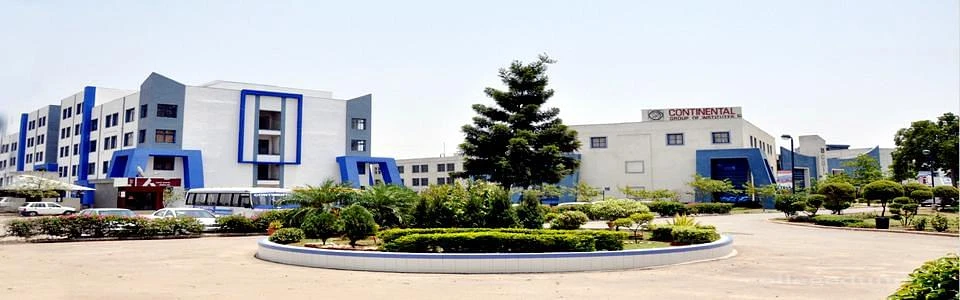
In this preview: 1 photo · 0 videos
CIET Fatehgarh Sahib is approved by the All India Council for Technical Education (AICTE), New Delhi, and is affiliated with I.K. Gujral Punjab Technical University (IKGPTU), Jalandhar. It also holds an ISO 9001:2000 certification. The institute does not currently have a NAAC grade.
For the 2025-2026 academic cycle, the total fee for the complete 4-year B.Tech program is approximately ₹3.66 Lakhs. For the 2-year MBA program, the total fee is approximately ₹1.89 Lakhs. These figures represent the total academic cost for the entire program duration as per the latest available fee structure.
According to official 2023 data, CIET reported an 85% placement rate. The highest package offered was ₹10 LPA, with an average package of ₹4.5 LPA. Major recruiters include IT and consulting firms such as Infosys, Wipro, TCS, Tech Mahindra, HCL, L&T, Capgemini, and Amazon, along with companies like ICICI Bank and Coatec India.
CIET provides separate hostel accommodations for male and female students. Each hostel has a capacity to house 400 students. The rooms are typically shared, configured with two beds per room. Common rooms with amenities for television and indoor sports are available for student recreation.
Admission to the B.Tech program requires a valid JEE Main score. For the M.Tech program, GATE scores are considered. For the MBA program, the institute accepts scores from national management entrance exams like CAT and MAT.
Share what future students should know about CIET.
Student voices are not rewritten by colleges. We remove spam and abuse.
Wider admission question? Community PulseWhat should future students know?
Tell us which course you're considering. We'll help you work out the next step.
Get instant Partner access after mobile verification. Your public edits are reviewed before they go live.
Claim this college
 Auditorium
 Cafeteria
 Computer Labs
 Gym
Gym Hostel
 Medical
 Science Labs
 Sports Complex
 Study Library