Loading Admission Guardian content
Loading Admission Guardian content
Find a program, read its fee details and explore the admission requirements.
Summary of the programs shown below. Fee amounts are not listed. Contact the college for its current fee schedule.
| Course | Stream | Fees |
|---|---|---|
| Computing Science Diploma | Computer Applications | |
| Foundation Course in Biotechnology | Engineering | |
| Advanced Diploma in Food and Beverage Management (Hotel and Restaurant Operations) | Management | |
| Advanced Diploma in Supply Chain Management | Management | |
| Diploma | Management |
Specializations
Specializations
Specializations
Specializations
 HCL Info System
 Maruti Suzuki
 NIIT
NIIT Reliance
 Zensar
If you're looking at a Canadian degree but the price tag makes you wince, the Continental Institute of International Studies (CIIS) in Fatehgarh Sahib has built its entire identity around that problem. It’s not your typical Punjab engineering college. Instead, CIIS operates as a launchpad, offering a structured, on-ramp to universities in Canada for a fraction of the direct first-year cost. That’s the core promise. And for a certain type of student—one with clear overseas ambitions and the budget to support a multi-year plan—it’s a compelling, if niche, proposition. You’ll spend your first year or two on a sprawling 60-acre campus off GT Road, following a North American-style trimester system, before (ideally) transferring to a partner institution like Thompson Rivers University or Seneca Polytechnic. The trade-off? You’re paying a premium for that pathway in a relatively isolated location, and the domestic placement scene takes a backseat. This isn't a college for everyone, but for its target audience, it serves a very specific purpose.
The academic structure here is fundamentally split. You have the high-profile International Pathway wing, and then the more conventional domestic programs run under the broader Continental Group of Institutes (CGI) umbrella on the same campus.
The pathway programs are the main event. These are designed so you complete the initial segment of a degree at CIIS and then transfer to a partner university abroad, primarily in Canada. The curriculum, faculty, and even the academic calendar are tailored for this. They follow a Trimester System—two 6-month blocks per year, each with mid-terms and finals—to align with North American schedules. It’s fast-paced. You have exams every 3 months, as students put it. Programs include a 2+2 Computing Science Diploma with Thompson Rivers University (TRU), Business Administration pathways to Seneca Polytechnic or University Canada West (UCW), and Advanced Diplomas in Hotel Operations or Supply Chain Management. Intakes for these are kept small, around 30-60 per specialization, which the college says is to maintain quality for visa processing.
For students looking to study and work in India, CIIS offers domestic B.Tech (CSE, ECE, Mechanical, Civil), BBA, BCA, B.Com, and MBA programs through its CGI campus. These are affiliated with MRSPTU and follow a more standard Indian university pattern. Faculty across the group totals around 100, with a notable number holding PhDs and several trained in Canada or the UK specifically to support the transition of pathway students. The college actively signs new collaborations, like a landmark MoU with Seneca Polytechnic in June 2025 for Business and Computer Programming pathways. You can verify these partnerships and the institute's standing on its official website.
You have to look at placements through two completely different lenses here, and that’s where a lot of confusion arises.
For International Pathway students, the endgame isn't an Indian campus placement. The assumed "placement" is the successful transfer to Canada, followed by access to that country's Post-Graduation Work Permit (PGWP) program. The college's focus for these students is on visa readiness and academic alignment, not on securing them jobs with Infosys in Pune. That’s a critical distinction. If the Canada plan falls through, these students are often left scrambling, as the institute’s placement cell is primarily geared toward the domestic batch.
For domestic students in B.Tech or MBA programs, the picture is more conventional but modest. The official claim is 100% placement assistance, which is fairly standard brochure language. The working number from student reviews on platforms like Shiksha and CollegeDunia suggests actual on-campus placement rates are closer to 70-80%. The average package cited in these reviews is 4.5 to 6 LPA. The highest package for the group is reported anecdotally to be around 12-15 LPA for top B.Tech or MBA grads, but that's an unverified figure. Recruiters are a mix of regional and national names: HCL, Maruti Suzuki, Wipro, Infosys, Hero MotoCorp, and Zensar Technologies are commonly listed. Sectors are split between IT/Software (around 40%), Manufacturing (30%), and Sales/Finance (20%).
The cost structure highlights the two-track model. The International Pathway programs command a significant premium for their specialized curriculum and visa support. Tuition for the first year in India ranges from ₹3,60,000 to ₹4,20,000 per annum. On top of that, add hostel and mess fees, which run from ₹75,000 for a quadruple-sharing room to over ₹1,10,000 for double/triple sharing. Throw in one-time charges like admission (₹10,000) and uniform (₹8,000), and your first-year all-in cost easily crosses ₹4.5 lakhs. That’s steep for a college in rural Punjab, but the argument is it saves you 60% or more compared to going directly to Canada for year one.
Domestic program fees are far more affordable. B.Tech or MBA tuition is between ₹80,000 and ₹1,10,000 per annum, plus the same hostel costs. The college offers merit-based scholarships up to ₹1.09 lakhs for students with 70%+ in their 12th grade, along with special quotas for SC/ST and minority categories. It’s worth crunching the numbers carefully, especially for the pathway, to understand the total financial commitment through to graduation in Canada.
The gateway differs based on your chosen path. For the International Pathway programs, there’s no national entrance exam like JEE. Selection is merit-based on your 10+2 marks, followed by a crucial Personal Interview (PI). This PI is less about technical knowledge and more about assessing your "visa readiness"—your clarity of purpose, communication skills, and financial preparedness for the overseas move. While you can start the program without an IELTS/PTE score, clearing it is a non-negotiable requirement before you can transfer to the Canadian partner university. CIIS provides in-house IELTS training to help with this.
For domestic B.Tech programs, admission typically requires a JEE Main score and participation in state-level counseling. For the MBA program, scores from CMAT or CAT are considered. The application window for the main September intake generally runs from May through August. Like many private institutes, CIIS has an NRI/Management quota, accounting for roughly 15% of seats.
Life at CIIS is defined by its location. The 60-acre campus is lush, green, and peaceful—a positive if you want to focus on studies. The flip side is rural isolation. You’re on a highway, about 35 km from Chandigarh and 25 km from Patiala. Social life is largely campus-bound. There’s no popping out to a multiplex. The college runs a fleet of buses covering a 50km radius for weekend trips.
Infrastructure is a mixed bag with some clear strengths. Labs for CSE and Mechanical are well-equipped to "international standard," and the campus uses a dedicated Blackboard web-based learning system. The library offers digital access and over 20,000 books. Wi-Fi is present but students report good speed in labs and average connectivity in hostel rooms.
Hostels are separate for boys and girls, with basic but functional rooms. AC rooms are available at a premium. The consensus on hostel life is straightforward: "Food is typical hostel fare—edible but repetitive." It’s vegetarian-heavy North Indian cuisine. Wardens are noted to be strict, with curfews as early as 7 PM for some batches. Sports facilities include large grounds for cricket and football and indoor spaces for table tennis and badminton. There’s an on-campus ATM and cafeteria.
Synthesizing feedback from review sites and forums, a clear consensus emerges. The overwhelming positive is the "Canada Shortcut." Students who successfully navigated the pathway are effusive, calling it a legitimate and cost-effective route. Quotes like, “It saved me 60% of the first-year cost compared to going directly to TRU,” are common. They also consistently praise the faculty as supportive, approachable, and knowledgeable about the Canadian curriculum.
The negatives are just as consistent. The high cost of the pathway program is a frequent gripe. The rural location leads to complaints about a lack of social life and entertainment. There’s also a tangible sense of placement ambiguity for international wing students, who feel the Indian placement cell isn’t for them. Administratively, reviews suggest the general staff can be slow, but the International Relations team—the ones handling visas—is sharp and efficient.
CIIS isn't a college you evaluate on standard Indian engineering college metrics. Its value is hyper-specific. If you are a student with a firm, well-researched goal of obtaining a Canadian degree and eventual work residency, and you want a structured, supported pathway to get there, CIIS makes logical sense. It can save you money upfront and demystify the transition. The faculty support and proven MoUs with institutions like Thompson Rivers University and Seneca Polytechnic add credibility.
However, if you're unsure about going abroad, or if your primary goal is to get a degree and secure a high-paying job in India's tech or core sectors, look elsewhere. The domestic programs are average, the location is isolated, and the placement outcomes are modest. The pathway program is a significant financial and emotional commitment with a single, clear destination in mind. For the right candidate with that focus, CIIS is a useful tool. For everyone else, it's probably an expensive detour.
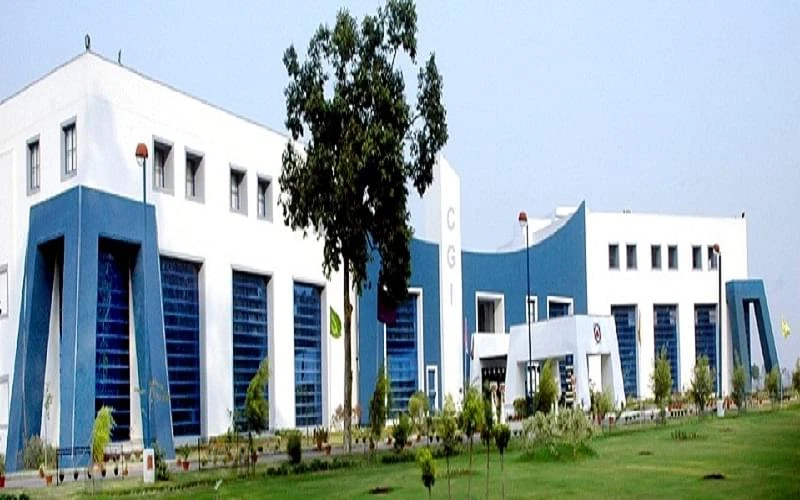
In this preview: 1 photo · 0 videos
Yes, the Continental Institute of International Studies (CIIS) in Fatehgarh Sahib is a 100% legitimate and recognized institution. It is approved by the All India Council for Technical Education (AICTE) and has verified long-term partnerships with public colleges in Canada.
The total cost for the 2+2 Canada program is structured in two phases. The first year in India costs approximately ₹4.5 Lakhs, which includes hostel fees. For the subsequent three years in Canada, the tuition fee is approximately CAD 22,000 per year.
You can begin your studies in the program at CIIS without an IELTS score. However, clearing the IELTS examination is a mandatory requirement before you can transfer to the partner university in Canada for the remainder of your degree.
Based on student feedback, the food in the CIIS hostel is rated around 3 out of 5. The menu is primarily vegetarian, following North Indian culinary standards with regular dishes like Dal, Paneer, and Roti.
Yes, the domestic degrees offered by CIIS, such as B.Tech and MBA, are affiliated with Maharaja Ranjit Singh Punjab Technical University (MRSPTU). These degrees are fully valid for all central and state government job examinations, including UPSC, SSC, and state PSC exams.
Share what future students should know about Continental Institute of International Studies.
Student voices are not rewritten by colleges. We remove spam and abuse.
Wider admission question? Community PulseWhat should future students know?
Tell us which course you're considering. We'll help you work out the next step.
Get instant Partner access after mobile verification. Your public edits are reviewed before they go live.
Claim this college
 Cafeteria
 Campus Shuttle
 Campus Wi-Fi
 Computer Labs
 Hostel
 Medical
 Science Labs
 Sports Complex
 Study Library