Loading Admission Guardian content
Loading Admission Guardian content
Provisional score based on available data. It may change as more information is verified.
Find a program, read its fee details and explore the admission requirements.
Summary of the programs shown below. Fee amounts are not listed. Contact the college for its current fee schedule.
| Course | Stream | Fees |
|---|---|---|
| Ph.D | Science |
Specializations
Eligibility: Post Graduation
 Bhushan Steel Ltd.
 Essar Steels
 Essel Mining & Industries Ltd. (EMIL) Aditya Birla
 Hindalco
 Jindal Iron & Steel Co. Ltd.
 Nalco
Nalco NTPC Limited
 Renault Nissan
 Sail
Sail Tata Steel
 Vedanta Resources
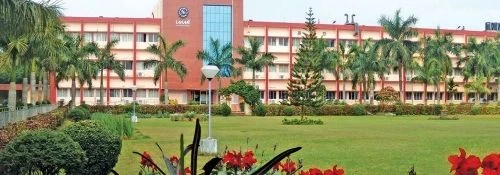
If you're looking for a traditional engineering college with a bustling campus life, you're in the wrong place. But if your ambition is to get your hands on multi-crore analytical equipment and publish research that solves real-world industrial problems, the CSIR-Institute of Minerals and Materials Technology (CSIR-IMMT) in Bhubaneswar is a singular destination. This isn't an undergraduate institute; it's a premier government research laboratory where the campus is a 100-acre working lab, the faculty are nationally recognized scientists, and the degree you earn comes from an Institution of National Importance. The vibe here is pure, unadulterated research. You don't come for fests. You come to work on projects for Coal India or Vedanta, to operate an HR-TEM, and to build a career in India's core industrial sectors. It's a specific, intense, and highly rewarding path for the right student.
Forget the standard curriculum. Academics here are driven by the research projects happening in the institute's dozens of labs. You're not just learning theory; you're applying it to industry-sponsored problems from day one. The programs are postgraduate and doctoral, funneled through AcSIR. The intake is small and selective—think 15-25 for a Ph.D. in Engineering per session—which means you get significant one-on-one time with your guide.
The flagship offerings are the Ph.D. programs in Engineering (Metallurgical, Chemical, Mineral, etc.) and Sciences. There's also a unique Integrated Dual Degree (M.Tech + Ph.D.) for exceptional B.Tech grads with high GATE scores, and a standalone M.Tech in Materials Resource Technology. A Post Graduate Diploma in Mineral Engineering rounds out the list. The faculty are the institute's biggest asset. Nearly 100% of the ~100+ scientific staff hold Ph.D.s from top institutions, and eight are ranked among the world's top 2% most influential scientists. They act as research guides, not just lecturers. The grading is a standard 10-point CGPA, but your real report card is your publication list and the patents you file.
Let's be clear: the placement process doesn't look like an IIT's. You won't see a parade of IT consulting firms. What you get is something more targeted and, for core sector enthusiasts, more valuable. Recruitment is heavily network and project-based. If you've worked on a project sponsored by Tata Steel, your path into their R&D wing is significantly smoother. The official placement percentage is vaguely termed "high absorption," but the student reality is that most find their roles through these channels or off-campus applications in their specialized field.
The reported highest package for 2024-25 was 12 LPA, though that's unverified. The working average for core sector roles (which constitute about 80% of outcomes) is between 4.5 and 6 LPA. The median likely sits around 5.5 LPA. That's a solid, if not spectacular, starting point for a research career in heavy industry. Top recruiters are the who's who of Indian core industry: Tata Steel, Vedanta, NALCO, SAIL, Hindalco, and JSW Steel. Government giants like NTPC, Coal India, BARC, and DRDO also recruit. About 15% of graduates move into academia or postdoctoral research. If your goal is a high-paying software job, this is the wrong institute. If you want to be a process engineer at a steel plant or a scientist at a national lab, the connections here are gold.
This is where a CSIR lab shines for students. The fees are a fraction of what you'd pay at a private university, making advanced research education incredibly accessible. For the 2025-27 period, regular candidates can expect tuition of about ₹13,000-₹14,000 per semester. Hostel rent is a mere ₹1,000-₹1,500 monthly, with a one-time refundable caution deposit of ₹4,000. Mess charges are extra, running ₹3,000-₹4,000 per month. All in, the total cost for a 5-year Ph.D., excluding food, is estimated at just ₹1.5 to ₹2 lakhs.
The real financial story, though, is the stipend. The vast majority of Ph.D. and many M.Tech students are funded. They hold national fellowships like the CSIR-UGC NET JRF/SRF or UGC-NET, which provide a monthly stipend of ₹37,000 to ₹42,000 plus a house rent allowance (HRA). That's not a loan; it's a salary to do your research. For those without a national fellowship, the institute sometimes offers its own institutional fellowships. You're essentially being paid to get your doctorate, which completely changes the affordability calculus.
Getting in is a multi-stage filter designed to find genuinely interested researchers. It starts with a hard academic gate. For a Ph.D. in Sciences, you must have a qualifying national fellowship like CSIR-UGC NET (JRF), DST-INSPIRE, or an equivalent. For a Ph.D. in Engineering or the M.Tech program, a valid GATE score is mandatory, typically alongside a relevant M.Tech degree (or a B.Tech with a very high score for the IDDP).
Meeting the score threshold just gets your application screened. The next critical step is the Statement of Purpose (SoP). You need to propose a coherent research idea that aligns with the expertise of scientists at IMMT. This isn't a formality. Finally, shortlisted candidates face a rigorous technical interview with a panel of scientists. They'll drill into your subject knowledge, your SoP, and your motivation. Applications open twice a year for the August and January sessions via the AcSIR portal. The fee is nominal: around ₹500 for General/OBC candidates and ₹250 for SC/ST/PWD.
The 100-acre campus is green, quiet, and professional. The Bose-Einstein International Residence (BEIR) hostel houses a small, close-knit community—just 28 boys and 28 girls. Reviews rate the hostel quality very high (4.5/5) for its modern, clean, double-bedded rooms. The mess food gets a more average 3.5/5, with a canteen available for variety. Don't expect a "campus life" in the collegiate sense. There's a football ground, volleyball court, and facilities for indoor games, but this isn't a place of major festivals or a vibrant club scene. The internet, powered by the National Knowledge Network backbone, is excellent. The in-house Health Centre has visiting doctors. The overall atmosphere is serene and intensely focused, which is either a pro or a con depending on what you're after.
Synthesizing feedback from platforms like Quora and Shiksha paints a consistent picture. The praise is effusive for the academic and research environment. "The research facilities are unmatched in India for mineral processing," is a common refrain. Students love the "green, peaceful campus" and the "high prestige of the CSIR brand." They appreciate that their guides are leading scientists who provide access to world-class equipment.
But the critiques are just as consistent. The social life is described as "almost non-existent" compared to larger universities. The management of administrative tasks—fellowship disbursements, contingency funds—can be slow and bureaucratic. The schedule is strict, with lab timings enforced; it can feel like a 9-to-5 research job. One paraphrased Quora review from 2024 sums it up perfectly: "If you want a fancy college life with fests and clubs, don't come here. But if you want to publish in high-impact journals and work with machines worth crores, this is the best place in Odisha."
CSIR-IMMT isn't for everyone, and that's its strength. It's a specialist institute for specialists. If you are a B.Tech or M.Sc. graduate passionate about metallurgy, mineral processing, advanced materials, or environmental engineering, and you see your future in industrial R&D or academia, this is a top-tier choice in India. The cost-to-value ratio is exceptional—low fees, a liveable stipend, and access to mentors and machines you won't find elsewhere. The placement network in core industries is powerful, even if the process isn't a formalized drive.
However, if you're unsure about a research career, crave a vibrant campus social scene, or are aiming for IT/consulting/finance roles, you will likely feel out of place and constrained here. The institute demands focus and self-motivation. For the right candidate—the one who gets excited about an XRD pattern or a smelting process—CSIR-IMMT offers a direct, prestigious, and funded pathway to becoming an expert in the foundational industries that build the nation. It's a definitive yes for them, and a clear no for everyone else.
In this preview: 5 photos · 0 videos
No, CSIR-IMMT is not a regular engineering college. It is a premier national research laboratory under the Council of Scientific & Industrial Research (CSIR). It does not offer undergraduate B.Tech degrees. Its academic programs, such as M.Tech and Ph.D., are conducted through the Academy of Scientific and Innovative Research (AcSIR).
Yes, most postgraduate research students at CSIR-IMMT receive a stipend. Typically enrolled as Junior or Senior Research Fellows (JRF/SRF), they receive a monthly stipend ranging from ₹37,000 to ₹42,000, in addition to a House Rent Allowance (HRA) as per government norms.
Placements for M.Tech students at CSIR-IMMT are strong, particularly in core industrial sectors. Major recruiters include leading companies in mining, metallurgy, and chemical engineering, such as Tata Steel and Vedanta, which are regular visitors for campus recruitment.
Admission to the Ph.D. program at CSIR-IMMT is based on a candidate's performance in national-level entrance exams like GATE or CSIR-UGC NET. Qualifying candidates must then appear for a mandatory technical interview conducted by the institute as the final step in the selection process.
IIT Bhubaneswar is a broad-based academic institution offering a full range of undergraduate (UG), postgraduate (PG), and doctoral programs across multiple engineering and science disciplines. In contrast, CSIR-IMMT is a specialized research laboratory focused exclusively on minerals and materials technology, with a heavy emphasis on industrial research and development (R&D).
Share what future students should know about CSIR-IMMT.
Student voices are not rewritten by colleges. We remove spam and abuse.
Wider admission question? Community PulseWhat should future students know?
Tell us which course you're considering. We'll help you work out the next step.
Get instant Partner access after mobile verification. Your public edits are reviewed before they go live.
Claim this college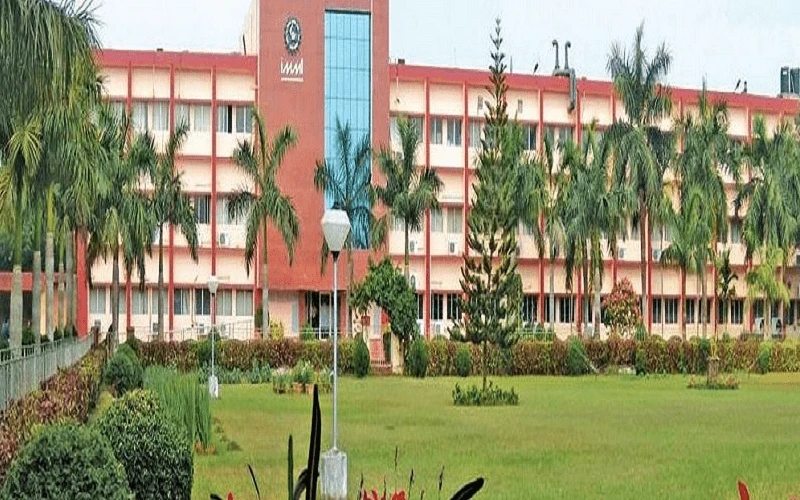
 Auditorium
 Cafeteria
 Computer Labs
 Medical
 Science Labs
 Sports Complex
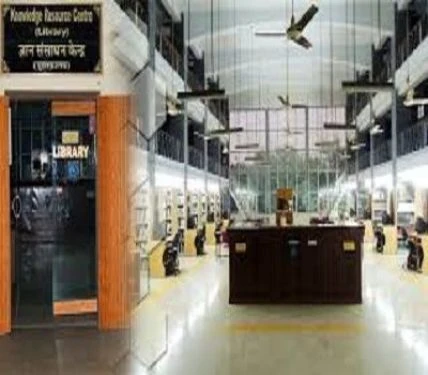
 Study Library