Loading Admission Guardian content
Loading Admission Guardian content

Provisional score based on available data. It may change as more information is verified.
Find a program, read its fee details and explore the admission requirements.
Summary of the programs shown below. Fee amounts are not listed. Contact the college for its current fee schedule.
| Course | Stream | Fees |
|---|---|---|
| Bachelor of Arts [BA] | Arts | |
| Bachelor of Commerce [B.Com] | Commerce | |
| Bachelor of Computer Applications [BCA] | Computer Applications | |
| Bachelor of Science [B.Sc] | Science | |
| Master of Science [M.Sc] | Science |
Specializations
Eligibility: 10+2
Specializations
Eligibility: 10+2
Specializations
Eligibility: 10+2
Specializations
Eligibility: 10+2
Specializations
Eligibility: Graduation
D.K.M. College for Women in Vellore is a study in contrasts. It’s a place where you can get a solid, accredited degree for a few thousand rupees a year, but you’ll trade away a lot of campus freedom for it. With a strong 'A' grade from NAAC and autonomous status, the academics are taken seriously. But talk to students, and you’ll hear just as much about the strict rules and the repetitive canteen food as you will about the lectures. For families in and around Vellore seeking a safe, disciplined, and affordable education for their daughters, it’s a compelling option. For those dreaming of a vibrant, liberal college life with high-flying corporate placements, the reality here might feel a bit constrained.
The academic structure here is defined by its two-shift system, which essentially creates two different college experiences under one roof. Shift I (Aided) offers the classic, subsidized arts and science programs—B.A., B.Sc., and B.Com—at a cost that’s almost symbolic. Shift II (Self-Financing) is where you find the contemporary, in-demand courses like B.Sc. Computer Science, Biotechnology, BCA, BBA, and B.Com with Computer Applications. The total intake across all UG programs is sizable, hovering around 1,400 students per year.
Academically, the autonomous status is a significant advantage. It means the college designs its own curriculum and conducts its own exams, allowing for more relevant and timely syllabi, especially in fast-moving fields like computer science. The 10-point CGPA grading system is rigorous. Faculty quality is a noted strength, with over 40% holding PhDs and many being NET/SLET qualified. The atmosphere is described as supportive, even "motherly," but undeniably strict. Industry collaboration, as noted in the college's own Self Study Report, is an area still developing. There are MoUs with local hospitals for Nutrition and Microbiology internships and some IT firm tie-ups for projects, but don’t expect a deep, integrated corporate pipeline.
This is where you need to separate the brochure claims from the ground-level data. The college will highlight visiting companies like TCS, Wipro, Cognizant, and Accenture. And they do visit. But the roles are typically entry-level IT support, data processing, or medical coding positions. The official NIRF 2024 data tells a more standardized story: a median package of ₹1.65 Lakhs Per Annum for UG graduates and ₹1.80 LPA for PG graduates. The highest package cited for 2023-24 was ₹4 LPA, but that’s an outlier.
The more telling figure is the placement percentage. While the college might claim 60-90% for specific batches (like BCA or B.Sc. CS), the broader NIRF metrics and student reviews suggest a realistic placement rate for the overall graduating strength is closer to 30-40%. A significant portion of students, particularly from the pure sciences and arts streams, opt for higher studies (M.Sc., M.Phil.) or government exam preparation. The placement cell is active, but the outcomes are modest. It’s a decent launchpad for a first job in the local IT/BPO sector, but not a gateway to high-salaried corporate careers.
The fee structure is arguably the college's biggest draw, especially for families with budget constraints. The dichotomy is stark:
Hostel fees are an additional ₹40,000 to ₹55,000 per year, including mess charges. The college facilitates several scholarship schemes, including full tuition waivers for eligible SC/ST/ADC/DNC students via government scholarships, merit-based waivers for top 12th-grade scorers, and minority scholarships. This robust financial aid system makes quality higher education accessible to a wide economic spectrum in the region.
Admission is straightforward and strictly merit-based. There are no entrance exams. Your ticket in is your Class 12 marksheet.
The process is conducted online via the college website. After application submission (with a nominal fee of ₹100-250), the college publishes merit lists based on 12th-grade percentage. This is followed by counseling and document verification. Cutoffs fluctuate each year based on applications, but for the popular self-financing courses like B.Com and B.Sc. Computer Science, you’ll typically need 80% or above in your relevant subjects. For aided courses and less competitive streams, the cutoff can drop significantly, sometimes to the 65-70% range. It’s a transparent, if highly competitive, system.
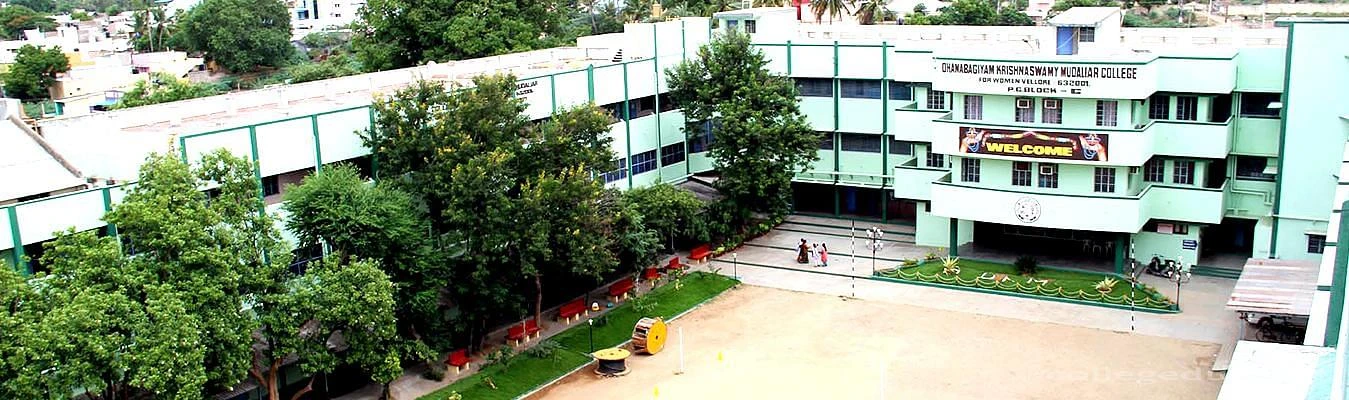
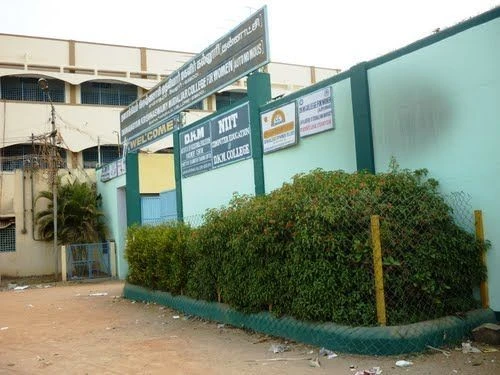
The 9-acre campus is secure, clean, and functional, but don’t expect sprawling, modern architecture. Infrastructure is a mixed bag. The library is well-stocked with over 35,000 books and e-resources. Science departments boast a FIST-funded lab with advanced equipment like UV-Vis Spectrophotometers, primarily for PG and research work. However, student reviews consistently point out that some older blocks need renovation. Wi-Fi access is restricted to specific zones like the library and labs, not campus-wide.
The on-campus women’s hostel, with a capacity for 300-400 students, is rated around 3.5/5 for safety and basic amenities, but the food is often described as just "average" or "hygienic." The canteen is a frequent point of contention, with students joking that "Sambar sadam is the national dish of DKM" due to its limited and repetitive menu. Life here is disciplined. There’s a strict dress code (uniforms or sarees), mobile phone usage is heavily regulated during classes, and a 75% attendance rule is rigidly enforced. It’s a environment that many parents love and many students find overly restrictive.
Synthesizing feedback from platforms like CollegeDunia and Shiksha gives you a clear, consistent picture.
The praise is resounding for safety, faculty support, and affordability. Students and parents alike call it a "secure haven." The teaching staff is repeatedly described as qualified, approachable, and genuinely invested in student success. The cost-to-education value, particularly for the aided shift, is considered exceptional.
The criticisms are equally consistent. The "school-like" atmosphere tops the list. Rules governing attire, phone use, and general conduct are strict. The infrastructure and food quality are regular pain points. Most critically, while placements are acknowledged, there’s a clear understanding that the packages are low and opportunities are limited to mass recruiters. As one review succinctly put it: "The college is like a second school. If you want freedom, don't come here. If you want a degree with safety, it's the best."
It depends entirely on what you’re looking for. D.K.M. College is an excellent, even outstanding, choice for a specific student: a young woman from Vellore or surrounding districts seeking a reputable, safe, and incredibly affordable undergraduate degree. If your goals are to build a strong academic foundation, potentially pursue higher studies, or secure a stable entry-level job in the local IT/BPO sector without financial burden, this college delivers tremendous value. The NAAC 'A' grade and autonomy add real academic weight to your degree.
However, you should probably look elsewhere if you prioritize a liberal campus life with lots of extracurricular freedom, state-of-the-art infrastructure, or a direct pathway to high-paying corporate jobs. The trade-off for the low fees and safety is a highly regulated environment and modest placement outcomes. For its core audience—budget-conscious families in Tamil Nadu wanting a quality, secure education for their daughters—D.K.M. College for Women remains a deeply respected and pragmatic option. You can verify its official standing through the NAAC portal and its latest NIRF ranking details.

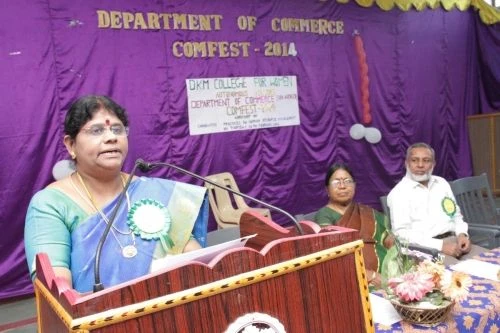
In this preview: 5 photos · 0 videos
Placement opportunities at D.K.M College for Women are considered decent for specific fields like IT and Medical Coding. However, the average salary packages offered are generally in the range of 1.5 to 2.5 LPA.
The primary difference lies in funding and schedule. Shift I is a Government-Aided program with very low fees and morning class timings. Shift II is a Self-Financing program with higher fees and classes held in the afternoon.
Yes, D.K.M College for Women maintains a strict uniform policy. Students in most departments are required to adhere to the official college dress code.
Admission with 70% is possible for certain courses like B.A. or B.Sc. in Zoology/Botany. However, more competitive programs such as B.Com or B.Sc. Computer Science typically require higher marks for admission.
The use of mobile phones is strictly restricted during class hours. Students are often required to keep their phones in their bags or designated lockers while on campus.
Share what future students should know about DKM.
Student voices are not rewritten by colleges. We remove spam and abuse.
Wider admission question? Community PulseWhat should future students know?
Tell us which course you're considering. We'll help you work out the next step.
Get instant Partner access after mobile verification. Your public edits are reviewed before they go live.
Claim this college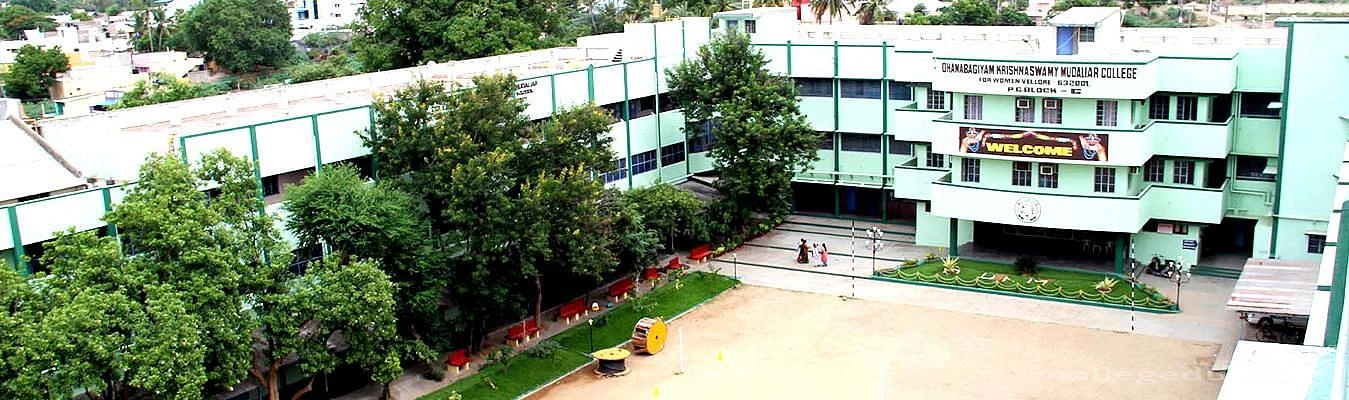
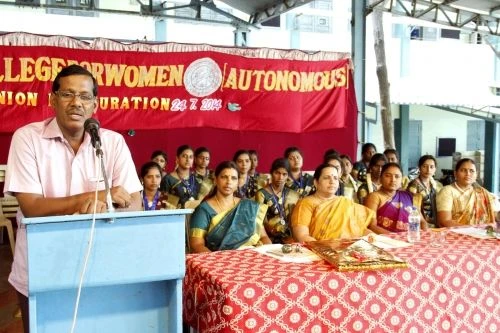
 Auditorium
 Cafeteria
 Computer Labs
 Hostel
 Medical
 Science Labs
 Sports Complex
 Study Library