Loading Admission Guardian content
Loading Admission Guardian content
Provisional score based on available data. It may change as more information is verified.
Find a program, read its fee details and explore the admission requirements.
Summary of the programs shown below. Fee amounts are not listed. Contact the college for its current fee schedule.
| Course | Stream | Fees |
|---|---|---|
| Auxiliary Nursing Midwifery [ANM] (Nursing) | Paramedical | |
| Bachelor of Science [B.Sc] (Nursing) | Paramedical | |
| General Nursing and Midwifery [GNM] | Paramedical | |
| Master of Science [M.Sc] | Paramedical | |
| P.B.Bachelor of Science [B.Sc] (Nursing) | Paramedical |
Specializations
Specializations
Eligibility: 10+2
Specializations
Eligibility: Graduation
Specializations
Eligibility: 10+2
Dasmesh College of Nursing in Faridkot isn't trying to be a typical college. It's a training ground. Established in 2009 and affiliated with the well-regarded Baba Farid University of Health Sciences (BFUHS), its primary identity is that of a disciplined, clinically-focused institution. The biggest draw is its direct attachment to a working, 100-bed multispecialty hospital. That means students aren't just learning theory; they're applying it to real patients from an early stage. It's a model that prioritizes professional readiness over campus social life, a trade-off that defines the experience here. If you're looking for a place where you can build a solid foundation for a nursing career in India or abroad, this is a serious contender. But you should know exactly what you're signing up for.
The college offers a standard ladder of nursing qualifications, from diplomas to post-graduation. The B.Sc. Nursing program is the main undergraduate draw, with an intake of 40 to 60 students. For those already in the field, there's a 2-year Post Basic B.Sc. Nursing course. At the diploma level, you have the 3-year GNM and 2-year ANM programs. The postgraduate M.Sc. Nursing is offered in five specializations—Medical-Surgical, Pediatric, Obstetrics & Gynecological, Community Health, and Psychiatric Nursing—with a very limited intake of just 5 seats per specialty.
Academically, it's a structured, no-frills environment. The college follows the BFUHS semester system, with grading split between internal assessments (25%) and final university exams (75%). Faculty, led by Principal Prof. Bhupinder Kaur, is frequently cited in reviews as a strong point: approachable and supportive, especially for exam preparation. But the real academic engine here is clinical practice. Beyond the on-site Dasmesh General Hospital, the college has a tie-up with the massive Guru Gobind Singh Medical College & Hospital for advanced rotations. That's a significant advantage, providing exposure to a high volume and variety of cases.
Placement in nursing operates differently than in engineering or business. It's less about a single "placement day" and more about channeling graduates into the healthcare system. The college reports a near 90-100% placement rate for eligible graduates, which is plausible given the chronic demand for qualified nurses. Top recruiters are a mix of in-house and external hospitals: Dasmesh General Hospital, GGS Medical College & Hospital, Fortis, Max, and Apollo.
Salary reality is where expectations need grounding. For fresh B.Sc. Nursing graduates entering the private sector in Punjab, the starting range is typically ₹15,000 to ₹25,000 per month. Government jobs, secured through state exams, offer better long-term stability with a starting pay around ₹44,900 as per the 7th Pay Commission, plus allowances. The college's notable value-add is its focus on international pathways. They provide guidance for exams like the NCLEX-RN (for USA/Canada) and language tests like IELTS/OET (for UK, Australia). This support is a key differentiator for students with global ambitions.
Fees are regulated by the Punjab Government and BFUHS, which provides some consistency. For the 2024-2024 session, the annual tuition fee for B.Sc. Nursing is around ₹65,000. M.Sc. Nursing is higher, at about ₹1,00,000 per year. On top of that, add a one-time registration fee of ₹10,000 and a refundable caution deposit of ₹10,000.
The hostel is a major cost component. A double-sharing non-AC room costs approximately ₹95,000 annually, while an AC single room runs about ₹1,40,000. When you factor in mess charges, the total annual cost for a B.Sc. student living on campus easily reaches ₹1.6 to ₹1.8 lakhs. Over four years, you're looking at an investment of ₹6.5 to ₹7.5 lakhs. Financial aid primarily comes through government schemes like the Post Matric Scholarship for SC/BC students from Punjab. The management occasionally offers merit-based incentives, but these aren't guaranteed.
Admission is centralized through the affiliating university. For the flagship B.Sc. Nursing program, you must take and qualify in the PPMET (Punjab Para Medical Entrance Test), conducted by BFUHS. NEET is not required. The cutoff for the general category in PPMET 2024 was the 50th percentile; for reserved categories (SC/ST/OBC), it was the 40th percentile. That's a decently accessible threshold.
The entire selection process is done through the BFUHS centralized counseling. You apply directly to the university, typically between May and June, rank high enough in the PPMET, and then choose Dasmesh College of Nursing during the counseling rounds based on your rank and seat availability. For M.Sc. Nursing, admission is usually merit-based or through a separate university-level entrance test.
This is where the college's identity becomes crystal clear. The infrastructure is functional and geared towards professional training. You have well-equipped labs for foundations, nutrition, and anatomy. The library spans 2,500 sq. ft. with over 3,200 books. The Dr. Puran Singh Auditorium hosts necessary workshops and the occasional event. The on-campus canteen, "De Cozy Corner," is a noted social spot.
Hostels are separate for boys and girls, with 24-hour power backup and security. But student reviews consistently highlight the strict regime. Attendance mandates are high—80% for theory and 100% for practicals. Hostel timings are enforced. The food, while hygienic, is often described as repetitive. Social life is minimal; cultural fests are pretty much limited to Freshers and Farewell. As one student put it, "Not a place for parties." The campus life is best described as austere and purpose-driven.
Sifting through reviews on CollegeDunia, Shiksha, and Quora reveals a strong, consistent consensus. This college has a very specific reputation.
The praise is overwhelmingly focused on professional preparation. Students rave about the clinical exposure. Getting to work in the attached hospital and the large GGS Medical College from the early years is considered the program's biggest strength. Faculty are repeatedly called "supportive" and "mentoring," especially for competitive and international exams. The infrastructure for learning—labs, library—gets good marks.
But the negatives are just as consistent. The strict discipline is the most common gripe. High attendance demands, strict hostel curfews, and enforcement of uniform policies can feel oppressive to some. The social and cultural scene is acknowledged to be virtually non-existent. Hostel food quality is a frequent, if minor, complaint.
The median verdict from alumni is perfectly captured by this paraphrase: "If you want to study and become a good nurse, come here. If you want a 'movie-style' college life, look elsewhere." Another noted, "The management is strict about uniforms and discipline, but it helps in the long run during hospital postings." The reviews suggest the college delivers exactly what it promises: rigorous training, not an expansive college experience.
Dasmesh College of Nursing is a straightforward proposition. Its value is highly dependent on your career goals and personality. It's absolutely worth it for the student who is singularly focused on becoming a competent, job-ready nurse. The direct hospital attachment and tie-up with a major medical college provide clinical experience that many theoretical programs lack. The guidance for international exams (NCLEX, IELTS) is a significant bonus for those looking abroad. The affiliation with BFUHS adds credibility, and the fee, while not cheap, is in line with other private nursing institutions in the region.
However, you should probably look elsewhere if you prioritize a balanced, vibrant campus life with lots of extracurricular activities and social freedom. The environment here is disciplined and academically intense, which some will find restrictive. It's a trade-off. For the right student—one who views college as a professional apprenticeship—Dasmesh offers a direct, no-nonsense path into the nursing profession with a solid foundation for both domestic and international careers. Just go in with your eyes open.
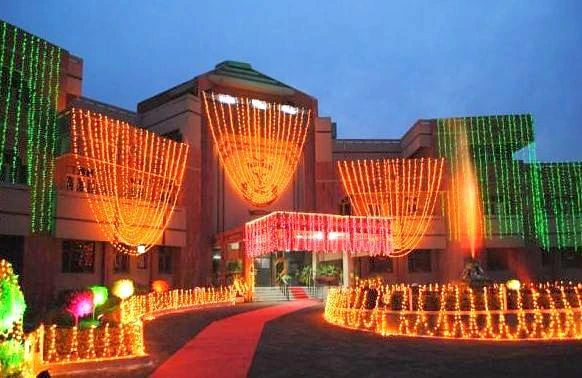
In this preview: 1 photo · 0 videos
Yes, Dasmesh College of Nursing is affiliated with the government-run Baba Farid University of Health Sciences (BFUHS) in Faridkot.
No, admission to the B.Sc. Nursing program at Dasmesh College is not based on NEET. Instead, it requires qualifying the PPMET entrance exam conducted by Baba Farid University of Health Sciences (BFUHS).
The total annual cost for the B.Sc. Nursing program, including tuition, hostel, and other charges, is approximately ₹1.6 to ₹1.8 Lakhs. The tuition fee alone is around ₹65,000 per year.
Yes, Dasmesh College of Nursing provides separate hostel facilities for both boys and girls on campus.
The clinical practice is excellent, as students gain hands-on experience at the 100-bedded Dasmesh Hospital and the 500-bedded GGS Medical College, which provides exposure to a wide range of patient cases.
Share what future students should know about Dasmesh College of Nursing.
Student voices are not rewritten by colleges. We remove spam and abuse.
Wider admission question? Community PulseWhat should future students know?
Tell us which course you're considering. We'll help you work out the next step.
Get instant Partner access after mobile verification. Your public edits are reviewed before they go live.
Claim this college
 Auditorium
 Cafeteria
 Computer Labs
 Gym
Gym Hostel
 Medical
 Science Labs
 Sports Complex
 Study Library