Loading Admission Guardian content
Loading Admission Guardian content
Provisional score based on available data. It may change as more information is verified.
Find a program, read its fee details and explore the admission requirements.
Summary of the programs shown below. Total course fee. Check the note beside each amount for inclusions and exclusions.
| Course | Stream | Fees |
|---|---|---|
| Bachelor of Ayurvedic Medicine and Surgery | Medical | 810000 |
| Doctorate of Medicine [MD] | Medical |
Eligibility: 10+2
Specializations
Dayanand Ayurvedic College in Jalandhar isn't just another medical school. It's a piece of living history, founded in 1898, that has survived partition and relocation to become a cornerstone of Ayurvedic education in North India. Managed by the DAV College Managing Committee, its reputation isn't built on glossy infrastructure but on a deep, clinical immersion that turns students into practitioners. If you want to learn Ayurveda by actually treating patients in a busy hospital from your first year, this is the place. But if you're looking for a sprawling, modern campus with a vibrant social scene, you'll be disappointed. The college recently secured a Grade 'B' from the National Commission for Indian System of Medicine (NCISM), a decent rating that reflects its established academic rigor alongside its aging physical plant.
The focus here is singular: producing competent Ayurvedic physicians. The curriculum, mandated by the NCISM, blends traditional Sanskrit shlokas with modern medical science. You'll dissect cadavers in Rachana Sharir (Anatomy) and diagnose live patients in the Kayachikitsa OPD. It's an old-school, disciplined approach.
The undergraduate BAMS program has an intake of 60 students. The 5.5-year journey (4.5 years academic + 1-year internship) is intense. Attendance rules are famously strict—you can't bunk classes easily. That discipline comes from a faculty of around 40, many holding MD/MS or PhDs. The college's academic heft is underscored by its former principal, Dr. Sanjeev Sood, who is now the Vice Chancellor of the affiliating Guru Ravidas Ayurved University.
For postgraduates, there are 10 MD (Ayurveda) seats across two specializations: Panchakarma (5 seats) and Dravyaguna Vigyan (5 seats). Admission is through the AIAPGET exam. The college also runs short-term certificate courses in Therapeutic Yoga and Panchkarma, and has historically attracted international doctors for clinical training, particularly from Europe.
The unique academic asset is the on-site DAV Pharmacy. Established in 1898, it's a functioning unit that produces over 250 classical Ayurvedic formulations. It's not just a museum piece; it provides students with rare, hands-on insight into drug manufacturing and quality control.
Forget corporate-style "placements" and "packages." Career outcomes here are defined by clinical pathways. The college's primary job is to make you eligible for the CCIM (now NCISM) registration, which allows you to practice. After that, it's up to you.
A significant majority of graduates—students and alumni estimate 60-70%—go into private clinical practice. They set up their own clinics, often after assisting an established practitioner. Others find roles in the corporate wellness sector. Major Ayurvedic chains like Patanjali, Dabur, and Baidyanath are common recruiters, along with private multi-specialty hospitals that have Ayurveda departments.
The government route is also open. Graduates are eligible to apply for Ayurvedic Medical Officer (AMO) positions in Punjab state and central government health services. These are secured through separate public service commission exams, not campus recruitment.
The mandatory one-year rotating internship is completed by 100% of BAMS students. The stipend situation is murky. While the college doesn't officially state it pays a stipend, student reviews indicate that during rotations at Government Civil Hospitals, students may receive a stipend as per state norms. Within the college's own hospital setup, a stipend is unlikely.
The cost structure has a notable twist: reasonable tuition but surprisingly high hostel costs for some options.
The BAMS tuition fee is around ₹1,80,000 per annum, regulated by the Punjab Government Fee Regulatory Committee. Over 5.5 years, the total tuition cost is approximately ₹8.1 lakhs.
Hostel fees are where it gets interesting. The standard non-AC hostel accommodation is affordable, ranging from ₹10,000 to ₹15,000 per year. However, the premium AC hostel rooms have been reported by 2024 students to cost up to ₹1,15,000 annually—a figure that raises eyebrows. Mess charges are extra, typically adding ₹3,000-₹4,000 per month. Remember to budget for additional university registration and exam fees.
Financial aid is limited. There's a DAV Merit Scholarship of about ₹6,000 per year for top performers. SC/ST/OBC students can apply for post-matric scholarships as per Punjab government schemes, but widespread need-based aid isn't a prominent feature.
Your ticket in is NEET-UG. No exceptions. For the BAMS program, all admissions—including any management quota seats—require a valid NEET score. The process is centralized and online, run by the Guru Ravidas Ayurved University (GRAU).
Cutoffs vary. For the General Category under the 85% Punjab state quota, you typically need a score in the 350-450+ range to feel secure. It can fluctuate with counseling rounds. For SC/BC categories, the cutoff is much lower, often hovering near the NEET qualifying percentile.
The seat matrix follows the standard 85% State Quota (for Punjab domicile holders) and 15% All India Quota. The application window usually opens after NEET results are declared, around August to October.
For the MD/MS (Ayurveda) programs, you must appear for the All India Ayush Post Graduate Entrance Test (AIAPGET) and participate in the subsequent counseling.
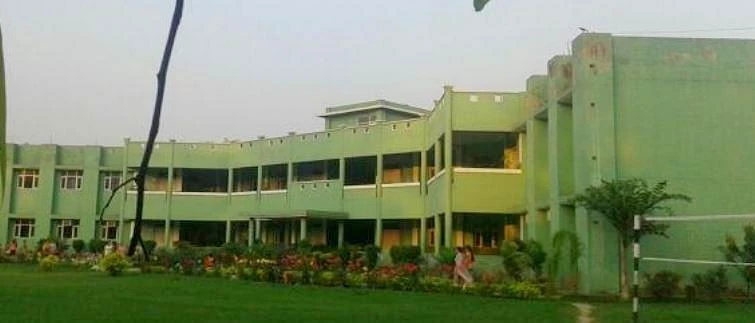
Let's be direct: the infrastructure is the college's weakest link. The 5-acre campus is described by students as "small" and the buildings as "old." Development feels slow. This isn't a lush, residential university campus.
The hostels are functional. The girls' hostel has a much larger capacity (140 seats) compared to the boys' (42 seats). Reviews rate them a 3 out of 5—clean and safe, but basic. The food in the mess is considered average, "okay" at best. The high cost of AC hostel rooms is a frequent point of contention in student discussions.
Where the college shines is its hospital and clinical facilities. With an official bed capacity of 63 (some sources say up to 150), and located on the busy GT Road, the hospital sees a high patient inflow. This translates to exceptional clinical exposure from the early years. Specialized OPDs for Diabetes, Arthritis, and Epilepsy provide focused learning. The herbal garden with 300+ medicinal species and the well-stocked library with over 12,000 books are significant academic assets.
Social life is limited. It's a demanding medical course with strict attendance, so there's little time or institutional push for large-scale fests. The vibe is academic and disciplined.
The consensus from platforms like CollegeDunia, Shiksha, and Quora is clear and consistent.
The Good: The teaching quality is highly praised. Faculty are "well-qualified," "dedicated," and the "old school" teaching method is seen as effective for a subject like Ayurveda. The clinical exposure is unanimously rated as excellent. As one review put it, "If you want to actually learn Ayurveda and see patients, this is the best private college in Punjab." The management, while strict, is generally viewed as fair.
The Not-So-Good: The aging infrastructure is the biggest gripe. "Don't expect a fancy campus" is a common refrain. Administrative processes can be slow, and grievance redressal isn't always swift. The cost of premium hostel accommodation is frequently cited as unreasonable. The social scene is quiet.
It's a trade-off students knowingly make: world-class clinical training in a no-frills, disciplined environment.
Dayanand Ayurvedic College is a specialist's choice. It's absolutely worth it for the student dead-set on becoming a skilled Ayurvedic clinician, who values patient-facing experience over campus aesthetics, and who can handle a disciplined, traditional academic environment. Its history, clinical load, and the reputation of its faculty make it the top private Ayurvedic college in Punjab for a reason. The Grade 'B' NCISM rating is a fair official snapshot—strong on education, weaker on infrastructure.
You should probably look elsewhere if your priority is a modern, expansive campus with a vibrant hostel life and lots of extracurriculars. The high fee for AC hostels also makes the overall cost-benefit analysis tricky for those seeking premium accommodation. Ultimately, DAC Jalandhar is a institution that produces practitioners, not pampered students. If that's your goal, it delivers effectively.
In this preview: 1 photo · 0 videos
Dayanand Ayurvedic College (DAC) Jalandhar is a private, un-aided institution. It is managed by the DAV College Managing Committee.
For the BAMS program, a NEET score above 400 is generally considered safe for General category students under the state quota. The required cutoff can fluctuate and may drop in later admission rounds.
Based on available reviews, the college itself typically does not pay a stipend during the internship. However, students may receive a stipend when they complete rotations at affiliated government hospitals.
The girls' hostel has a capacity for 140 students and is reported to be safe with basic amenities. Some students, however, consider the associated fees to be on the higher side.
Government Ayurvedic College Patiala is often preferred for its lower fees and government status. Dayanand Ayurvedic College Jalandhar is widely regarded as the top private alternative, noted for its strong clinical reputation.
Share what future students should know about Dayanand Ayurvedic College.
Student voices are not rewritten by colleges. We remove spam and abuse.
Wider admission question? Community PulseWhat should future students know?
Tell us which course you're considering. We'll help you work out the next step.
Get instant Partner access after mobile verification. Your public edits are reviewed before they go live.
Claim this college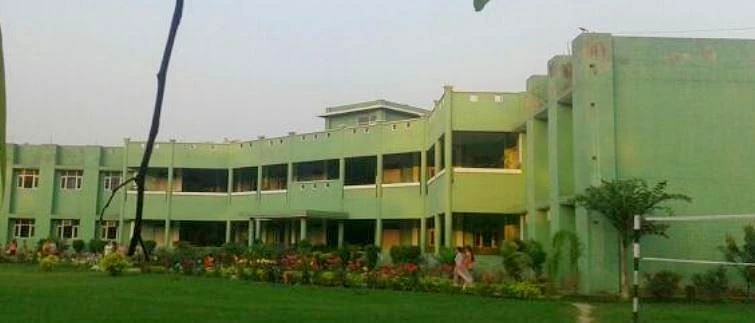
 Auditorium
 Cafeteria
 Campus Shuttle
 Computer Labs
 Hostel
 Medical
 Science Labs
 Sports Complex
 Study Library