Loading Admission Guardian content
Loading Admission Guardian content
Selected ranking categories, with the recorded year beside each result. Open all records for the complete history.
20 published records · Lower numeric ranks are stronger
NIRF
Medical
#242019
IIRF
Medical
#382022
Indiatoday
Medical
#262020
Outlook
Medical · private
#102021
The Week
Medical
#192019
The Week
Medical · private
#52022
Find a program, read its fee details and explore the admission requirements.
Summary of the programs shown below. Fee periods can differ by program. Check the note beside each amount before comparing costs.
| Course | Stream | Fees |
|---|---|---|
| Bachelor of Science [B.Sc] | Paramedical | 78750 |
| Master of Science [M.Sc] (Nursing) | Paramedical | 218400 |
| M.B.B.S. | Medical | 406000 |
| DM | Medical | 1611800 |
| Master of Chirurgiae [M.Ch] | Medical | 1611800 |
Specializations
Eligibility: 10+2
Specializations
Eligibility: Graduation
All accepted exams
Eligibility: 10+2 with 50% + NEET
Specializations
All accepted exams
Eligibility: Post Graduation
Specializations
All accepted exams
Eligibility: Post Graduation
2 exams with cutoff data available - showing recent entries
Dayanand Medical College and Hospital (DMCH) in Ludhiana isn't just another private medical college. It's a massive, 1,600-bed tertiary care hospital that functions as a city within a city, and that's its defining feature. For a student, that translates to a level of clinical exposure that's hard to match in most private setups. You'll see the volume and variety of cases here that are typically the domain of large government institutions. That's the core trade-off: you're paying private college fees, but you're getting a public hospital's patient load. It's a grind, and students say the administration runs it with a firm hand, but the consensus is clear—if you want to be a clinician, DMCH prepares you. It's consistently ranked among the top 40 medical colleges in India by NIRF, holding the 36th position in the 2024 rankings NIRF Rankings.
DMCH offers the full spectrum of medical education, from undergraduate to super-specialty levels, all under the academic umbrella of BFUHS. The MBBS program is the cornerstone, with an intake of 100 seats (and a potential increase to 150). The 4.5-year course, plus a mandatory internship, is known for its rigor. The postgraduate offerings are extensive, with about 100 MD/MS seats across 19+ specialties like General Medicine, Pediatrics, Radio-diagnosis, and Surgery. For further specialization, the college offers DM and MCh programs in high-demand fields like Cardiology, Neurology, Gastroenterology, and Neurosurgery.
The faculty, around 190 strong, is led by practicing clinicians like Principal Dr. G.S. Wander, a noted cardiologist. The academic culture isn't relaxed. Attendance is strictly enforced (75-80% is the norm), and internal assessments are taken seriously. But students on review platforms often credit this discipline for building a strong foundation for competitive exams. The college has also actively sought research collaborations, signing MoUs with IIT Ropar for healthcare tech and Punjab Agricultural University for nutrition research, which is a positive step beyond pure clinical training.
In a medical college, 'placement' means something different. It's about the internship, securing a junior residency (JR) post, and the college's reputation for PG selections. DMCH scores highly on the first two. Internship stipends for MBBS graduates follow BFUHS rates, generally reported between ₹7,000-15,000 per month. More importantly, a significant number of graduates are absorbed as Junior Residents within the DMCH hospital itself, providing a seamless transition to paid clinical work.
The real financial payoff comes after postgraduation. According to the official NIRF 2024 report, the median package for PG (3-year) graduates is a solid ₹30 LPA. For the 5-year MBBS program, the median is listed at ₹4.32 LPA, which aligns with typical pre-PG earnings. The college claims a 100% internship placement rate, which is standard. Where DMCH particularly shines is in its alumni network for USMLE aspirants. A notable pipeline of graduates heads to the USA for residencies, and the college's environment is often cited as supportive for that path. For domestic careers, DMCH graduates regularly find roles in top hospital chains like Fortis, Apollo, Medanta, and Max Healthcare.
The fee structure at DMCH is a tale of two quotas, dictated by Punjab government regulations. It's the single biggest factor for most families.
For the MBBS program, 50% of seats are under the Government Quota, with an annual tuition of approximately ₹4,26,000. The remaining 35% are Management Quota seats, costing about ₹10,94,000 per year. The 15% NRI Quota involves a one-time course fee of around $110,000. Over the 4.5-year course, the total cost for a Government Quota student (including hostel and mess) can reach ₹22-25 lakhs. For Management Quota, it balloons to ₹55-60 lakhs.
Hostel fees add another layer, ranging from ₹15,000 per year for a basic shared room to ₹70,000 for an AC single. Mess charges are extra, typically ₹3,000-5,000 monthly. There's no mention of extensive merit-based scholarship programs from the college itself in the available data. Financial aid, if any, would likely be through state or national schemes. The bottom line: the Government Quota offers relative value, but the Management Quota is a major financial commitment.
Admission to every program is entrance-exam driven and centralized through BFUHS counseling.
The selection process is transparent but rigid. You must register for the relevant NEET exam, then participate in the centralized counseling conducted by BFUHS, where you'll lock in your seat based on your rank and availability. A crucial detail for out-of-state students: the cheaper Government Quota seats are primarily reserved for Punjab domicile holders. Students from other states usually compete for the Management or NRI Quota seats.
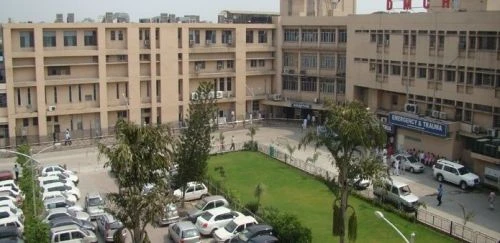
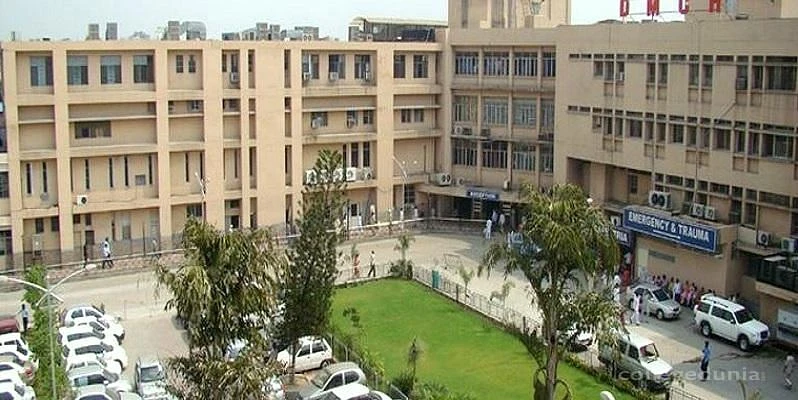
This is an urban, high-functioning medical complex, not a sprawling, leafy university campus. The infrastructure is heavily tilted towards the hospital and academics, which is the point.
The 1,326 to 1,625-bed hospital is the heart of it all. It includes specialized centers like the Hero DMC Heart Institute and the DMCH Cancer Care Centre. For training, there's a modern Simulation Centre for clinical skills. The central library is well-stocked with over 15,000 books and 24/7 reading room access, plus key online resources like UpToDate and ClinicalKey.
Hostels are separate for genders and are described as secure but strict, especially for women, with enforced curfews. Reviews on sites like CollegeDunia mention wardens being "nosy." The food, however, gets a passing to good grade. The campus has Wi-Fi, but students call it average in hostels. Sports facilities include a gym, basketball court, and indoor games, but don't expect large playing fields—the urban location doesn't allow for it. The college and hospital are on the same campus but in separate blocks, so your day involves walking between buildings.
Sifting through forums like Reddit, Quora, and reviews on Shiksha and CollegeDunia paints a consistent picture.
The praise is almost unanimous for clinical exposure. "The patient load is massive. You see cases here that you won't see in most private colleges in India," is a common refrain. The preparation for USMLE and the success rate of alumni going to the USA is a huge positive. Academically, students appreciate the dedicated, if strict, faculty who don't give away marks easily.
But the negatives are just as consistent. The strictness is a major theme. "It feels like a school sometimes," with high attendance mandates and tight hostel rules. Some reviews point to occasional rude behavior from non-teaching hospital staff. The cost of the Management Quota is a frequent grievance. And if you're looking for a vibrant, relaxed campus life with lots of space, DMCH isn't it. The environment is professional and demanding.
One telling Reddit quote sums up the trade-off: "If you want to do USMLE, come to DMCH. If you want a chill life, go to a government college."
DMCH is a very specific kind of institution. It's not for everyone. If you are a Punjab resident who secures a Government Quota seat, it represents one of the best value propositions in North Indian private medical education—high-quality training at a relatively controlled cost. For a Management Quota student, the decision is tougher. You're investing ₹55-60 lakhs.
That investment buys you exceptional clinical hands-on experience from day one, a disciplined academic environment that pushes you, and a proven track record for students targeting postgraduation—both in India and abroad. If your primary goal is to become a skilled, confident clinician and you're willing to forego a more relaxed college experience, DMCH delivers.
However, if you prioritize a balanced campus life with more freedom, extensive sports, or a less pressurized atmosphere, a government college or a different private institution might be a better fit. Ultimately, DMCH is a factory for producing work-ready doctors, and it runs with that efficiency. Just know what you're signing up for.
In this preview: 2 photos · 0 videos
DMCH is often preferred for its higher patient load and modern infrastructure, while CMC is noted for its legacy and specific departments like Pediatrics. DMCH also has a higher percentage of students aiming for USMLE.
Unlike government colleges in many states, DMCH currently does not have a compulsory rural service bond for MBBS graduates.
No. The Government Quota seats are generally reserved for Punjab residents (85% State Quota). Other state students usually apply via the Management or NRI quotas.
Students report a "zero-tolerance" policy. While "intro sessions" exist, severe ragging has not been reported in recent years.
Excellent. As a tertiary care center, it receives referrals from across Punjab, Haryana, and Himachal Pradesh, ensuring a high volume of complex cases for postgraduate students.
Share what future students should know about DMCH.
Student voices are not rewritten by colleges. We remove spam and abuse.
Wider admission question? Community PulseWhat should future students know?
Tell us which course you're considering. We'll help you work out the next step.
Get instant Partner access after mobile verification. Your public edits are reviewed before they go live.
Claim this college
 Auditorium
 Cafeteria
 Hostel
 Medical
 Study Library