Loading Admission Guardian content
Loading Admission Guardian content
Provisional score based on available data. It may change as more information is verified.
Selected ranking categories, with the recorded year beside each result. Open all records for the complete history.
15 published records · Lower numeric ranks are stronger
Indiatoday
Arts
#312020
Indiatoday
Commerce
#262020
Outlook
Arts
#222020
Outlook
Commerce
#212021
Find a program, read its fee details and explore the admission requirements.
Summary of the programs shown below. First-year fee. Check the note beside each amount for inclusions and exclusions.
| Course | Stream | Fees |
|---|---|---|
| Bachelor of Arts [BA] | Arts | 10905 |
| Bachelor of Arts [BA] {Hons.} | Arts | 10905 |
| Bachelor of Commerce [B.Com] | Commerce | 10905 |
| Bachelor of Commerce [B.Com] {Hons.} | Commerce | 10905 |
| Certificate Course in Digital Marketing | Management |
Specializations
All accepted exams
Eligibility: 10+2
Specializations
All accepted exams
Eligibility: 10+2
Specializations
Eligibility: 10+2
Specializations
Eligibility: 10+2
Specializations
Eligibility: 10+2
1 exam with cutoff data available
 Delhivery
 Ernst & Young
 Focus Tv
 Genpact
 ICICI Prudential
 KPMG Global Services
 KPMG India
 L&T Ltd.
 Oberois Group
 PWC
PWC S&P Capital IQ
 Zee Media
If you're looking for a University of Delhi college that's more about substance than spectacle, Delhi College of Arts and Commerce (DCAC) is a name that keeps coming up. Established in 1987, this South Campus constituent college has carved a distinct niche, especially for its pioneering Journalism program. It's not the sprawling, red-brick campus you see in DU brochures. Instead, DCAC offers a pragmatic, internship-friendly environment where the faculty is strong and the crowd is known to be sophisticated and relatively chill. The recent NIRF 2025 ranking, placing it at 30th among colleges, signals a notable upward trajectory from its 97th position in 2024. For students who prioritize academic quality and real-world exposure over a giant campus, DCAC presents a compelling, if understated, choice.
DCAC's academic portfolio is solidly built around the arts, commerce, and a single but highly regarded science stream. The intake is modest, fostering a more personalized classroom environment compared to some of DU's larger colleges. The undisputed crown jewel is the B.A. (Hons.) in Journalism, launched in 1989 as the first of its kind in the university. The department has a formidable reputation, emphasizing hands-on training in reporting, editing, and media production with access to a dedicated media lab. For Commerce, the B.Com. (Hons.) program is rigorous, while the B.A. (Hons.) in Economics also draws a sharp crowd. The B.Sc. (Hons.) in Computer Science has a small intake of just 30, making it a competitive option.
The faculty is a genuine strength. A significant majority of the permanent staff hold PhDs, and students consistently praise professors in the Journalism and Economics departments for being approachable and treating them like adults. The college has also integrated well with the National Education Policy (NEP) 2020 framework, offering a range of Generic Electives and Skill Enhancement Courses. Practical add-ons, like the certificate course in Tax & Accounting with Taxmann Academy and foreign language classes, add tangible value to the core degree.
Let's talk numbers. The official NIRF 2024 report lists a median package of ₹3.80 LPA. Student-reported averages hover between ₹3.6 LPA to ₹5.2 LPA. You'll see a wide range in the "highest package" figures—some sources cite ₹22 LPA for 2023-24, but more recent student reviews for 2024-25 mention a top offer of around ₹12 LPA. That discrepancy is worth noting. The placement cell, called Broadway, is active and brings in a respectable roster of companies.
Top recruiters include the Big 4 accounting firms (KPMG, Deloitte, EY, PwC), IT/consulting giants like Accenture and Wipro, and media names such as Zee and Inshorts. But here's the reality check from student forums: placement rates are around 60-70% for those who actively participate. A large chunk of students, perhaps 40% or more, opt for higher studies like MBA, CA, or MA instead. Placements are strongest for B.Com. (Hons.) and Economics graduates, who land roles in finance, audit, and data analysis. B.A. Programme and other general stream students more commonly find opportunities in content writing, sales, and social media marketing, with packages typically closer to the ₹3-4 LPA mark. The internship scene, however, is very robust with stipends ranging from ₹5,000 to ₹30,000 per month.
One of DCAC's biggest advantages is its affordability as a government college under DU. The annual tuition fee for the 2024-25 academic year is remarkably low:
Over three years, the total course cost typically falls between ₹40,000 to ₹70,000, excluding semester examination fees (around ₹1,500 each) and minor society charges. The lack of a hostel means living expenses are extra, with PG rents in nearby Netaji Nagar or Satya Niketan varying widely. The college offers several need and merit-based scholarships, including the Shree Maheshwari Foundation aid, Sarla Devi Scholarship, and standard government Post Matric scholarships for SC/ST/OBC students.
Admission is strictly through the Common University Entrance Test (CUET UG). There is no management quota. After taking CUET, students must register on DU's Common Seat Allocation System (CSAS) portal for centralized counseling. The cutoffs are high, reflecting the college's popularity, especially in South Campus.
The first-round General category cutoffs for 2024 were steep:
These scores are competitive. You'll need to be in the top percentile of CUET test-takers to have a serious shot. The application fee for CSAS is nominal: ₹250 for General/OBC-NCL/EWS categories and ₹100 for SC/ST/PwBD candidates. All standard DU reservations apply.
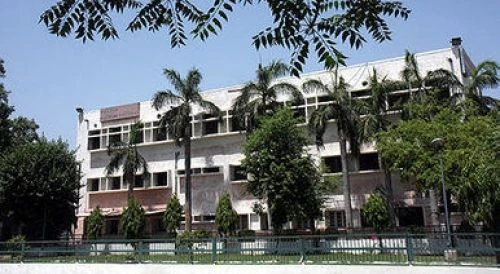
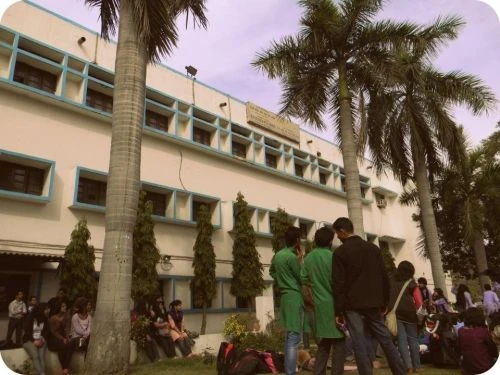
This is where DCAC diverges most from the classic DU image. The campus is compact—about 5 acres—and students often describe it as feeling more like a school. A major point of contention: the classrooms are not air-conditioned, which can be brutal during Delhi's peak summer. The library, however, is a beloved, air-conditioned sanctuary with over 60,000 books. Sports facilities for basketball, football, and table tennis exist but are limited by the space. The canteen is a hit for its affordable and hygienic snacks like chole bhature and samosas.
The biggest infrastructure note: DCAC does not have hostels. Almost all outstation students live in private PGs or rented flats in the surrounding areas of Netaji Nagar, Satya Niketan, and Sarojini Nagar. The college is a 15-20 minute walk from the nearest metro stations (Sarojini Nagar, INA), so budgeting for e-rickshaw rides is part of daily life. Societies like Enactus DCAC and the Broadway placement cell are highly active and provide excellent co-curricular platforms. The fests, however, are acknowledged to be smaller in scale compared to the mega-events at North Campus colleges.
Scouring platforms like Reddit, Quora, and Shiksha reveals a clear consensus. The positives are consistent: a mature, unpretentious student crowd with minimal toxic politics; exceptionally supportive and knowledgeable faculty in key departments; and a relaxed attendance policy that facilitates internships. "It's a college for doers," one alumnus noted.
The criticisms are just as consistent. The small, non-AC campus tops the list. The walk from the metro is a daily grind. And if a vibrant, large-scale campus life with big-name fest concerts is your priority, you'll likely find DCAC lacking. The placement numbers, while decent for a DU arts/commerce college, require proactive effort from the student. There's a gap between the highest package headlines and the average graduate's experience.
DCAC is a college of specific strengths. It's an outstanding choice if you're targeting B.A. (Hons.) Journalism—it's arguably a top-three program in DU. It's also a very smart pick for B.Com. (Hons.) or Economics students who want strong academics, a good placement cell, and a campus culture that doesn't get in the way of pursuing internships or side projects. The value for money is exceptional.
But you should probably look elsewhere if a traditional, expansive university campus with hostels and sprawling lawns is non-negotiable for your college experience. The infrastructure limitations are real. It's also not the place for someone passively waiting for campus placements to hand them a dream job; you need to leverage its Delhi location and proactive culture. For the right student—one who is career-focused, independent, and values faculty quality over fancy facilities—DCAC delivers a high-return, low-drama DU degree. Check out the latest details directly on the college website.

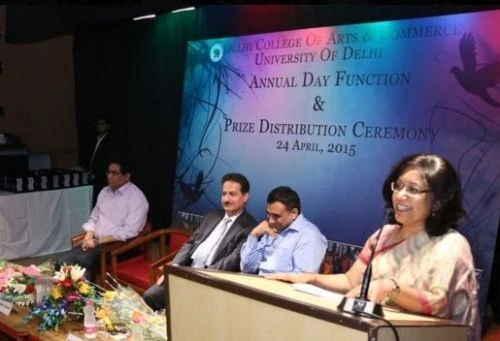

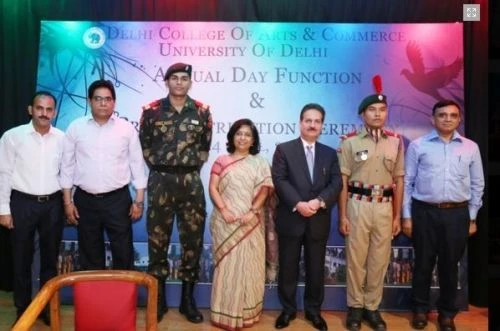
In this preview: 5 photos · 0 videos
Yes, the Delhi College of Arts and Commerce (DCAC) is considered one of the top three colleges in Delhi University for Journalism, often ranked alongside Lady Shri Ram College (LSR) and Kamala Nehru College.
No, DCAC does not provide on-campus housing or hostel facilities. Most students opt to live in nearby paying guest (PG) accommodations in areas like Netaji Nagar or Satya Niketan.
ARSD College generally has better infrastructure and a higher NIRF rank (typically within the top 10 in DU). However, DCAC is often preferred by students for its perceived "crowd quality" and the strength of specific departments like Journalism and Economics.
Compared to some other Delhi University colleges like Shaheed Bhagat Singh College, DCAC's attendance policy is considered relatively lenient. The official university requirement is 67% attendance.
Placement rates for the B.A. Programme at DCAC are generally lower than for courses like B.Com or Economics. Most B.A. Programme graduates secure roles in content writing, sales, or social media marketing, with average annual salary packages ranging around 3-4 LPA (Lakhs Per Annum).
Share what future students should know about DCAC.
Student voices are not rewritten by colleges. We remove spam and abuse.
Wider admission question? Community PulseWhat should future students know?
Tell us which course you're considering. We'll help you work out the next step.
Get instant Partner access after mobile verification. Your public edits are reviewed before they go live.
Claim this college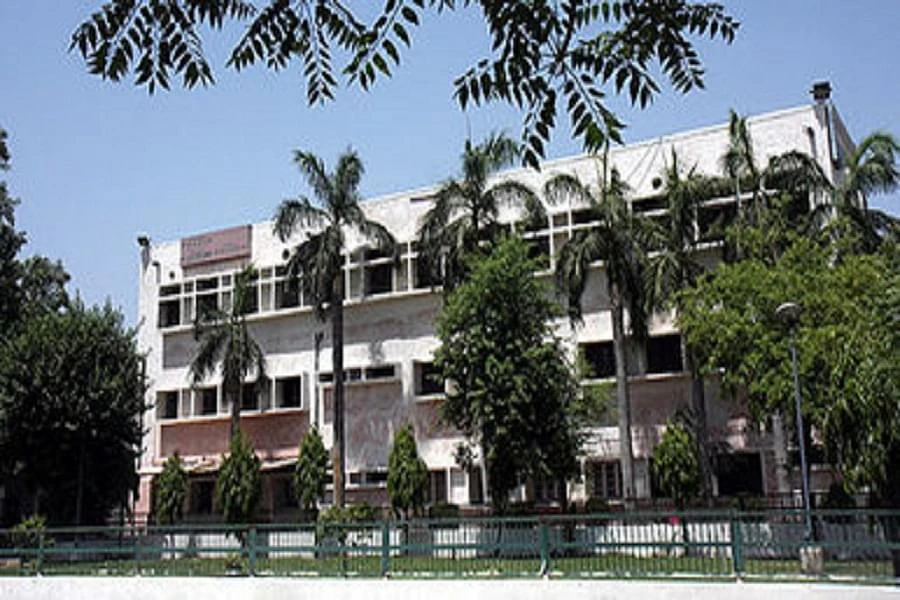
 Auditorium
 Cafeteria
 Computer Labs
 Medical
 Science Labs
 Sports Complex
 Study Library