Loading Admission Guardian content
Loading Admission Guardian content

Find a program, read its fee details and explore the admission requirements.
Summary of the programs shown below. Fee periods can differ by program. Check the note beside each amount before comparing costs.
| Course | Stream | Fees |
|---|---|---|
| Diploma | Vocational Courses | 25000 |
| Diploma in Vocational Studies [D.Voc] | Vocational Courses | 25000 |
| Master of Business Administration [MBA] | Management | 38000 |
| Bachelor of Technology [B.Tech] | Engineering | 65000 |
| Bachelor of Business Administration [BBA] | Management |
Specializations
Eligibility: 10th
Specializations
Eligibility: 10th
Specializations
All accepted exams
Eligibility: Graduation with 50% + CMAT
Specializations
All accepted exams
Eligibility: 10+2
Specializations
Eligibility: 10+2
2 exams with cutoff data available - showing recent entries
 Accenture
 Airtel
 ATG Tires Pvt. Ltd
 BOCL Building Bangladesh
 Cadence Design Systems
 Honeywell
 JCB
JCB L&T Ltd.
 Mahindra & Mahindra
 Maruti Suzuki
 Midas
Midas NIIT
NIIT Oracle
 RITES Ltd
 Solar Semiconductors
 Wipro
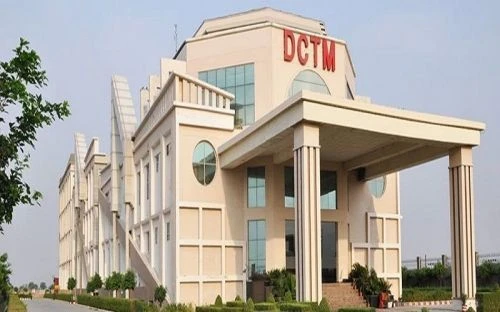
WiproDelhi College of Technology and Management sits on the edge of the National Capital Region, a private engineering and management college that’s been around since 2008. Its biggest selling point is affordability—a full B.Tech degree for under ₹3 lakhs—and a sprawling 11-acre campus that feels more substantial than its location on NH-44 might suggest. But the story here is one of clear trade-offs. You get decent infrastructure and reportedly supportive faculty for a fraction of the cost of a Delhi private college. The catch? Placement numbers are murky, and the college’s own claimed 50% placement rate tells you this isn’t a recruitment powerhouse. For a student from a middle-class background in Haryana or nearby NCR districts, looking for a budget-friendly AICTE-approved degree, DCTM is a practical, no-frills option. For anyone prioritizing guaranteed campus placements or a vibrant urban college life, it’s a harder sell.
DCTM offers a standard mix of engineering, management, and computer application programs typical of a mid-sized private technical college in the region. The academic structure is straightforward, governed by its affiliating universities. The B.Tech program is the main draw, with Computer Science and Engineering having the highest intake at 60 seats. Mechanical Engineering also has 60 seats, while newer specializations like Artificial Intelligence and Machine Learning, along with Civil and ECE, have smaller intakes of 30 each. The postgraduate offerings are limited to M.Tech in CSE and Mechanical Design, and a general MBA.
Where the college seems to score points consistently, according to student sentiment, is in faculty quality. Reviews repeatedly mention teachers as "experienced," "helpful," and "friendly," with a high command of their subjects. The teaching style is said to focus on both practical skills and theoretical exam preparation. There’s an emphasis on discipline—attendance is strictly enforced, and bunking classes isn’t an option. The semester system runs on a predictable six-month cycle, with results declared within 45 to 60 days after exams. It’s a no-nonsense, teaching-focused environment. The college lists industrial tie-ups, though specifics beyond medical partnerships with Sukhoi and Fortis hospitals are vague.
This is the section where you need to read between the lines. The official placement data presents one picture: a highest package of ₹12 LPA, an average of ₹5.77 LPA, and a roster of recruiters that includes big names like IBM, TCS, Wipro, Infosys, Accenture, and engineering firms like L&T and Maruti Suzuki. The college claims a "good placement record."
But the student reviews introduce significant caveats, and they’re important. Multiple alumni sources suggest the actual placement scenario is less robust. The frequently cited figure is that around 50% of the batch gets placed. Some reviews go further, stating there is effectively "no placement cell" and that students must rely on off-campus opportunities. The highest package is sometimes reported by students as being closer to 6-8 LPA, not 12. This gap between the brochure and the ground reality is the critical consideration.
About 100 students reportedly secured internships in the last academic year, which for a total intake of 474 isn't a bad ratio. The top sectors are IT/tech and core engineering/manufacturing, aligning with the recruiter list. The verdict? Treat the official numbers as a best-case scenario. If you’re considering DCTM, plan on being in the proactive half of your batch, building your own skills and seeking off-campus opportunities. The placement cell might provide a platform, but it likely won’t be a guarantee.
The affordability argument is DCTM’s strongest card. For the 2025-2026 academic year, the annual tuition fee for the B.Tech program is ₹65,000. Over four years, that’s a total tuition cost of ₹2.6 lakhs—a figure that’s exceptionally low for a private B.Tech program in the NCR vicinity. The MBA program is even more affordable at ₹38,000 per year. Hostel and mess fees are stated to be included within the course fee structure, though a specific breakdown isn’t provided, which is a point to clarify during admission.
The college does offer scholarships. These include government financial aid for eligible categories (likely SC/ST/OBC) and specific benefits for students who have qualified in JEE. It also has tie-ups with Punjab National Bank (PNB) and State Bank of India (SBI) for education loans, which should be straightforward to arrange given the relatively low principal amount. The low fee structure makes it accessible for middle-class families, but it’s wise to confirm all ancillary costs (examination fees, library security, etc.) upfront.
Admissions at DCTM follow a dual-track system common to private colleges in Haryana: a portion through state counseling and a portion via direct management quota.
For B.Tech, 75% of seats are filled through the Haryana State Technical Education Society (HSTES) counseling based on JEE Main scores. The remaining 25% are management quota seats filled directly by the college, also using JEE scores. The HSTES cutoff for B.Tech CSE gives a clear picture of the competition level. In 2024, the closing rank for the General category was 1,203,127. For context, the 2023 cutoff ranged between 536,190 and 865,172. These are not highly competitive ranks, indicating that admission through counseling is accessible for many JEE Main aspirants.
For the MBA program, the split is 50-50 between state counseling (using scores from CAT, MAT, XAT, or CMAT) and direct college admission, which includes a Group Discussion and Personal Interview round. M.Tech admissions are direct for GATE-qualified candidates. BBA and BCA admissions follow the process of the affiliating university, J.C. Bose University.
The basic eligibility across UG programs is 10+2 with a minimum of 50% aggregate. For PG, a bachelor’s degree with 50% is required. Admissions typically open in May-June, with the academic session commencing in August-September.
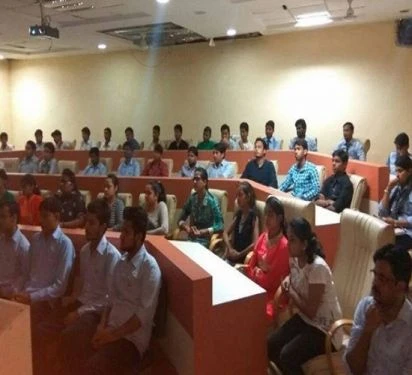
The 11-acre campus is a positive feature. Infrastructure is consistently rated as "good" by students. Academically, it houses well-equipped labs for each department and a library with over 22,000 books and a digital section. The campus is Wi-Fi enabled with 24x7 access.
Hostel life gets mixed but generally positive reviews. There are separate, well-furnished hostels for boys (on-campus) and girls (in Palwal city with bus service). They accommodate over 250 students, with AC rooms and modern amenities. The most consistent praise is for the mess food, described as "very nice," fresh, and hygienic, with some ingredients even sourced from the college’s own farms. A contradictory review mentions problems with hostel/mess, but it’s an outlier in the provided data.
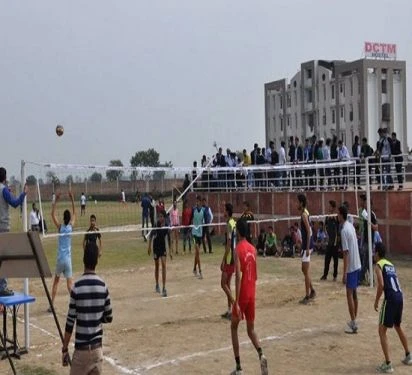
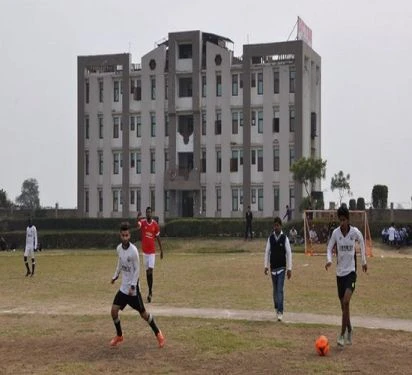
For recreation, sports facilities spread over 5 acres include courts for tennis, badminton, basketball, and fields for cricket and football. There’s also a fully equipped gym. Social life revolves around college-organized events; the college arranges fests every 2-3 months and hosts various clubs, workshops, and industry visits. It’s a self-contained environment. The location on the highway means you’re not in a bustling town, but college bus services cover a 70 km radius for day scholars.
Synthesizing student sentiment paints a coherent picture of DCTM’s value proposition.
The Good:
The Not-So-Good:
The consensus? It’s a good college for what you pay, especially if you are a self-motivated student who doesn’t expect the institution to hand you a job. The teaching environment is solid, but you’ll need to be proactive about your career.
DCTM is a classic example of getting what you pay for. For a total B.Tech cost of ₹2.6 lakhs, you get a legitimate AICTE-approved degree, a spacious campus, decent hostels, and by all accounts, a committed teaching faculty. That’s a solid deal for a student from a middle-class background in Haryana or the surrounding NCR region who has a JEE Main rank in the 500k-1.2M range and is budget-conscious.
However, you must enter with realistic expectations, primarily about placements. Don’t count on the college’s placement cell to be your primary career launchpad. Plan to be in the top half of your class, build your skills independently, and actively pursue off-campus and internship opportunities from year one. The college provides a stable, disciplined academic environment at a low cost, but the onus for career outcomes leans more on the student.
Who should look elsewhere? Students with higher JEE ranks who can secure seats in more established government colleges or better-placed private institutes, even at a higher fee. Also, those for whom a guaranteed campus placement process is a non-negotiable priority might find the uncertainty here too great. For the right student—cost-aware, disciplined, and self-driven—DCTM represents a pragmatic and value-for-money educational path.
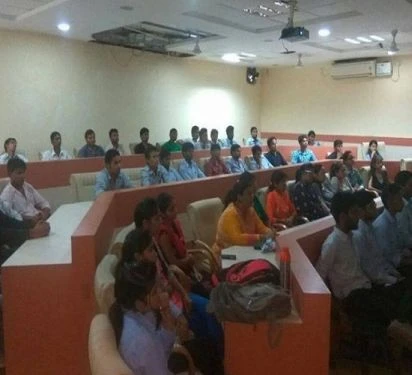
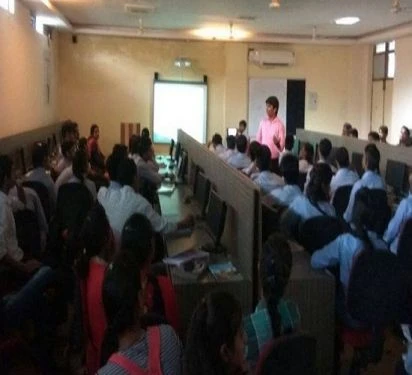
In this preview: 5 photos · 0 videos
For the 2025-2026 academic year, the annual tuition fee for the B.Tech program at DCTM is ₹65,000. The total tuition cost for the four-year program is ₹2,60,000. Hostel and mess charges are included within the course fee structure, though a specific breakdown should be confirmed during admission.
Placement reports show a mixed picture. The college cites an average package of ₹5.77 LPA and a highest package of ₹12 LPA, with recruiters like TCS, Infosys, and Wipro. However, student reviews consistently indicate a placement rate of around 50%, with many noting a reliance on off-campus opportunities. Prospective students should be prepared to be proactive in their job search.
Admission is through two channels. 75% of B.Tech seats are filled via Haryana State (HSTES) counseling based on JEE Main scores. The remaining 25% are management quota seats filled directly by the college, also using JEE scores. The 2024 HSTES cutoff for B.Tech CSE (General category) was 1,203,127.
Yes, Delhi College of Technology and Management is approved by the All India Council for Technical Education (AICTE). It is also ISO 9001:2015 certified and recognized by the Department of Technical Education (DTE), Government of Haryana.
DCTM provides separate, well-furnished hostels for boys (on-campus) and girls (in Palwal city with bus service). Rooms are air-conditioned with modern amenities, and 24-hour security is provided. Student reviews frequently praise the quality and hygiene of the mess food. The hostels can accommodate over 250 students.
Share what future students should know about DCTM.
Student voices are not rewritten by colleges. We remove spam and abuse.
Wider admission question? Community PulseWhat should future students know?
Tell us which course you're considering. We'll help you work out the next step.
Get instant Partner access after mobile verification. Your public edits are reviewed before they go live.
Claim this college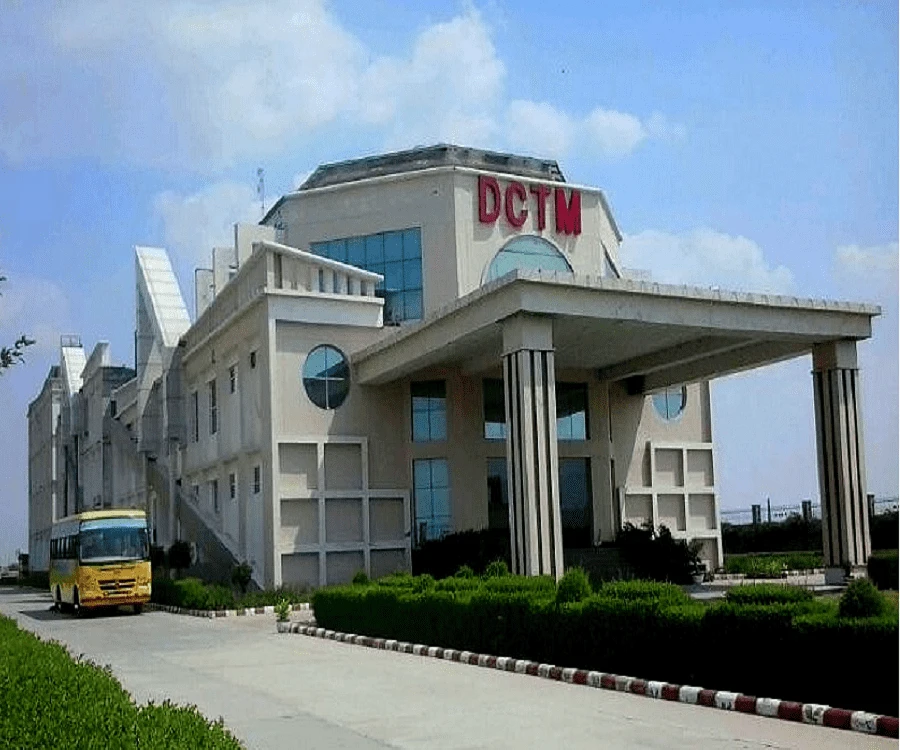
 Auditorium
 Cafeteria
 Campus Shuttle
 Computer Labs
 Medical
 Science Labs
 Sports Complex
 Study Library