Loading Admission Guardian content
Loading Admission Guardian content

Provisional score based on available data. It may change as more information is verified.
Selected ranking categories, with the recorded year beside each result. Open all records for the complete history.
5 published records · Lower numeric ranks are stronger
Find a program, read its fee details and explore the admission requirements.
Summary of the programs shown below. First-year fee. Check the note beside each amount for inclusions and exclusions.
| Course | Stream | Fees |
|---|---|---|
| Master of Business Administration [MBA] | Management | 97320 |
Specializations
All accepted exams
Eligibility: Graduation
Forget the brochures. The Department of Management Studies at Anna University (DoMS) is a study in contradictions. It’s a government department housed in century-old buildings on a sprawling 189-acre engineering campus. The pedagogy can feel traditional, the bureaucracy can be maddening, and you won’t find a swanky corporate-style atrium. But here’s the thing that cuts through all the noise: the return on investment is arguably the best in the country. Paying a total of about one lakh rupees for a two-year MBA that lands you a job averaging six lakhs per annum? That’s the core proposition. It’s a pragmatic, no-frills choice for high-scoring TANCET candidates who want a powerful brand name without the crushing debt of a private B-school.
This isn’t a place with a dozen niche specializations. The focus is on a solid, foundational MBA. The flagship full-time program has an intake that typically ranges from 120 to 240 students. There’s also a part-time MBA for working professionals and a specialized MBA in Tourism Management.
Academically, it follows a dual specialization model. You pick two from Marketing, Finance, HR, Operations, and Systems Management. The curriculum includes sectoral electives like Health Services Management, a nod to the department’s collaborations with Apollo and Fortis hospitals. The grading is on a strict 10-point CGPA scale, where an ‘O’ (Outstanding) requires scoring between 91 and 100 marks. A first-class with distinction needs a CGPA of 8.5 or above.
The faculty is a major strength on paper—over 90% hold PhDs, including globally recognized researchers like Dr. L. Suganthi. But student sentiment is mixed. You’ll hear praise for their depth of knowledge and criticism for a teaching style that can lean towards rote learning. The academic calendar is the standard Anna University semester system. It’s structured, predictable, and very much a part of the larger university machinery.
Let’s be clear about the numbers. The often-cited “40 LPA” figure you might see online belongs to the engineering departments. For the MBA program, the reality is more grounded. The highest package for the 2024-25 batch was in the range of ₹10-12 LPA. The average sits between ₹5.5 and ₹6.5 LPA, with a median around ₹6 LPA.
That’s a decent outcome for a state-run institution. The official placement percentage is claimed to be over 90%, but a scan of student reviews on platforms like Shiksha and CollegeDunia suggests a working figure closer to 75-80% for core management roles. The rest often find positions in IT-enabled services.
Recruiters are a mix of established names, heavily skewed towards South India’s industrial and IT corridor. Banking is a strong suit, with HDFC, ICICI, and Axis Bank being regulars. IT giants like TCS, Cognizant, and Infosys recruit in volume. Core manufacturing and auto companies like Renault Nissan, Hyundai, and TVS Motors also participate. The sectoral split is roughly 40% BFSI, 30% IT/ITES, and 20% Manufacturing.
This is where DoMS becomes almost impossible to beat on a cost basis. For a Tamil Nadu resident in the general category, the total two-year course fee is between ₹80,000 and ₹1,20,000. Yes, for the entire MBA. Annual tuition is just ₹35,000 to ₹50,000.
Hostel and mess fees add another ₹40,000-50,000 per year. There are one-time admission and refundable deposit fees. It’s stunningly affordable. Financial aid is primarily through state government scholarships for BC, MBC, SC, and ST students, along with a first-graduate tuition fee waiver. The value proposition is the entire story here.
Your ticket in is the TANCET score. Period. Admissions for the vast majority of seats are purely merit-based through the TANCA counseling process. There are no group discussions or personal interviews for these government-aided seats. It’s all about that rank.
And the cutoffs are fiercely high. For the 2024 session, general category (OC) candidates needed a percentile between 99.4 and 99.6. That’s why the peer group is consistently cited as a major strength—you’re studying with some of the brightest test-takers in the state. Cutoffs for BC/MBC categories hovered around 98.5-99.2, and for SC/ST around 90-96 percentile.
There is a separate channel—seats under the “Consortium of Industries” or for NRIs. These come with significantly higher fees (around ₹2-4 lakhs total) but follow a different selection criteria.
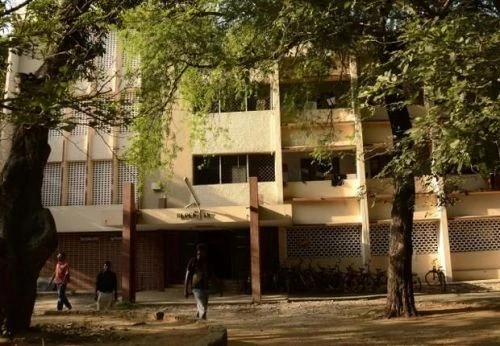
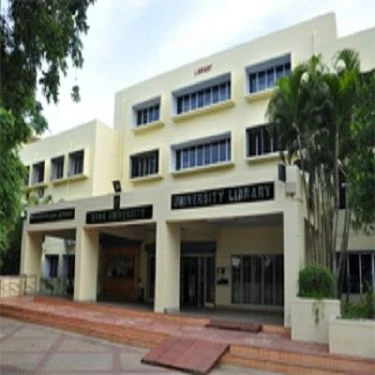
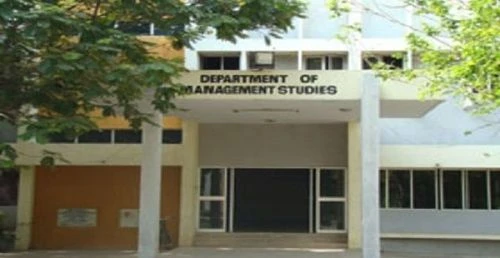
The campus is the historic College of Engineering, Guindy. It’s massive, green, and steeped in legacy. The infrastructure for management students, however, is functional, not luxurious. Classrooms are adequate. The department has a dedicated computer lab and a new Ramco ERP Lab set up in 2024.
Hostel life is a defining experience. There are 22 blocks across the campus. The rooms are often described as “vintage”—spacious but showing their age. Wi-Fi coverage can be spotty in the older blocks. The mess serves standard South Indian fare; students call it repetitive but hygienic. You don’t come here for the hostel food.
But you do come for the location. Being in Guindy, in the heart of Chennai, is a huge advantage for internships and city access. The sports facilities are world-class, a benefit of the larger campus. Life is largely student-driven—the placement cell and major fests are managed by students, which many see as invaluable practical experience.
The consensus is remarkably consistent across Quora, Reddit, and review sites. The ROI is the undisputed king. As one Quora user put it, “If you want a corporate-style glass building and AC classrooms, don't come here. If you want a degree that pays for itself in 3 months of working, this is the place.”
Positives always highlight the brilliant peer group, the unbeatable Anna University/CEG brand value in South India, and the prime Chennai location. The student-run culture gets praise for fostering real initiative.
The negatives are just as predictable. The bureaucracy feels like a “government office.” The teaching methodology can be traditional, with an emphasis on exams. The infrastructure, while adequate, lacks the polish of private competitors. And the hostel food is a perennial complaint.
It’s a trade-off every student knowingly makes. You’re exchanging some comforts and modern pedagogy for brand value and financial sensibility.
DoMS is a very specific, high-value proposition. It is absolutely worth it if you are a TANCET high-scorer (99+ percentile) looking for a respected, affordable MBA to launch a career primarily in South India’s banking, IT, or manufacturing sectors. The low fee means zero financial stress and rapid ROI. You’re buying the Anna University brand and a strong peer network at a bargain price.
Look elsewhere if you prioritize cutting-edge campus infrastructure, a pedagogy heavy on case studies and international exposure, or if you’re targeting top-tier consulting or finance roles in Mumbai or Delhi. The placement averages, while good for the price, won’t match those of the premier IIMs or even top private schools. DoMS is for the pragmatic striver. It’s not glamorous, but it’s one of the smartest financial decisions a management aspirant in Tamil Nadu can make.
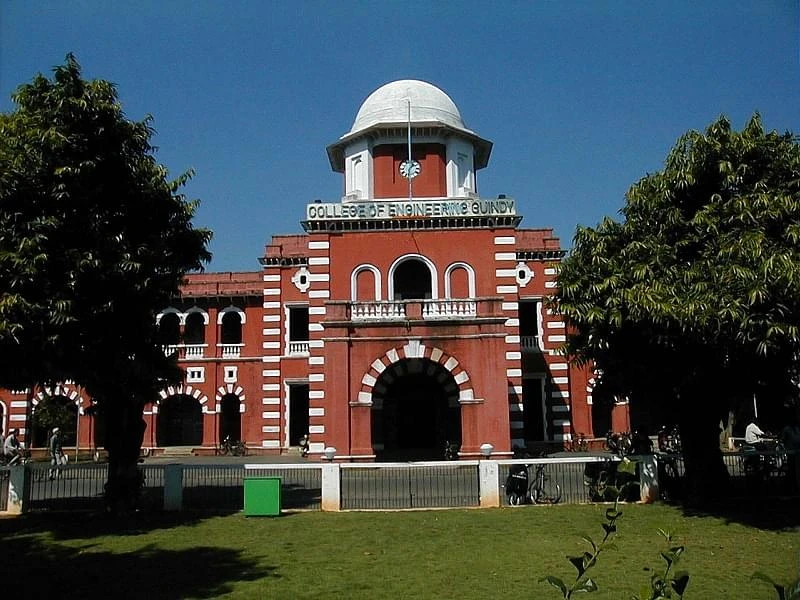
In this preview: 4 photos · 0 videos
Yes, the Department of Management Studies (DoMS) at Anna University is considered a top choice for an MBA in South India, particularly for students seeking high return on investment and a strong regional brand name. It is the preferred institute for top rankers in the TANCET entrance exam.
For admission to the full-time MBA program at DoMS Anna University, the TANCET cutoff is typically very high. Candidates from the General (OC) category usually need to secure a percentile of 99.4 or higher to be considered.
Placements at DoMS Anna University are decent, with average packages around 6 LPA. The institute is recognized as an excellent source for entry-level roles in the Banking and IT sectors, though its placement record is not considered "elite" compared to some top national institutes.
DoMS (CEG) is the flagship, full-time, on-campus MBA program of Anna University and is significantly more prestigious. CDE (Centre for Distance Education) is the separate distance learning wing of the university, offering a different mode of education.
DoMS Anna University does not have a traditional "direct" management quota. However, it does reserve seats for candidates under the Industrial Sponsorship and NRI categories, which involve higher tuition fees.
Share what future students should know about DOMS.
Student voices are not rewritten by colleges. We remove spam and abuse.
Wider admission question? Community PulseWhat should future students know?
Tell us which course you're considering. We'll help you work out the next step.
Get instant Partner access after mobile verification. Your public edits are reviewed before they go live.
Claim this college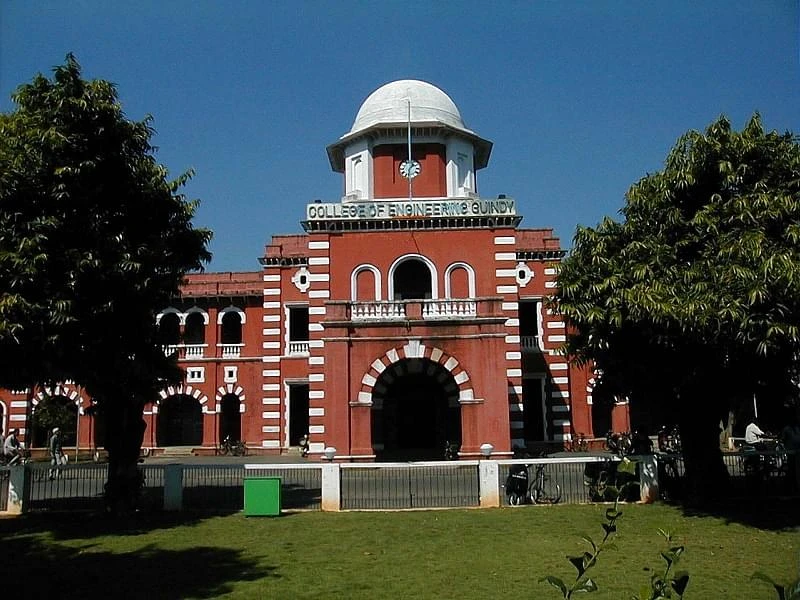
 Auditorium
 Bank & ATM
 Cafeteria
 Computer Labs
 Medical
 Sports Complex
 Study Library