Loading Admission Guardian content
Loading Admission Guardian content

Find a program, read its fee details and explore the admission requirements.
Summary of the programs shown below. Fee periods can differ by program. Check the note beside each amount before comparing costs.
| Course | Stream | Fees |
|---|---|---|
| Bachelor of Arts [BA] | Arts | 14720 |
| Bachelor of Arts [BA] {Hons.} | Arts | 14720 |
| Bachelor of Commerce [B.Com] | Commerce | 14720 |
| Bachelor of Science [B.Sc] | Science | 14720 |
Specializations
Eligibility: 10+2
Specializations
Eligibility: 10+2
Specializations
Eligibility: 10+2
Specializations
Eligibility: 10+2
Dera Natung Government College (DNGC) in Itanagar isn't trying to be an IIT. It knows its role. For over four decades, it has been the primary academic launchpad for thousands of students from Arunachal Pradesh's capital complex, offering an affordable, government-backed education with one clear, community-driven goal: preparing for the state civil services. With a sprawling 49-acre campus and a student body of nearly 2,000, its identity is shaped more by the rhythms of APPSC exam preparation than corporate recruitment cycles. The recent shift to the NEP 2020 framework and mandatory CUET admissions are the latest chapters in its evolution from a local college to a more standardized state institution. But at its heart, DNGC remains a reflection of Arunachal's own priorities—where a stable government job often outweighs a private sector package.
DNGC is a pure undergraduate college, and as of the 2024-25 session, it has fully implemented the National Education Policy (NEP) 2020. That means the old, rigid streams are gone. Now, a BSc student majoring in Physics might take a minor in Political Science, a skill course in computer basics, and a value-added course on local tribal heritage. It's a significant shift aimed at breaking down academic silos.
The intake numbers tell you where the student interest lies. The BA program, with a massive 1,400 seats across eight departments (English, Economics, History, Political Science, etc.), is the undisputed king. That's not surprising in a state where the humanities and social sciences are the preferred tracks for civil service aspirants. The BSc programs (PCM and CBZ, 150 seats each) and BCom (200 seats) are smaller, more focused cohorts.
Faculty is consistently cited as a strength. With over 60% holding PhDs, the teaching staff—including noted figures like Dr. Bidyut Lochan Behera in English—is considered highly qualified and accessible. The academic calendar runs from August to May. Where DNGC punches above its weight is in collaborations: MoUs with NIELIT for IT training, the Indian Institute of Entrepreneurship for startup awareness, and the Arunachal Anthropological Forum for research in tribal studies add practical layers to the theoretical coursework.
Let's be direct: if you're looking at DNGC for on-campus, corporate placement drives, you're looking at the wrong college. The placement cell exists, but its impact is minimal. The data floating around needs a serious filter. While some education portals have listed a fantastical "60 LPA" highest package, that's almost certainly erroneous—likely conflating an alumni's achievement years later. The verified figures from 2024 are more modest: a highest package of 6.2 LPA, an average of 3.8 LPA, and a median of 3.3 LPA.
Companies like Wipro, Infosys, and Cognizant have conducted off-campus or pool drives in the past, but the intake is low. The real placement story at DNGC isn't about private companies. It's about government offices. Over 80% of students use their degree as a foundation to prepare for the Arunachal Pradesh Public Service Commission (APPSC) and UPSC exams. The campus culture, library resources, and peer group are all oriented towards this goal. As one 2024 alum put it plainly on a review forum: "Don't expect a company to come and give you a job." The college provides the degree and the environment; cracking the exam is up to you. That's the unwritten contract.
This is where DNGC's value proposition shines. As a government college, tuition is nominal. For BA and BCom students, annual fees range from ₹3,500 to ₹5,000. BSc students, with lab fees, pay between ₹5,500 and ₹7,500. Over three years, you're looking at a total academic cost of ₹15,000 to ₹22,000—less than a single semester at many private institutions.
The bigger expense is lodging. Hostel seats are severely limited (only 226 total between the Tai Bida boys' hostel and Nyari Welly girls' hostel). They're allotted by merit, typically prioritizing third and fifth-semester students. If you get a seat, the annual hostel admission and rent is about ₹1,300, but the mess charges run ₹2,200–₹2,500 per month. Plan for a total annual hostel cost of ₹25,000–₹30,000.
Financial aid, however, is robust. Most students from Arunachal Pradesh's Scheduled Tribes are eligible for the state stipend. The National Scholarship Portal (NSP) is actively promoted on campus. For the eligible student, the net cost of a degree here can approach zero.
The rules changed with CUET. For the 2024 intake, performance in the Common University Entrance Test (UG) is the primary and mandatory criterion for admission to all undergraduate programs. The college's own prospectus confirms this.
After CUET scores come in, the crucial "Catchment Area" rule takes over. A full 80% of seats are reserved for students from the designated catchment area—essentially the Capital Complex (Itanagar, Naharlagun) and surrounding districts. For these students, the historic cutoff has hovered around 40-50% equivalence in their Class 12 marks. For students from outside this zone (Open/Non-Catchment), the competition is fiercer, requiring 60% or higher.
The selection process is straightforward: CUET-based merit list first, then a direct merit list based on Class 12 marks if seats remain. The application window usually opens in June. Your strategy is simple: take CUET seriously, and know your residency status.
The campus is a mix of serene beauty and infrastructural frustration. Set on 49.3 acres of hilly terrain, the "Orchid Garden" and green vistas are genuinely peaceful. There's a large football ground, a basketball court, and an open gym—DNGC regularly wins the state's Inter-College Youth Festival, so sports and culture are big.
The library is a strong point, fully automated with INFLIBNET access and over 30,000 volumes. The computer centre and language lab are reportedly well-maintained. But then you get the complaints. Consistently, students note aging infrastructure: broken windows, fans that don't work in older blocks, and poor sanitation in some toilets. The 32 science labs, particularly for Physics and Chemistry, are described as average and in need of modern equipment. Wi-Fi is confined to the library and IT cell; don't expect seamless connectivity across the hillside.
Hostel life is Spartan and competitive. With only 86 seats for boys and 140 for girls, getting a room is an achievement. The amenities are basic—rated a 3/5 by students—and overcrowding is a common issue. You're here for the degree and the community, not the luxury.
Scouring platforms like CollegeDunia and Shiksha, a clear consensus emerges. The positives are strong: faculty quality and approachability are praised relentlessly. The "value for money" rating is near-perfect because of the low fees. The natural environment and active NCC/NSS units are big pluses.
But the negatives are equally stark and repeated. Infrastructure maintenance is the top grievance. Student politics, driven by the powerful All Arunachal Pradesh Students' Union (AAPSU), is a dominant force. Multiple reviews mention academic activities being suspended for weeks during volatile election cycles on campus, which students find disruptive. The complete absence of a functional corporate placement system is the other major critique. Students feel utterly on their own for job hunting outside the government sector.
The overarching sentiment? It's a great, affordable base camp for your APPSC/UPSC preparation journey, surrounded by peers on the same path. But it's not a college that will hand you a career. You have to build it yourself.
DNGC's worth is entirely dependent on your goals and geography. For a student from Arunachal Pradesh's catchment area aiming for a state government job, it's arguably the best-value option in the capital. The cost is negligible, the faculty is solid, and the entire ecosystem is geared towards civil service exam preparation. The alumni network, including figures like Chief Minister Pema Khandu, is deeply embedded in the state's fabric.
However, if you're a student from outside the state, or your ambition is a corporate career in a metro, DNGC is a poor fit. The limited infrastructure, lack of placements, and intense local political environment will be significant hurdles. Even for science students within the state, the lab facilities may feel inadequate compared to newer institutions.
In short, DNGC is a purpose-driven institution. It excels at its primary purpose—producing graduates ready to serve Arunachal Pradesh. For that specific mission, it's effective and essential. For anything else, you're probably looking in the wrong place.

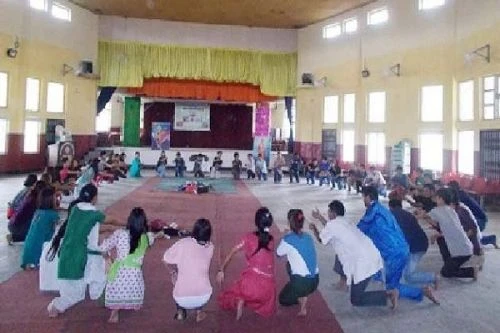


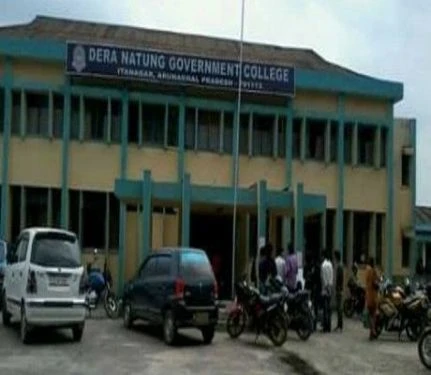
In this preview: 5 photos · 0 videos
Yes, for the 2025 academic session, CUET UG scores are the primary and mandatory basis for undergraduate admission to DNGC, as confirmed by the latest college prospectus.
Hostel facilities at DNGC are very limited, with only approximately 226 total seats. These seats are allotted strictly on merit, with priority given to students in their 3rd and 5th semesters.
DNGC is widely considered the best government college option for Science in the capital region. However, student feedback indicates that lab equipment for core subjects like Chemistry and Physics requires upgrading.
The Catchment Area rule gives admission priority to local residents from Papum Pare and surrounding districts. Students from outside this catchment area require significantly higher academic marks to secure a seat in the college.
Currently, DNGC operates primarily as an undergraduate college. Most students pursuing post-graduation move to institutions like Rajiv Gandhi University (RGU) for their PG courses.
Share what future students should know about DNGC.
Student voices are not rewritten by colleges. We remove spam and abuse.
Wider admission question? Community PulseWhat should future students know?
Tell us which course you're considering. We'll help you work out the next step.
Get instant Partner access after mobile verification. Your public edits are reviewed before they go live.
Claim this college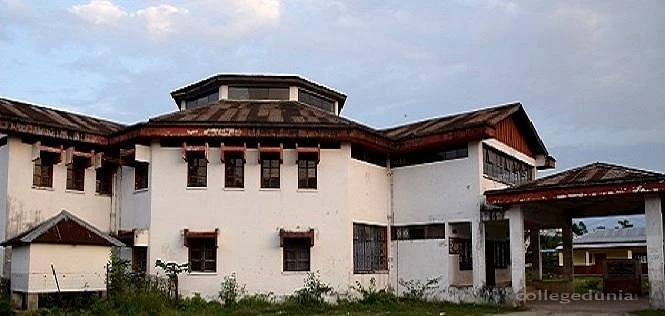
 Auditorium
 Cafeteria
 Computer Labs
 Medical
 Science Labs
 Sports Complex
 Study Library