Loading Admission Guardian content
Loading Admission Guardian content
Find a program, read its fee details and explore the admission requirements.
Summary of the programs shown below. Fee amounts are not listed. Contact the college for its current fee schedule.
| Course | Stream | Fees |
|---|---|---|
| Doctorate of Medicine [MD] (Community Medicine) | Medical | |
| M.B.B.S. | Medical |
Specializations
Eligibility: Post Graduation
All accepted exams
Eligibility: 10+2 with 50% + NEET
If you're looking for a traditional college with lecture halls and a placement cell, you're in the wrong place. The ICMR-National Institute for Implementation Research on Non-Communicable Diseases (NIIRNCD) in Jodhpur, formerly the Desert Medicine Research Centre (DMRC), is something else entirely. It's a specialized, high-stakes research hub where the goal isn't to pass exams but to shape national health policy. Think of it as a launchpad for a career in public health research, not a stepping stone to corporate jobs. The work here is intensely focused, the cohort is tiny, and the environment is more government lab than campus. For the right student—one with a clear research vision and a JRF fellowship in hand—it can be an unparalleled opportunity. For everyone else, it's probably not even on the radar.
This isn't about choosing from a list of 50 courses. NIIRNCD's academic offerings are hyper-specialized and built entirely around its research mandate. The primary program is the PhD, awarded through its affiliation with AcSIR. Intake is minuscule—maybe 5 to 10 scholars a year—and entirely dependent on available research projects and supervisor bandwidth. Specializations are directly tied to the institute's work: Implementation Research, Epidemiology, Public Health, Microbiology, and Social & Behavioral Sciences related to NCDs.
Beyond the PhD, the institute runs two key training programs. The Six-Month Dissertation Training is a serious commitment for final-year PG students (M.Sc., MPH, M.Tech), with 20 seats split between public health and life sciences streams. It's not a casual internship; it's meant for a substantive research project. There's also a Two-Month Internship/Observership for shorter exposure. The faculty is the core asset here. With about 10-12 core scientists, all holding PhDs or MDs, the mentorship is direct and hands-on. You're not learning from a distant professor but working alongside established researchers like Dr. Praveen Kumar Anand (Cardiovascular Epidemiology) or Dr. Ramesh Kumar Huda (AI/ML in Health). The culture is one of rigorous, applied science.
Forget campus recruitment drives with tech giants. Career progression here follows the research and public health pipeline. PhD scholars, typically already on ICMR or CSIR fellowships, aim for post-doctoral positions, scientist roles in other national labs (like ICMR or CSIR institutes), or faculty positions in universities and medical colleges. Many also move into public health organizations like the WHO, UNICEF, or into government roles as epidemiologists.
For non-PhD researchers and trainees, the most direct path is project-based employment at the institute itself. NIIRNCD frequently advertises temporary positions tied to specific grants. These can be lucrative for early-career researchers: a Project Research Scientist-II role pays between ₹67,000 to ₹80,000 plus HRA. Project Technical Support roles offer around ₹28,000-₹35,000. It's a foot in the door of the national research system. The key takeaway? "Placement" is self-driven and network-based, rooted in the quality of the research you produce during your time there.
The fee structure is straightforward and relatively low, given it's a central government institute. For the PhD program via AcSIR, regular candidates pay ₹12,000 per semester (₹24,000 annually). Sponsored candidates (those whose employers fund them) pay double that. The Six-Month Dissertation Training has a consolidated fee of ₹10,000. Short-term internships have no fee, but also no stipend.
Crucially, the primary financial support for PhD scholars is not from the institute but from the national fellowship they must possess to be eligible for admission (e.g., ICMR-JRF, CSIR-JRF, UGC-NET JRF). These fellowships provide a monthly stipend as per government norms. The institute itself does not typically offer additional merit scholarships. Hostel or mess facilities are not standard for short-term trainees, so accommodation costs in Jodhpur must be factored in separately.
Gaining entry here is less about cracking an entrance exam and more about proving you're a serious research candidate. For the PhD program, the first and non-negotiable gate is holding a valid National Level Fellowship (JRF/SRF). Acceptable fellowships include those from ICMR, CSIR, UGC, DBT, or DST. Without this, your application won't be considered. Shortlisted candidates then face a rigorous interview and presentation of their research proposal through the AcSIR portal. Admissions happen twice a year.
For the Dissertation Training and Internship programs, selection is based on academic merit (your PG marks matter) and the strength of your Statement of Purpose (SOP). You need to articulate what you want to research and why NIIRNCD is the place to do it. Applications are submitted directly to the institute's academic officer. The process is competitive due to the limited seats, but it's also looking for specific alignment with the institute's ongoing projects.
Don't expect sprawling lawns or sports complexes. The NIIRNCD campus is a functional research enclave. Its strengths are in its specialized laboratories—well-equipped units for microbiology, biochemistry, virology, and vector biology that support its field work. The library is a niche resource for medical research, and the entire campus has high-speed NKN internet connectivity. A notable feature is its Model Rural Health Research Unit (MRHRU) in Jaipur, which serves as a live field station for implementation studies.
Accommodation is a known pinch point. There's a Guest House Annexe that sometimes houses JRFs and dissertation students, but it's small and availability is never guaranteed. Most short-term trainees have to find private PGs or rentals in Jodhpur, which can be a hassle. The location on New Pali Road is more institutional/industrial; you'll need to commute for city amenities. This leads directly to the biggest point about student life: there isn't one in the collegiate sense. No fests, no clubs, no annual gatherings. It's a workplace. Your social circle will be your lab mates and colleagues.
Feedback from past scholars and interns, gathered from professional forums, paints a consistent picture. The positives are powerful for the research-oriented. They highlight the "high-impact" nature of the work—seeing research directly influence policy is a major draw. Mentorship from senior scientists is described as genuinely involved and accessible. The infrastructure, particularly the labs, is praised as top-tier for this kind of work in the region. And as a central government body, the reliability of fellowship stipend payments is a significant plus compared to some university settings.
But the negatives are real considerations. Administrative bureaucracy is a frequent gripe, with slow paperwork and government procedural delays. The complete lack of a social or campus life is a deal-breaker for some. The location, while in Jodhpur, isn't centrally located for leisure. And the limited on-campus housing creates a real logistical and financial hurdle for out-of-town trainees. It's an environment that demands high independence.
This institute is not for everyone. It's a specialist tool for a specific career path. NIIRNCD is absolutely worth it for the aspiring public health researcher who already has a JRF fellowship and a clear interest in non-communicable diseases, epidemiology, or implementation science. The access to cutting-edge projects, influential mentors, and the ICMR brand is exceptional. The low fees and reliable stipend structure make it a financially sensible choice for doctoral work.
You should probably look elsewhere if you want a traditional university experience, are seeking corporate placements, don't have a national fellowship, or thrive on a vibrant campus social life. It's also not the right fit if your interest in medicine is clinical (patient-facing) rather than research-oriented. In essence, NIIRNCD is a premier launchpad for a research career in India's public health system. Its value is immense, but its appeal is narrowly focused. Choose it not as a college, but as your first research job.
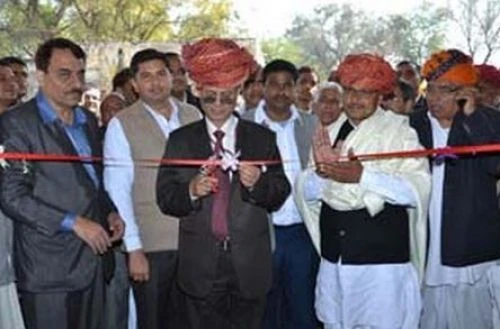
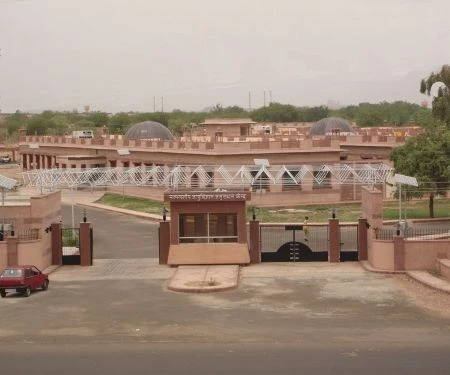


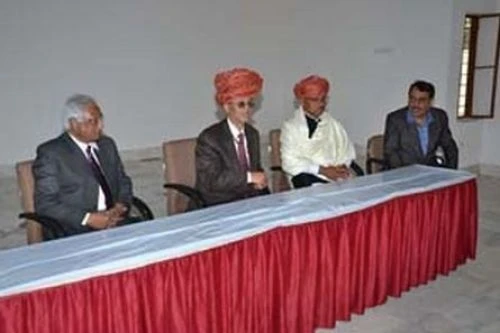
In this preview: 5 photos · 0 videos
No, the Desert Medicine Research Centre (DMRC), now known as NIIRNCD, does not offer MBBS or MD programs. It is a dedicated research institute under the Indian Council of Medical Research (ICMR) and only offers PhD programs and short-term research training.
DMRC and NIIRNCD refer to the same institute. DMRC (Desert Medicine Research Centre) was the original name. It was renamed in 2019 to the National Institute for Implementation Research on Non-Communicable Diseases (NIIRNCD) to reflect its expanded focus on Non-Communicable Diseases.
Yes, a PhD from NIIRNCD (DMRC) is valid for teaching positions. The degree is awarded by the Academy of Scientific and Innovative Research (AcSIR), which is an Institution of National Importance. This makes the degree valid for roles like Assistant Professor in India and globally.
Jobs at NIIRNCD (DMRC) are predominantly project-based. The primary way to apply is to regularly check the "Career" section of the institute's official website for announcements regarding "Walk-in Interviews" for scientific and technical positions.
The institute has a small Guest House Annexe, but it is usually occupied and full. Therefore, most students and interns undertaking training or projects at the centre arrange for private paying guest (PG) accommodations in Jodhpur.
Share what future students should know about DMRC.
Student voices are not rewritten by colleges. We remove spam and abuse.
Wider admission question? Community PulseWhat should future students know?
Tell us which course you're considering. We'll help you work out the next step.
Get instant Partner access after mobile verification. Your public edits are reviewed before they go live.
Claim this college
 Auditorium
 Cafeteria
 Computer Labs
 Gym
Gym Hostel
 Medical
 Science Labs
 Sports Complex
 Study Library