Loading Admission Guardian content
Loading Admission Guardian content
Provisional score based on available data. It may change as more information is verified.
Selected ranking categories, with the recorded year beside each result. Open all records for the complete history.
1 published record · Lower numeric ranks are stronger
Find a program, read its fee details and explore the admission requirements.
Summary of the programs shown below. Total course fee. Check the note beside each amount for inclusions and exclusions.
| Course | Stream | Fees |
|---|---|---|
| Master of Business Administration [MBA] | Management | 41000 |
| Master of Engineering [ME] | Engineering | 60000 |
| Bachelor of Engineering [BE] | Engineering | 220000 |
| Bachelor of Technology [B.Tech] | Engineering | 220000 |
Specializations
All accepted exams
Eligibility: Graduation with 50% + TANCET
Specializations
All accepted exams
Eligibility: Pass in Graduation + GATE
Specializations
All accepted exams
Eligibility: 10+2 with 50% + TNEA
Specializations
All accepted exams
Eligibility: 10+2 with 50% + TNEA
1 exam with cutoff data available
 Athenahealth
 EmbedUR Systems Pvt Ltd
 OFSS
OFSSDhanalakshmi College of Engineering (DCE) in Chennai is a study in contrasts. It's an autonomous, NAAC 'A' grade institution with NBA accreditation for its core programs, delivering solid IT placements from a campus that feels more like a disciplined school than a typical college. If your primary goal is a cost-effective engineering degree with a direct pipeline to companies like TCS and Infosys, DCE gets the job done. But if you're looking for a vibrant campus life with lots of freedom, the rural location and strict rules might feel stifling. The data shows a clear value proposition, especially for government quota students, but it comes with caveats that every prospective student should weigh carefully.
DCE’s academic portfolio is heavily tilted towards computing and electronics, reflecting market demand. The B.E. in Computer Science and Engineering and Electronics and Communication Engineering are the largest, with 120 seats each, and carry the weight of NBA accreditation. The newer specializations—B.Tech in Artificial Intelligence and Data Science and B.E. in CSE with Cyber Security or AI & ML—have smaller intakes of 30-60 seats, suggesting a more focused approach. Core branches like Mechanical and Electrical & Electronics Engineering have a modest 30 seats each, which often correlates with lower cutoffs and more variable placement outcomes.
As an autonomous college, DCE designs its own curriculum, though it stays aligned with Anna University's broader framework. That autonomy allows for quicker integration of industry input, a fact underscored by their active MoUs with IBM, Infosys Campus Connect, and Oracle Academy. The faculty strength is around 113, with about a quarter holding PhDs. It’s a decent ratio for a private college in this tier. The academic culture, as students describe it, is results-oriented. Professors are generally accessible and known to offer extra help, which can be a significant advantage for students who need the push.
This is where DCE builds its reputation. The official placement claim hovers around 92-95%, but talking to alumni paints a more nuanced picture. The working number for eligible students (those without standing arrears) is closer to 70-80%. That’s a critical distinction. The highest package touted for the 2025-26 cycle is ₹12 LPA, with some off-campus outliers claimed at ₹15 LPA. The average sits between ₹3.5 to ₹4.5 LPA, and the official NIRF-reported median is ₹3.30 LPA. These figures are honest for a college in its band.
Recruiters are predominantly from the IT services sector. TCS, Infosys, Cognizant, Wipro, and HCL are the consistent mass recruiters. Product-based or higher-paying tech roles come from names like Zoho, Amazon, and Bosch, but these are less frequent. For core branches, opportunities exist with L&T, TVS, and Ford, but the volume is much lower. About 80% of placed students land in IT/software roles. The college’s training regimen—starting aptitude and soft skills coaching from the second year—is frequently cited as a major positive by students. It’s a structured process aimed squarely at clearing campus recruitment hurdles.
The cost structure at DCE is a classic example of the Tamil Nadu engineering model, with a vast difference between government and management quota seats. For the 2025-27 cycle, annual tuition for government quota students is approximately ₹50,000 to ₹65,000. Management quota fees range from ₹1 lakh to ₹1.5 lakh, with CSE and AI specializations at the top end.
But tuition is just the start. Hostel and mess fees add another ₹50,000 to ₹85,000 yearly. There’s a mandatory transport fee (₹20,000–₹30,000) that is a major point of student grievance, as it’s often enforced even for those living nearby. Add exam and development fees, and the total four-year cost for a government quota student living in the hostel lands between ₹5.5 to ₹7 lakhs. For a management quota student, it’s ₹9 to ₹12 lakhs.
The college offers substantial merit scholarships based on TNEA cutoff scores: a 100% tuition waiver for scores above 186, 75% for 181-185, and 50% for 171-180. These, along with standard Tamil Nadu government scholarships for BC/MBC/SC/ST categories, can significantly improve affordability.
Admission to DCE’s B.E./B.Tech programs is straightforward and entirely based on your Class 12 marks. There’s no separate entrance exam; everything goes through the single-window TNEA (Tamil Nadu Engineering Admissions) counseling system. The college’s TNEA code is 1405.
Cutoffs vary widely by branch and have been softening slightly in recent years, a trend across many private colleges. For the 2024/2025 cycle, the closing ranks for the general category give a clear picture of demand:
The application window for TNEA typically opens in May, with counseling running through the summer. For postgraduate (M.E.) programs, admissions are based on TANCET, GATE, or CEETA-PG scores.
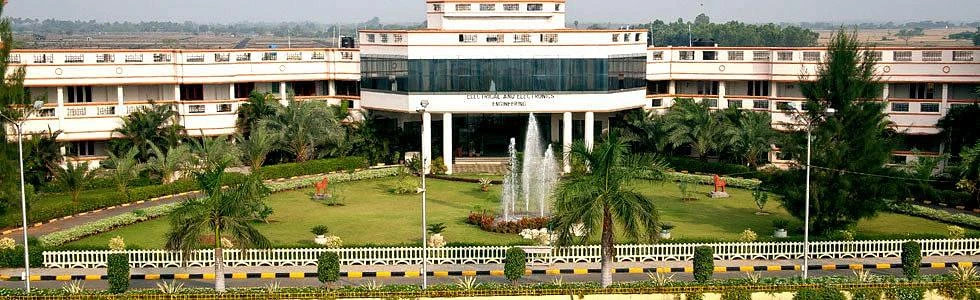
The DCE campus in Manimangalam is green, spacious, and quiet—about 12 km from Tambaram railway station. That’s the upside. The downside is its isolation; there’s little within walking distance, making students reliant on college buses or occasional trips to the city.
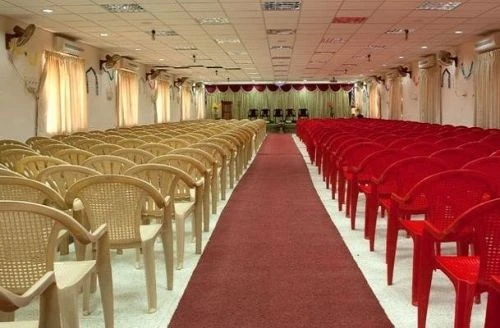
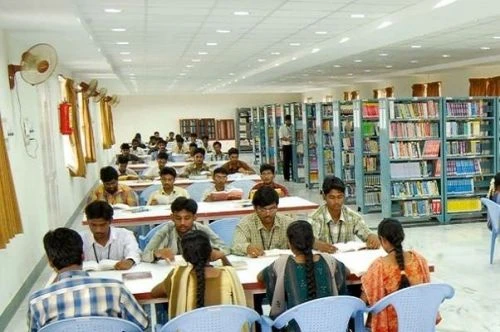
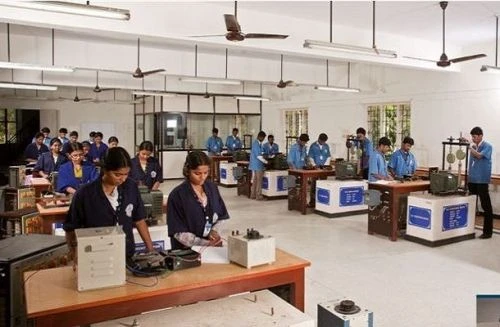
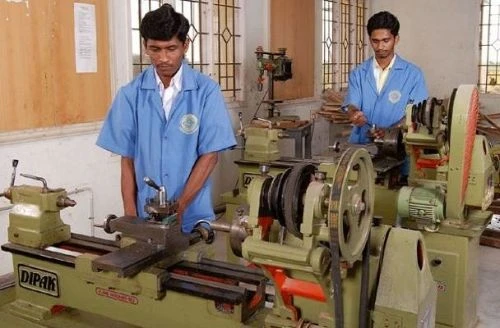
Infrastructure is adequate. Labs for CSE, ECE, and Mechanical are reported to be well-equipped and better maintained than some of the older classrooms. The library has a digital suite and over 30,000 volumes. Wi-Fi covers hostels and key areas, though speeds are described as just average. Hostels have a capacity for 500 boys and 350 girls. Rooms are basic but spacious, and the food in the mess is tolerable but repetitive, with non-veg served on specific days. Security is tight, with strict curfews.
And that leads to the most defining aspect of DCE student life: discipline. The college enforces a formal dress code, restricts casual gender interaction, and has a reputation for levying fines for rule breaches. It’s not a campus buzzing with fests or autonomous student clubs. The social life is limited. For some, this environment minimizes distractions. For others, it feels overly restrictive.
Scouring platforms like Reddit, Quora, and review sites reveals a consistent, almost unanimous consensus. DCE is viewed as a pragmatic choice, not a dream destination.
The positives are clear and repeated: excellent placement training that begins early, good faculty support, and strong value for money for government quota students who secure IT jobs. The campus is considered peaceful and conducive to studying.
But the negatives are just as consistently highlighted. The strict, school-like atmosphere tops the list. Students talk about fines for using phones in class and pervasive monitoring. The mandatory bus fee is a huge sore point, seen as a compulsory extra cost. The remote location means there’s no spontaneous outing to a café or mall. As one Reddit user succinctly put it, "If you want a job in TCS or CTS and are okay with school-like discipline, join here. If you want 'college life' and freedom, look elsewhere."
That’s the trade-off in a nutshell. The management is focused on academic results and placement percentages, and the rules are designed to support that single-minded goal.
Dhanalakshmi College of Engineering is a solid, no-frills option for a specific type of student. It’s worth serious consideration if you are a government quota student with a TNEA rank between 40,000 and 1,00,000, aiming for a stable career in IT services, and are comfortable with a highly structured, disciplined environment. The ROI in that scenario is hard to beat—you get an NAAC 'A' grade, autonomous education with decent placements at a very low cost.
However, you should probably look elsewhere if you prioritize a vibrant campus life, personal freedom, or are passionate about core engineering fields like Mechanical or EEE where placement support is thinner. The college’s strengths are in its training pipeline to IT companies, and it excels within that narrow lane. It’s a factory for employable graduates, not a crucible for broad-based college experimentation. Your decision hinges entirely on which of those outcomes matters more to you.
For the latest official information, always refer to the DCE website and the TNEA portal.
In this preview: 5 photos · 0 videos
Yes, Dhanalakshmi College of Engineering is considered one of the better mid-tier colleges for CSE in Chennai. This reputation is supported by its NBA accreditation and strong placement ties with major IT companies.
Yes, Dhanalakshmi College of Engineering has recently transitioned to autonomous status. This allows the college to design a more flexible and industry-aligned curriculum for its students.
Dhanalakshmi College of Engineering (DCE) in Manimangalam is a standalone institution under the Dhanalakshmi Educational Trust. Dhanalakshmi Srinivasan College of Engineering (DSCET) is a separate group with campuses in Mamallapuram, Perambalur, and Coimbatore. They are distinct institutions with different TNEA codes.
The hostel facilities at DCE are described as decent but with strict rules. There are separate blocks for boys and girls, and the facilities include 24/7 security and Wi-Fi access.
The TNEA (Tamil Nadu Engineering Admissions) code for Dhanalakshmi College of Engineering is 1405. This code is used for the centralized counseling process for engineering admissions in Tamil Nadu.
Share what future students should know about DCE.
Student voices are not rewritten by colleges. We remove spam and abuse.
Wider admission question? Community PulseWhat should future students know?
Tell us which course you're considering. We'll help you work out the next step.
Get instant Partner access after mobile verification. Your public edits are reviewed before they go live.
Claim this college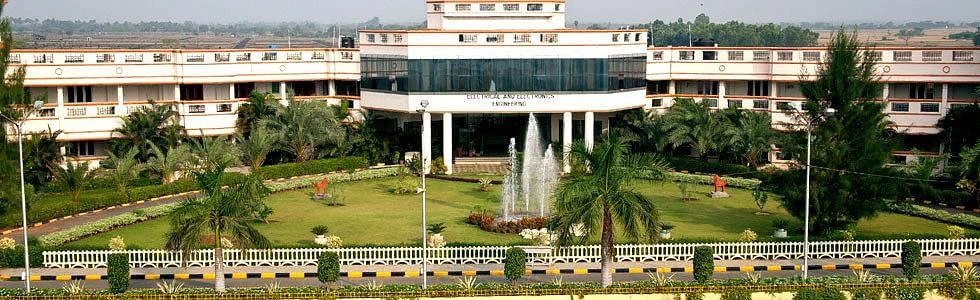
 Auditorium
 Cafeteria
 Computer Labs
 Hostel
 Medical
 Science Labs
 Sports Complex
 Study Library