Loading Admission Guardian content
Loading Admission Guardian content

Find a program, read its fee details and explore the admission requirements.
Summary of the programs shown below. Fee amounts are not listed. Contact the college for its current fee schedule.
| Course | Stream | Fees |
|---|---|---|
| Bachelor of Arts [BA] | Arts | |
| Bachelor of Commerce [B.Com] | Commerce | |
| Bachelor of Science [B.Sc] | Science | |
| Master of Science [M.Sc] (Organic Chemistry) | Science |
Specializations
Eligibility: 10+2
Specializations
Eligibility: 10+2
Specializations
Eligibility: 10+2
Specializations
Eligibility: Graduation
Dharma Apparao College in Nuzvid is a study in contrasts. Founded in 1966, it's one of the oldest private-aided colleges in the Krishna district, offering a low-cost, no-frills path to a traditional degree. With NAAC B++ accreditation and fees so low they're often fully covered by state scholarships, it's a pragmatic choice for many. But you won't find a buzzing corporate placement cell or modern dorms here. This is an institution built on academic legacy and affordability, where the strongest department—Chemistry—sends graduates to pharma giants, while others navigate state-run job fairs. It serves a specific, vital purpose in the regional education landscape.
The academic slate is classic: BA, B.Com, and B.Sc. combinations that have defined degree colleges for decades. Intakes are modest, typically 50-60 students per stream. The B.Sc. programs—Mathematics, Physics, Chemistry (MPC); Mathematics, Physics, Computer Science (MPCS); and the life sciences combo of Botany, Zoology, Chemistry (BZC)—form the core. Commerce students can opt for B.Com General or the slightly more contemporary B.Com with Computer Applications. For Arts, the History, Economics, Political Science (HEP) combination is the main offering.
At the postgraduate level, the M.Sc. in Organic Chemistry is the clear standout, with an intake of 24-30. It's the program that consistently gets mentioned by alumni and has a tangible link to local industry placements. The college follows the Choice Based Credit System (CBCS) as per Krishna University's calendar. Faculty strength leans on a core of about 12-15 permanent aided staff, supplemented by guest lecturers. The vibe is traditional; you're here for a solid, syllabus-focused foundation, not experimental interdisciplinary projects. That's not a criticism, just the reality of a college in this category.
Let's be direct. If you're looking at DAR for high-flying, on-campus corporate recruitment, you'll likely be disappointed. As a traditional degree college, its placement mechanism is almost entirely tied to large-scale AP State Skill Development Corporation (APSSDC) job fairs or pooled drives. The official numbers floating around—like a highest package of 6 LPA or an average of 3.2-3.7 LPA—should be taken as broad indicators from these fairs, not guaranteed college-specific outcomes.
The placement rate is estimated at 40-60% for students who actively participate, but that's a key detail. Many graduates, especially from BA and B.Com streams, immediately pursue B.Ed, MBA, or government exam preparation. For B.Sc. and M.Sc. Chemistry students, the path is clearer. Recruiters like Hetero Drugs and Divi’s Laboratories are known to pick up talent from the chemistry departments. On the IT/ITES side, mass recruiters such as Infosys BPM, Wipro, and TCS conduct Smart Hiring drives at these state fairs. The gap between the college's historic academic reputation and its formal placement cell is notable. You get a degree and access to state-run opportunities, but the onus to convert that into a job is largely on you.
This is where DAR becomes a compelling option for a significant demographic. Its 'Aided' status keeps tuition remarkably low. For the 2024-25 session, expect to pay between ₹5,000 to ₹10,000 per year for BA or B.Com General. B.Sc. and computer-based commerce programs range from ₹15,000 to ₹25,000. The M.Sc. Organic Chemistry fee is higher, at ₹30,000 to ₹45,000 annually.
And here's the critical part: for eligible students (which covers a large portion of the local student body), the Andhra Pradesh government's Jagananna Vidya Deevena and Vasathi Deevena scholarships are designed to cover the entire tuition and hostel fees, respectively. Hostel fees for the on-campus girls' facility are about ₹2,500 to ₹4,000 per month, including mess charges. The financial model essentially removes cost as a barrier to a university-affiliated degree. That's a powerful draw.
The process is centralized and merit-based, leaving little room for management quotas. For all Undergraduate (UG) programs, admission is conducted strictly through the state's OAMDC (Online Admissions Management System for Degree Colleges) portal. The sole criterion is your Intermediate (10+2) marks. There's no college-specific entrance exam. Cutoffs vary yearly by stream, but for sought-after combinations like B.Sc. MPCS, they can hover around 85-90% for the general category. Applications typically open in May after the board results.
For the M.Sc. Organic Chemistry program, you need a valid rank in the APPGCET (Andhra Pradesh Post Graduate Common Entrance Test). Counseling for both UG and PG is managed by the AP State Council of Higher Education (APSCHE). It's a transparent system, if sometimes administratively slow. The college's official site, darcollegenuzvid.in, usually posts admission notices, but the actual application happens on the state portal.
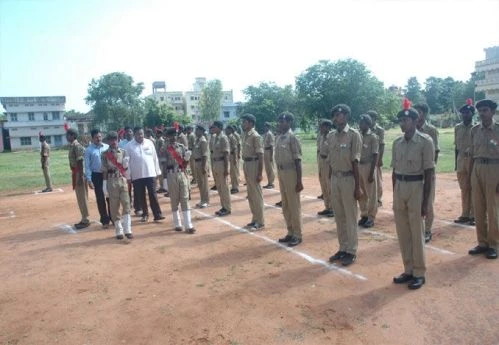
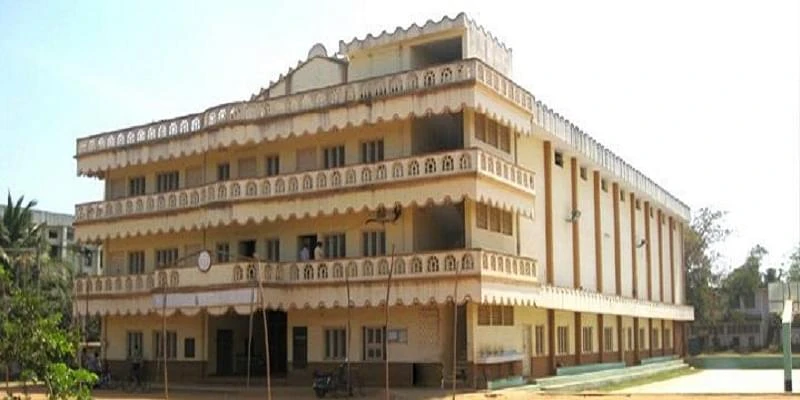
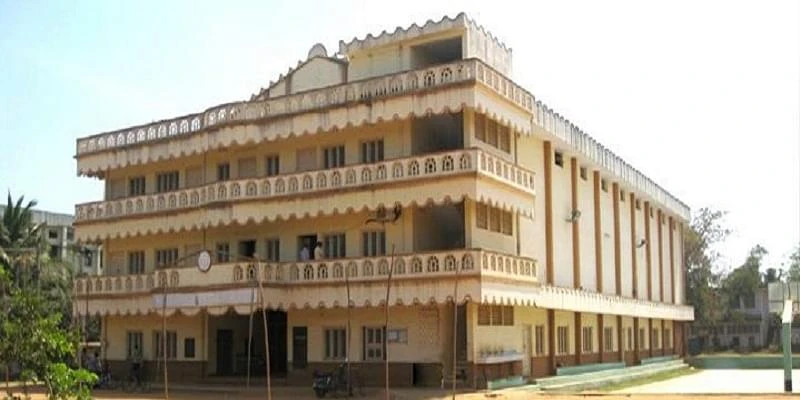
The 5.1-acre campus has a distinct, old-school character. The main building has heritage value, reportedly part of the old Nuzvid Fort area. It's green and peaceful, which students appreciate. But the infrastructure shows its age. Reviews consistently mention aging furniture, basic washrooms, and a general need for refurbishment. The library holds over 30,000 books, and labs for science subjects are functional, with the chemistry labs noted as being relatively well-equipped.
Hostel life is primarily for women; the college runs a dedicated girls' hostel on campus rated as 'basic but adequate.' Male students typically find private paying guest accommodations or hostels in Nuzvid town. There's a large playground shared with the junior college, supporting cricket, volleyball, and kabaddi. The canteen provides subsidized meals. Social life is quiet, centered on campus events and local town visits. Don't expect a metropolitan college experience. You get a spacious, low-cost academic environment that gets the job done.
Scouring platforms like CollegeDunia and Shiksha reveals a consistent, pragmatic consensus. The overwhelming positive is affordability. Verbatim, students call it "the best college for students from poor financial backgrounds." The experienced faculty, particularly in core subjects like Chemistry and Telugu, are deeply respected for their command and teaching style.
But the negatives are just as consistent. The decaying physical infrastructure—peeling paint, old desks—is a frequent complaint. The placement support is described as minimal; you're guided towards state job fairs, not company-specific campus drives. Attendance is strictly enforced, tied to scholarship disbursement. The overall sentiment is perfectly captured by one alumni paraphrase: "It's a government-aided college, so don't expect a 'hi-fi' lifestyle. It's for serious students who want a degree without debt." The Chemistry department's strength and the peaceful campus are the other major pluses.
Dharma Apparao College isn't for everyone, and it makes no pretensions otherwise. Its value proposition is razor-sharp: an accredited, historically respected degree at a near-zero net cost for scholarship-eligible students. If you are from the region, have financial constraints, and want a solid foundation in traditional B.Sc., B.Com, or BA subjects to either pursue higher studies or enter the workforce via state job channels, DAR is a rational and worthy choice. Its M.Sc. Organic Chemistry program has a genuine regional reputation for industry links.
However, if you prioritize modern campus amenities, an active corporate placement cell with high-paying tech jobs, or a vibrant extra-curricular scene, you will find DAR lacking. It's an institution that fulfills a specific, critical socio-educational role. For the student it's designed for, it's more than worth it. For others, it would feel like a step back in time. The decision hinges entirely on aligning your expectations with the college's established, uncompromising reality.

Dharma Apparao College (DAR) in Nuzvid is a Private Aided college. This means it is privately managed but receives financial aid from the Government of Andhra Pradesh.
No, DAR College does not offer B.Tech degrees. It is a Degree college offering undergraduate programs like BA, B.Com, and B.Sc. Students in Nuzvid seeking B.Tech typically look at institutions like RGUKT (IIIT Nuzvid).
The annual fee for the B.Sc. Computer Science program at DAR College is approximately ₹18,000 to ₹25,000. For eligible students, this fee is often fully reimbursed by the Andhra Pradesh state government.
The college primarily provides an on-campus hostel for female students. Male students usually arrange accommodation in private hostels or paying guest (PG) facilities located near the college.
Dharma Apparao College (DAR) is currently affiliated with Krishna University, located in Machilipatnam, Andhra Pradesh.
Share what future students should know about DAR.
Student voices are not rewritten by colleges. We remove spam and abuse.
Wider admission question? Community PulseWhat should future students know?
Tell us which course you're considering. We'll help you work out the next step.
Get instant Partner access after mobile verification. Your public edits are reviewed before they go live.
Claim this collegeIn this preview: 5 photos · 0 videos
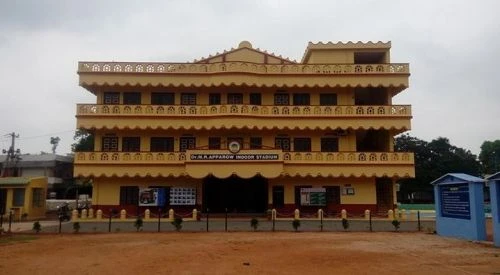
 Auditorium
 Cafeteria
 Campus Security
 Computer Labs
 Gym
Gym Hostel
 Medical
 Science Labs
 Sports Complex
 Study Library