Loading Admission Guardian content
Loading Admission Guardian content

Provisional score based on available data. It may change as more information is verified.
Find a program, read its fee details and explore the admission requirements.
Summary of the programs shown below. First-year fee. Check the note beside each amount for inclusions and exclusions.
| Course | Stream | Fees |
|---|---|---|
| Diploma in Engineering (Polytechnic) | Engineering | 25000 |
| Bachelor of Technology [B.Tech] | Engineering | 40800 |
| Master of Technology [M.Tech] (Computer Science and Engineering) | Engineering | 57000 |
Specializations
Specializations
All accepted exams
Eligibility: 10+2 with 45% + AP EAMCET
Specializations
All accepted exams
Eligibility: Graduation with 50% + AP PGECET
1 exam with cutoff data available
 Capgemini
 Chevron
 Hindustan Copper Limited (HCL)
 JCB
JCB Polaris
 TCS
TCSIf you're looking at colleges in Andhra Pradesh with an AP EAPCET rank in the 1.3 lakh range, Grandhi Varalakshmi Venkata Rao Institute of Technology (GVIT) in Bhimavaram is a name that'll come up. It's a private, budget-conscious option that gets you a JNTUK-affiliated B.Tech degree. But there's a gap between the brochure and the ground reality, especially when it comes to campus placements. The official site claims 60-70% placement, but dig into student reviews and you'll hear a different story—closer to 30-40% for actual on-campus roles. That's the central tension here: a low-cost degree from a quiet campus versus the hustle you'll need to secure a job afterward.
GVIT offers the standard JNTUK curriculum across its programs. The B.Tech intake is modest, with 120 seats each in CSE and ECE, and 60 seats in EEE, Mechanical, and Civil. There's also an M.Tech in CSE (18 seats) and Diploma programs in Mechanical and EEE.
The faculty strength is around 85 members. Students often mention that professors are accessible and friendly, which is a plus in a smaller college setting. It's not a research powerhouse, but there is a notable Centre for Bioinformatics Research & Software Development (CBRSD) on campus. This center has historical links to international projects, like a collaboration with Italy's IASMA Research Centre. That's an interesting footnote, but it's not a defining feature of the daily academic experience for most undergraduates.
You're here for a degree. And GVIT delivers that through JNTUK. The academic pressure is reportedly less intense than at top-tier colleges, which can be good or bad depending on your drive. You'll need to be self-motivated, especially in branches like CSE where the syllabus alone won't make you job-ready.
This is where you need to read carefully. The official narrative and student experiences don't fully align.
The college reports a highest package of 4.8 LPA and an average of 2.5-3.0 LPA for the 2023-24 cycle. Top recruiters listed include TCS, Capgemini, HCL, Polaris, Chevron, and JCB. The placement percentage is claimed to be 60-70%.
Now, the reality check from alumni reviews across platforms like Shiksha and Reddit paints a more cautious picture. The effective placement rate for on-campus, core-role offers is often cited as being between 30-40%. Many of the "placements" come from off-campus pool drives or are for BPO/IT support roles. Placement is heavily skewed towards IT services companies; core engineering branches (Mechanical, Civil) see significantly fewer opportunities.
So, what's the takeaway? You can get placed from GVIT, particularly in CSE and ECE. But the packages are modest, and the process is selective. Don't bank on the college's placement cell to hand you a career. The consistent advice from alumni is clear: "You have to learn coding on your own." Success stories often involve students who leveraged online resources, built projects, and cracked off-campus drives or pursued higher studies abroad.
Affordability is GVIT's strongest card. Tuition fees are regulated by the Andhra Pradesh Admission and Fee Regulatory Committee (AFRC). For B.Tech, you're looking at approximately ₹35,000 to ₹40,800 per year. Over four years, that's roughly ₹1.4 to ₹1.63 lakhs in tuition.
Hostel and mess fees add another ₹45,000 to ₹55,000 annually. So, the all-inclusive annual cost for a hostelite is in the ballpark of ₹80,000 to ₹95,000.
The key financial aid comes from the state government. Eligible students can avail of the Jagananna Vidya Deevena (RTF) and Vasathi Deevena (MTF) scholarship schemes, which can cover a significant portion of tuition and hostel fees. This makes GVIT a viable economic option for many families.
Admissions are entrance-exam driven. For B.Tech, you need a valid rank in AP EAPCET. For M.Tech, it's AP PGECET or GATE. Diploma admissions go through AP POLYCET.
The cutoffs are accessible. For the 2023-24 session, the closing ranks for the General Category in AP EAPCET were around 125,000-135,000 for CSE and 130,000-145,000 for ECE. These ranks are a solid reference point.
The seat allocation follows the standard 70:30 rule for Andhra Pradesh: 70% of seats are filled through the Convener Quota (Category A) based on your entrance rank, and 30% are under Management Quota (Category B). Always confirm the latest cutoff trends on the official APSCHE website.
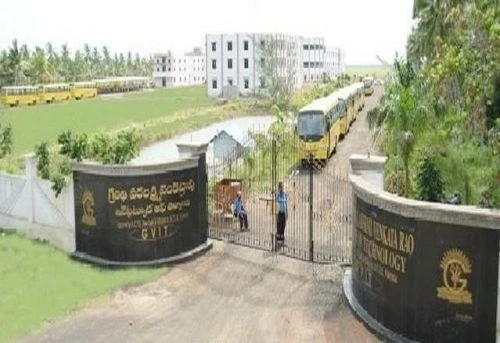
The 10-acre campus in Tundurru is described as green and quiet—away from the bustle of Bhimavaram town. That's a pro for focus, a con if you're seeking a vibrant city life.
Infrastructure is a mixed bag. The library has a decent collection. Labs are equipped to meet JNTUK syllabus requirements, though students in Mechanical and EEE have noted that some equipment is aging. A frequent complaint is the lack of consistent, high-speed Wi-Fi across the entire campus.
Hostels have separate blocks for boys and girls, with a capacity of 100 each. Reviews rate them around 3 out of 5. The most common grievance? The quality of canteen and mess food, often labeled as average to poor. The college runs a fleet of 22 buses, which is a strong point, connecting students across West Godavari and East Godavari districts.
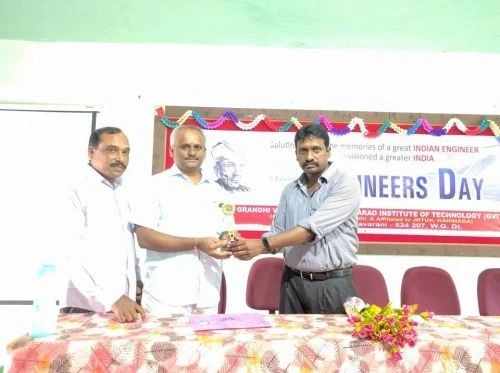
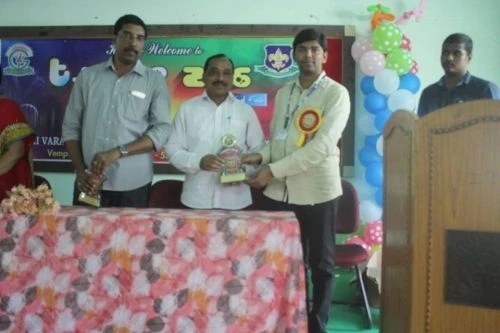
On the extracurricular front, there's an annual tech fest and cultural day. Sports facilities include cricket and volleyball, and there's a notable Table Tennis coaching camp held in association with the Sports Authority of Andhra Pradesh (SAAP). Discipline is reportedly strict, with enforced dress codes and attendance policies that some students find overly rigid.
Synthesizing feedback from 2020-2024 gives you a clear, unfiltered picture.
The Good: Faculty are approachable and helpful. The campus environment is peaceful. The fee structure, especially with government scholarships, is highly affordable. For a student with a rank between 1.2-1.5 lakhs, it's seen as a practical, no-frills option to get an engineering degree.
The Not-So-Good: Placement anxiety is the biggest theme. The gap between official claims and the on-ground job rate is a source of frustration. Administrative processes can be slow, particularly for scholarship disbursements. Infrastructure, especially hostels and internet, needs upgrading. The "school-like" discipline rubs many the wrong way.
The alumni consensus is pragmatic. One 2023 review sums it up: "If you want a degree with low pressure and have a low EAMCET rank, it's okay. But don't expect a 10 LPA job from the campus. You have to learn coding on your own."*
GVIT is a specific solution for a specific problem. It's worth serious consideration if your AP EAPCET rank is in the 1.3 lakh range, your budget is tight, and your primary goal is to secure an accredited B.Tech degree with minimal financial risk. The state scholarships make it economically sensible. The quiet campus and decent faculty support can provide a stable environment to study.
But you must go in with eyes wide open. Treat the placement cell as a potential facilitator, not a guarantor. Your employability will depend almost entirely on your own initiative—online courses, certifications, personal projects, and off-campus job hunting. If you are a self-starter who just needs a legitimate degree as a launchpad, GVIT can work. If you are looking for a college with a strong brand, a vibrant campus life, and a placement cell that actively secures high-paying roles for the majority, you should probably look at colleges with higher cutoffs and fees. GVIT is a budget-tier, functional choice. Manage your expectations accordingly, and it can serve its purpose.
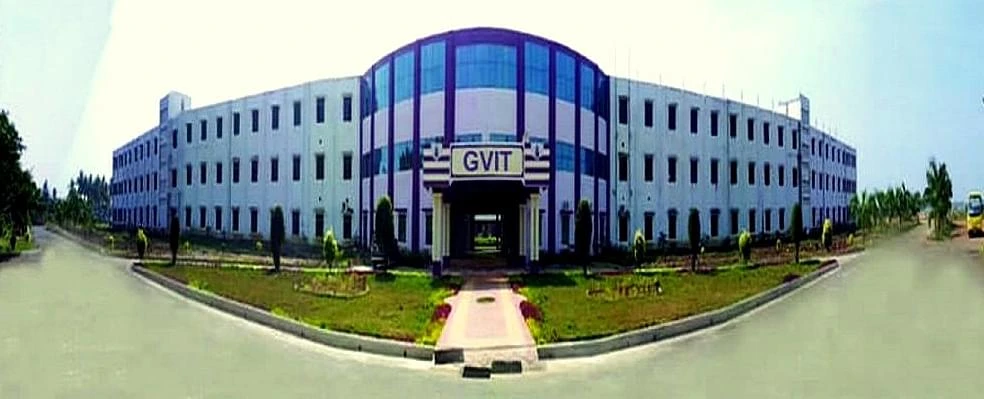
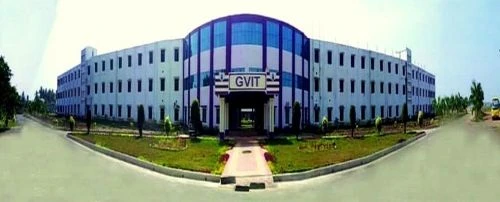
In this preview: 5 photos · 0 videos
No, Grandhi Varalakshmi Venkata Rao Institute of Technology (GVIT) is a separate institution from Vishnu Institute of Technology (VITB). VITB is generally considered a Tier-1/2 college with significantly higher admission cutoffs and placement records, while GVIT is a smaller, distinct college in Bhimavaram.
For the Computer Science and Engineering (CSE) program, the Grandhi Varalakshmi Venkata Rao Institute of Technology (GVIT) cutoff in AP EAPCET typically falls around 1.3 Lakh rank. This is a general benchmark, and the exact rank may vary slightly each academic year.
Yes, GVIT provides a bus facility for student transportation. The college operates a fleet of 22 buses that cover a wide radius around Bhimavaram to connect students from surrounding areas.
Based on median student reviews, the quality of the hostel food at GVIT is often described as "average" to "poor." This sentiment is commonly reported for many private college hostels in the region.
Yes, Grandhi Varalakshmi Venkata Rao Institute of Technology conducts an annual technical fest and a cultural day. However, these events are noted to be smaller in scale compared to the larger fests held at colleges like SRKR Engineering College or Vishnu Institute of Technology.
Share what future students should know about GVIT.
Student voices are not rewritten by colleges. We remove spam and abuse.
Wider admission question? Community PulseWhat should future students know?
Tell us which course you're considering. We'll help you work out the next step.
Get instant Partner access after mobile verification. Your public edits are reviewed before they go live.
Claim this college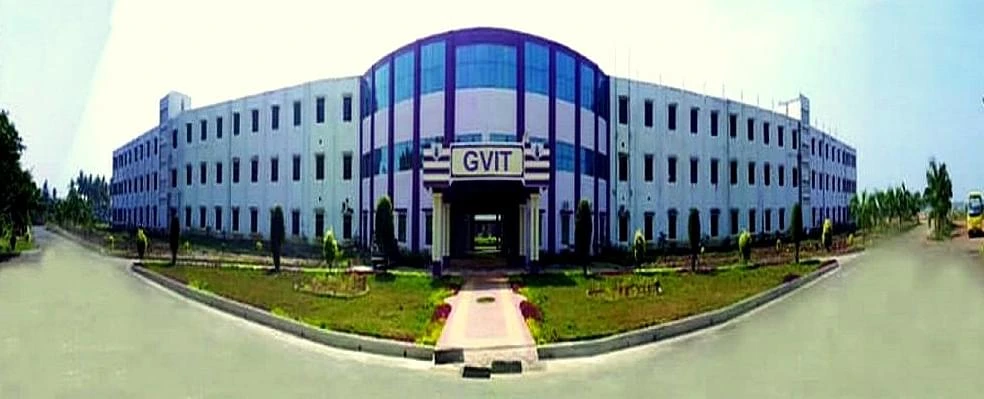
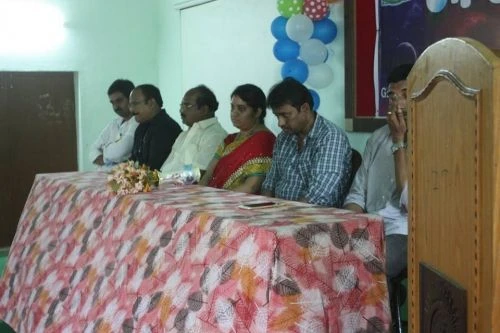
 Auditorium
 Cafeteria
 Campus Security
 Campus Shuttle
 Computer Labs
 Hostel
 Medical
 Science Labs
 Sports Complex
 Study Library