Loading Admission Guardian content
Loading Admission Guardian content

Find a program, read its fee details and explore the admission requirements.
Summary of the programs shown below. Fee periods can differ by program. Check the note beside each amount before comparing costs.
| Course | Stream | Fees |
|---|---|---|
| Bachelor of Science [B.Sc] | Science | 2940 |
| Bachelor of Arts [BA] (Economics) | Arts | 3315 |
| Master of Business Administration [MBA] | Management | 56600 |
| Master of Computer Applications [M.C.A] | Computer Applications | |
| Master of Science [M.Sc] | Science |
Specializations
Eligibility: 10+2
Specializations
Eligibility: 10+2
Specializations
All accepted exams
Eligibility: Graduation with 50% + APICET
All accepted exams
Eligibility: Graduation with 50% + APICET
Specializations
Eligibility: Graduation
1 exam with cutoff data available
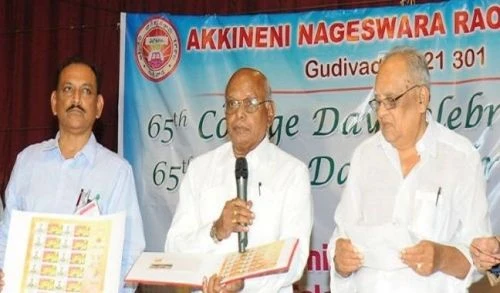
Akkineni Nageswara Rao College in Gudivada is a bit of a local legend. Founded in 1950, it's one of those institutions that has educated generations in the Krishna district. It’s got the official stamps of approval—an NAAC 'A' grade and UGC autonomy—which means it can design its own curriculum. But the real story here is the gap between its long history and its current placement reality. The college claims a ₹22 LPA top package, but official placement rates hover around 35%. That’s a figure you don't see every day, and it tells a more nuanced story than the recruiter list featuring names like the Big Four accounting firms.
ANR College runs a fairly traditional arts, science, and commerce shop, but with the added heft of postgraduate professional courses. At the UG level, you've got your standard B.A. (Economics), B.Com (General and Computer Applications), and B.Sc. programs. The B.Sc. combinations are where the choice lies—Maths, Physics, Chemistry; Maths, Stats, Computer Science; or the life sciences track with Botany and Zoology. They're offered in both English and Telugu medium, which is a nod to its regional student base.
The postgraduate courses are the main draw for many. The MBA and MCA programs have the highest intake at 120 seats each. The MBA offers specializations in Finance, Marketing, and HR. The M.Sc. programs are spread across sciences like Chemistry, Computer Science, and Microbiology. Being an autonomous college since 2018, it has more control over syllabus design and evaluation. They’ve implemented a CGPA system and have started rolling out features like the Academic Bank of Credits (ABC) and a Mentor-Mentee system, aligning with the National Education Policy 2020. The faculty is described as dedicated and experienced, which is typical for an established college. You won't find a long list of flashy industry MoUs here, but the curriculum seems geared toward foundational knowledge.
This is the section that requires a careful read. The official data presents a split picture. On one hand, the 2023 placement brochure highlights a highest package of ₹22 lakhs per annum and an average of ₹9 LPA. The median package sits at ₹7 LPA. The recruiter list is genuinely impressive, featuring consulting giants like EY, KPMG, PwC, and Deloitte, alongside names like Genpact, Huawei, Maruti Suzuki, and Divis Pharma.
But here’s the critical context: the official placement percentage is 35%. That number is crucial. It means for the 2023 batch, 120 students were placed out of a likely eligible pool. A student review from the 2019 batch noted that while 70% passed, "most of the students do not get the job." That anecdote aligns uncomfortably well with the official 35% figure.
So, what's the reality check? The top-tier recruiter visits and high packages are real, but they likely go to a small, top-performing cohort from the MBA and MCA programs. The majority of students, especially from the pure science and arts streams, may not see robust on-campus recruitment. The gap between the highest package and the placement rate suggests a highly skewed outcome. If you're a top-rank holder in APICET landing in the MBA program, there's a shot at those brand-name recruiters. For everyone else, the college provides a degree, but the onus for a job might be more on you.
Fees at ANR College are moderate, especially for a private autonomous institution. The professional courses cost more. The MBA program's annual tuition is around ₹70,000. The MCA is similarly priced. For traditional courses, the total program cost is quite affordable: a B.Sc. degree can cost between ₹7,920 and ₹45,000 for the entire three years. A B.Com is about ₹36,000 total, and an M.Sc. ranges from ₹50,000 to ₹60,000.
Hostel and mess fees are extra and are estimated at roughly ₹30,000 per year for boarding and lodging, though an older review mentioned ₹18,000, so inflation has played its part. The college does offer scholarships, which are listed in the student corner of their official website. These are typically based on academic merit, reserved category quotas, or financial need. It's worth checking the site directly or contacting the administration for the latest forms and deadlines.
Admissions depend entirely on the program. For undergraduate BA, B.Com, and B.Sc. courses, it's primarily merit-based, using qualifying exam marks, through a college-organized process subject to state reservation rules.
For postgrad, you need entrance exams. M.Sc. and M.Com admissions go through KRUCET (Krishna University Common Entrance Test). The big-ticket MBA and MCA programs require APICET (Andhra Pradesh Integrated Common Entrance Test). Here, 70% of seats are filled via state counseling based on the APICET rank. The remaining 30% are Management/NRI Quota seats, where the college management selects candidates, though they still need to meet a basic eligibility (50% aggregate in graduation).
For the B.Ed. program at their affiliated College of Education, the entrance exam is AP EDCET. The 2024 cutoff for the B.Ed. program showed an overall rank of 602 in Round 1, giving you a ballpark idea of competitiveness.
Application windows vary. For example, M.Com applications for 2025 were in September, while B.Sc. admissions for 2025 were slated for late October. Always check the college website for the most current notifications. Forms are available there or at the college office.
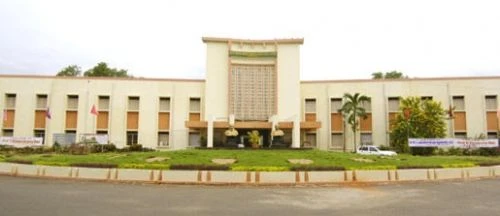
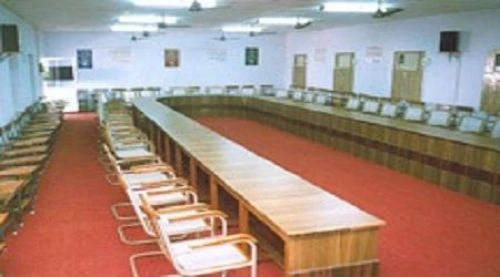
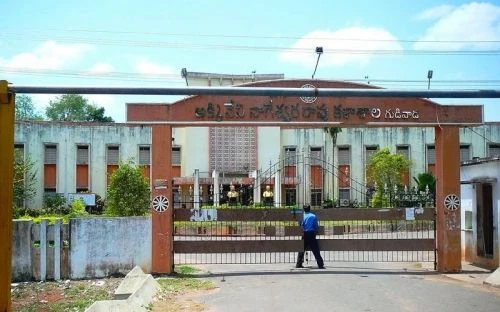
Set on 15 acres, the campus is described as spacious. The infrastructure is solid, if not ultra-modern. There are separate libraries for UG and PG students, housing over 75,000 volumes. Labs for sciences and computers are noted as "well-equipped."
Hostel life is a big part of the experience for many. They have separate facilities: the Akkineni Annapurna Women's Hostel and a Men's Hostel built with UGC grants. Reviews from past students call them "good," "well-maintained," and "secure." Rooms are comfortable, and there are separate dining halls. The canteen food gets a specific shout-out for being "very tasty," which is a win in any student's book.
On the extracurricular front, the college has its own playground and facilities for a long list of sports—from cricket and football to kabaddi, chess, and table tennis. It’s a self-contained environment. Gudivada is a town, not a metro, so the social life is very campus-centric. The location is well-connected by road and rail, with Vijayawada Airport about 47 minutes away for longer journeys.
Synthesizing what’s out there, the reviews paint a picture of a decent regional college with clear limitations. The positives often highlight the experienced faculty, the spacious campus and good hostel facilities, and the value-for-money fee structure. The autonomous status is seen as a plus for curriculum relevance.
The negatives consistently circle back to placements and career support. The low placement percentage (35%) is a major concern. Students feel the college could do much more in terms of training, internships, and attracting a wider pool of recruiters. There's a sense that unless you're in the top percentile of your MBA/MCA class, you're largely on your own. Some also mention that while the infrastructure is adequate, it isn't cutting-edge. The location in Gudivada is peaceful but doesn't offer the industry exposure or internship opportunities of a bigger city like Vijayawada or Hyderabad.
It depends entirely on your goals and budget. If you're a student from the Krishna district region looking for an affordable, accredited, autonomous college to earn a reputable B.Sc., B.Com, or M.Sc. degree, ANR College is a perfectly sensible choice. The fees are low, the faculty is seasoned, and the campus provides a solid academic environment. You'll get a decent education without a huge financial burden.
However, if your primary goal is strong, assured campus placements with high packages, you need to be cautious. The MBA and MCA programs offer a lottery ticket—a chance at a great job with a big-name firm—but the odds, based on the 35% placement rate, are not in everyone's favor. You'd need to be a very high-ranker in APICET and be prepared to be exceptionally proactive. For students seeking a dynamic, placement-focused professional program, larger institutions in major cities might offer better odds and more consistent opportunities. ANR College is a legacy institution doing good work in its domain, but it's not a placement powerhouse.

In this preview: 5 photos · 0 videos
The annual tuition fee for the MBA program at Akkineni Nageswara Rao College is approximately ₹70,000. This is for the academic year 2025. Additional costs like hostel and mess fees, which are estimated at around ₹30,000 per year, would apply for students opting for campus accommodation.
For the 2023 placement session, the highest package offered at Akkineni Nageswara Rao College was ₹22 lakhs per annum (LPA). This top package is typically secured by a select few students from the postgraduate professional programs like MBA or MCA.
The placement outcome at ANR College is mixed. While the college reports a highest package of ₹22 LPA and an average of ₹9 LPA with recruiters like EY, KPMG, and Deloitte, the official placement percentage for 2023 was 35%. This indicates that campus placements are strong for a top-performing minority but are not guaranteed for the entire batch. Prospective students should weigh this rate alongside the recruiter names.
Admissions to the MCA program at ANR College are primarily based on the APICET (Andhra Pradesh Integrated Common Entrance Test) rank. Seventy percent (70%) of seats are filled through the state counseling process based on APICET ranks. The remaining 30% of seats are under the Management/NRI Quota, where the college management selects candidates who meet the basic eligibility criteria.
To be eligible for MBA admissions via the APICET route, candidates must have passed a recognized bachelor's degree of minimum 3 years duration. For admission under the Management/NRI Quota (30% of seats), candidates must have passed the qualifying examination with at least 50% marks in aggregate (or an equivalent CGPA).
Share what future students should know about ANR.
Student voices are not rewritten by colleges. We remove spam and abuse.
Wider admission question? Community PulseWhat should future students know?
Tell us which course you're considering. We'll help you work out the next step.
Get instant Partner access after mobile verification. Your public edits are reviewed before they go live.
Claim this college
 Auditorium
 Cafeteria
 Campus Security
 Computer Labs
 Gym
Gym Hostel
 Medical
 Science Labs
 Sports Complex
 Study Library