Loading Admission Guardian content
Loading Admission Guardian content

Based on incomplete college records.
Find a program, read its fee details and explore the admission requirements.
Summary of the programs shown below. Fee amounts are not listed.
| Course | Stream | Fees |
|---|---|---|
| Bachelor of Theology [B.Th] | Arts | |
| Diploma in Theology | Arts | |
| Master of Divinity [M.Div] | Arts |
Eligibility: 10+2
Specializations
Eligibility: 10th passed
Eligibility: Graduation
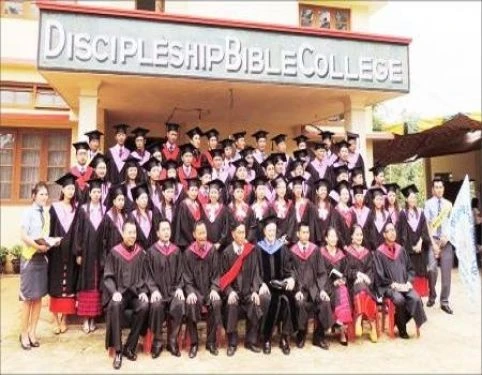
Discipleship Bible College in Dimapur isn't your typical college. It doesn't chase NIRF rankings or corporate placements. Founded in 1981 on a hillock called 'Mt. Miracles,' its mission is singular: training men and women for Christian ministry. With full accreditation from the Asia Theological Association (ATA) and deep roots in the Nagaland Baptist Church Council, DBC has built a reputation over four decades as a rigorous, affordable, and spiritually intense training ground for pastors, missionaries, and church leaders across Northeast India and beyond. If you're looking for a theology degree that prioritizes character formation as much as academic knowledge, this is a place you'll hear about.
DBC offers a clear ladder of theological education, from a diploma to a doctorate. The core residential programs are the three-year Bachelor of Theology (B.Th) and the two or three-year Master of Divinity (M.Div). The M.Div program is notably part of the Federated Theological Programme of North East India (FTPNEI), a joint venture with other regional Bible colleges that likely pools some academic resources. There's also a Diploma in Theology for those with a Class X background and a Doctor of Ministry (D.Min) designed for experienced pastors.
The academic culture is where DBC truly defines itself. It's not just about lectures. The faculty, led by Principal Rev. S. Wati and Academic Dean Dr. Husazulü Chüzho, operate in a mentor-mentee model. You're not just learning systematic theology; you're being formed for ministry life. That formation includes the famous—or infamous—'Dignity of Labour' component. Every student participates in manual work like gardening and cleaning. It's a practical lesson in humility and servant leadership that students either embrace or find challenging. The medium of instruction is English, and the calendar typically runs from late June to a graduation ceremony in April.
Forget TCS and Infosys. Placement at Discipleship Bible College means placement into ministry. The college reports a near 100% placement rate for graduates seeking roles in churches, missions, or Christian NGOs. The primary recruiting network is the vast ecosystem of the Nagaland Baptist Church Council (NBCC) and its constituent tribal associations (Ao, Sumi, Angami, etc.). Other key partners include mission boards like the International Evangelistic Fellowship (IEF).
Graduates typically become pastors, associate pastors, youth directors, missionaries (with alumni serving in Nepal and Bhutan), Christian educators, or social workers within faith-based NGOs. There's no 'average package' to quote here. Compensation is tied to church or mission board scales, which are modest. The ROI isn't financial; it's measured in spiritual impact and lifelong vocation. For a secular job, a B.Th alone is a tough sell, though some graduates use it as a foundational degree for government exams or broader social work.
Affordability is a consistent highlight in student reviews. For the 2024-25 academic year, the annual tuition is ₹42,000 for the B.Th/Diploma programs and ₹49,000 for the M.Div. On top of this, the mess fee is ₹18,000 per year (billed monthly). Hostel accommodation is included in the campus life for residential students, with no separate exorbitant fee mentioned, keeping overall costs low.
Over a standard three-year B.Th program, the total cost for tuition, mess, and basic lodging is estimated to be between ₹1.8 to ₹2 lakhs. That's remarkably low for a full residential college education. The college website doesn't detail an extensive scholarship program, but given its affiliation with the NBCC, there may be church-sponsored support for candidates from member congregations. The application form itself costs ₹300.
Admission to DBC is a holistic process that evaluates more than just academic scores. It starts with eligibility: 10+2 passed for the B.Th, and a B.Th degree (with a B grade or above) for the 2-year M.Div track. Graduates from any stream can apply for the 3-year M.Div.
The selection process is a three-step filter:
The application window is tight, typically closing around May 17-20 for the June session. It's a process designed to filter for commitment. You can't just stumble into DBC; you need a clear purpose and the endorsement of your local church community.
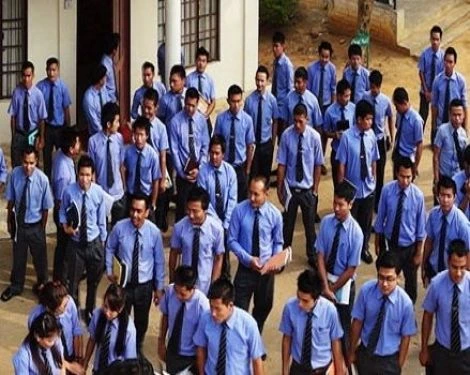
The campus, situated on 'Mt. Miracles,' is described as spacious and beautifully enclosed—a self-contained community for over 400 residents including students and staff. The atmosphere is highly disciplined: strictly alcohol, tobacco, and drug-free, with structured daily routines that include morning and evening prayers.
Hostels are basic but sufficient, with separate facilities for men and women. Don't expect luxury; expect shared rooms and a focus on community living. The DBC Dimapur Library is a key resource, housing a specialized collection of theological texts, though digital access is noted as limited. There's a basic computer lab for research and thesis work. For recreation, facilities for volleyball, football, and indoor games like table tennis are available. The social life is deeply shaped by the cross-cultural mix of students from various Naga tribes and international students from places like Nepal and Myanmar, which many alumni cite as a formative experience.
Talking to students and alumni paints a consistent picture. The positives are powerful. The spiritual rigor and prayer-focused environment are the top draws. People come here for transformation, and most feel they get it. The cross-cultural exposure within the student body is highly valued, preparing graduates for diverse ministry settings. And almost everyone mentions the affordability—it's seen as incredible value for money in the theological education space.
But it's not for everyone. The strict discipline can be a shock. The mandatory 'Dignity of Labour' and rigid daily schedules require adjustment. Some find the infrastructure basic; hostel comforts are minimal, and internet connectivity on the hillock can be unreliable. You come here for spiritual and academic training, not for Wi-Fi speed or air-conditioned rooms. The teaching is respected, with faculty seen as accessible mentors deeply invested in student growth.
Discipleship Bible College serves a specific audience with remarkable focus. If you are certain of a calling to Christian ministry—particularly within the Baptist tradition of Northeast India or cross-cultural missions—and you seek an education that molds character as diligently as it teaches hermeneutics, DBC is an outstanding and affordable choice. Its ATA accreditation opens doors for higher theological study globally, and its NBCC network provides a clear pathway into ministry.
However, if you're looking for a liberal arts experience, secular career options directly from your degree, or a campus with modern amenities and lax rules, you'll be disappointed. The discipline is real, the lifestyle is communal and simple, and the entire program is vocational. For the right candidate, DBC isn't just a college; it's a pivotal training ground. For everyone else, it probably won't even be on the radar. Its value is profound, but its appeal is intentionally narrow.

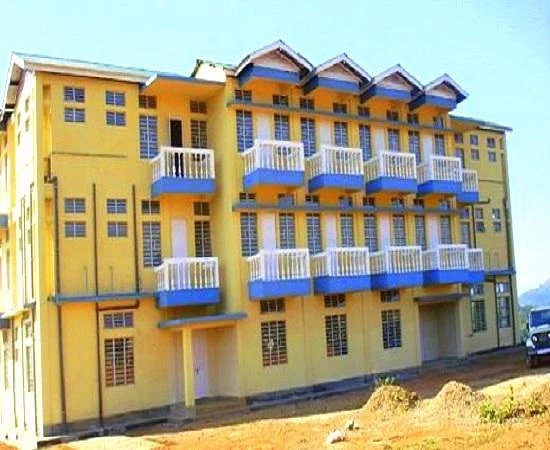
In this preview: 5 photos · 0 videos
Yes, Discipleship Bible College is recognized as a religious educational institution by the Government of Nagaland. It is also accredited by the Asia Theological Association (ATA), which enables its graduates to pursue higher theological studies like M.Th. or Ph.D. at universities worldwide.
While the Bachelor of Theology (B.Th) is a theological degree, graduates from DBC often use it as a foundational graduation to appear for various competitive exams. Many also find employment in the social sector and with non-governmental organizations (NGOs).
The "Dignity of Labour" is a mandatory program at DBC where all students participate in manual work such as campus cleaning and gardening. This initiative is designed to instill a mindset of servant-leadership and practical humility.
Yes, Discipleship Bible College offers a Master of Divinity (M.Div) program through its Distance Education mode. This program is specifically designed to accommodate working pastors and other professionals.
English is the primary medium of instruction for all academic programs offered at Discipleship Bible College (DBC).
Share what future students should know about DBC.
Student voices are not rewritten by colleges. We remove spam and abuse.
Wider admission question? Community PulseWhat should future students know?
Tell us which course you're considering. We'll help you work out the next step.
Get instant Partner access after mobile verification. Your public edits are reviewed before they go live.
Claim this college

 Cafeteria
 Computer Labs
 Medical
 Sports Complex
 Study Library