Loading Admission Guardian content
Loading Admission Guardian content
Find a program, read its fee details and explore the admission requirements.
Summary of the programs shown below. Fee periods can differ by program. Check the note beside each amount before comparing costs.
| Course | Stream | Fees |
|---|---|---|
| Bachelor of Commerce [B.Com] | Commerce | 27500 |
| Bachelor of Computer Applications [BCA] | Computer Applications | 27500 |
| Bachelor of Arts [BA] | Arts | 27615 |
| Bachelor of Science [B.Sc] | Science | 27650 |
| Bachelor of Tourism and Hotel Management [BTHM] | Hotel Management |
Specializations
Eligibility: 10+2
Specializations
Eligibility: 10+2
Specializations
Eligibility: 10+2
Specializations
Eligibility: 10+2
Eligibility: 10+2
Founded in 1941 by Arya Samaj leaders and freedom fighters, Doaba College in Jalandhar isn't just another degree mill. It's an institution with a legacy, one that counts filmmaker Yash Chopra and industrialist Lord Swraj Paul among its alumni. For students in Punjab's Doaba region looking for a traditional, academically rigorous college that won't break the bank, it's often the first name that comes up. But that legacy comes with old-school discipline and a placement scene that's more about steady jobs than dream packages. If you're after a no-frills, value-for-money education with surprisingly strong media and science programs, this might be your spot. Just don't expect the glitz of a private university.
Doaba College offers a classic mix of Arts, Science, Commerce, and a few professional courses. It's a government-aided institution, which keeps fees relatively low for traditional streams like B.A., B.Sc, and B.Com. The professional courses—BCA, BBA, B.Sc IT, and BJMC—run on a self-financing basis, so they cost a bit more.
The academic culture here is, well, academic. They follow the GNDU semester system and the faculty, many with PhDs and 15+ years of experience, are known to be strict about attendance and fundamentals. It's not a place where you can easily skip class. Two features really stand out. First, the School of Competitive Exams provides on-campus coaching for IAS, PCS, and banking exams—a huge plus for students aiming for government services. Second, the Journalism department is arguably the college's crown jewel. It runs its own community radio station, Raabta 90.8 MHz, and has a professional-grade Sh. Yash Chopra TV Studio. For hands-on media training in Punjab, it's tough to beat.
The Biotechnology program also gets a special nod due to the college's DBT Star College status, which means better lab funding and a research-oriented approach.
Let's be clear: you don't come to an 80-year-old aided college like Doaba for a Silicon Valley placement drive. The placement cell is active, but its outcomes are modest and realistic for the region and course type.
The highest package touted for 2024-25 was ₹10 LPA, but that's an unverified student claim. The verified, working figure for top offers in tech or management roles is more like ₹4-6 LPA. The average package across all placed students typically falls between ₹2.5 and ₹3.5 LPA. Placement percentages tell the real story. The college claims around 40-50% for professional courses like BCA and BBA. For general BA or B.Sc streams, student reviews suggest that figure is closer to 20-30%. Most opportunities are in sales, customer service, and back-office roles.
Recruiters are a mix of national names and regional players. You'll see Wipro, TCS, Infosys, and Tech Mahindra for IT roles. HDFC Bank, ICICI Bank, and Bajaj Finserv are regulars for finance. Media placements are often with local giants like PTC News or Punjab Kesari. It's a decent list for a college of its type, but don't expect a flood of offers. You'll need to be in the top tier of your class and proactive to land one.
The affordability is a major draw. A three-year B.A. can cost as little as ₹75,000-85,000 in total tuition. Even the more expensive BCA program totals around ₹1.4-1.55 lakhs for three years. That's significantly lower than nearby private universities. But remember to factor in other costs.
Hostel and mess fees are a substantial add-on, ranging from ₹64,000 to ₹80,000 per year. It includes lodging and vegetarian meals, but reviews say the hostel rooms are pretty basic. There are also mandatory fees like registration (₹3,000) and semester exams (₹2,500 each).
The college does offer scholarships to ease the burden. The Platinum Jubilee Scholarship can grant a 100% fee waiver to students who scored over 90% in their 12th grade. There's also a concession for single girl children and standard post-matric scholarships for SC/ST/OBC students as per Punjab government rules. It's worth checking the official website for the latest forms and deadlines.
Admissions here are refreshingly straightforward for most programs. There's no entrance exam for courses like B.A., B.Com, or B.Sc. Selection is purely merit-based, depending on your marks in the 10+2 board exams. For postgraduate courses, they look at your graduation scores.
The process follows the GNDU calendar. Applications usually open in May, with a deadline in late July. The college then publishes a merit list, followed by counseling and document verification. The application fee is around ₹3,000 for general courses and ₹5,000 for professional ones like BCA or BBA.
Since it's merit-based, cutoffs fluctuate each year based on applicant volume and scores. For sought-after programs like BCA or BJMC, you'll likely need a percentage in the high 70s or 80s to be in contention. For general arts courses, the threshold can be lower. The key is to apply as soon as the window opens and keep an eye on the merit list announcements.
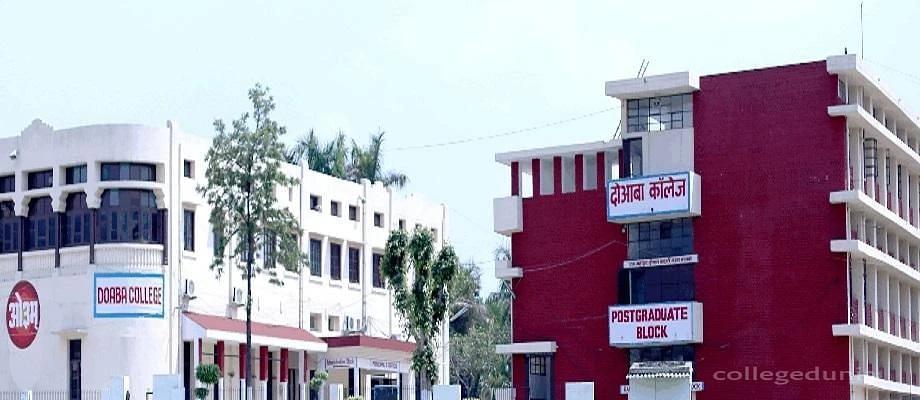
The 21-acre campus feels historic, and parts of it look the part. Some classrooms and facilities are seen as outdated by students—don't expect air-conditioning everywhere. But the essentials are there and functional. There are 14 science labs, five computer labs with decent tech, a massive library with over 70,000 books, and good sports facilities including a swimming pool and indoor stadium.
Hostel life is a mixed bag. The girls' hostel (capacity 96) and boys' hostel (capacity 80) are on campus, which is a big security plus. They're clean and have Wi-Fi, but they're also described as basic and no-frills. The canteen, "Canteen Park," gets average reviews—affordable but not known for gourmet quality or spotless hygiene.
Social life revolves around festivals. The Doaba Youth Fest and the media fest Communis are the big annual events that actually liven up the campus. There's an active NCC and NSS wing too. But overall, this isn't a "happening" campus in the party sense. It's more focused and disciplined.
Talking to former students and scanning forums gives you a consistent picture. The praise usually centers on three things: academic rigor, the journalism department, and value for money. Many appreciate that the teachers are knowledgeable and enforce discipline, which they feel helped them build a solid foundation. The media facilities are universally praised as best-in-class for the region.
The criticisms are just as consistent. The attendance policy is notoriously strict—you must maintain 75% to be eligible for exams, and shortages can lead to fines as high as ₹5,000. Students call the administration slow and bureaucratic for routine tasks. And there's a recurring theme about placements: manage your expectations. As one review put it, "Don't expect Google or Microsoft. Most placements are for sales roles in local companies or banks."
It's a trade-off. You get a reputable, affordable education but within a traditional and sometimes rigid system.
Doaba College is a very specific kind of fit. It's absolutely worth it if you're a student in the Doaba region prioritizing a reputable, affordable degree from a well-established college with strong NAAC and UGC credentials. It's a top-tier choice for Journalism (BJMC) and a solid, budget-friendly option for BCA, B.Sc IT, and traditional science programs, especially with its DBT Star status. The on-campus competitive exam coaching is a unique and valuable perk for aspirants to government services.
However, you should probably look elsewhere if you're seeking a vibrant, modern campus life with ultra-flexible schedules, or if your primary goal is a high-flying corporate placement directly from campus. The discipline is old-school, the infrastructure shows its age in places, and the placement outcomes are modest. Think of Doaba as a platform to build a strong academic foundation without a huge financial burden. Your career launch from here will depend heavily on your own drive, exam performance, and leveraging that foundation through further studies or off-campus opportunities.
In this preview: 1 photo · 0 videos
Yes, Doaba College is considered a solid choice for IT programs like BCA and B.Sc IT. It offers updated computer labs and an affordable fee structure. Placements for these courses are mostly with service-based MNCs like Wipro and TCS.
The attendance policy at Doaba College is very strict. Students must maintain 75% attendance to be eligible to sit for the GNDU examinations. Falling short of this requirement often results in heavy monetary fines.
The Journalism department is the flagship department of Doaba College. It is highly regarded for providing the best practical exposure in the Doaba region, featuring a professional TV studio and a community radio station.
Yes, Doaba College provides a secure on-campus hostel for female students. The girls' hostel has a capacity to accommodate 96 students.
No, there is no entrance exam for B.Com admissions at Doaba College. Admission to the B.Com program is strictly based on the merit of the applicant's 10+2 marks.
Share what future students should know about Doaba College.
Student voices are not rewritten by colleges. We remove spam and abuse.
Wider admission question? Community PulseWhat should future students know?
Tell us which course you're considering. We'll help you work out the next step.
Get instant Partner access after mobile verification. Your public edits are reviewed before they go live.
Claim this college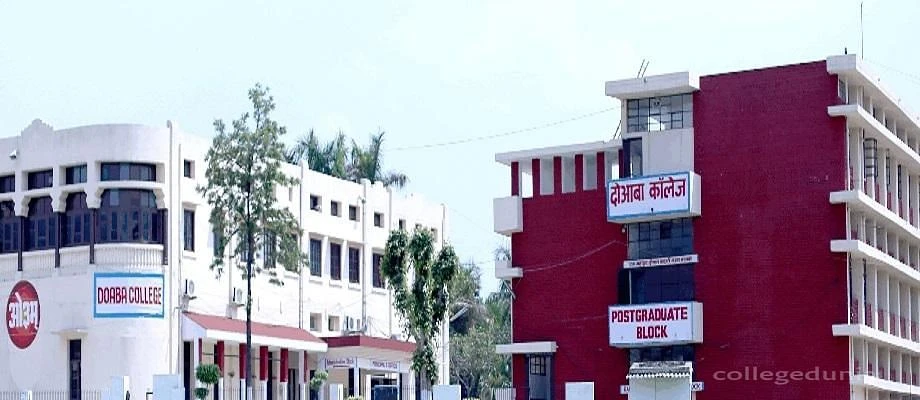
 Auditorium
 Cafeteria
 Computer Labs
 Gym
Gym Hostel
 Medical
 Science Labs
 Sports Complex
 Study Library