Loading Admission Guardian content
Loading Admission Guardian content
Provisional score based on available data. It may change as more information is verified.
Find a program, read its fee details and explore the admission requirements.
Summary of the programs shown below. Fee amounts are not listed. Contact the college for its current fee schedule.
| Course | Stream | Fees |
|---|---|---|
| Master of Arts [MA] (English) | Arts | |
| Master of Social Work [MSW] | Arts | |
| Master of Commerce [M.Com] (Finance) | Commerce | |
| Bachelor of Computer Applications [BCA] | Computer Applications | |
| Bachelor of Science [B.Sc] | Science |
Specializations
Eligibility: Graduation
Eligibility: Graduation
Specializations
Eligibility: Graduation
Specializations
Eligibility: 10+2
Specializations
Eligibility: 10+2
Don Bosco Arts and Science College in Angadikadavu is a study in contrasts. It’s a place where you’ll find a professional-grade television studio that rivals local news networks, yet the campus sits in a quiet village where the nearest railway station is 45 kilometers away. The college, run by the Salesians of Don Bosco, has built a reputation over two decades for discipline and strong professional programs, particularly in Journalism and Social Work. But that discipline comes with rules—strict dress codes, hostel curfews, and an almost school-like atmosphere. If you’re looking for a transformative, no-nonsense education in a structured environment, this could be your spot. If your idea of college involves cinematic freedom, you’ll likely feel confined.
The academic portfolio is a clear indicator of where the college’s strengths lie. You won’t find traditional hard sciences here. Instead, the focus is squarely on commerce, computer applications, media, and the social sciences.
Undergraduate offerings are broad within that scope. B.Com has the largest intake, especially the Computer Application variant. BCA and the newer B.Sc in AI & ML cater to the tech crowd. The BA in Journalism is a direct feeder into the prestigious MCJ program. And the BSW (Social Work) is notably fieldwork-intensive, which is a plus. A unique academic rule is the mandatory English Proficiency Course (EPC) for all first-years, a push to maintain an English-medium environment.
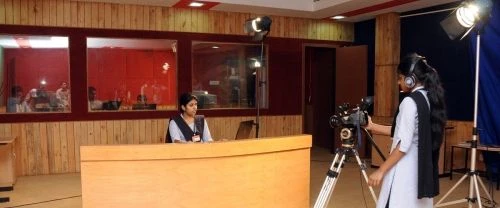
The postgraduate programs are where DBASC truly punches above its weight. The MA in Journalism (MCJ) is the crown jewel, with a state-of-the-art studio that’s a major draw. The MSW program offers specializations in Medical & Psychiatry or Community Development, and it has strong NGO connections. The MCA program is AICTE-approved. Faculty-wise, it’s a mixed bag. You have around 50-60 teachers, with about 15-20% holding PhDs. The consensus from students is that they are supportive and mentor-like, which counts for a lot.
Let’s separate the brochure talk from the ground truth. The college will mention a highest package of 15-20 LPA. That’s almost certainly an outlier or an off-campus achievement. The working average for on-campus roles is closer to ₹3.5 Lakhs Per Annum. The NIRF 2023 data provides a more sobering, and likely more accurate, median: ₹2.57 LPA for UG and ₹1.73 LPA for PG.
The placement percentage also has two versions. Officially, it’s 70-80%. Dig into student reviews on Shiksha and CollegeDunia, and the sentiment is that for general BA/B.Com programs, it’s more like 40-50%. Placement is significantly better for the professional courses. MCA and BCA students get looks from IT service giants like TCS, Wipro, and Infosys. MCJ graduates are practically groomed for the Malayalam media industry, with recruiters like Asianet News, Malayalam Manorama, and Mathrubhumi regularly visiting. MSW students find roles in NGOs and corporate CSR wings.
So, the reality check? If you’re in a general arts program, don’t bank on the college for a high-paying job. You’re there for the degree and the discipline. If you’re in MCJ, MSW, or MCA, the college’s industry-specific infrastructure and reputation can genuinely open doors.
The fee structure is relatively affordable for a private institution, but you need to budget for everything.
For a three-year UG program, tuition totals roughly ₹70,000 to ₹1.4 lakhs. BA/B.Com programs are at the lower end (₹22,000-₹30,000 per year), while BCA and B.Sc (Tech) are higher (₹35,000-₹45,000 per year). PG programs like MCJ and MCA cost about ₹1.1 to ₹1.3 lakhs for two years.
The big additional cost is the hostel. With mess included, it runs ₹75,000 to ₹85,000 per year. That means your total annual outlay can easily cross ₹1.2 lakhs when you factor in tuition and boarding. There’s also a management quota, which often involves a one-time “admission fee” or donation ranging from ₹25,000 to ₹50,000. For financial aid, SC/ST/OBC students can access the Kerala government’s E-Grantz scheme. The college also offers merit scholarships for top scorers in university exams.
Admissions run on two parallel tracks: the university merit system and the management quota.
For most UG and PG courses (except MCA), selection is purely merit-based on your 10+2 or degree marks. These merit seats are allotted through the Kannur University Centralized Admission Process (CAP). Cutoffs aren’t officially published in a central list, but for in-demand courses like B.Com Computer Application or BCA, you’ll likely need 70% or above in your 12th grade.
The other route is the management quota. This involves applying directly to the college office, usually followed by an interview with the principal. This is where that additional “admission fee” may come into play. For the MCA program, you must appear for the Kerala MCA Entrance Exam. The application window typically opens in May, right after 12th-grade results are out, and closes by July.
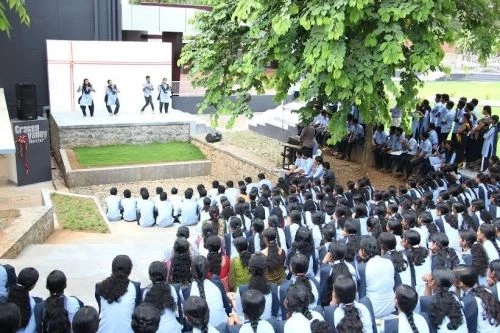
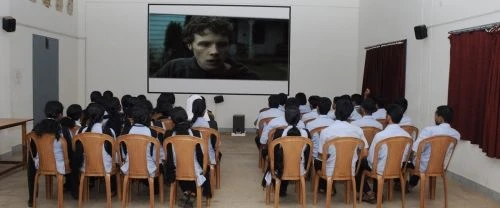
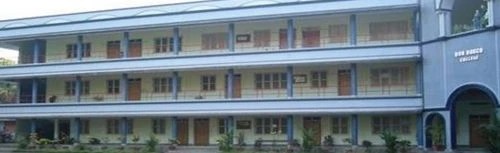
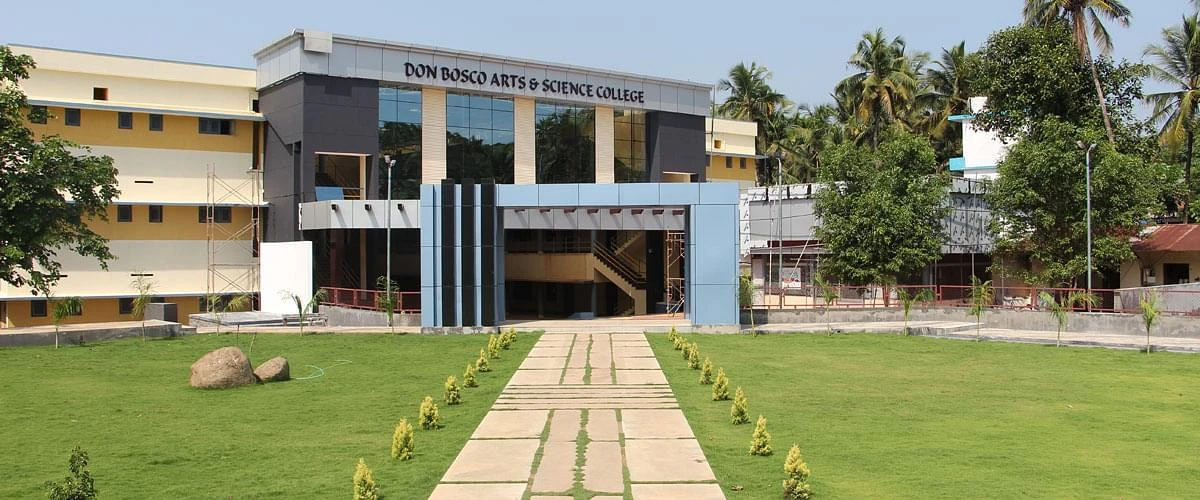
This is where the Don Bosco philosophy is most palpable. The 6-acre campus is clean, green, and well-maintained. The infrastructure highlights are specific and impressive: a professional media studio for journalism students, a computer lab with 70+ systems, and a dedicated language lab.
But campus life is defined by structure. The hostels—Savio Home for boys, Maria Niketan and Alphonsa Bhavan for girls—are known for being exceptionally clean and safe. They’re also known for being exceptionally strict. Mobile phone usage is restricted to specific areas and times. There are fixed curfews. The dress code on campus is formal; uniforms are required on specific days, and “fancy” clothes are a no-go. The 75% attendance rule is enforced, with internal marks tied to it.
Social life revolves around official events. The annual fest ‘DISA’ and various department fests are big deals. There’s a decent football ground and a popular basketball court. The canteen serves affordable, hygienic Kerala meals. Just don’t expect a bustling, urban college scene. Angadikadavu is a village. Your world, for better or worse, will largely be the campus.
The student sentiment is remarkably consistent, which tells you something.
The praise is fervent in specific areas. Graduates from the MCJ program rave about the studio facilities and direct pipeline to media jobs. Many call the teachers “mentors” who are genuinely approachable. Almost everyone acknowledges that the college instills discipline and a strong work ethic. “It molds your character,” is a common refrain. The cleanliness and safety of the hostels are also major pluses.
The criticisms are just as consistent. The word “strict” appears in nearly every critical review. The hostel rules on phones and timings are a frequent pain point. The remote location means limited options for entertainment or even simple shopping. The overall atmosphere is repeatedly described as “like a school with a degree.” One paraphrased Quora review sums it up: “If you want to study and get a job, come here. If you want to enjoy ‘campus life’ like in movies, look elsewhere.”
It depends entirely on what you’re after and which program you choose.
Don Bosco Angadikadavu is an excellent fit for a specific student: one who values a disciplined, structured environment over unchecked freedom; one who is aiming for a professional course like Journalism, Social Work, or Computer Applications where the college’s specialized infrastructure and industry links provide real value; and one who doesn’t mind a quiet, rural setting.
It’s probably not the right choice if you crave an autonomous, vibrant campus life with lots of personal freedom. The rules will chafe. It’s also not a placement powerhouse for general degree holders. You’re paying for the Don Bosco method of education—character building and academic rigor—more than for a guaranteed corporate ticket.
So, is it worth it? For a student seeking a solid, ethical grounding in media, social work, or commerce with IT, and who thrives under clear structure, the answer can be a strong yes. For everyone else, the trade-offs might be too significant. Visit if you can, and talk to current students. The contrast between the stellar media studio and the strict hostel gates will tell you everything you need to know.
In this preview: 5 photos · 0 videos
Yes, Don Bosco Arts and Science College Angadikadavu is considered a good option for a BCA degree. The program is supported by good lab facilities and the college has a decent placement record with IT companies like TCS and Wipro for its graduates.
The girls' hostel at DBASC is known to be very strict, which contributes to its reputation for being very safe. Rules include fixed entry times, typically around 6:00 PM, and limitations on mobile phone usage for residents.
The primary difference is in their academic focus. Don Bosco Arts and Science College (DBASC) in Angadikadavu offers programs in Arts, Science, and Media. Vimal Jyothi Engineering College, located in nearby Chemperi, is an institution for Engineering and Management (MBA) studies.
Yes, direct admission through the management quota is possible at Don Bosco Arts and Science College. Prospective students must contact the college office directly, and the process typically involves an interview with the Principal.
According to most alumni feedback, the MCJ course is considered worth the fees. This is primarily due to access to professional studio facilities and the program's strong industry connections within the Malayalam media sector.
Share what future students should know about DBASC.
Student voices are not rewritten by colleges. We remove spam and abuse.
Wider admission question? Community PulseWhat should future students know?
Tell us which course you're considering. We'll help you work out the next step.
Get instant Partner access after mobile verification. Your public edits are reviewed before they go live.
Claim this college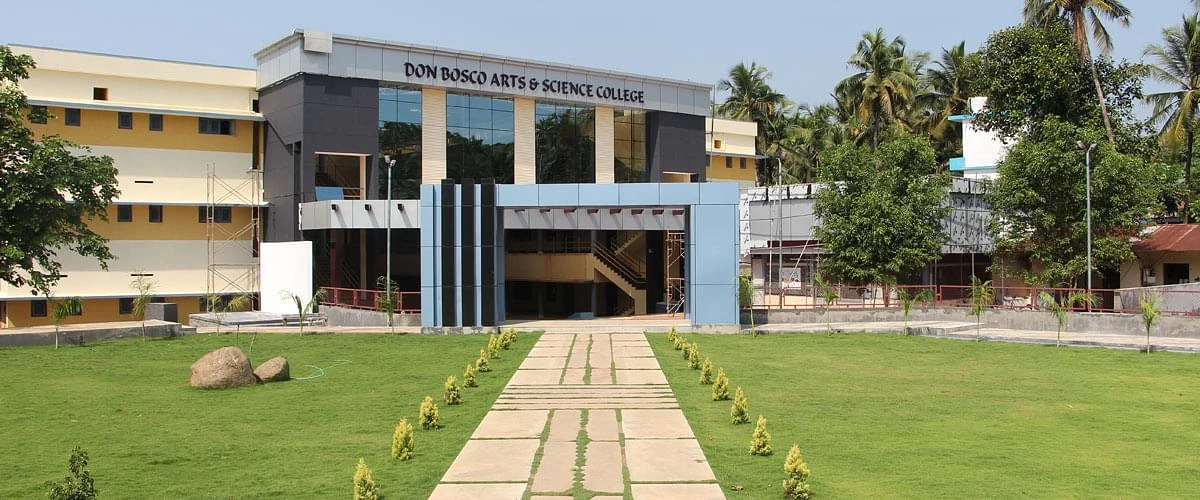
 Auditorium
 Cafeteria
 Campus Shuttle
 Computer Labs
 Hostel
 Medical
 Science Labs
 Sports Complex
 Study Library