Loading Admission Guardian content
Loading Admission Guardian content

Selected ranking categories, with the recorded year beside each result. Open all records for the complete history.
37 published records · Lower numeric ranks are stronger
Outlook
MBA · private
#952020
Indiatoday
MBA
#1372021
Outlook
BBA/BBM
#322022
Outlook
Mass Communications · private
#202020
Find a program, read its fee details and explore the admission requirements.
Summary of the programs shown below. Fee periods can differ by program. Check the note beside each amount before comparing costs.
| Course | Stream | Fees |
|---|---|---|
| Bachelor of Computer Applications [BCA] | Computer Applications | 90000 |
| Bachelor of Commerce [B.Com] {Hons.} | Commerce | 180000 |
| Bachelor of Business Administration [BBA] | Management | 205000 |
| Master of Business Administration [MBA] | Management | 441000 |
| Post Graduate Diploma in Management [PGDM] | Management | 480500 |
Specializations
Eligibility: 10+2
Specializations
Eligibility: 10+2 with 65%
Specializations
Eligibility: 10+2 with 65%
Specializations
All accepted exams
Eligibility: Graduation
Specializations
All accepted exams
Eligibility: Graduation + CAT
2 exams with cutoff data available
 99Acres
 Academia Guru
 Accenture
 Acxiom Consulting
 AIM India
 Airtel
 Allied Market Research
 Amazon
 Aon Hewitt
 Archelons
 Asian Paints
 Axiom Landbase
 Axis Bank
 Berger
 Cadbury
 Capital First Limited
 Capital Via
 Ceasefire Industries
 Coca-Cola
 Colgate Palmolive India Ltd.
 Dabur India Ltd.
 Daffodil
 FedEx
FedEx Flipkart
 Gati-KWE
 Genpact
 Havells
 HDFC Bank
 HDFC Sales
 HIL CK Birla Group
 HSBC
HSBC IBM
IBM ICFAI University
 ICICI Bank
 ICICI Securities
 Idea Cellular
 Ikya
Ikya IndusInd Bank
 Infosys
 Infoway
 InterGlobe Technologies
 IPCA Laboratories
 ITC
ITC Jaro Education
 Jeevansathi.com
 Johnson & Johnson
 Just Dial
 Kent
Kent Kotak Mahindra Bank
 Kotak Securities
 LAVA Mobiles
 Mercer Human Resource Consulting
 MetLife
 Muthoot Fincorp
 Nestle India
 NIIT
NIIT OM Logistics Ltd.
 Parle Agro
 Patanjali
 Pepsico Holdings (I) Pvt. Ltd.
 Quest
Quest Reckitt Benckiser (I) Pvt. Ltd
 Royal Bank of Scotland
 Siam Computing
 Standard Chartered
Doon Business School (DBS), located in Dehradun, Uttarakhand, operates as a constituent school under the umbrella of DBS Global University (DGU). The institution's trajectory provides essential context for prospective students. Originally established as a standalone management institute with a strong regional footprint, it evolved significantly in 2024 when the overarching entity attained the status of a full-fledged private university under the Uttarakhand Private University Act. This transition from an affiliated college to a constituent school of a private university allows the institution autonomy in curriculum design, examination scheduling, and the introduction of contemporary specialisations.
The institution holds formal recognition from the University Grants Commission (UGC). Furthermore, its core management programmes maintain approval from the All India Council for Technical Education (AICTE), satisfying the necessary regulatory benchmarks for technical and management education in India. DBS is also associated with the Association of Indian Universities (AIU). For an applicant, this regulatory backing ensures that the degrees awarded are valid for public sector employment, further higher education, and international credential evaluation. The primary focus of Doon Business School remains business and management education, though the wider DBS Global University campus in Selaqui houses varied disciplines ranging from computing to agriculture and pharmacy, providing a multidisciplinary campus environment.
The academic portfolio at Doon Business School spans undergraduate, postgraduate, and integrated formats, heavily weighted toward industry-specific tracks rather than generic management degrees.
At the postgraduate level, the Master of Business Administration (MBA) serves as the flagship offering. The two-year programme is structured to provide foundational business acumen in the first year before diverging into specialisations. Beyond the traditional pillars of Finance, Human Resource Management, Marketing, and International Business, the school has pivoted toward technology and niche sectors. Applicants can opt for specialisations in Business Analytics, Digital Transformation, Logistics and Supply Chain Management, Healthcare and Pharma Management, and Media and Creative Communication.
Additionally, the institution offers a Global MBA variant. This programme typically features an international immersion module designed to expose students to cross-border business practices, regulatory environments, and global supply chains. The institution also periodically offers a specialized MBA Winter Batch to accommodate students operating on different academic or professional timelines.
For candidates entering directly from higher secondary education, the Bachelor of Business Administration (BBA) is available in multiple formats. Recognizing the shift in corporate hiring, DBS offers highly specialised BBA tracks alongside its general programme. These specialized pathways include Fintech, Business Analytics, Banking and Financial Services, E-Commerce and Supply Chain, Digital Marketing, and Entrepreneurship. To align with modern educational frameworks, these programmes are accessible in Honours and Honours with Research formats, providing a pathway for students interested in academic research or deeper subject mastery. The Bachelor of Commerce (B.Com) programme follows a similar structural model.
A critical option for high school graduates is the Integrated Program in Management (BBA+MBA). Spanning five years, this dual-degree format allows students to secure a postgraduate qualification without the friction and uncertainty of reapplying through the highly competitive national MBA entrance exam cycle after three years of undergraduate study. The institution's curriculum design is characterised by corporate partnerships. A notable example is the collaboration with technology enterprise HCLTech to deliver dual specialisations in Artificial Intelligence and Data Analytics across computing and management disciplines, indicating a curriculum focused on the digital transformation of business.
The admissions framework at Doon Business School relies on a composite evaluation model. This approach benefits candidates who possess a balanced profile rather than those who rely exclusively on a single high-percentile entrance test score.
For MBA admissions, the baseline eligibility requires a candidate to hold a recognised undergraduate degree with a minimum aggregate score of 60 percent. The selection process evaluates applicants across three distinct parameters, creating a cumulative merit score.
The first parameter is the entrance examination, which carries a 40 percent weightage in the final decision. DBS accepts valid scores from an array of national-level tests, including the Common Admission Test (CAT), Xavier Aptitude Test (XAT), Management Aptitude Test (MAT), Common Management Admission Test (CMAT), and the Graduate Management Admission Test (GMAT). For candidates who have not taken these national exams, or wish to improve their standing, the DBS Global University Entrance Examination serves as an accepted alternative. The scores from these diverse exams are internally normalised to ensure parity during evaluation.
The second parameter, accounting for 30 percent of the weightage, is the candidate's prior academic performance. This is calculated based on the marks secured in Class XII and the graduation degree. This substantial weightage underscores the institution's preference for consistent academic performers.
The final 30 percent of the evaluation is determined through an online personal interview. Following the initial screening of applications based on test scores and academics, shortlisted candidates are interviewed to assess their communication proficiency, domain knowledge, problem-solving abilities, and overall corporate readiness. For undergraduate programmes like the BBA and B.Com, the admission process relies primarily on Class XII academic records and personal interviews, though specific university entrance assessments may be deployed depending on the chosen specialisation and application round.
Understanding the financial commitment required for Doon Business School involves analyzing the base tuition alongside several mandatory supplementary charges. The fee structure is dispersed across semesters, and applicants must budget for the total cost of ownership rather than just the advertised academic fee.
For the standard MBA programme, the base tuition fee is established at Rs 2,35,000 per semester. Calculated over the mandatory four semesters, the core tuition amounts to Rs 9,40,000. Candidates opting for the five-year Integrated BBA+MBA programme face a first-year tuition fee of Rs 1,35,000 per semester.
At the undergraduate level, the BBA fee structure varies distinctly based on the chosen track. The general BBA programme is priced between Rs 1,08,000 and Rs 1,23,000 annually. Conversely, the specialised BBA programmes, such as Fintech, Business Analytics, or E-Commerce, command a premium, with annual fees ranging from Rs 1,30,500 to Rs 1,50,500.
Beyond the core tuition, the institution levies several compulsory incidental charges. Most notably, the university enforces a Day Boarding fee for all students who do not reside within the campus hostels. This charge, positioned at approximately Rs 25,000 per year, is designed to cover the use of campus amenities, study spaces, and resources during extended academic hours and mandatory late-evening group projects. Students must also account for one-time charges collected early in the programme. These include a uniform fee of Rs 9,500 (which provisions the business suits required for formal corporate events and presentations), a book bank fee of Rs 4,500, and an alumni registration fee of Rs 5,000. Additionally, a refundable security deposit of Rs 10,000 is collected during the admission cycle.
When evaluating hostel options, applicants should note that on-campus residence is often heavily recommended by the administration due to the intensive, cohort-based nature of the curriculum. While specific hostel tariffs vary according to room occupancy and air-conditioning preferences, they align with standard private university accommodation rates in Uttarakhand. Consequently, the total financial outlay for an MBA student will substantially exceed the Rs 9.4 lakh tuition base once residential, boarding, and incidental fees are aggregated.
To offset these costs, Doon Business School operates a structured, merit-based scholarship framework. These financial aid awards are applied directly against the tuition fee and demand strict eligibility criteria. To qualify for consideration, an applicant must have secured a minimum of 65 percent in their graduation degree and possess a valid score from CAT, XAT, MAT, or CMAT. The scholarship mechanism operates on a tiered percentile basis; candidates presenting higher entrance exam percentiles capture a larger percentage reduction in their tuition liability. Applicants must secure a formal confirmation letter from the Office of the Registrar to guarantee their scholarship allocation, as oral commitments or website estimates are not legally binding.
The placement machinery at Doon Business School is driven by an active career development cell that leverages the institution's industry linkages. The placement data for the 2025-26 recruitment season provides a verifiable snapshot of the corporate outcomes available to graduates.
In aggregate, the university reported a highest package of Rs 40 Lakhs Per Annum (LPA). While this ceiling demonstrates the institution's capability to attract premium roles, such outlier figures typically represent highly specialised profiles, international placements, or candidates with significant prior work experience. The more broadly applicable metric is the overall average package, which stood at Rs 8.7 LPA for the cohort. This average positions the school within the mid-tier management education segment, offering a stable entry point into the domestic corporate sector. Furthermore, the top 20 percent of the placed cohort secured an average package of Rs 13.47 LPA, establishing a realistic target benchmark for high-performing students who optimize their academic and internship opportunities.
The 2025-26 season witnessed an 84 percent increase in the total volume of campus offers and a 32 percent expansion in the roster of visiting companies. Over 350 corporations participate in the annual recruitment cycle. The hiring landscape is diversified across sectors, with significant absorption in Information Technology, Fast-Moving Consumer Goods (FMCG), banking, financial services, and management consulting. The historical recruiter portfolio includes major multinational and domestic firms such as Deloitte, EY, KPMG, Infosys, and Wipro.
When interpreting these figures, applicants must recognise that the metrics are reported on a university-wide aggregate basis. Placement velocities and average packages can vary materially between a general MBA and a highly specialised track like Business Analytics or Fintech. The Rs 8.7 LPA average remains the most reliable baseline for calculating expected return on investment.
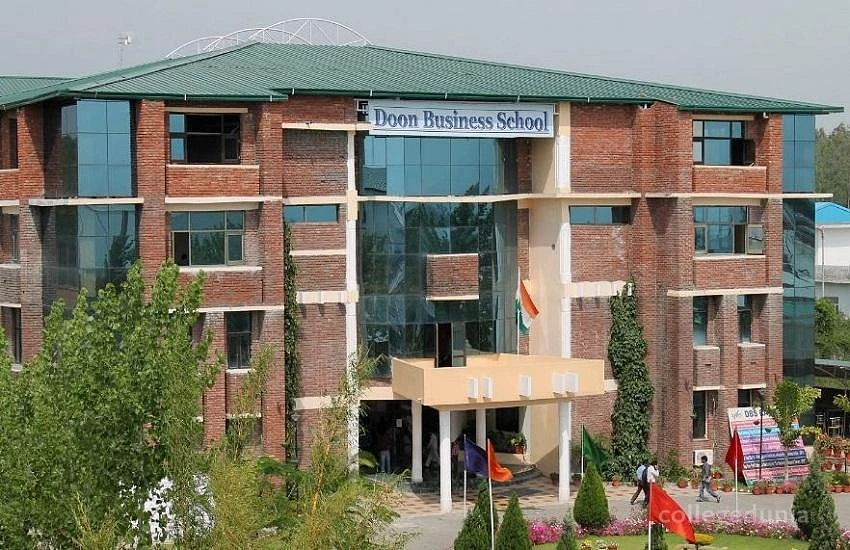
The physical footprint of Doon Business School is located in Selaqui, a major industrial and institutional suburb of Dehradun, Uttarakhand. Positioned adjacent to the local Pharma City, the campus location offers a dual advantage. Geographically, it sits in a scenic, relatively pollution-free environment at the foothills of the Himalayas, which many students find conducive to focused study. Economically, proximity to the Selaqui industrial belt facilitates seamless industry-academia interaction, allowing for frequent guest lectures, industrial visits, and accessible local internship opportunities.
The campus infrastructure is designed to simulate a modern corporate environment. Academic facilities include technologically equipped computer laboratories, a comprehensive central study library, and auditoriums scaled for seminars and corporate conclaves. To address the growing intersection of management and technology, the university hosts an Artificial Intelligence Cell. Student life is managed through various clubs and committees that handle extracurricular, cultural, and professional development activities.
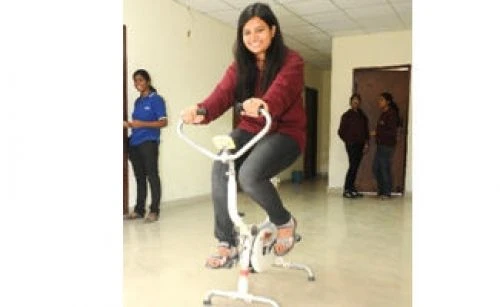
For the residential cohort, the campus maintains hostels, a central cafeteria, medical support facilities, and sports complexes. The institutional culture places a strong emphasis on discipline and professional grooming. This is enforced through strict business attire requirements on specific days and the day-boarding framework, ensuring that students remain engaged with cohort-based projects and campus resources well beyond standard lecture hours.
For a candidate finalising a college shortlist, Doon Business School presents specific operational strengths alongside clear trade-offs that demand careful evaluation.
Who it fits: The institution is an optimal fit for applicants seeking a structured, industry-aligned management education within a visually appealing, distraction-free environment. The composite admission process, which dilutes the weight of the entrance exam to 40 percent, makes DBS an attractive destination for candidates who possess strong interpersonal skills, solid academic records, and interview confidence, but who may not have breached the top percentiles of the CAT or XAT examinations. The availability of highly specialised tracks, such as Fintech, E-Commerce, and Business Analytics, serves students who have a clear career trajectory and wish to bypass general management in favour of niche sector recruitment. Financially, for a student who secures a high-tier scholarship based on their MAT or CMAT scores, the Rs 8.7 LPA average placement outcome represents a highly efficient and accelerated return on investment.
What could rule it out: Conversely, several factors could rule the institution out for specific applicant profiles. Candidates whose primary decision driver is the legacy, deep historical alumni network, or universal brand recognition associated with the top-tier Indian Institutes of Management (IIMs) or equivalent heritage business schools will find DBS positioned in a different tier. The financial structure requires rigorous scrutiny; the mandatory supplementary charges, including the Rs 25,000 annual day boarding fee, uniform charges, and deposits, inflate the total cost of attendance significantly above the baseline tuition. For a highly fee-sensitive student who fails to qualify for the entrance-score scholarships, funding the full-price cost of the MBA (approaching Rs 10 to 11 lakhs overall with boarding) may prove burdensome without the guarantee of a top-decile placement outcome. Ultimately, Doon Business School operates effectively as a practical, career-focused launchpad for students prepared to leverage its corporate linkages and specialised curriculum.




In this preview: 5 photos · 0 videos
Yes, Doon Business School is considered a good option for students seeking a mid-tier private business school in North India. It is recognized for its strong industry certifications in areas like SAP and SAS and offers a decent return on investment.
Doon University is a State Government University, while Doon Business School (now DBS Global University) is a Private University. They are entirely separate and distinct institutions.
Yes, the 24 LPA placement packages are real. However, they are typically international offers or top-tier domestic offers achieved by a very small percentage of the batch, often in specialized fields like Business Analytics or SAP roles.
Hostel life at DBS Dehradun features well-maintained facilities with good security. While the mess food is considered average, the social life is vibrant due to the active presence of numerous student-run clubs.
Yes, Doon Business School accepts CUET scores as a primary gateway for admission into its undergraduate programs, which include BBA, B.Com, and BCA.
Share what future students should know about Doon Business School.
Student voices are not rewritten by colleges. We remove spam and abuse.
Wider admission question? Community PulseWhat should future students know?
Tell us which course you're considering. We'll help you work out the next step.
Get instant Partner access after mobile verification. Your public edits are reviewed before they go live.
Claim this college
 Team Lease
 TechInfini Solutions
 Tommy Hilfiger
 Udaan
Udaan Vodafone
 Wipro
Wipro Wrigleys
 XL Dynamics
 Yes Bank
75 named recruiters in the recorded data. Company names are deduplicated.

 Auditorium
 Cafeteria
 Campus Shuttle
 Campus Wi-Fi
 Computer Labs
 Gym
Gym Hostel
 Medical
 Science Labs
 Sports Complex
 Study Library