Loading Admission Guardian content
Loading Admission Guardian content
Selected ranking categories, with the recorded year beside each result. Open all records for the complete history.
21 published records · Lower numeric ranks are stronger
NIRF
Management · overall
#42024
Indiatoday
MBA
#92021
Find a program, read its fee details and explore the admission requirements.
Summary of the programs shown below. Fee periods can differ by program. Check the note beside each amount before comparing costs.
| Course | Stream | Fees |
|---|---|---|
| Ph.D. (Management Studies) | Management | 41650 |
| Executive Programme in Advanced Product Management | Management | 137000 |
| Management Development Programme | Management | 147500 |
| Master of Business Administration [MBA] (Executive) | Management | 230150 |
| Master of Business Administration [MBA] | Management | 1120000 |
Specializations
Eligibility: Post Graduation
Specializations
Eligibility: Graduation
Eligibility: Post Graduation
Specializations
Eligibility: Graduation + CAT
Specializations
All accepted exams
Eligibility: Graduation with 50% + CAT
1 exam with cutoff data available
 Accenture
 ACS Xerox
 Adani group
 Aditya Birla Group
 Airtel
 Amazon
 American Express
 Amway India
 Asian Paints
 Axis Bank
 Bank of America
 Berger
 Bharat Heavy Electricals Ltd. (BHEL)
 Bharat Petroleum Corporation Limited (BPCL)
 Bharti Walmart Private Ltd.
 BNY Mellon
 Bosch Ltd
 Boston Analytics
 Capgemini
 Car Dekho
 Citi Bank
 Coca-Cola
 Cognizant
 Crisil
 Cristopia
 Dalmia Bharat
 Dassault Systemes
 Dell
Dell Deloitte
 Deutsche Bank
 DSCL
DSCL E-Clerx
 Educomp Solutions Ltd.
 Ernst & Young
 Essel Mining & Industries Ltd. (EMIL) Aditya Birla
 EXL Service
 Fidelity
 Ford India Ltd
 Frost & Sullivan
 Fullerton
 Futures First
 Gabriel
 GE Healthcare
 Genpact
 Glaxo Smithkline Consumer Ltd (GSK)
 Global Analytics India Pvt. Ltd.
 Godrej Infotech
 GODREJ Pvt. Ltd
 Google
 Grant Thornton India Private Limited
 HDFC Bank
 Hero Honda Motors
 Hewlett-Packard (HP)
 Hindustan Petroleum
 HMEL
HMEL IBM
IBM IBM India Pvt. Ltd.
 ICICI Bank
 IDBI Bank
 Idea Cellular
 Indian Oil Corporation Ltd (IOCL)
 Infosys
 ITD Cementation India Ltd
 Jaipur Rugs Company Pvt. Ltd
 Jindal South West Steel ltd (JSW)
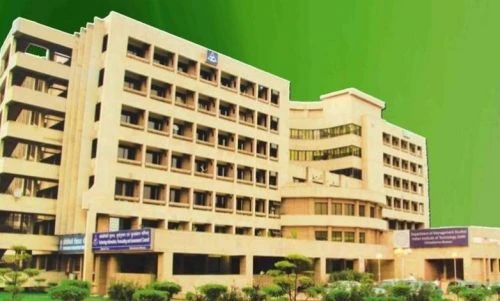
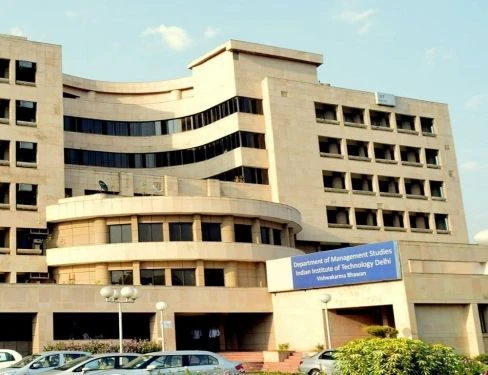
The Department of Management Studies (DMS) at the Indian Institute of Technology (IIT) Delhi is a premier business school located within the sprawling IIT Delhi campus in Hauz Khas, New Delhi. Established in 1993, the department evolved from the Center for Systems and Management Studies to offer specialized, analytically rigorous management education. Benefiting directly from the robust technological and research ecosystem of its parent institute, DMS IIT Delhi delivers a curriculum heavily grounded in systems thinking, quantitative analysis, and data-driven decision making.
The institution is consistently recognized as a top-tier management school in India. It secured the 4th position in the Management category of the National Institutional Ranking Framework (NIRF) in both 2024 and 2025. It also achieved a global rank of 92 in the QS World University Ranking for Business and Management Studies. By combining a highly competitive student cohort, an intimate batch size, and the formidable IIT brand, DMS offers one of the most compelling return-on-investment (ROI) propositions in the Indian management education landscape.
The department is an exceptional fit for candidates seeking a high ROI management degree with a strong emphasis on Strategy, Consulting, Information Technology, and Operations. With total tuition fees significantly lower than those of top-tier standalone business schools and average placements crossing INR 22.50 LPA, the financial proposition is highly advantageous. It strongly suits candidates with engineering backgrounds or those comfortable with intense quantitative rigor, given the curriculum's analytical focus and the institution's technical heritage. Applicants aiming for leadership roles in the telecommunications or technology sectors will find the specialized MBA Telecom program uniquely aligned with their goals.
Candidates strictly prioritizing traditional FMCG marketing roles, pure-play investment banking, or those seeking the massive alumni networks characteristic of older management institutes (like the established IIMs) might find DMS limiting. Because the batch size is deliberately kept small (typically under 120 students per cohort), the absolute size of the alumni network is smaller than those of institutes graduating 500 students annually. Furthermore, while batch diversity is actively encouraged and improving, the cohort remains predominantly engineering heavy. Students looking for a highly varied academic peer group comprising large numbers of humanities or commerce graduates might prefer traditional business schools.
DMS IIT Delhi offers three primary academic routes: the flagship full-time Master of Business Administration (MBA), the full-time MBA in Telecommunication Systems Management, and an Executive MBA for working professionals. The department also runs a rigorous Doctoral (PhD) programme and various Management Development Programmes (MDPs).
MBA (General) The flagship MBA is a two-year, full-time residential programme. The curriculum is meticulously designed to balance core foundational courses with a wide array of electives, allowing students to pursue dual specializations. In the first year, students cover essential core modules including Financial Management, Business Research Methods, Strategic Management, Information Systems Management, Ethics and Values-Based Leadership, and Operations. In the second year, students tailor their trajectory through electives across Finance, Marketing, Human Resources, Strategy, and Operations. A distinguishing feature of the DMS curriculum is the mandatory Global Field Study (GFS), which provides international exposure, and intensive live projects that ensure practical, hands-on immersion.
MBA (Telecommunication Systems Management) Unique to DMS IIT Delhi, this specialized MBA draws extensively from the Bharti School of Telecom Technology and Management. It is expressly tailored for individuals aiming for leadership roles in the telecommunications, IT, and allied technology sectors. The curriculum integrates standard management modules with specialized coursework in Telecommunication Systems, Telecom System Analysis Planning and Design, International Telecommunication Management, and Telecom Regulation. This niche focus makes graduates highly sought after by telecom operators, network infrastructure providers, and tech consultancies.
Doctoral and Executive Programmes The PhD programme caters to scholars aiming for careers in academia or advanced corporate research, with specializations spanning Economics, Finance, Information Systems, Marketing, and Operations. The Executive MBA is a three-year programme structured for working professionals, enabling them to upgrade their managerial acumen without interrupting their careers.
The IIT Ecosystem Advantage Instruction at DMS moves beyond traditional lectures, incorporating Harvard case studies, simulation exercises, and continuous evaluation. A significant structural advantage of studying at DMS is the academic flexibility inherent in the IIT system. Management students can interact with cutting-edge technical departments, participate in cross-disciplinary minor area programs, and leverage the institute's incubation centres for entrepreneurial ventures.
Admission to the full-time MBA programmes at DMS IIT Delhi for the 2026 cycle is highly competitive. It is governed by a stringent selection process that evaluates entrance exam scores, academic consistency, and professional experience.
Eligibility Criteria Candidates must hold a Bachelor's degree from a recognized university or institute. The degree must entail a minimum of three years of education after completing higher secondary schooling (10+2). The minimum academic requirement is 60 percent marks in aggregate (across all semesters) or a 6.00 CGPA on a 10-point scale. For candidates belonging to the SC, ST, and PwD categories, a relaxation of 5 percent is provided, bringing the threshold to 55 percent or a 5.50 CGPA. Candidates appearing for their final year examinations are eligible to apply, provided they submit proof of meeting the requirements by the institute's stipulated deadline.
CAT Cutoffs and the Shortlisting Process DMS exclusively accepts the Common Admission Test (CAT) score for domestic candidates. The admission process operates in two distinct tiers: initial shortlisting for the Personal Interview (PI) and the final merit selection.
The minimum qualifying CAT percentiles required to simply be considered for the shortlisting phase are clearly demarcated by category:
However, achieving this minimum qualifying cutoff does not guarantee an interview call. The actual competition dictates that General category candidates typically need a CAT score in the 98 to 99 percentile range to secure a Personal Interview, particularly if their past academic record or work experience scores are average.
Composite Selection Index DMS IIT Delhi employs a comprehensive shortlisting index to select candidates for the PI round. While the scaled CAT score carries the heaviest weightage, the index rigorously evaluates past academic performance, converting Class 10, Class 12, and Graduation marks into normalized scores. Professional work experience is heavily rewarded, optimally favouring candidates with 12 to 36 months of relevant industry exposure.
Additionally, the institute incorporates diversity multipliers into the index. Extra weightage is granted for gender diversity to encourage a balanced cohort. Academic diversity is also factored in, and historically, candidates who have graduated from Institutes of National Importance (such as IITs or NITs) have received specific weightage, reflecting the program's demanding technical rigor. The final merit list is prepared by aggregating the PI performance with the initial shortlisting index components, making the interview stage a critical and decisive determinant of final admission.
A primary draw of DMS IIT Delhi is its highly favorable fee structure when compared to standalone private business schools and top-tier IIMs.
Detailed Fee Structure For the MBA batch, the total tuition fee for Indian citizens is set at INR 12,00,000 for the entire programme, which is payable in four equal semester installments of INR 3,00,000.
In addition to the tuition fee, students are required to pay other semester charges (covering examinations, library access, internet, and student activities) amounting to approximately INR 22,400 per semester. The Institute Residence Fee is approximately INR 8,600 per semester. Over the four semesters, these amount to INR 89,600 and INR 34,400 respectively.
This brings the total institutional and residential cost to roughly INR 13.24 Lakhs over two years. It is important to note that these figures exclude the monthly mess advance (food charges) and one-time refundable caution deposits, which are billed separately.
Scholarships and Waivers IIT Delhi maintains a robust financial support system to ensure the programme remains accessible. The most significant structural support is the 100 percent tuition fee waiver granted to all SC, ST, and PwD students, meaning these candidates are only responsible for the ancillary charges and hostel fees.
For General, EWS, and OBC students facing financial constraints, the institute offers Merit-cum-Means (MCM) scholarships. These scholarships typically provide a full tuition fee waiver to students whose verified annual family income falls below a stipulated threshold, contingent on maintaining a required minimum CGPA. Furthermore, various alumni-endowed awards and corporate scholarships are available, recognizing top academic performers across specific management specializations.
DMS IIT Delhi consistently demonstrates robust placement outcomes, driven by its analytical curriculum and the broader IIT brand equity. The Final Placement Report for the 2023-2025 MBA cohort highlights the programme's resilience and the strong, continued industry demand for its graduates.
Placement Statistics (2023-2025 Batch) The department achieved a 98 percent placement rate for the graduating class. The compensation metrics underscore the exceptional ROI of the programme:
Notably, the cohort's female students outperformed the general average, securing an impressive female average package of INR 23.29 LPA.
Sectoral Distribution and Prominent Recruiters The placement distribution reflects the curriculum's structural strengths, with a heavy and distinct lean towards consulting and technology roles:
Summer Internships (2024-2026 Batch) The summer placement process for the incoming batch also yielded strong results. The highest stipend reached INR 4.00 Lakhs, with an average stipend of INR 1.65 Lakhs, and a median stipend of INR 1.50 Lakhs for the two-month period. The average stipend for female candidates stood at INR 1.83 Lakhs.
Case Competitions A testament to the cohort's quality is their performance in national corporate case competitions. DMS students frequently secure podium finishes, which often translate directly into Pre-Placement Offers (PPOs). Recent cohorts have produced National Winners in the IDFC Fame 3.0 and J&J Imagivators competitions, and National Finalists in the L'Oreal Sustainability Challenge, TVS Credit EPIC Challenge, and the Samsung E.D.G.E challenge.
Embedded within the sprawling 320-acre IIT Delhi campus in Hauz Khas, DMS students experience one of the most vibrant and well-equipped academic environments in the country. The location in South Delhi provides immense logistical advantages for corporate interactions, live projects, and guest lectures.
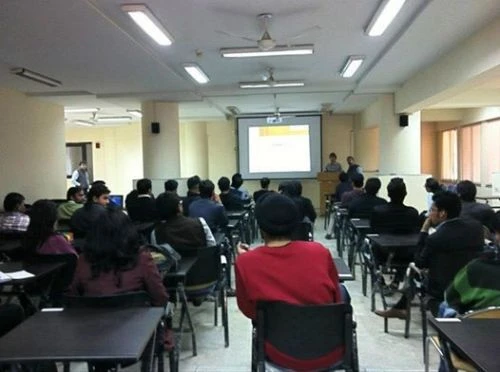
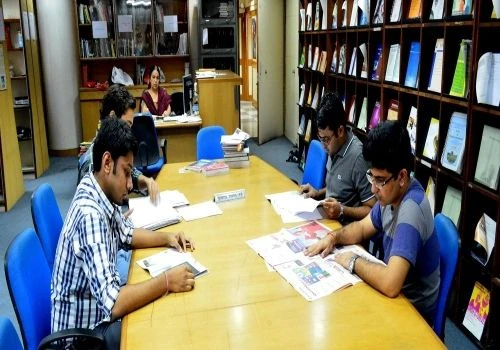
Academic and Residential Infrastructure The department boasts state-of-the-art Computer Labs, behavioral labs, and syndicate rooms explicitly designed for case-based learning and collaborative group work. Students have full access to the multi-story Central Study Library of IIT Delhi, which houses a vast repository of management journals, financial databases, and field reports, and remains open 24/7 during examination periods.
The residential experience is integral to the MBA programme. Students are accommodated in dedicated Hostels equipped with modern amenities and high-speed internet. The campus features multiple Cafeteria options, night messes, and food outlets. For financial convenience, the campus houses a Bank & ATM (branches of SBI and Canara Bank). The campus environment is highly secure with 24/7 Campus Security and CCTV surveillance.
Health and Recreation The IIT Delhi Hospital provides free comprehensive Medical care, including OPD services, to all students. The recreational infrastructure is unparalleled, featuring a world-class Sports Complex with an Olympic-sized swimming pool, a synthetic athletics track, tennis courts, basketball courts, and squash courts, alongside a fully equipped Gym within the Student Activity Center. A massive Auditorium hosts large-scale conclaves and cultural events.
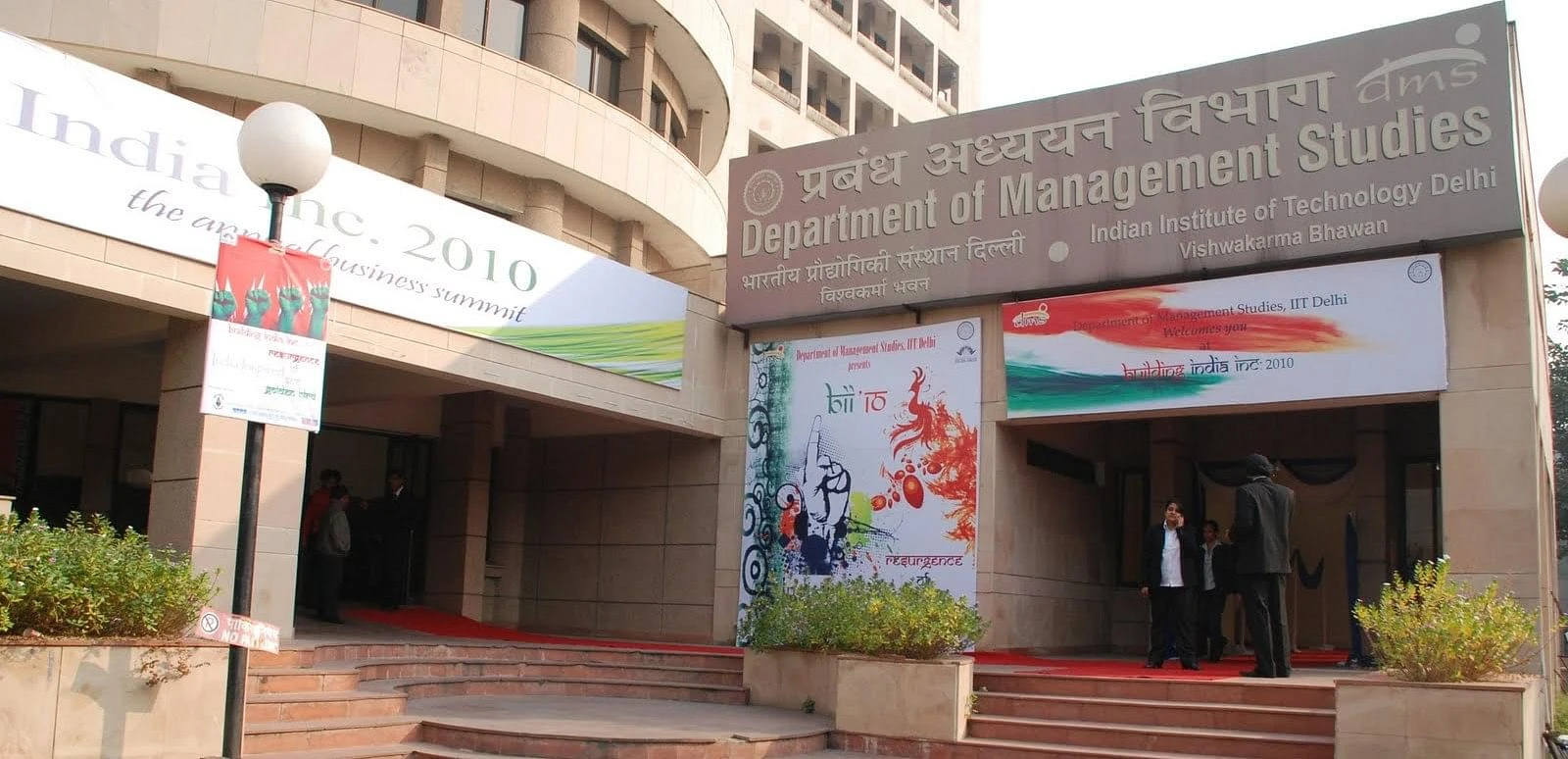
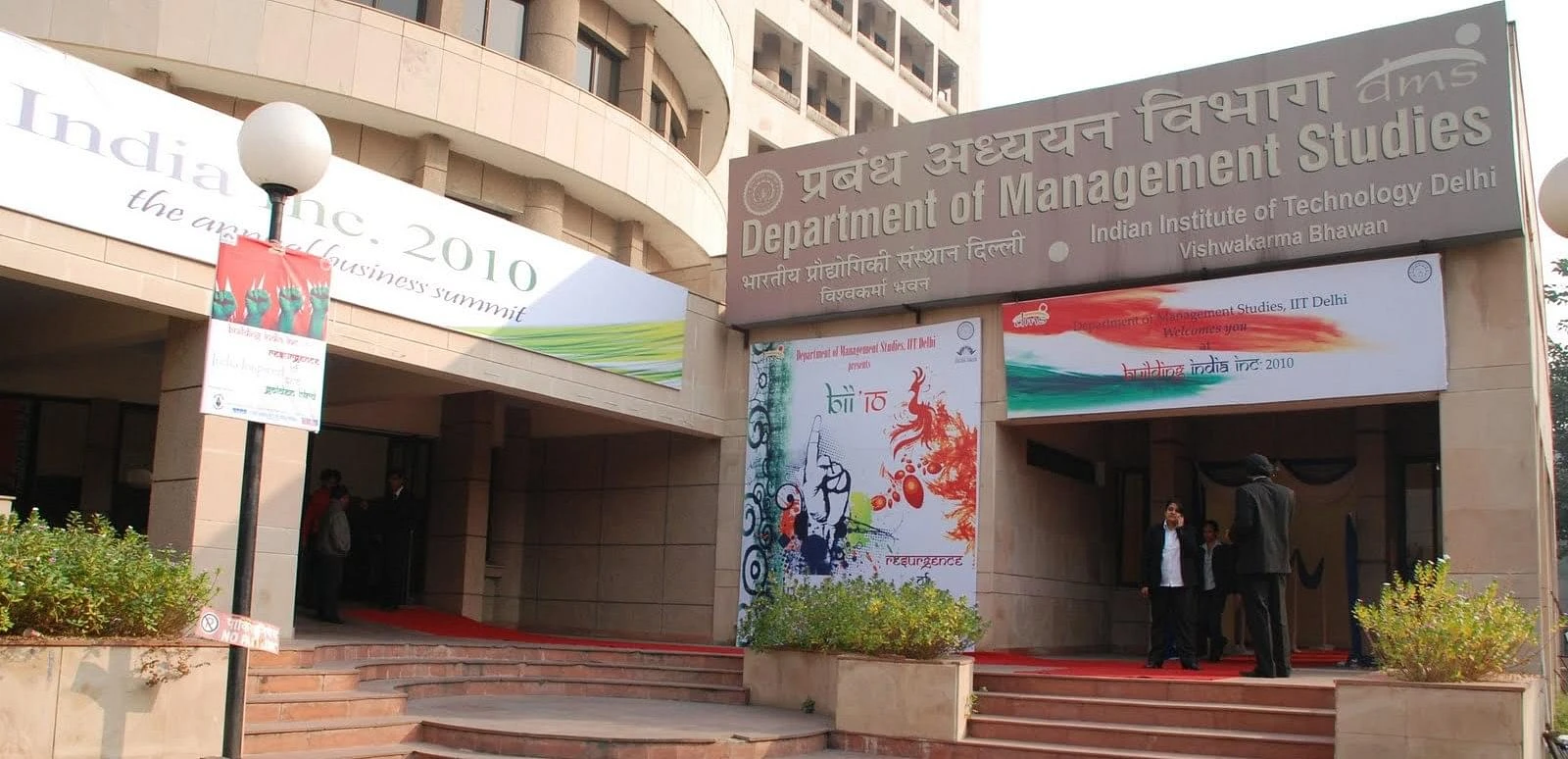
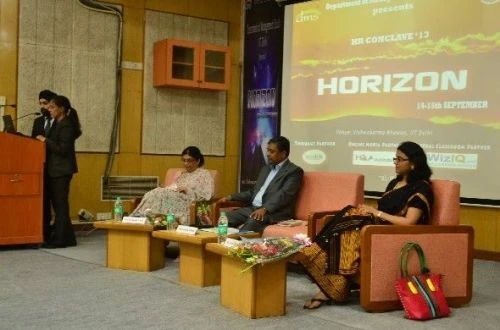
Student Committees and Events Life at DMS is heavily student-driven. The Corporate Relations and Placement Committee manages industry interactions, while domain-specific clubs organize year-round activities. The department hosts several flagship conclaves, including Building India Inc. (a premier business summit), Parivartan (the annual management festival), Horizon (the HR conclave), and Strategia (the Strategy and Consulting conclave). These events facilitate deep industry networking and provide platforms for students to interact with global corporate leaders.
DMS IIT Delhi stands out as a formidable option for MBA aspirants, particularly those who value an evidence-based, quantitative approach to management. Its modest fee structure combined with an average placement of over INR 22.50 LPA delivers a return on investment that is exceedingly difficult to match in the current educational market. The institution is specifically optimized for candidates aiming for careers in technology consulting, supply chain operations, and product management.
For candidates evaluating their options, the most direct academic alternatives are the management schools at other established IITs. SJMSOM (IIT Bombay) offers a highly comparable profile with a similar technological integration, slightly leaning more towards operations and supply chain. VGSOM (IIT Kharagpur) and DoMS (IIT Madras) are also strong alternatives within the IIT system offering similar ROI.
Outside the IIT ecosystem, candidates might weigh DMS against MDI Gurgaon. MDI commands a significantly higher tuition fee but offers a much larger batch size, a massive and deeply entrenched alumni network in FMCG and general management, and a purely management-focused campus culture. IIM Indore and IIM Kozhikode are also frequent comparison points; while these institutes offer the undeniable prestige of the IIM tag and highly diverse cohorts, DMS IIT Delhi often competes fiercely on pure financial ROI and targeted tech-industry placements. Ultimately, the choice hinges on whether the candidate prefers the intimate, analytically rigorous, and tech-forward environment of an IIT, or the traditional, expansive corporate ecosystem of an established IIM or standalone private business school.
In this preview: 5 photos · 0 videos
Yes, in terms of Return on Investment (ROI) and placement packages, DMS IIT Delhi often outperforms new IIMs like IIM Shillong and IIM Udaipur, and competes with older, established institutes such as MDI Gurgaon and IIM Kozhikode or Indore.
Yes, the MBA (General) program is open to all graduates. However, the MBA (Telecom) program specifically requires a background in Engineering, Technology, or Science.
While the qualifying cutoff is 90 percentile, the actual call cutoff for the General category is usually 98+ percentile.
Hostel life is vibrant and inclusive. MBA students share hostels with B.Tech and PhD students from IIT Delhi, providing a unique and enriching multidisciplinary environment.
Yes, the Department of Management Studies at IIT Delhi has a verified track record of achieving 100% placements for its students for several consecutive years.
Share what future students should know about DMS IITD.
Student voices are not rewritten by colleges. We remove spam and abuse.
Wider admission question? Community PulseWhat should future students know?
Tell us which course you're considering. We'll help you work out the next step.
Get instant Partner access after mobile verification. Your public edits are reviewed before they go live.
Claim this college Jindal Steel and Power (JSPL)
 Johnson & Johnson
 JP Morgan Chase
 JP Morgan Chase & Co.
 JSW Steel Ltd
 Juspay
 Larsen & Toubro Ltd.
 LAVA Mobiles
 LG Electronics
 Maersk GSK
 Mahindra & Mahindra
 Marico Industries Ltd.
 Max Life Insurance
 Max Newyork Life
 Mediatek
 Medtronics
 Microsoft
 Mu Sigma
 National Instruments
 Nestle India
 Nomura Services India (P) Ltd.
 ONGC
ONGC Optum
Optum Perfetti Van Melle
 Polaris
 Procter & Gamble
 PWC
PWC Raam Group
 Reckitt Benckiser (I) Pvt. Ltd
 Reliance
 RPG Enterprises
 SBI
SBI SBI Capital Markets Ltd
 Schneider Electric
 Siemens
 SMC Insurance India Pvt. Ltd.
 Stryker
 Sun Microsystems
 Synergy Technics
 Tata Consultancy Services
 Tata Power
 Tata Teleservices
 Tech Mahindra
 Texas Instrument
 Unicom Infotel Pvt Ltd
 Vedanta
 Virtusa
 VMware
 Vodafone
 Wipro
Wipro Xerox
Xerox Yamaha
 Yes Bank
118 named recruiters in the recorded data. Company names are deduplicated.
 Auditorium
 Bank & ATM
 Cafeteria
 Campus Security
 Campus Wi-Fi
 Communication Centre
 Computer Labs
 Gym
Gym Hostel
 Science Labs
 Smart Classrooms
 Sports Complex
 Study Library
 Swimming Pool