Loading Admission Guardian content
Loading Admission Guardian content

Find a program, read its fee details and explore the admission requirements.
Summary of the programs shown below. Fee periods can differ by program. Check the note beside each amount before comparing costs.
| Course | Stream | Fees |
|---|---|---|
| Master of Business Administration [MBA] | Management | 126000 |
| Master of Computer Applications [M.C.A] | Computer Applications | |
| Bachelor of Technology [B.Tech] | Engineering | |
| Master of Technology [M.Tech] | Engineering | |
| Bachelor of Pharmacy [B.Pharma] | Pharmacy |
Specializations
All accepted exams
Eligibility: Graduation with 50% + CAT
Eligibility: Graduation
Specializations
All accepted exams
Eligibility: 10+2 with 75% + JEE Main
Specializations
All accepted exams
Eligibility: Pass in Graduation + GATE
All accepted exams
Eligibility: 10+2
2 exams with cutoff data available
If you're looking at private engineering colleges in Haryana and your primary filter is cost, Doon Valley Institute of Engineering and Technology (DIET) in Karnal will almost certainly be on your list. Established in 2001, this private college offers a B.Tech degree from Kurukshetra University for a total tuition fee that's often less than a single year's cost at many NCR competitors. That's the core proposition. But the trade-off, as you'll hear from students, is a campus experience and placement outcomes that match its budget-friendly tag. It’s a pragmatic choice for a specific kind of student—one who values an affordable, no-frills path to a valid engineering degree and is prepared to hustle for their own opportunities.
DIET is the engineering arm of the broader Doon Valley Group. Its academic structure is straightforward and mirrors most state-affiliated private colleges. The B.Tech program is the main draw, with an annual intake of around 330 students split across seven branches. Computer Science and Engineering, Mechanical, Civil, and Electronics & Communication get the largest shares at 60 seats each. Information Technology, Electrical & Electronics, and Food Technology have smaller intakes of 30.
That last one, Food Technology, is frequently mentioned as a standout. Given Karnal's position in an agricultural and dairy belt—it's home to the National Dairy Research Institute (NDRI)—this program has a contextual advantage you won't find in a typical city college. The curriculum is standard KUK fare, but the potential for local industry projects and niche placements is a tangible plus.
Faculty-wise, you're looking at a mix. Department heads and senior professors typically hold PhDs, while a significant portion of the teaching staff comprises M.Tech holders. The student-faculty ratio is reportedly around 1:40, which is common for institutions at this level. Reviews consistently note that faculty are approachable and focused on helping students clear university exams, which is a practical benefit for degree completion.
This is where you need to separate official claims from the consensus on the ground. The college's placement cell brings in companies, but the narrative of "100% placement" that sometimes surfaces in marketing is, frankly, not what most alumni describe.
Let's look at the numbers. The highest package cited for the 2023-24 batch is in the INR 10-12 LPA range. Important context: this is almost always an off-campus achievement or a top-tier offer secured by a standout student. It's not the norm. The average package sits between INR 3.0 and 4.5 LPA, with a median likely around INR 3.2 LPA. That's a decent starting point for a budget college in this region.
The more critical figure is the placement percentage. While official brochures may suggest 70-80%, the working number from student reviews on platforms like Shiksha and CollegeDunia is closer to 40-50% for core engineering roles through on-campus drives. Many students, especially in CSE and IT, end up securing positions through off-campus drives for IT service giants.
Recruiters are a familiar list for Tier-3 colleges: TCS, Wipro, HCL Technologies, Infosys, and Tech Mahindra lead the IT pack. For core branches, companies like Voltas, Carrier, and Panasonic show up. Abbott Nutrition is a notable recruiter specifically for Food Technology graduates. The takeaway? You'll get access to mass recruiters. Landing a role with a specialized tech firm or a high-paying core engineering company will require significant independent effort.
The affordability is DIET's strongest card. For the 2024-25 session, the B.Tech tuition fee is approximately INR 51,500 per year. Over four years, that's a total tuition cost of about INR 2.06 lakhs. Compare that to many private colleges where a single year can cost more, and the value proposition is clear.
But you have to factor in the full cost of living. Hostel and mess fees add another INR 50,000 to 60,000 per year for a non-AC room. There are additional annual charges like a Development Fund (~INR 13,000) and Student Fund (~INR 4,000), plus a one-time refundable caution deposit.
Scholarship options exist. The college offers merit-based scholarships for university toppers and students with high JEE Main scores. For Haryana domicile students belonging to SC/BC categories, the state's Post-Matric Scholarship scheme is applicable. It's worth checking the official website for the latest forms and deadlines.
Admissions for the B.Tech program are primarily conducted through the Haryana State Technical Education Society (HSTES) counseling, which uses your JEE Main score. If you're a diploma holder looking for lateral entry into the second year, that's also an option.
The cutoff ranks give you a sense of the competition—or lack thereof. In the 2024 counseling for the General Home State category, the closing rank for B.Tech in Computer Science and Engineering drifted between 1,173,688 and 1,384,295. For Information Technology, it was around 952,018. These are not particularly competitive ranks, which aligns with the college's positioning.
A management quota, accounting for roughly 25% of seats as per state norms, is available for direct admission. This route typically requires meeting the minimum eligibility criteria (45% in 10+2 with PCM) and involves a separate application and fee structure. For M.Tech, GATE scores or B.Tech merit are considered, while MBA admissions look at CAT, MAT, or CMAT scores.
The 30-acre campus provides space, but the infrastructure gets mixed reviews. It's functional. Labs for CSE and workshops for mechanical and civil engineering are adequately equipped, though some students note that equipment in older labs feels dated. The library is automated and has a digital section, which is a plus.
Hostels are separate for boys and girls, offering basic non-AC rooms with a bed, table, and chair. The quality is often rated a middle-of-the-road 3 out of 5. The food in the mess is described as edible but monotonous—a common hostel complaint nationwide. Wi-Fi is available in hostels and key areas, but don't expect blazing speeds; students call it "average."
Social life is quiet. There are sports grounds for cricket and football, and indoor facilities for table tennis and badminton. However, major fests or a vibrant cultural scene aren't highlights. The atmosphere leans more toward academic and disciplined, with several reviews mentioning strict attendance policies and a fine culture for rule-breaking. On the positive side, this environment reportedly keeps ragging incidents to a minimum.
Sifting through student feedback paints a consistent picture. The positives are almost always about cost and location. "One of the most budget-friendly options" and "good for local day scholars" are recurring themes. Many appreciate the supportive faculty who help navigate the Kurukshetra University syllabus. The Food Tech program consistently gets special mention for its niche relevance.
The negatives are equally predictable. The gap between placement promises and reality is the biggest sore point. As one Shiksha reviewer put it, "It is an okay type college. If you just want a degree at a low cost, it's fine, but don't expect Google to come to campus." Infrastructure is seen as aging in parts, and the strict disciplinary approach can feel overbearing to some. The social scene is described as limited, making it a poor fit for someone seeking a typical "campus life" experience.
Quora discussions often highlight the path for CSE students: "The Food Tech department is actually good because of the local industry tie-ups, but CSE students mostly end up in mass recruiters like TCS." Hostel life reviews note the basics: "Hostel food is edible but gets boring. The warden is strict about entry timings."
DIET Karnal is a college of clear trade-offs. It's not for everyone, but it serves a specific need effectively.
Consider DIET if: Your budget is the primary constraint and you need a legitimate, AICTE-approved, KUK-affiliated B.Tech degree at the lowest possible cost. You're a self-motivated learner who doesn't rely on the college brand for placements and is prepared to build skills independently for off-campus opportunities. You're specifically interested in Food Technology and see value in the local agro-industrial context. You're a day scholar from Karnal or nearby towns, minimizing living costs.
Look elsewhere if: You prioritize a strong college brand name, high placement guarantees, or a vibrant campus life with great infrastructure. You need a high level of industry exposure and recruitment from top-tier core engineering or product companies directly from campus. You're aiming for a competitive rank in JEE Main and can secure a seat at a top NIT, IIIT, or even a better-ranked private university within a slightly higher budget.
In essence, DIET is a pragmatic, no-frills launchpad. It gives you the degree. What you build with it is largely up to you.
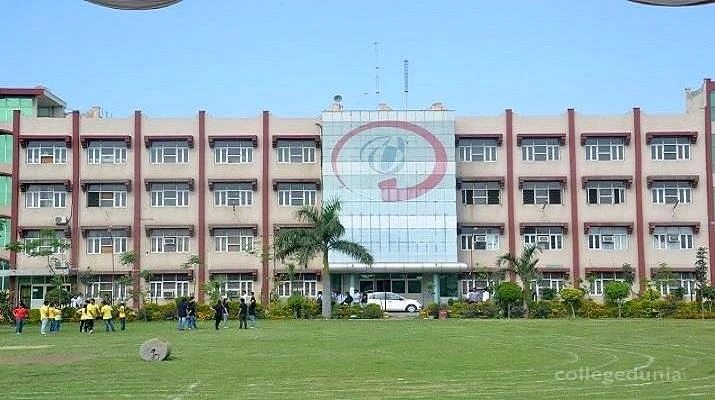
In this preview: 1 photo · 0 videos
The institute is considered average for CSE. It provides the necessary degree and basic lab facilities. However, students are advised to work independently on their coding skills to secure good placement opportunities.
DIET (Doon Valley Institute of Engineering and Technology) is a private engineering college. NDRI (National Dairy Research Institute) is a premier national government research institute focused on dairy. They are entirely different types of institutions.
No, DIET does not guarantee 100% placements. While the college provides placement assistance, achieving 100% placement for most batches is not a reality, as is common with many engineering colleges.
Strict anti-ragging laws and policies are enforced at the institute. Recent student reviews suggest a safe hostel environment with no major reported incidents of ragging.
Yes, direct admission is possible through the Management Quota. To be eligible, candidates must meet the minimum academic criteria, which typically includes securing at least 45% marks in 12th standard.
Share what future students should know about DIET.
Student voices are not rewritten by colleges. We remove spam and abuse.
Wider admission question? Community PulseWhat should future students know?
Tell us which course you're considering. We'll help you work out the next step.
Get instant Partner access after mobile verification. Your public edits are reviewed before they go live.
Claim this college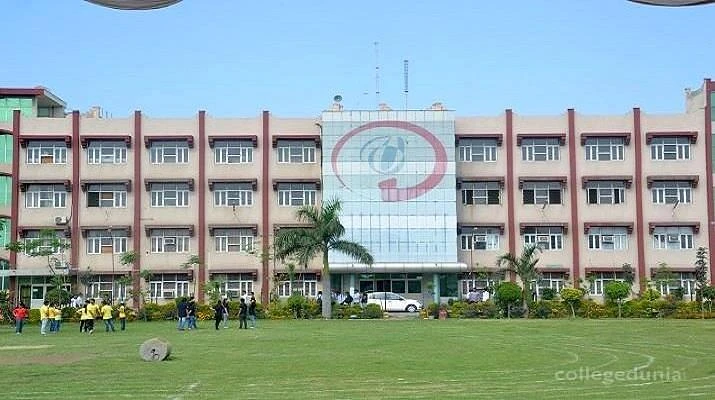
 Auditorium
 Cafeteria
 Computer Labs
 Gym
Gym Hostel
 Medical
 Science Labs
 Sports Complex
 Study Library