Loading Admission Guardian content
Loading Admission Guardian content
Provisional score based on available data. It may change as more information is verified.
Find a program, read its fee details and explore the admission requirements.
Summary of the programs shown below. First-year fee. Check the note beside each amount for inclusions and exclusions.
| Course | Stream | Fees |
|---|---|---|
| M.B.B.S. | Medical | 994406 |
| Doctorate of Medicine [MD] | Medical | 1150205 |
| Master of Surgery [MS] | Medical | 1150205 |
All accepted exams
Eligibility: 10+2 with 50% + NEET
Specializations
Eligibility: Post Graduation
Specializations
Eligibility: MBBS
2 exams with cutoff data available
Dr. B.R. Ambedkar Medical College (BRAMC) in Bangalore is a study in contrasts. Established in 1981, this private, trust-run institution is known for one thing above all else: immense clinical exposure. Its 800-bed teaching hospital, with an OPD fee of just ₹10, draws a patient load that many students describe as unparalleled. That's the core trade-off here. You come for the hands-on medicine, not the glamour. The college isn't ranked in the NIRF Top 100 and sits around 513 nationally on CollegeDunia. But for a student who prioritizes seeing a vast array of cases over a polished campus life, BRAMC presents a compelling, if gritty, proposition.
The academic offering is focused and traditional, centered around the MBBS program and a range of postgraduate MD/MS seats. The MBBS intake was recently increased to 150 seats per year, which is a decent size for a private college. The program follows the standard 4.5 years of academics plus a 1-year compulsory rotating internship, all under the syllabus and calendar of RGUHS.
For postgraduates, there are 74 seats spread across 18 specializations. The spread is fairly typical, with stronger intakes in high-demand fields like MD General Medicine (9 seats), MD Anaesthesiology (10), and MS General Surgery (7). The non-clinical departments have smaller intakes, usually 1-3 seats each.
Faculty strength is listed at over 250, with nearly all senior clinical staff holding MD/MS degrees. The academic culture, as per student accounts, is heavily tilted towards practical, bedside learning—a direct result of the hospital's environment. You won't find many experimental pedagogies here. It's a workmanlike approach to medical education, tightly coupled to the rhythms of a busy hospital.
Let's be clear: in the context of an MBBS program, "placements" don't exist in the corporate sense. The relevant metrics here are internship stipends and post-graduation trajectories. And on the stipend front, the data is frustratingly murky.
The college and trust have been flagged in student reviews for inconsistent stipend policies for MBBS interns. Some reports from 2024 claim it's non-stipendiary for certain quota students, while others mention figures between ₹15,000 to ₹25,000 per month. This ambiguity is a significant pain point you'll see echoed on forums. For PG residents, the stipend is clearer and aligns with Karnataka state mandates, ranging from ₹45,000 to ₹60,000 per month.
Career outcomes are self-directed. 100% of students complete the mandatory internship, but the vast majority then prepare for and take the NEET PG exam. Alumni have secured seats and subsequently built careers in reputable hospitals like Manipal, Apollo, Columbia Asia, and even AIIMS—but that's a function of their NEET PG rank, not campus recruitment. The college's value is in preparing you clinically for that next step, not in placing you after MBBS.
The fee structure at BRAMC is a stark illustration of India's medical education landscape. It's a multi-tier system entirely dependent on the quota through which you secure a seat via the Karnataka Examination Authority (KEA) counseling.
For the 2024-25 academic year, the annual tuition fee for MBBS is approximately ₹1.44-1.5 lakhs for Government Quota seats. For Private/Open Quota seats, that number jumps to between ₹10.93 lakhs and ₹12 lakhs per year. The Management/NRI Quota can cost between ₹35 lakhs to a staggering ₹40 lakhs annually.
On top of tuition, add hostel and mess fees of about ₹1.17 to ₹1.42 lakhs per year. There are also additional one-time or annual charges for university registration, library, and labs, which can stack up to around ₹50,000-₹1,00,000. Doing the math, the total 5.5-year cost for an MBBS degree ranges from roughly ₹10-12 lakhs (Govt Quota) to ₹60-70 lakhs (Private Quota), and can eclipse ₹1.6-2.0 crores for the NRI route. There's no prominent mention of institutional scholarships or financial aid schemes in available student materials.
Admission is 100% entrance-exam driven. For the MBBS program, you must qualify in NEET UG. For MD/MS programs, it's NEET PG. There is no separate management test or interview for the seats routed through counseling.
The selection process is centralized and conducted by the Karnataka Examination Authority (KEA). You apply through their portal after NEET results are declared, typically in June or July. The KEA then conducts multiple rounds of counseling to allot seats based on your NEET rank, category, and seat quota availability.
Cutoff ranks give you a sense of the competition. For the 2024 admission cycle (early rounds), the closing ranks for MBBS were approximately:
These ranks are dynamic and shift each year based on applicant pool and seat matrix, but they position BRAMC as a mid-tier private option in Karnataka. The private seat rank is notably more competitive than the government one, reflecting the number of seats available in each pool.
This is where student reviews become sharply divided. The college's 25-acre campus houses the central academic block, hostels, and the massive 800-bed hospital. The library is a positive, with over 16,000 books and a 24/7 reading room. Labs for core subjects like Anatomy and Pathology are reported to be well-equipped. There's a large playground and some basic indoor sports facilities.
But the living experience draws consistent criticism. Hostels are separate for boys and girls, but the quality is uneven. Multiple reviews, including on Shiksha, point out that the girls' hostel infrastructure lags, with mentions of shared washrooms in some wings being a particular grievance. The boys' hostel is generally rated as better. The mess food, serving primarily South Indian fare, is routinely described as "average" or worse in student feedback.
A major point of contention is the location. Kadugondanahalli, near Tannery Road, is not a developed or upscale part of Bangalore. Students frequently cite concerns about the surrounding area being ill-maintained and having questionable hygiene and safety, especially after dark. On the flip side, being in Bangalore does provide easy access to the city's renowned NEET PG coaching centers.
Social life? Practically nil. Don't expect vibrant fests or a bustling campus culture. The vibe is largely academic and clinical.
Synthesizing feedback from CollegeDunia, Shiksha, Reddit, and Quora paints a very consistent picture. The consensus isn't ambiguous.
The Good: The clinical exposure is repeatedly hailed as exceptional. "The patient load is massive. You see cases here that you won't see in posh private hospitals," is a sentiment echoed everywhere. Faculty are widely praised as experienced, approachable, and dedicated to teaching practical medicine. The location, while gritty, is also a plus for access to city amenities and coaching.
The Not-So-Good: Infrastructure and hygiene are the biggest complaints. The hospital, while busy, is often described as not optimally clean. The hostel issues, especially for women, are a serious concern. The management is frequently labeled "money-minded" and bureaucratic. The lack of a reliable internship stipend is a major financial and morale issue for many. And the social scene is acknowledged to be virtually non-existent.
One Reddit summary from r/indianmedschool captures the trade-off perfectly: "If you want to learn clinical skills, this is the place. If you want a luxury campus, look elsewhere."
The answer depends entirely on what you're optimizing for. BRAMC is a specific kind of medical college for a specific kind of student.
It is worth serious consideration if your primary goal is to become a clinically confident doctor and you view medical college as a rigorous training ground, not a "campus experience." If you secure a government quota seat, the value-for-money proposition becomes very strong given the exposure. You're trading comfort for competency.
You should look elsewhere if you prioritize a clean, modern campus, a vibrant student life, reliable amenities, or a management known for student-friendly policies. The high fees for private/NRI quotas are harder to justify given the infrastructure gaps reported. Also, if consistent financial support during internship is critical for you, the unclear stipend policy is a significant red flag.
In essence, BRAMC is a no-frills, high-volume clinical factory. It will make you a work-ready doctor, but it likely won't coddle you along the way. For the right student, that's exactly what they need. For others, it could be a grueling five years. Your choice hinges on which category you fall into.
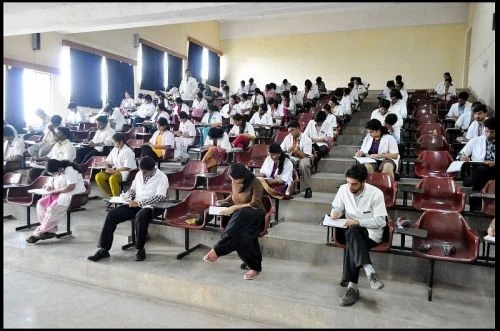
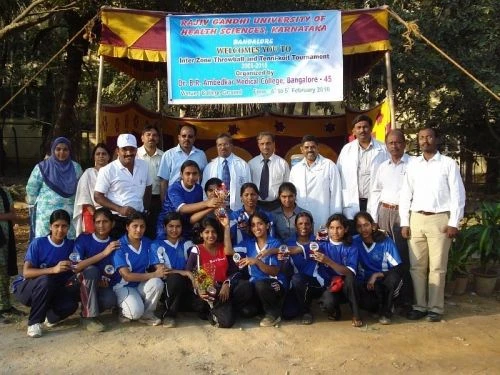
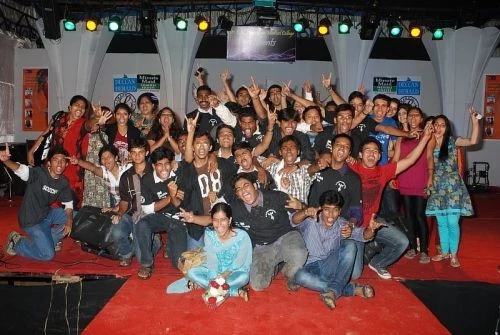
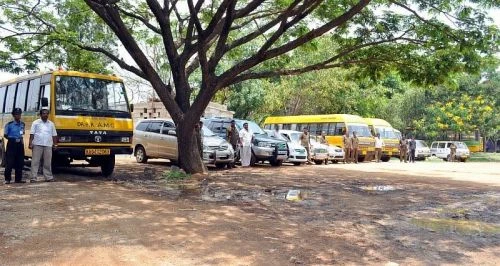
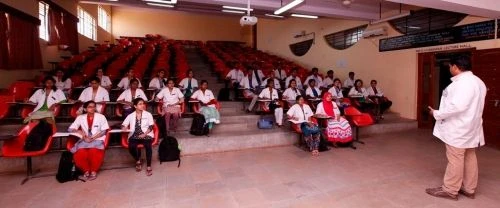
In this preview: 5 photos · 0 videos
Dr. B.R. Ambedkar Medical College (BRAMC) in Bangalore is a private college run by a trust. However, it does offer government quota seats for admission through the Karnataka Examination Authority (KEA).
For the 2024-25 academic year, the MBBS fee for management quota (private seats) is approximately ₹12 Lakhs per annum. The fee for NRI/Management quota seats can be up to ₹35 Lakhs.
The stipend for MBBS interns at BRAMC is variable. While some recent reports suggest the internship may be non-stipendiary for some students, others receive a stipend of around ₹15,000.
The patient flow at Dr. B.R. Ambedkar Medical College is reported to be excellent. It is considered one of the highest in Bangalore, which is attributed to its location and the provision of affordable care, ensuring strong clinical exposure for students.
No, hostel accommodation is not mandatory at BRAMC. Students, especially local residents, have the option to stay outside the campus. However, many students prefer the on-campus hostels due to their proximity to the teaching hospital.
Share what future students should know about BRAMC.
Student voices are not rewritten by colleges. We remove spam and abuse.
Wider admission question? Community PulseWhat should future students know?
Tell us which course you're considering. We'll help you work out the next step.
Get instant Partner access after mobile verification. Your public edits are reviewed before they go live.
Claim this college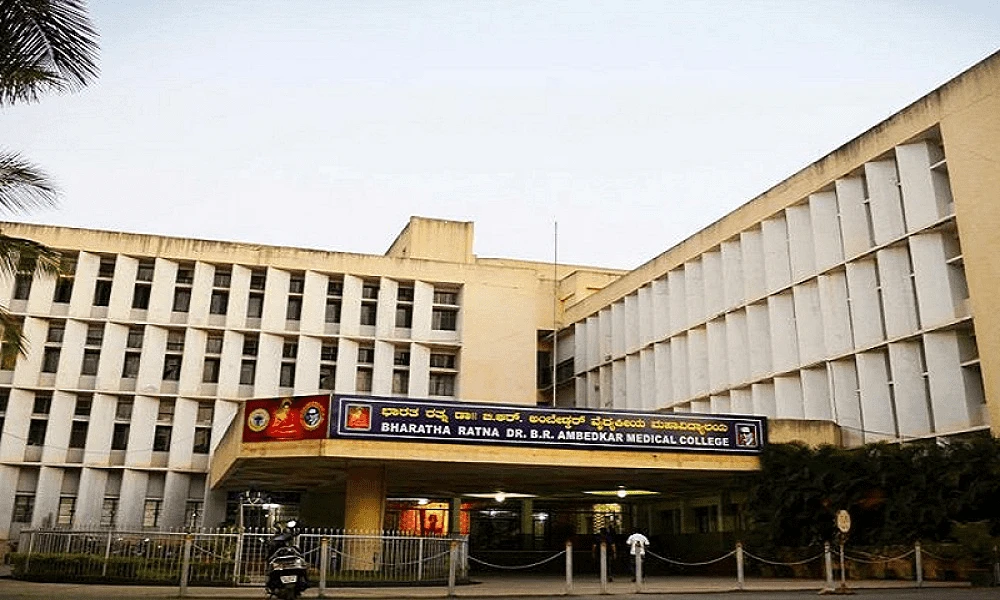
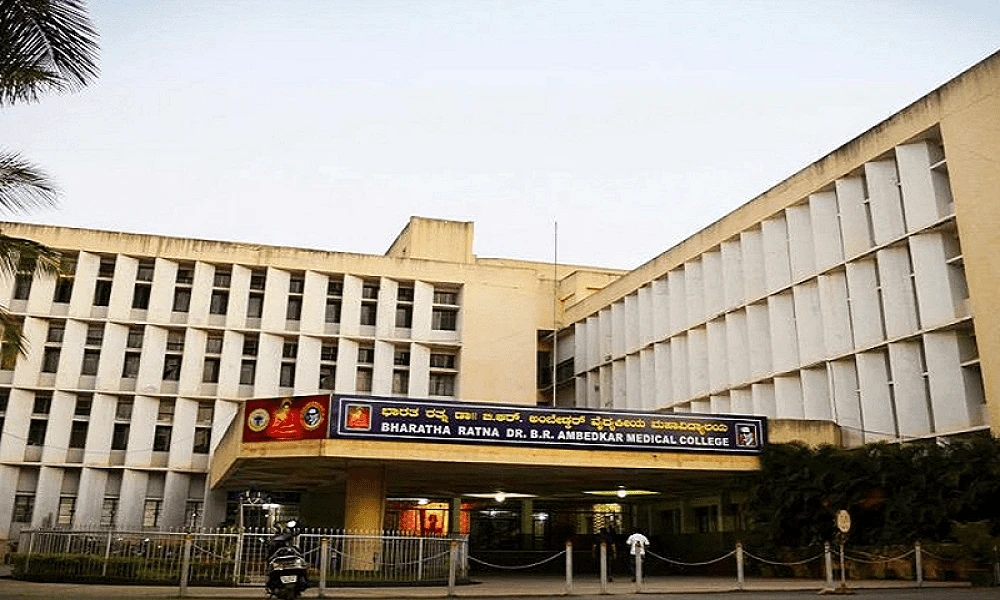
 Auditorium
 Cafeteria
 Campus Shuttle
 Campus Wi-Fi
 Computer Labs
 Hostel
 Medical
 Sports Complex
 Study Library