Loading Admission Guardian content
Loading Admission Guardian content

Provisional score based on available data. It may change as more information is verified.
Find a program, read its fee details and explore the admission requirements.
Summary of the programs shown below. First-year fee. Check the note beside each amount for inclusions and exclusions.
| Course | Stream | Fees |
|---|---|---|
| Bachelor of Science [B.Sc] (Home Science) | Science | 3390 |
| Master of Arts [M.A] | Arts | 8590 |
| Ph.D | Management | 18000 |
| Master of Science [M.Sc] | Agriculture | 30590 |
| Master of Business Administration [MBA] | Management | 30590 |
Specializations
Eligibility: 10+2
Specializations
Eligibility: Graduation
Specializations
Eligibility: Post Graduation
Specializations
Eligibility: Graduation
Specializations
Eligibility: Graduation
If you're looking for a university that promises corporate placements and a buzzing social calendar, Dr. B. R. Ambedkar University of Social Sciences (BRAUSS) in Indore isn't it. But if you want a quiet, affordable, and academically rigorous environment to study the social sciences, prepare for civil services, or pursue a PhD, this state-run university is a unique and often overlooked option. Established in 2016 on the grounds of Dr. Ambedkar's birthplace in Mhow, it functions with a clear mandate: to be a center for social thought, not a corporate feeder. That focus defines everything here, from the low fees to the lack of a traditional placement cell. It's a place for a specific kind of student, and understanding that distinction is key.
BRAUSS is structured around five schools: Thoughts & Philosophy, Social Sciences & Management, Agriculture and Rural Development, Education and Skill Development, and Law & Social Justice. This isn't a university with hundreds of engineering seats. Its strength lies in traditional and niche social science programs.
At the UG level, you'll find BA/B.Com specializations (intake around 10 per stream), B.Sc in Home Science and Agriculture, and a BSW. The postgraduate offerings are more expansive, with 22 MA specializations—from Sociology and Economics to Pali and Rural Development. There's also an MBA, MSW, M.Com, and M.Sc programs in Agriculture and Food & Nutrition. For researchers, the university offers M.Phil and PhD programs across 17 specializations, including Law and Management.
The faculty, around 30 strong, is frequently cited as a major asset. A significant majority hold PhDs, and student reviews consistently praise professors like Dr. C.D. Naik (Philosophy) and Prof. R.D. Maurya (Rural Development) as being helpful and deeply knowledgeable. The academic system is semester-based with a passing SGPA of 5.0. Collaborations exist, like an MoU with the Atal Bihari Vajpayee Institute of Good Governance, but the academic culture is largely self-contained and focused on its core disciplines.
Let's be direct: you don't come to BRAUSS for on-campus placements. The official website doesn't publish highest or average package figures, and for good reason. The consensus from student reviews on platforms like Shiksha and CollegeDunia is that the placement percentage is very low for corporate roles.
That's not a failure; it's a reflection of the student body's goals. Most students here are using the low-cost, high-quality academic environment as a base to prepare for UPSC, MPPSC, UGC-NET, or other government exams. The "placements" that do occur are typically in NGOs, government-linked development projects, or academic research roles. Internships, especially for MSW and Agriculture students, are available with rural development projects and government departments. So, the placement cell isn't hosting Amazon or Deloitte. It's facilitating connections to the social sector. If you're aiming for a private sector MBA job, you'll be doing the legwork yourself. The gap between this reality and the typical "placement brochure" is the most critical thing to understand.
This is where BRAUSS shines for students from economically constrained backgrounds. The fees are exceptionally low, a direct benefit of its status as a state public university. For the 2024-2024 session, a BA program costs about INR 3,390 per year. An MA ranges from INR 12,000 to 15,000 annually. Even the MBA is just about INR 30,590 per year. A full PhD program totals around INR 52,000.
Hostel fees are approximately INR 6,000 per year, with mess charges extra at about INR 2,000 per month. To support students, the university offers the Chancellor’s Fellowship for top performers. More substantially, state government schemes like the Post-Metric Scholarship for SC/ST/OBC students and the Mukhya Mantri Medhavi Vidyarthi Yojna (MMVY) are actively available. For many students, these scholarships cover or even exceed the already minimal tuition cost.
Admissions operate on a dual track. For undergraduate programs, scores from the national CUET-UG exam are accepted. For postgraduate programs like M.Sc, M.Phil, and PhD, the university conducts its own entrance test. If seats remain vacant after these entrance-based rounds—which they often do—admission to BA and MA programs can revert to a simple merit-based system using your previous qualifying marks (12th or graduation).
The process is straightforward: check the merit list, complete document verification, and pay the fee. The application fee is around INR 700 for general candidates and INR 350 for SC/ST. The application window typically opens in May and runs through June. For PhD programs, the selection involves the entrance test followed by an interview or group discussion.
The campus in Mhow is described by students as "very big" and "spacious," with a calm, clean atmosphere conducive to studying. Infrastructure is functional. The central library holds thousands of books and journals, with digital access available in the IT center. Labs are equipped for Agriculture, Psychology, and Computer Science needs. Sports facilities for cricket, football, volleyball, and kabaddi are present.
Hostels, separate for boys and girls, get positive marks for cleanliness and safety, often rated 4/5. The resident warden system in the girls' hostel adds to the sense of security. The downsides of campus life are consistent in reviews. The canteen is frequently cited as "poor" or essentially non-existent, pushing students to look for food options outside campus. Wi-Fi is available but limited to the IT center and library, not campus-wide. And the location, while historic, is a drawback for city life—it's about 27-30 km from central Indore, a solid hour's drive.
Synthesizing feedback from CollegeDunia, Shiksha, and other forums paints a clear picture. The positives are strong but specific: affordability is the top draw, followed by high faculty quality ("teachers reply to every single student's query"). The environment is praised as "calm" and "noise-free," perfect for an academic focus on research or exam prep. One review summed it up: "It is a good university for distance education and those preparing for competitive exams."
The negatives are just as clear. The placement scene is almost non-existent for corporate jobs. Social life is minimal, with very few fests or cultural activities, leading some to call it "boring." The location is isolated, and the canteen situation is a genuine hassle. You don't come here for a "college experience." You come here to study.
BRAUSS is a niche institution that serves a vital purpose. It's worth it if you are a student of the social sciences, philosophy, or rural development seeking a serious, low-cost academic environment to build a foundation for government services, research, or social work. It's ideal for self-motivated learners who prioritize faculty interaction and library resources over campus festivities. The value for money, especially with scholarships, is exceptional for this path.
However, it's not worth it if your primary goal is a corporate job post-graduation, or if you crave a vibrant, interconnected campus life with modern amenities. The isolation and lack of placement support would be a significant handicap. Choose BRAUSS for its academic mission and affordability, not for the traditional markers of a university's prestige. It's a focused tool, not a multi-purpose one.
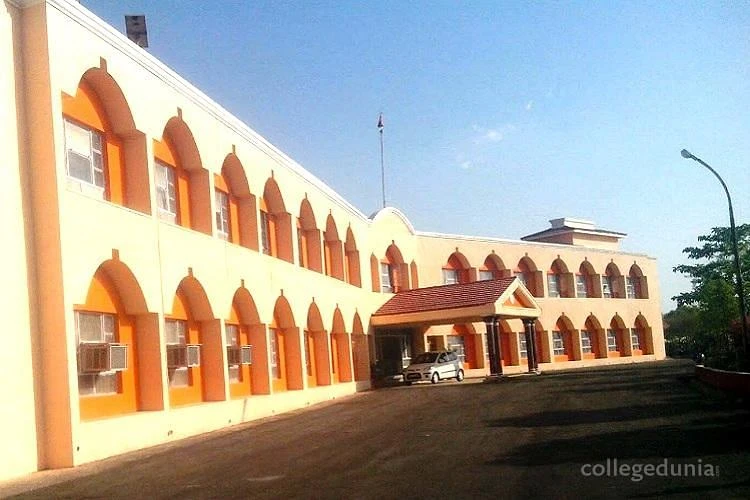
In this preview: 1 photo · 0 videos
The university offers an affordable MBA program. However, it is noted that its placement drive is not as robust as private business schools. It can be a good option for self-motivated students specifically targeting government sector roles.
Yes, BRAUSS accepts CUET scores for admission to most of its undergraduate (UG) programs. Any remaining vacant seats after this process are typically filled based on university merit criteria.
The university provides a dedicated and secure hostel facility for female students. The girls' hostel has a resident warden to oversee operations and safety.
The total fee for a PhD program at BRAUSS is approximately INR 52,000. This makes it one of the most affordable doctoral programs available in the region.
The university campus is located in Mhow, which is about 27-30 kilometers from central Indore. The travel time by road is roughly one hour.
Share what future students should know about Dr. B. R. Ambedkar University of Social Sciences.
Student voices are not rewritten by colleges. We remove spam and abuse.
Wider admission question? Community PulseWhat should future students know?
Tell us which course you're considering. We'll help you work out the next step.
Get instant Partner access after mobile verification. Your public edits are reviewed before they go live.
Claim this college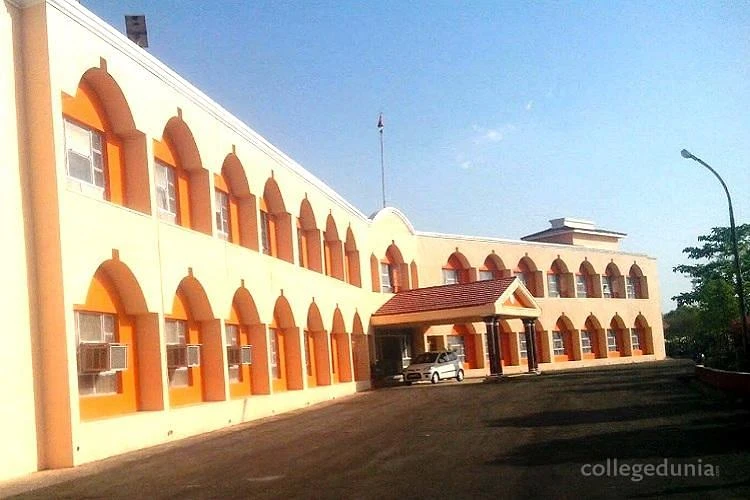
 Cafeteria
 Communication Centre
 Computer Labs
 Medical
 Science Labs
 Study Library