Loading Admission Guardian content
Loading Admission Guardian content

Selected ranking categories, with the recorded year beside each result. Open all records for the complete history.
3 published records · Lower numeric ranks are stronger
IIRF
Medical
#692022
Find a program, read its fee details and explore the admission requirements.
Summary of the programs shown below. Fee periods can differ by program. Check the note beside each amount before comparing costs.
| Course | Stream | Fees |
|---|---|---|
| Diploma | Paramedical | 50500 |
| Doctorate of Medicine [MD] | Medical | 121500 |
| Master of Chirurgiae [M.Ch] (Neuro Surgery) | Medical | 121500 |
| Master of Surgery [MS] | Medical | 121500 |
| M.B.B.S. | Medical | 126500 |
Specializations
Specializations
All accepted exams
Eligibility: Post Graduation
Specializations
All accepted exams
Eligibility: Post Graduation
Specializations
All accepted exams
Eligibility: Graduation
All accepted exams
Eligibility: 10+2 with 50% + NEET
4 exams with cutoff data available - showing recent entries
Gajra Raja Medical College in Gwalior isn't just another government med school. It's the first medical college in Madhya Pradesh, founded in 1946, and that history is palpable. You feel it in the worn corridors of the old J.A. Hospital and see it in the sheer volume of patients that stream through its gates daily. For a student who wants to learn medicine by seeing and doing, GRMC offers a clinical experience that's hard to match, especially for the price. But it's a trade-off. The legacy comes with aging infrastructure and a famously rigid administration. This is a place that prioritizes work over comfort, a fact echoed by nearly every student review you'll find online.
GRMC runs the full gamut from undergraduate to super-specialty training. The MBBS program, with an intake of 200, follows the NMC's Competency-Based Medical Education (CBME) curriculum. But the real academic draw is the postgraduate offering. There are 178 MD/MS seats across staples like General Medicine, Surgery, Paediatrics, and Radio-diagnosis, plus non-clinical fields. For super-specialization, they offer 17 DM/M.Ch seats in high-demand areas like Neurosurgery, Cardiology, and Neurology.
And then there's the faculty. With around 170 regular professors, the departments are well-staffed. Names like Dr. R.K.S. Dhakad (the Dean) and department heads like Dr. Sudhir Saxena (Anatomy) lend credibility. The teaching happens in a mix of heritage lecture halls and newer smart classrooms. But let's be clear—the primary teacher here is the hospital itself. The academic culture is old-school and demanding, heavily focused on practical, bedside learning over theoretical fluff.
Medical colleges don't have "placements" in the corporate sense. Your career path is built on the internship, post-graduate seat, and subsequent government service. At GRMC, the financials are set by the state. The internship stipend is ₹13,000-₹15,000 per month, which many alumni call inadequate for the 12-14 hour workdays. PG residents do better, earning between ₹65,000 and ₹72,000 monthly.
After MBBS, a fresh grad can expect ₹60,000-₹75,000 per month as a Junior Resident or Medical Officer in the government sector. Private practice or corporate hospital roles might start higher, around ₹80,000 to ₹1.2 LPA. The key metric is the PG success rate. While an official number isn't published, a common student claim is that 75-80% of graduates secure a PG seat within a year or two. That's a decent outcome, aided heavily by the college's strong reputation in exam interviews.
There is a catch, though: the bond. To skip the mandatory one-year rural service after MBBS, you must pay a ₹10 Lakh penalty. A similar bond exists for PG courses, with penalties ranging from ₹10-15 Lakhs. It's a significant financial and professional consideration.
This is where government colleges like GRMC shine. The affordability is staggering compared to private institutions. The annual tuition for MBBS is between ₹1 lakh and ₹1.14 lakh. Over the full 5.5-year course, you're looking at a total cost of roughly ₹5.5 to ₹6.5 lakhs, including tuition and other fees. Hostel fees are about ₹12,000 per year, though mess charges are extra and variable (₹3,000-₹4,500 monthly).
Financial aid is robust for eligible students. Madhya Pradesh residents with top board scores (75% in MP Board/85% in CBSE) can get full tuition coverage under the Mukhya Mantri Medhavi Vidyarthi Yojana (MMVY). There are also standard Post-Matric scholarships for SC/ST/OBC students and the Gaon Ki Beti Yojana for rural female students. The low fee structure itself is the biggest scholarship, making a medical degree accessible.
Admission is 100% merit-based through national entrance exams. For MBBS, you need a qualifying score in NEET-UG. For the 2024 session, the Round 1 cutoff for the General category under the All India Quota (AIQ) was between ranks 9,600 and 11,000. For the 85% State Quota seats reserved for Madhya Pradesh domicile holders, the cutoff was more lenient, around ranks 18,000 to 22,000.
Selection happens through centralized counseling. The 15% AIQ seats are filled by the Medical Counseling Committee (MCC), while the Directorate of Medical Education (DME), Madhya Pradesh, handles the state quota. For MD/MS, you need a qualifying rank in NEET-PG, and for DM/M.Ch, it's NEET-SS. There is no management or NRI quota—every seat is contested purely on NEET rank.
The campus is an urban sprawl integrated with the Jaya Arogya (J.A.) Group of Hospitals. That's the key feature. The hospital complex is massive, with over 2,190 beds spread across the old main building, the Kamla Raja Hospital for women and children, a modern 1000-bed multi-specialty block, and a super-specialty wing. The infrastructure is a tale of two cities. The new hospital blocks are well-equipped, but the older sections show their age, with complaints about maintenance and outdated equipment in some departments.
There are eight hostels (four each for boys and girls). The newer blocks are fine, but the older ones have issues. Rules can be strict, with reported "lock-in" hours where students are expected to be in the hospital. The library is well-stocked, and a new sports complex with a gym, tennis, and badminton courts has improved recreational options.
Social life is what you make it. Gwalior is a historical city with all essential amenities, but it's not a metro. You won't find the vibrant campus festival culture of some central institutes. The lifestyle is more focused and, some would say, slower.
Scouring platforms like Quora, Reddit, and CollegeDunia reveals a consistent, almost unanimous consensus. The positives are powerful. The clinical exposure is the undisputed king. Students repeatedly say they see textbook cases daily, and the patient load is a brutal but effective teacher. The legacy and reputation are tangible assets, especially during PG admissions. And the affordability is a lifesaver.
But the negatives are just as consistent. Infrastructure decay in the older buildings is a frequent gripe. The administrative rigidity is legendary—students often feel micromanaged with strict attendance policies and hostel rules. Many feel the internship stipend doesn't match the workload. As one Reddit user put it: "If you want to learn clinical medicine, GRMC is a goldmine. If you want a luxury campus, look elsewhere." Another on Quora noted, "The new 1000-bed hospital has changed the game, but the administration still operates like it's 1946."
GRMC Gwalior is a classic, no-frills workhorse of a medical college. It's best for the pragmatist—the student whose primary goal is to become a clinically sharp doctor without accruing massive debt. If your NEET rank lands you here but not in a top-tier AIIMS or a newer central institute, GRMC is an excellent choice. The clinical training is arguably better than many more expensive, prettier private colleges.
You should probably look elsewhere if you prioritize a modern, comfortable campus life, flexible administration, and a vibrant extra-curricular scene. The environment here is demanding and traditional. It's also a great fit for MP domicile students who get the benefit of a lower state quota cutoff for a college of this caliber. In the end, GRMC doesn't coddle you. It prepares you for the real, often gritty, world of Indian healthcare. For the right student, that's exactly what's needed.
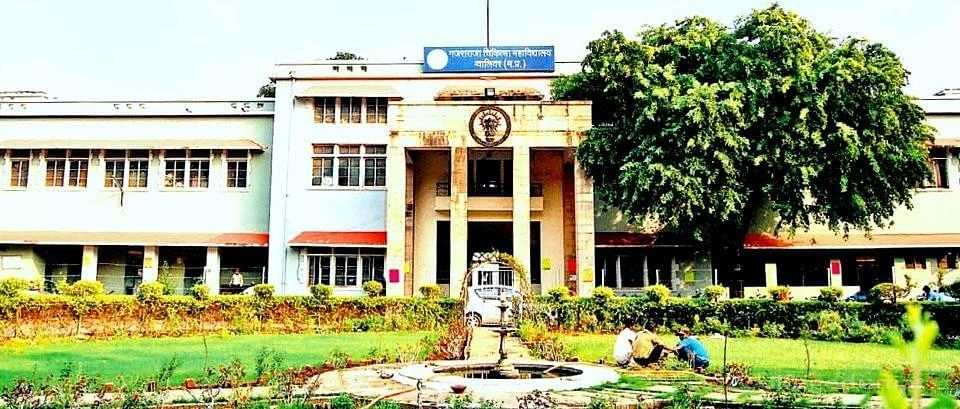
In this preview: 1 photo · 0 videos
GRMC Gwalior has a higher patient load and an older legacy, which can provide extensive clinical exposure. However, Government Medical College (GMC) Bhopal is often preferred by some for its location in the state capital and slightly better infrastructure.
The bond amount for MBBS students at GRMC is ₹10 Lakhs. This bond is applicable for skipping the compulsory one-year rural service after completing the course.
Yes, Gajra Raja Medical College provides dedicated hostels for first-year students. This policy is in place to help prevent ragging, though room availability can sometimes be tight.
Gwalior is a traditional and safe city known for being affordable. Students coming from metropolitan areas might find the lifestyle to be slower-paced, but it offers a secure and cost-effective living environment.
Yes, the college has a gym. A new sports complex that includes gym facilities was recently inaugurated for student use.
Share what future students should know about GRMC.
Student voices are not rewritten by colleges. We remove spam and abuse.
Wider admission question? Community PulseWhat should future students know?
Tell us which course you're considering. We'll help you work out the next step.
Get instant Partner access after mobile verification. Your public edits are reviewed before they go live.
Claim this college
 Auditorium
 Cafeteria
 Campus Shuttle
 Computer Labs
 Gym
Gym Hostel
 Medical
 Science Labs
 Sports Complex
 Study Library