Loading Admission Guardian content
Loading Admission Guardian content

Find a program, read its fee details and explore the admission requirements.
Summary of the programs shown below. Fee periods can differ by program. Check the note beside each amount before comparing costs.
| Course | Stream | Fees |
|---|---|---|
| Bachelor of Homeopathic Medicine & Surgery [BHMS] | Medical | 37000 |
| Doctorate of Medicine [MD] (Homoeopathic - Practice of Medicine) | Medical |
All accepted exams
Eligibility: 10+2
Specializations
Eligibility: Graduation
4 exams with cutoff data available
If you're looking at BHMS colleges in Delhi and have a NEET rank that's decent but not sky-high, Dr. B.R. Sur Homoeopathic Medical College, Hospital and Research Centre (SHMCH) is a name that comes up fast. It's a government-run institution, which means fees are a fraction of what private colleges charge. But the real draw, according to students who've been there, isn't the price tag—it's the sheer volume of patients walking through its doors. You get clinical exposure from the first year, something that's hard to put a value on. Just know what you're signing up for: the campus is essentially one building on a single acre in Moti Bagh, and you'll be hunting for a PG in Satya Niketan because there's no UG hostel. It's a trade-off, but for many, it's a worthwhile one.
The academic offering here is focused. For undergraduates, it's the 5.5-year BHMS program—that's 4.5 years of academics followed by a mandatory one-year rotatory internship. The intake was recently bumped up to 63 seats, which is a decent size for a specialized government college. Postgraduates can pursue a 3-year MD in Homoeopathy, though seats are limited: just three each in Materia Medica and Practice of Medicine, for a total of six.
The academic calendar follows GGSIPU, and the teaching style has a reputation. Faculty, led by Principal Dr. Neeraj Gupta, are often described as strict but deeply knowledgeable. They enforce the 75% attendance rule, so don't expect to coast. What sets SHMCH apart is its research bent. The attached Research Centre has collaborated with places like the Institute of Nuclear Medicine and Allied Sciences (INMAS) on projects, which is a serious credential for a homoeopathic college. It's not just about memorizing remedies; there's an attempt to engage with modern research methodologies.
Let's be clear: medical colleges like this one don't have placement drives like engineering schools. Your career launchpad is the compulsory internship and the degree itself. The internship stipend for BHMS graduates is currently between ₹22,000 and ₹30,000 per month, which is a solid amount for a trainee. For MD residents, the stipend jumps significantly, ranging from about ₹56,100 to even ₹1,00,000 per month depending on the year and allowances.
After that, paths diverge. Many alumni set up their own private practices, which is the most common route in homoeopathy. Others prepare for government medical officer exams through UPSC or state PSCs, aiming for positions in Delhi government dispensaries or institutions like NHMC. Some also join established private chains like Bakson's or Dr. Batra’s. For the academically inclined, clearing the AIAPGET for further MD or PhD studies is the next step. The college's strong clinical base and research links give a leg up here.
This is where the government-college advantage hits home. The annual tuition fee for the BHMS program is estimated to be between ₹15,000 and ₹25,000. Over the entire 5.5-year course, the total fee payable (including university charges) is around ₹84,217. That's astonishingly low. Compare it to any private BHMS college where fees can run into lakhs per year, and the value proposition becomes stark.
MD fees are also modest, roughly ₹16,000 to ₹45,000 annually. There are no hostel fees because, well, there's no UG hostel. Your major living cost will be renting a PG or shared apartment in nearby Satya Niketan or Moti Bagh. Financial aid is available through standard government channels—SC/ST/OBC and EWS scholarships can be applied for via the Delhi Government and GGSIPU portals.
Your ticket in is NEET-UG for BHMS and AIAPGET for the MD program. There's no other way. The selection is purely merit-based through centralized counseling—AACCC for the 15% All India Quota seats and GGSIPU for the 85% Delhi State Quota seats. There is no management or NRI quota, which keeps things transparent.
The cutoffs tell an interesting story. For the General category under the All India Quota, the college has closed around ranks 58,000 to 65,000 in recent counseling rounds. That's a specific bracket. However, for the Delhi State Quota, the ranks can go much lower, sometimes extending beyond 1,50,000. This is a critical data point for Delhi residents. If you're a local candidate with a rank in that broader range, this college becomes a very realistic target. You can check the official NIRF Rankings for context, though homoeopathic colleges are rarely featured in the main medical lists.
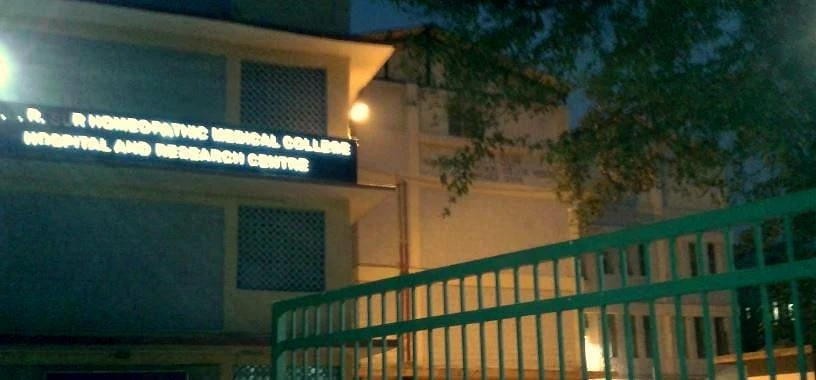
Manage your expectations. The campus is an urban, one-acre plot with a single four-story academic block. It houses everything: classrooms, labs, the library, and the hospital. The infrastructure is functional. Labs for Anatomy, Physiology, and Pathology are reported to be well-equipped for the course work. The library has over 6,000 books and journal access.
The 50-bed hospital and bustling OPD are the heart of the place. That's the trade-off. You're here for the clinical exposure, not the lawns.
Now, the big issue: housing. Most student reviews confirm there is no on-campus hostel facility for undergraduate students. This is the single biggest logistical hurdle, especially for outstation candidates. The student ecosystem has adapted to nearby private accommodations, primarily in Satya Niketan, which is a hub for students due to its proximity to Delhi University's South Campus. There's also no dedicated college canteen, so you'll be relying on the eateries in that same market. Social life is low-key—no large-scale fests. It's a study-and-clinic-focused environment.
The consensus from forums like CollegeDunia, Shiksha, and Reddit is pretty consistent. Students are fiercely proud of the clinical training. Phrases like "excellent patient exposure" and "you see real cases from day one" are repeated everywhere. They also universally appreciate the low fees. It's a government college bargain.
But the negatives are just as consistently voiced. The lack of a hostel is a massive pain point and a significant added expense. The small, single-building campus feels cramped, especially when compared to the larger grounds of Nehru Homoeopathic Medical College (NHMC). Some find the administrative processes slow, citing a "typical government office vibe."
The location near Satya Niketan is seen as a saving grace for food and basic amenities, but it doesn't make up for the lack of on-campus community spaces or sports grounds. It's a pragmatic choice, not a glamorous one.
It depends entirely on what you prioritize. If your primary goal is to become a homoeopathic practitioner with the strongest possible hands-on clinical training from day one, and you want to do it without crippling debt, SHMCH is arguably one of the best choices in North India. The government fee structure is a major relief, and the patient inflow is a genuine educational advantage.
However, if you envision a typical "college life" with a sprawling campus, hostels, sports fields, and big cultural fests, you will be disappointed. The infrastructure is basic, and the lack of a hostel is a serious consideration for anyone not from Delhi-NCR. It's a no-frills, professional training ground. Ideal for the student who is dead-set on the medicine and willing to forego the extras. For a Delhi resident with a NEET rank in the state quota range, it's an excellent, high-value option. For someone from farther away, the housing hassle needs to be factored in as a real cost and inconvenience.
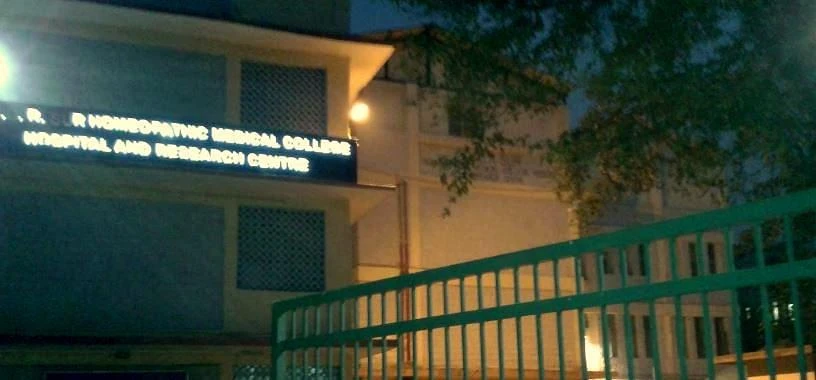
In this preview: 1 photo · 0 videos
No, the college does not provide an on-campus hostel for its BHMS students. Limited accommodation may be available for MD (Postgraduate) residents.
For the General All India Quota (AIQ), admissions typically close around a rank of 60,000. For candidates applying under the Delhi State Quota, the cutoff rank can extend beyond 1.5 Lakh.
Nehru Homoeopathic Medical College (NHMC) has a larger campus and offers more MD (Postgraduate) seats. However, Dr. B.R. Sur Homoeopathic College (SHMCH) is often noted for its specific clinical training and its location in South Delhi.
Interns at the college currently receive a monthly stipend ranging between ₹22,000 and ₹30,000.
Yes, the BHMS degree awarded by Guru Gobind Singh Indraprastha University (GGSIPU) through this college is recognized globally. However, to practice in countries like the UK or Canada, graduates must clear the respective country-specific licensing examinations.
Share what future students should know about Dr. B.R. Sur Homoeopathic Medical College, Hospital and Research Centre.
Student voices are not rewritten by colleges. We remove spam and abuse.
Wider admission question? Community PulseWhat should future students know?
Tell us which course you're considering. We'll help you work out the next step.
Get instant Partner access after mobile verification. Your public edits are reviewed before they go live.
Claim this college
 Auditorium
 Cafeteria
 Campus Security
 Campus Shuttle
 Computer Labs
 Medical
 Science Labs
 Sports Complex