Loading Admission Guardian content
Loading Admission Guardian content
Selected ranking categories, with the recorded year beside each result. Open all records for the complete history.
2 published records · Lower numeric ranks are stronger
IIRF
Medical
#592022
Find a program, read its fee details and explore the admission requirements.
Summary of the programs shown below. Fee periods can differ by program. Check the note beside each amount before comparing costs.
| Course | Stream | Fees |
|---|---|---|
| Bachelor of Science [B.Sc] | Science | 26000 |
| M.B.B.S. | Medical | 100700 |
| Doctorate of Medicine [MD] | Medical | |
| Master of Surgery [MS] | Medical | |
| Diploma | Paramedical |
Specializations
Eligibility: 10+2
All accepted exams
Eligibility: 10+2 with 50% + NEET
Specializations
All accepted exams
Eligibility: Post Graduation
Specializations
All accepted exams
Eligibility: Graduation
Specializations
4 exams with cutoff data available - showing recent entries
If you want to understand medicine in the real world, where resources are stretched and patient volumes are overwhelming, Dr. Sampurnanand (SN) Medical College in Jodhpur is a classic case study. Established in 1965, this sprawling government institution isn't about polished corridors or cutting-edge student lounges. Its reputation is built on something far more valuable for a budding doctor: raw, unfiltered clinical exposure. With an attached hospital system boasting over 2,500 beds, students here see a pathology load that private colleges can't match. That's the trade-off. You get a world-class medical education for a pittance in tuition, but you'll navigate aging infrastructure and Jodhpur's infamous heat. It's a place that forges resilient clinicians, not pampered graduates.
The academic structure here is vast and traditional, following the RUHS and NMC mandates. The MBBS program, with an annual intake of 250, is the engine of the college. The 4.5-year course followed by a compulsory rotating internship is where the famed clinical training happens. Beyond that, the college offers a solid range of B.Sc. Allied Health Sciences programs and a deep bench of postgraduate seats.
Postgraduate (MD/MS) programs cover over 20 disciplines, with around 155-177 seats. The clinical specializations—like General Medicine, Surgery, Pediatrics, and the coveted Radiodiagnosis—are highly competitive. The para-clinical departments are strong too, staffed by a significant number of PhD holders. For super-specialization, the college offers DM/MCh programs in fields like Cardiology and Neurology, adding another 18 seats to the academic roster.
Faculty strength is around 273, led by senior clinicians like Dr. B.S. Jodha and Dr. Sanjeev Sanghvi. The academic culture is famously intense, centered around the 24/7 library reading room. It's not a hand-holding environment. You're expected to learn from the wards and your peers, with seniors guiding you on the "important topics" for the notoriously tough RUHS professional exams.
Let's be clear: medical colleges don't have corporate-style campus placements. Your career is built through exams, residencies, and service. At SNMC, every MBBS graduate is placed into a one-year compulsory internship at the attached hospitals, earning a stipend of ₹21,000–₹22,100 per month. After that, the path forks.
Most graduates either pursue PG entrance exams (NEET-PG) or fulfill a mandatory 2-year rural service bond with the Rajasthan government. If you opt out of the bond, the penalty is ₹5 lakhs. As a Medical Officer or Junior Resident in the state system, starting salaries range from ₹55,000 to ₹85,000 per month.
For those who secure a PG seat at SNMC or elsewhere, resident stipends are decent: starting around ₹55,000 and going up to ₹61,000 by the third year. The real financial leap comes after super-specialization (DM/MCh). Alumni who've completed programs like Cardiology or Neurosurgery are known to command offers of ₹1.5–2.5 lakh per month in top corporate hospitals like Apollo or Fortis. The college's 100% "placement" simply means every graduate is eligible to work; your trajectory depends entirely on your own exam performance and specialization choices.
This is where government medical colleges shine. For a student securing a state quota seat, the cost is almost laughably low. The annual tuition fee for MBBS is between ₹33,500 and ₹36,850. Add in hostel fees (₹25,000–₹35,000), a one-time caution deposit, and other development charges, and the total cost for the entire 5.5-year MBBS journey is estimated at just ₹2.5 to ₹4 lakhs.
There's a stark contrast for management quota ("Payment Seat") candidates, who pay ₹8.5–9.5 lakhs per year in tuition alone. Financial aid is available through state government schemes like the Post-Matric Scholarship for SC/ST/OBC/EWS students and the Chief Minister’s Higher Education Scholarship. The value-for-money equation, for a government seat holder, is arguably unbeatable in Indian medical education.
Admission is strictly entrance-exam based, centralized, and highly competitive. For MBBS, you need a qualifying score in NEET-UG. Selection happens through two main channels: the Medical Counseling Committee (MCC) for the 15% All India Quota (AIQ) seats, and the RUHS/State Medical Board for the 85% Rajasthan State Quota seats.
The 2024 NEET-UG closing rank for the General category AIQ seat at SNMC was 5,202. For popular PG courses, the ranks are even fiercer: MD Radiodiagnosis closed around rank 1,900 and MD General Medicine around 2,800 in the 2024 NEET-PG counseling. For super-specialties, you need to clear NEET-SS. The entire process is detailed on the Rajasthan Medical Education portal. Remember the bond: accepting an MBBS seat here means committing to 2 years of rural service or paying a ₹5 lakh penalty.
The campus is a city within a city, but it's a study in contrasts. The academic and hospital blocks are functional. The library is a massive, modern, RFID-enabled sanctuary with a 24/7 reading room that students swear by. The sports facilities—a large cricket ground, football field, gymnasium—are good and well-utilized.
The hospital system, the college's crown jewel, is known as the "Five Pillars": the 1,100+ bed Mathura Das Mathur (MDM) Hospital for tertiary care, Mahatma Gandhi Hospital for surgery, the high-volume Umaid Hospital for OBG/Pediatrics, Kamala Nehru Chest Hospital, and a dedicated Psychiatric Hospital.
Now, the hostels. There are seven of them (five for boys, two for girls). Reviews are mixed, to put it mildly. The newer wings are acceptable, but the older ones are often described as cramped and dilapidated. "The hostels feel like 1965," as one Reddit user noted. Hygiene in common washrooms is a frequent complaint. The student-run messes provide satisfactory food. A significant challenge is Jodhpur's climate—summers can hit 45°C+, and while lecture theatres are air-conditioned, hostels largely are not. Power cuts add to the discomfort. Wi-Fi is available in the library and spotily in hostels, but don't expect reliable high speed.
The student sentiment forms a clear, consistent picture. The overwhelming positive is the clinical exposure. Students call it a "clinical goldmine," where they handle rare and complex cases from their third year itself. The location in central Jodhpur is also a plus, with easy access to the city's amenities and coaching centers for PG prep.
But the negatives are just as stark. The aging infrastructure and maintenance issues are a constant gripe. The administrative bureaucracy is slow and frustrating. The workload, especially for interns and PG residents, is brutal, with 24-36 hour shifts being common during peak seasons. The consensus on ragging is that it's been effectively curbed to formal introductions, but the academic pressure itself is relentless.
One paraphrased Quora review sums up the ethos: "If you want to be a 'bookish' doctor, go to a private college. If you want to know how to handle a crashing patient with zero resources, come to SNMC."
SNMC Jodhpur is not for everyone. If your priority is a comfortable, modern campus life with pristine facilities, look elsewhere. The infrastructure is dated, the hostels can be rough, and the administrative experience is classic government red tape.
But if your primary goal is to become a clinically superb, resourceful doctor without bankrupting your family, this college is a phenomenal option. For the price of a few lakhs, you get access to a patient load and variety that rivals any institution in the country. It's a place that weeds out the faint-hearted and forges extremely capable clinicians. It's best for resilient, self-motivated students who learn by doing and can look past physical discomfort for unparalleled hands-on experience. For the state quota student, the return on investment is exceptional. For the management quota student paying crores, the calculus is much harder to justify when compared to newer private colleges with better student amenities.
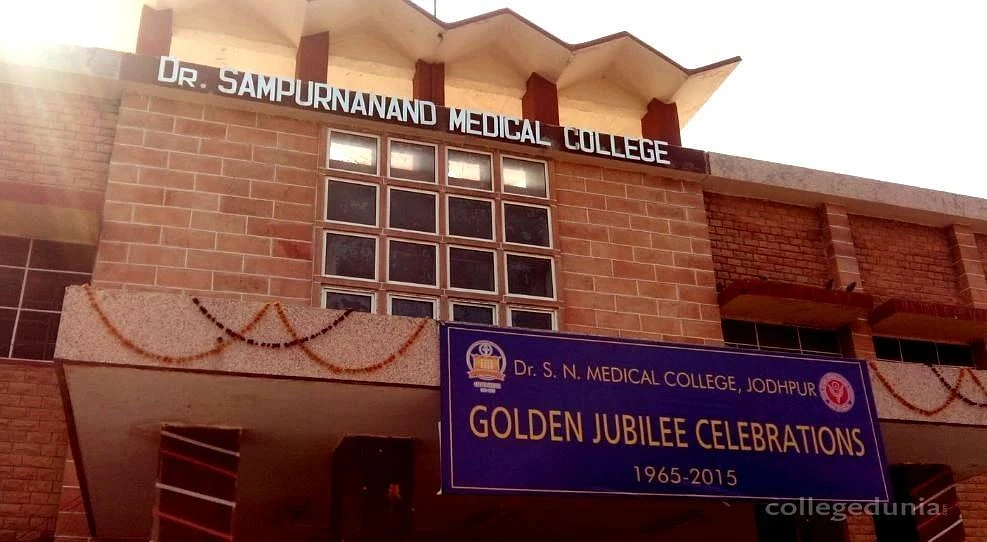
In this preview: 1 photo · 0 videos
SNMC Jodhpur is considered to offer better clinical exposure due to its age and the size of its associated hospital. However, RUHS Jaipur is noted for having far superior modern infrastructure.
The bond amount for the MBBS program at SNMC is ₹5 Lakhs, which is tied to a mandatory 2-year rural service commitment.
Yes, as a state government college, SNMC Jodhpur has a "Payment Seat" category, which functions as a management quota. The annual fees for these seats are significantly higher, approximately ₹8-9 Lakhs per year, compared to government seats.
First-year male students often face accommodation delays or are placed in older hostel wings. Hostels for female students are generally more secure but enforce strict curfews, typically around 9 PM.
No, ragging is not considered a significant problem. The college has strict anti-ragging committees and CCTV surveillance in place, which has reduced such incidents to more of a formal "interaction" between seniors and juniors.
Share what future students should know about Dr SN Medical College & Hospital.
Student voices are not rewritten by colleges. We remove spam and abuse.
Wider admission question? Community PulseWhat should future students know?
Tell us which course you're considering. We'll help you work out the next step.
Get instant Partner access after mobile verification. Your public edits are reviewed before they go live.
Claim this college
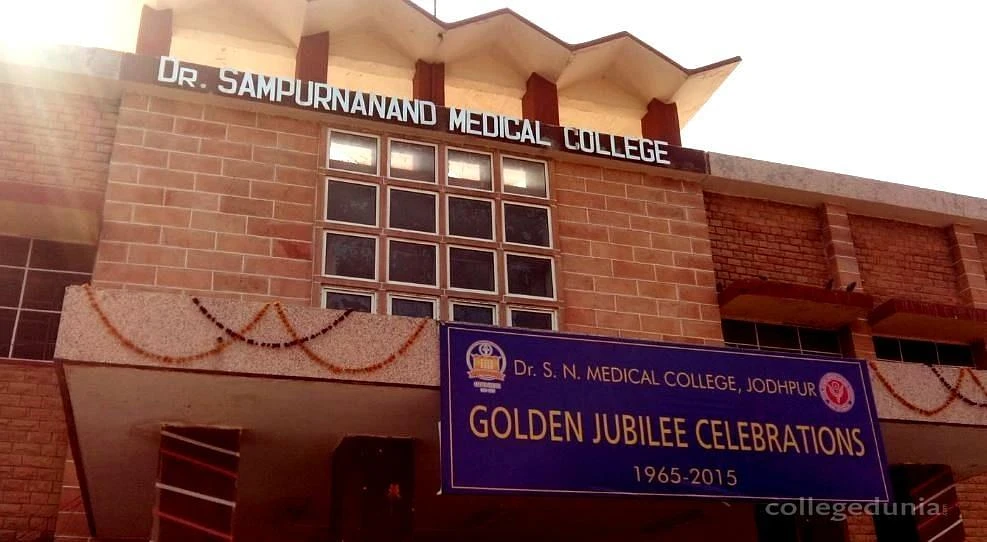
 Auditorium
 Cafeteria
 Gym
Gym Hostel
 Medical
 Science Labs
 Sports Complex
 Study Library