Loading Admission Guardian content
Loading Admission Guardian content
Find a program, read its fee details and explore the admission requirements.
Summary of the programs shown below. Fee periods can differ by program. Check the note beside each amount before comparing costs.
| Course | Stream | Fees |
|---|---|---|
| Bachelor of Arts [BA] | Arts | 3420 |
| Bachelor of Science [B.Sc] | Science | 3940 |
Specializations
Eligibility: 10+2
Specializations
Eligibility: 10+2
If you're looking for a quiet, disciplined, and academically solid college in Lower Assam that won't break the bank, Dudhnoi College is a name that keeps coming up. Established back in 1972, it’s built a reputation as the academic hub of Goalpara district. But its recent achievements are what really turn heads: an 'A' grade from NAAC in 2024 and, more impressively, autonomous status granted by the UGC in August 2025. That's a rare move for a college in a semi-rural area, and it signals a shift. This isn't just another affiliated college anymore; it's an institution now designing its own curriculum under the NEP 2020. For students from the surrounding tribal and rural communities, it represents a significant, affordable gateway to higher education. Just don't expect a bustling corporate placement scene—that's not really its game.
The autonomy granted in 2025 is the big story here. It means the college can now craft its own syllabi and exams, moving beyond the standard Gauhati University template. That flexibility is starting to show. They run the standard trio of B.A., B.Sc., and B.Com. degrees, now structured as Four-Year Undergraduate Programs (FYUGP) with both Honours and General tracks.
The Arts stream is the most extensive, with majors in Assamese, Bodo, English, Economics, and Political Science, among others. For Science, options include Physics, Chemistry, Botany, and Zoology. The B.Com program is smaller, with around 88 seats, focusing on Accountancy and Management.
Where it gets interesting are the newer offerings. They've introduced Integrated Teacher Education Programs (ITEP)—4-year B.A./B.Sc./B.Com. B.Ed. degrees. There's also a vocational course in Industrial Fish and Fisheries, which makes sense given the local context. Beyond degrees, you'll find certificate courses in Yoga, Human Rights, and computer skills (ADCA) through NIELIT.
Faculty quality is a consistent plus in student reviews. Out of roughly 64 teachers, a solid 45-50% of the permanent staff hold PhDs. The Anthropology and Geography departments are particularly noted for their field-work focus. The teaching style is described as traditional but thorough, geared heavily towards helping students clear their university exams. Attendance rules are strict; you'll need 75% to sit for finals.
This is where you need a clear-eyed view. Dudhnoi College is a traditional degree college, not a professional institute. The placement cell exists, but its reach is limited. The official NIRF 2025 report lists a median package of ₹5.85 LPA for 2023-24, up from ₹5.10 LPA the year before. That's a decent number for a state-run arts and science college.
But look at the placement percentage: only about 7-9% of the graduating batch. In the 2024 cycle, that translated to 67 students placed out of 391 graduates. The reality, echoed on review sites like Shiksha and CollegeDunia, is that the college does not have a pipeline to corporate or IT recruiters. If you're dreaming of campus drives from big tech or consulting firms, you'll be disappointed.
The placement success it does have is oriented towards specific sectors. Top recruiters are local and state-level: government schools under SSA Assam, the Assam Police, the Indian Army, and various state departments. There are notable alumni successes in PSUs like Indian Oil Corporation (IOCL) and Oil India Limited, but these are typically secured through all-India exams, not on-campus placement. For most students, the path leads to higher education (M.A., M.Sc., M.Com) or competitive exams for government service.
Affordability is arguably Dudhnoi College's strongest suit. Thanks to its government-aided status, the tuition fees are remarkably low. For the 2025-26 session, annual tuition for B.A. or B.Sc. Honours is between ₹4,500 and ₹5,200. A full three-year degree can cost as little as ₹13,500. The B.Com program, run on a self-financing basis, is similarly priced. The newer ITEP (B.Ed. integrated) programs are higher, estimated at ₹15,000-₹20,000 per year, but that's still very reasonable for a dual degree.
Hostel fees add to the cost but remain low. Annual hostel admission is around ₹5,000-₹8,000, with monthly mess charges of ₹2,000-₹3,000. All in, including food and stay, a year in the hostel might run you ₹35,000 to ₹45,000.
Where the college truly supports its student body—over 80% of whom come from ST, SC, OBC, and other reserved categories—is through scholarships. The Post-Matric Scholarship for ST/SC/OBC students is widely availed. Specific schemes like Ishan Uday for the North-East Region and Assam's own Nijut Moina scheme for female students provide crucial financial backing. The administration is reportedly proactive in helping students navigate these applications.
Admissions are handled through the Assam state system. For the 2025-26 academic year, the process is increasingly aligning with the national CUET (UG) exam. However, a significant portion of seats is still expected to be filled based on Class 12 (HSSLC) merit.
The application window typically opens in May or June, right after the HS results are out. All applications must be submitted via the state's Samarth Portal. The college then publishes merit lists, followed by an offline document verification round at the campus itself.
Cutoffs vary by subject and category. For popular Science subjects like Zoology or Mathematics in the general category, the cutoff has historically hovered between 65% and 80%. For Arts and Commerce, the thresholds can be slightly lower. Reservation policies are strictly followed as per Assam Government norms, with a significant majority of seats allocated for ST, SC, OBC, MOBC, and EWS candidates.
The campus is its own little world. Set on over 27 acres, it's famously green and serene. The defining feature is a large, picturesque pond that surrounds the main academic building, connected by a beautiful footbridge. It's a popular spot and makes for a unique campus photo.
Infrastructure is a mix of old and new. The library houses over 17,000 physical books and provides digital access via the N-LIST program. Labs for science subjects are described as functional with basic equipment. On the sports front, facilities are surprisingly good: a large football ground, a modern indoor stadium for badminton, and even a swimming pool—a rarity for colleges in the district.
Hostel life gets mixed reviews. The girls' hostel (capacity 31-50) is inside the main campus with 24/7 security, and a boys' hostel is available too. Safety and discipline are high points. The downsides? The food is often called average and repetitive. Students also note occasional power cuts, though the college uses solar energy for campus lighting. A common gripe is that while Wi-Fi is available in academic blocks, it's often absent or unreliable in the hostels.
Social life is active and culturally rich. Given the student demographics, ethnic festivals of the Rabha, Bodo, and other communities are celebrated with enthusiasm. The NSS (National Service Scheme) and Rover/Ranger units are very strong, organizing regular camps and community service activities.
Scouring platforms like Careers360 and Shiksha paints a consistent picture. The overwhelming praise is for the faculty. Reviews repeatedly mention teachers being "helpful," "knowledgeable," and treating students "like family." They're seen as accessible and genuinely invested in student success, especially for university exams.
The campus environment and discipline are also big positives. Students call it a peaceful place conducive to studying. The recent upgrade to autonomous status is viewed very positively as a sign of progress.
But the criticisms are just as consistent. The lack of a corporate placement culture is the number one drawback. Students are blunt: if you want an IT job, look elsewhere. The hostel food and intermittent power issues are frequent complaints. Some also mention that while the library is good, the overall digital infrastructure could be improved.
The median consensus? It's an excellent, affordable choice for a solid undergraduate foundation, especially if your goals are higher studies or government jobs. It's not a shortcut to a corporate career.
Dudhnoi College makes a compelling case for a specific type of student. If you're from the region or surrounding states, looking for a respected, disciplined, and incredibly affordable 'A' grade college, it's a top contender. The recent autonomous status is a game-changer, promising more relevant and flexible curricula. The faculty-student rapport is a genuine strength. For anyone aiming to complete a quality BA, B.Sc., or B.Com. degree before pursuing a Master's, preparing for civil services, or entering teaching, this college provides a strong, low-cost launchpad.
But you have to go in with the right expectations. This is not a cosmopolitan campus with a buzzing corporate recruitment cell. Social life is rooted in local culture, not urban nightlife. If your dream is an immediate high-paying MNC job after graduation, you'll likely feel out of place. The value here is in the foundational education and the financial accessibility. For thousands of students in Lower Assam, that's exactly what they need. It's a college deeply connected to its community, quietly upgrading its capabilities, and offering a proven path to a degree without the burden of debt.
For the most current information, always refer to the official college website.
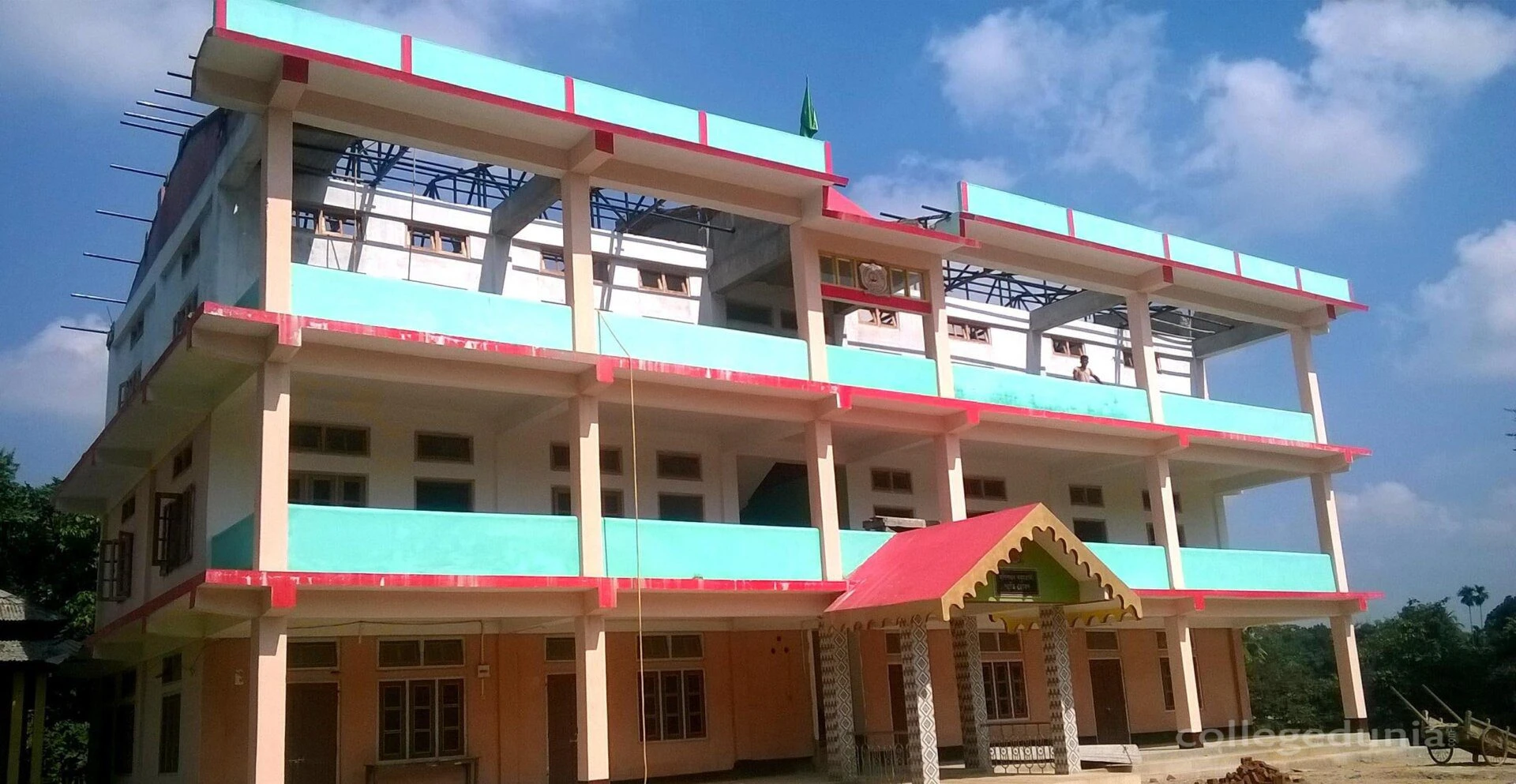
In this preview: 1 photo · 0 videos
Dudhnoi College is a government-aided autonomous college. This means it receives government grants but operates with autonomous status, allowing it to manage its own academic affairs.
Yes, Dudhnoi College offers teacher education through the recently introduced ITEP (Integrated Teacher Education Program). This is a 4-year integrated course combining B.A./B.Sc./B.Com. with a B.Ed. degree.
The cutoff for the B.Sc. program varies annually but generally ranges between 65% to 80% for the general category. Popular subjects like Zoology and Mathematics typically have cutoffs within this range.
Yes, Dudhnoi College provides separate on-campus hostel facilities for both boys and girls.
Placement opportunities for B.Com. graduates at Dudhnoi College are limited. Most students pursue higher education such as M.Com., MBA, or professional courses like CA/CS at other institutions after graduation.
Share what future students should know about Dudhnoi College.
Student voices are not rewritten by colleges. We remove spam and abuse.
Wider admission question? Community PulseWhat should future students know?
Tell us which course you're considering. We'll help you work out the next step.
Get instant Partner access after mobile verification. Your public edits are reviewed before they go live.
Claim this college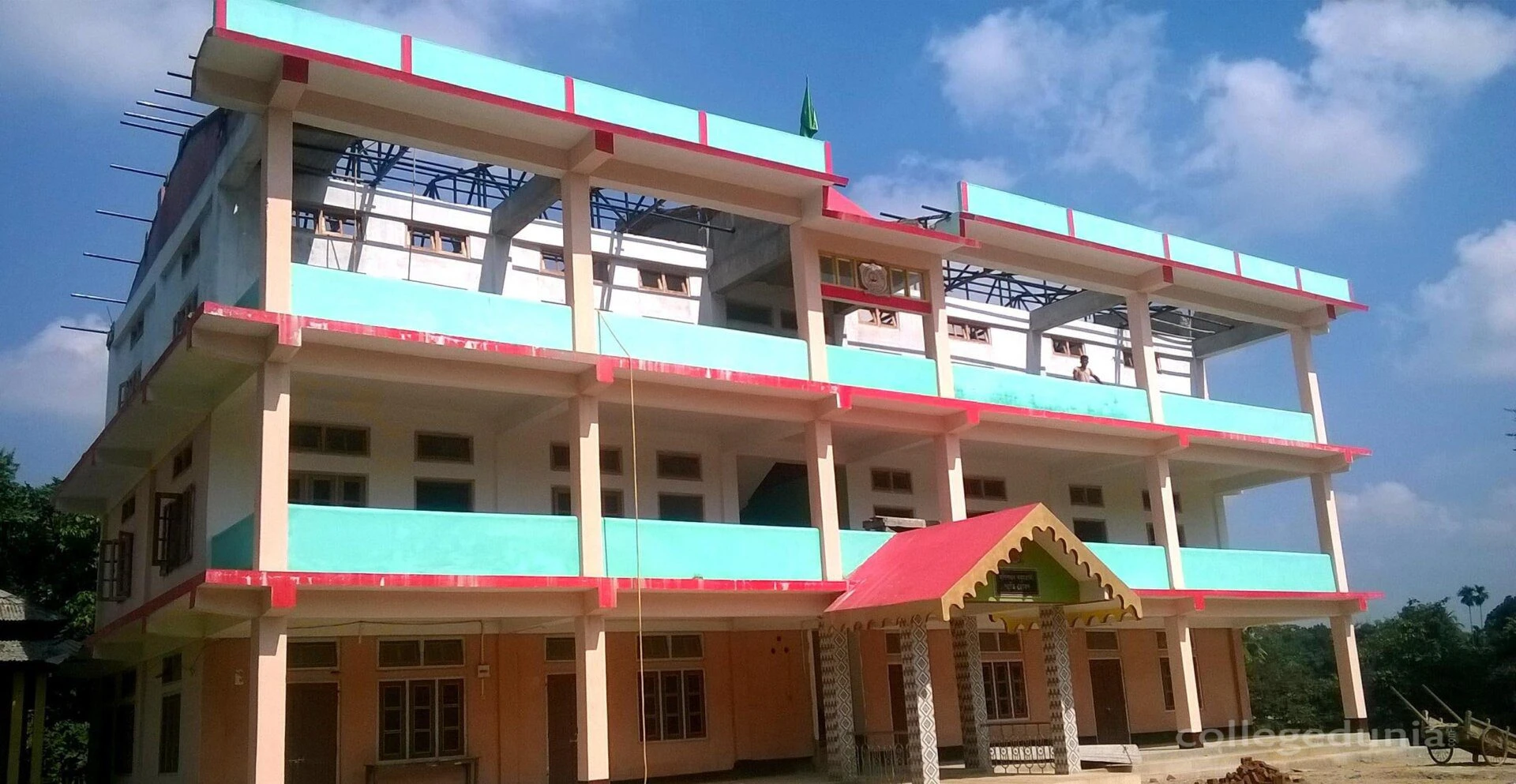
 Auditorium
 Cafeteria
 Computer Labs
 Gym
Gym Hostel
 Medical
 Science Labs
 Sports Complex
 Study Library