Loading Admission Guardian content
Loading Admission Guardian content

Find a program, read its fee details and explore the admission requirements.
Summary of the programs shown below. Fee periods can differ by program. Check the note beside each amount before comparing costs.
| Course | Stream | Fees |
|---|---|---|
| Bachelor of Technology [B.Tech] | Engineering | 77520 |
| Bachelor of Technology [B.Tech] {Lateral} | Engineering | 77520 |
| Master of Technology [M.Tech] | Engineering | 79520 |
Specializations
All accepted exams
Eligibility: 10+2 with 75% + JEE Main
Specializations
All accepted exams
Eligibility: 10+3 with 75% + JEE Main
Specializations
All accepted exams
Eligibility: Pass in Graduation + GATE
 Grail Research
 IRIS India
The first thing you notice about E-Max School of Engineering and Applied Research is the gap. It's a 70-acre campus that looks, as one student put it, "like a palace from the outside." But talk to the alumni, and you'll hear a different story—one where the impressive infrastructure doesn't always translate to impressive outcomes. Established in 2009 and affiliated with Kurukshetra University, this private college in Ambala, Haryana, offers a classic value proposition: low-cost B.Tech degrees in a sprawling, green setting. It's AICTE-approved and leverages its parent university's strong NAAC A++ rating, though its own institutional NAAC grade isn't as prominent as some marketing suggests. For a certain student—the self-starter on a tight budget, perhaps aiming for core mechanical roles or independent GATE prep—that can be enough. For others expecting a direct pipeline to high-paying jobs, the reality check can be harsh.
ESEAR's academic portfolio is straightforward, centered on undergraduate engineering. The total B.Tech intake is 360 students across five branches. Computer Science & Engineering (CSE) and Civil Engineering have the highest demand, with 60 and 120 seats respectively. Mechanical, Electronics & Communication (ECE), and Automobile Engineering round out the offerings, each with 60 seats. There are limited M.Tech options in Computer Science and Mechanical Engineering, with intakes likely under 25 per specialization.
The academic rhythm is set by Kurukshetra University. Exams follow the KUK calendar—typically December and May/June—and the grading is the standard 10-point CGPA system. Where ESEAR tries to differentiate is through industry links, notably a partnership with AIESEC for international internships and MoUs with local manufacturing units in the Ambala-Yamunanagar belt. That's a decent initiative for a college in an industrial region.
Faculty strength sits around 61 members. Here's the nuance: while most hold M.Tech degrees, the proportion of PhDs is relatively low, estimated at under 15% of the total staff. Student reviews frequently mention high turnover, with experienced instructors often moving on, leaving junior lecturers to handle classes. It's a common challenge for private colleges outside major metro areas, but it directly impacts academic consistency.
This is the section where you need to read between the lines. The official narrative and ground-level student reports don't fully align.
The college's placement cell publishes figures like an 80%+ placement rate and a highest package of 12 LPA for the 2023-2024 cycle. The average package is cited between ₹3.5 and ₹4.5 LPA, with a median likely hovering around ₹3 LPA. Recruiters include familiar IT names like TCS, Wipro, Infosys, and HCL, alongside core sector companies such as Ashok Leyland, Honda, and Bajaj. A slew of local SMEs and firms like Grail Research and IRIS India also visit.
Now, the reality check from student reviews on platforms like Shiksha and Quora paints a more cautious picture. The consensus suggests the effective placement rate for on-campus offers is closer to 30-40%, with many students ultimately finding jobs off-campus. The high package figures often apply to a very small number of students, sometimes in sales or business development roles rather than core engineering. The gap between the official claim and the alumni-reported number is notable and something to factor in.
For core branches like Mechanical and Automobile, the placement story is a bit more consistent, if modest. The college's well-regarded labs and regional industry ties do lead to opportunities, but packages typically range from ₹2.5 to ₹4 LPA. For CSE, while IT companies visit, the roles and packages are often entry-level. Internships, crucially, are largely self-arranged, with the college providing the necessary No-Objection Certificates but limited direct placement into paid positions.
Affordability is one of ESEAR's strongest arguments. For the 2025-2027 period, the annual tuition fee for B.Tech is ₹77,520. Add in development and university exam fees, and a day scholar's annual cost lands between ₹85,000 and ₹95,000. Hostellers pay an additional ₹52,000 to ₹60,000 for a double-sharing room with mess charges included, bringing the total annual cost to approximately ₹1.4 to ₹1.55 lakhs.
Over four years, that means a B.Tech degree costs roughly ₹5.8 to ₹6.5 lakhs with hostel. Compared to private colleges in Chandigarh, Delhi-NCR, or even parts of Punjab, that's a significant saving.
Financial aid options help. The college facilitates government scholarships like the Post-Matric Scholarship for SC/BC students from Haryana. There are also merit-based tuition fee waivers for students with high JEE Main ranks and provisions for minority scholarships through the Ministry of Minority Affairs (MOMA). It's not an exhaustive list of corporate scholarships, but it covers the key state and central schemes.
Admission to the B.Tech programs is primarily through the Haryana State Technical Education Society (HSTES) counseling, which uses your JEE Main score. The basic eligibility is 10+2 with Physics and Mathematics, and a minimum of 45% aggregate (40% for reserved categories).
The cutoffs aren't fiercely competitive. For the 2024 session, most branches, including Mechanical, Civil, ECE, and Automobile, were accessible with any positive JEE Main score. Even for the most sought-after branch, Computer Science & Engineering, the closing rank was in the range of 4-6 lakhs. That tells you about the demand pool.
The process is standard: register on the HSTES portal, fill and lock your choices, and await seat allotment based on your JEE rank. For seats that remain vacant after counseling, the college offers direct admission under the management quota, based on 12th-grade marks. You can find the official application link and details on the E-Max School of Engineering and Applied Research website.
The 70-acre shared campus is consistently praised for its scale and aesthetics. It's green, spacious, and the buildings are modern. Sports facilities include large grounds for cricket and football, plus indoor spaces for table tennis and badminton. The central library houses over 30,000 books and provides digital access to DELNET and IEEE journals. A fleet of over 20 buses connects the campus to Ambala, Yamunanagar, Kurukshetra, and Naraingarh.
Hostels are separate for boys and girls, with a total capacity of about 500. Reviews rate them a basic 3 out of 5. Rooms are functional; AC rooms are available at an extra cost of ₹10,000-15,000 per year. Wi-Fi is present but students report inconsistent speeds, often between 10-20 Mbps.
The catch is location. The campus sits in a rural area, about 20 km from Ambala Cantonment railway station. There's virtually no off-campus social scene or nightlife. Student life is largely insular, confined to campus activities. Some students also mention a strict administrative culture, with fines levied for attendance shortfalls or minor disciplinary issues. It's a contained, regulated environment.
Synthesizing feedback from CollegeDunia, Shiksha, and discussion forums reveals a clear, if divided, consensus.
The positives are repeated: "The infrastructure is 5-star." The campus beauty, the low cost compared to alternatives, and the quality of the mechanical/automobile workshops for hands-on learning are all highlighted. For a student who is financially constrained and disciplined, these are tangible benefits.
But the criticisms are just as consistent. Placement promises are viewed with skepticism, with many alleging that the advertised high percentages don't match the on-ground experience of their batch. Faculty turnover is a frequent complaint, leading to instructional inconsistency. The rural isolation and strict fine culture are also cited as downsides that affect daily life.
The most common summary from recent graduates is pragmatic: "If you are a self-starter who can study on your own and just need a degree at a low cost, E-Max is okay. But if you expect the college to hand you a high-paying job at the end of 4 years, you will be disappointed."
ESEAR is a college of clear trade-offs. It's worth serious consideration for a specific profile: a student from a middle-class family in Haryana or surrounding regions, with a modest JEE Main rank and a tight budget, who is seeking an affordable B.Tech degree. It's particularly relevant for those interested in core mechanical or automobile engineering, where the practical labs offer real value, and who are prepared to hustle for internships and final placements themselves.
However, it's likely not the best fit for students whose primary goal is a high-paying, on-campus IT placement from a brand-name recruiter, or those who thrive in a vibrant, urban college environment with a strong research faculty. The college provides the platform—the degree, the infrastructure, the low cost—but a significant portion of the career outcome responsibility falls on the student. Your ROI depends almost entirely on what you do with that platform over four years. Check the latest NIRF Rankings for broader context, but know that ESEAR operates in a different, more localized league. It fills a niche, and for the right student in that niche, it works.
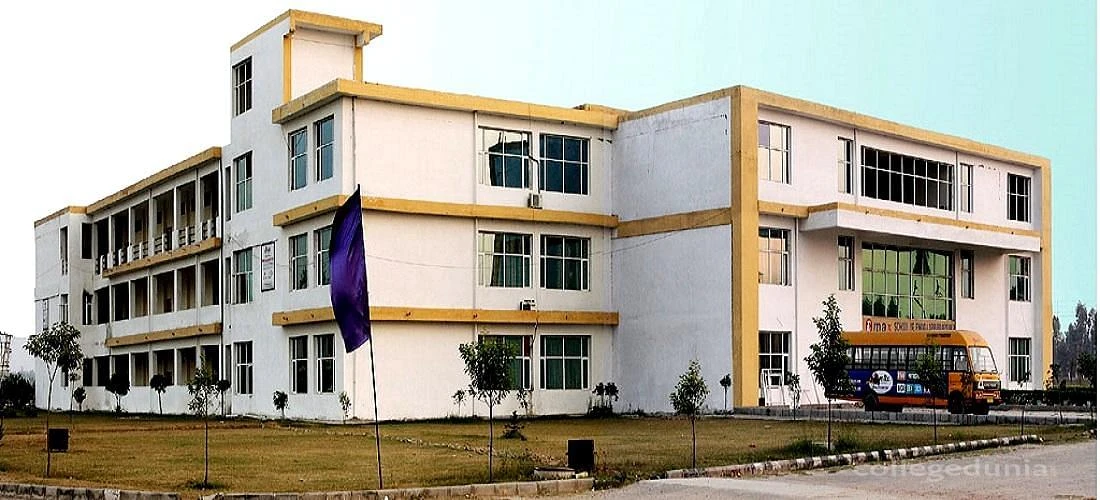
In this preview: 1 photo · 0 videos
The infrastructure for CSE is good, but the faculty and placement records are considered average. The college is noted as suitable for students who plan to prepare for competitive exams like GATE or are targeting off-campus IT jobs.
The annual hostel fee at E-Max School of Engineering is approximately ₹52,000 to ₹60,000. This cost typically includes mess charges for food.
Yes, E-Max School of Engineering and Applied Research is affiliated with Kurukshetra University (KUK), which is a recognized state government university.
Yes, direct admission is possible through the Management Quota. Eligibility requires a minimum of 45% marks in your 12th-grade examinations.
Placements for Mechanical Engineering are considered better than many local colleges, partly due to the presence of an Automobile branch. The typical placement packages range between ₹2.5 LPA and ₹4 LPA.
Share what future students should know about E-Max School of Engineering and Applied Research.
Student voices are not rewritten by colleges. We remove spam and abuse.
Wider admission question? Community PulseWhat should future students know?
Tell us which course you're considering. We'll help you work out the next step.
Get instant Partner access after mobile verification. Your public edits are reviewed before they go live.
Claim this college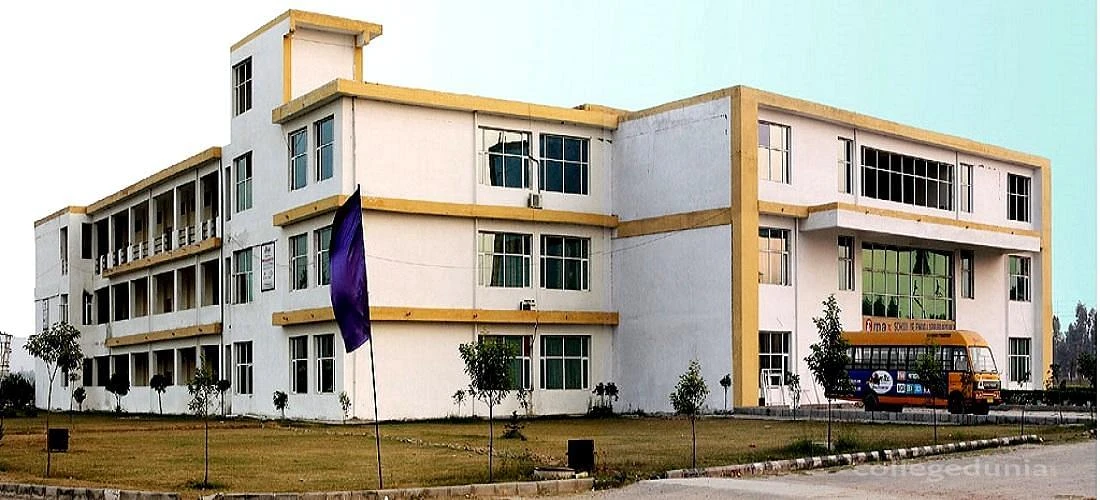
 Auditorium
 Cafeteria
 Computer Labs
 Gym
Gym Hostel
 Sports Complex
 Study Library