Loading Admission Guardian content
Loading Admission Guardian content

Provisional score based on available data. It may change as more information is verified.
Find a program, read its fee details and explore the admission requirements.
Summary of the programs shown below. Programs record different fee periods. Compare the individual amounts and their notes below.
| Course | Stream | Fees |
|---|---|---|
| Master of Arts [MA] | Arts | 31500 |
| Bachelor of Commerce [B.Com] | Commerce | 58200 |
| Bachelor of Science [B.Sc] | Science | 121200 |
| Bachelor of Arts [BA] | Arts | |
| Bachelor of Business Administration [BBA] | Management |
Specializations
Eligibility: Graduation
Specializations
Eligibility: 10+2
Specializations
Eligibility: 10+2
Specializations
Eligibility: 10+2
Specializations
Eligibility: 10+2
If you're looking for a quiet, green campus where academics are taken seriously and the library is genuinely impressive, EMEA College of Arts and Science in Kondotty deserves a long look. Established in the early 80s and affiliated with the University of Calicut, this government-aided institution has carved out a reputation for solid teaching and a peaceful atmosphere. But here's the thing you need to know upfront: it's not a typical bustling city college. It's situated less than a kilometer from the Calicut International Airport, which gives it a unique, somewhat isolated feel. The academic focus is strong, especially in its aided programs, but the career outcomes vary wildly depending on whether you're studying Computer Science or Microbiology. This profile unpacks the reality behind the 'A+' NAAC grade, the surprisingly low fees, and what students actually say about life there.
The college has fully adopted the Four-Year UG Honours (FYUGP) system under the NEP, following the University of Calicut's calendar. The academic offering is split clearly between government-aided courses, which are heavily subsidized, and self-financing ones. That's a crucial distinction that affects both cost and, often, perceived faculty stability.
The aided side is where you'll find the traditional strengths: B.A. in Economics, English, and the unique B.A. in West Asian Studies. On the science front, B.Sc. Computer Science and Microbiology are the main draws. The self-financing wing leans into applied fields—BBA in Finance, B.Voc in Logistics Management, Professional Accounting, and Islamic Finance. The B.Voc programs, in particular, seem designed with local industry links in mind, like the airport.
Faculty get consistently good marks in reviews, especially in the aided departments where a high percentage hold PhDs. The grading is the standard Calicut University 10-point indirect system. It's a teaching-focused place. Don't expect a hyper-competitive, cut-throat academic culture. The vibe is more supportive, which suits some students perfectly.
This is where you have to read between the official lines. The NIRF 2023 report lists a median package of INR 3.30 LPA for three-year UG programs. Student reviews and other data suggest the average for recent years sits in the 2.5 to 3.3 LPA range. The highest packages, likely for CS roles, are reported around 5-6 LPA.
The real story is the placement percentage and its variation by course. The college might claim 80% placement for streams like B.Com and B.Sc. Computer Science. And for those, it's probably in the ballpark, with recruiters like TCS, Infosys, Wipro, and Cognizant showing up. But for core science programs—Microbiology, Biotechnology, Biochemistry—the picture is different. Reviews consistently suggest a placement rate closer to 30-40%, with many graduates opting for higher studies or finding their own way into labs and hospitals.
The B.Voc and BBA students benefit from practical internships, notably at the nearby Calicut International Airport. So, the verdict? If you're in CS or Commerce, campus placement is a realistic goal, albeit with modest packages. If you're in pure sciences, view the college as a solid academic launchpad for an MSc or professional courses, not a direct ticket to an industry job.
The fee structure is arguably one of the college's biggest advantages, especially for the aided courses. We're talking about INR 3,000 to 6,000 per year for B.A., B.Sc., and B.Com (Aided). That's incredibly low. The self-financing courses cost more: around INR 42,000/year for B.Sc. CS or Microbiology, and INR 20,000-30,000 for BBA or B.Com (SF).
Hostel fees are a separate matter. There's a secure on-campus girls' hostel with fees around INR 4,000-6,000 per month including mess. For boys, it's trickier—there's only a sports hostel on campus. Everyone else relies on private PGs in Kondotty town, which adds to the cost and commute.
Where EMEA shines is scholarships. They offer a wide array, including DCE Scholarships, Post-Matric scholarships for minority students, the C.H. Mohammed Koya Scholarship, and general Higher Education scholarships. For eligible students from the region, the net cost can become very manageable.
Admission for UG programs is straightforward and centralized. There's no college-specific entrance exam. You go through the University of Calicut's Centralized Admission Process (CAP), which is purely merit-based on your Class 12 marks.
The cutoffs reflect the demand. For the 2024 cycle, getting into an aided course like B.Sc. Computer Science or B.Com required 85% or more in the General category. Other aided courses like B.A. Economics or B.Sc. Microbiology had cutoffs around 75%+. The self-financing courses are generally less competitive. The application window typically opens in May or June, right after the Kerala HSE results are out. For PG courses like M.A. or M.Sc., you'll likely need to take the Calicut University Common Entrance Test (CU-CET).
The campus is repeatedly described as "green" and "peaceful." The 25-acre space includes a beloved student spot called Mahogany Park. Infrastructure is good, not flashy. The library is a standout—frequently rated as one of the best in the district with over 30,000 books and digital resources. Labs for science programs are well-equipped, and there's an Audio-Visual Theatre and open-air theatre for events.
Sports facilities are a genuine strength, with a quality football ground, volleyball, basketball, and a gym. This focus has produced notable alumni like Indian footballer Anas Edathodika. Extracurricular life revolves heavily around NSS and NCC, along with cultural festivals.
Now, for the quirks. The proximity to the airport causes a major daily headache: notoriously poor cellular network on campus due to signal restrictions. The canteen offers only snacks, not full meals. And the discipline level is high—strict attendance, a formal dress code, and a generally regulated environment. It feels more structured than a typical university campus.
Scouring platforms like Shiksha and CollegeDunia reveals a clear consensus. The positives are strong: a beautiful, serene campus; a fantastic, well-stocked library; and supportive, qualified faculty in the core departments. Students in NSS and NCC seem particularly engaged.
But the criticisms are just as consistent. The strict rules and "school-like" atmosphere grate on some. The placement gap between commerce/CS and pure sciences is a frequent complaint, with science students feeling they have to forge their own path. The mobile network issue is almost universally mentioned as a massive inconvenience. And the lack of a full meal service in the canteen is a common gripe.
One paraphrased review sums up the trade-off well: "If you are looking for a high-tech city life, this isn't it. It's a calm, village-like atmosphere near the airport." Another noted, "Placements for BBA and B.Com are okay, but for B.Sc, you basically have to find your own way or go for PG."
EMEA College is a specific proposition. It's an excellent, cost-effective choice for a certain type of student. If you're from the Malabar region, want a serious academic environment without city distractions, and are pursuing an aided course like B.A. Economics, B.Sc. CS, or B.Com, it offers tremendous value. The low fees, 'A+' NAAC accreditation, and strong faculty make it a smart, conservative pick. It's also a great base if you're heavily involved in NSS/NCC or sports.
However, you should probably look elsewhere if you prioritize high-flying campus placements in core science fields, can't stand strict discipline and dress codes, or need a vibrant, connected urban campus life. The network issues and remote location are real compromises. For B.Sc. Microbiology or Biotechnology students, temper your expectations—this is a stepping stone to further studies, not a direct corporate pipeline. Ultimately, EMEA is a respected, traditional college that does the fundamentals well, but it makes no apologies for not being a trendy, placement-focused powerhouse.
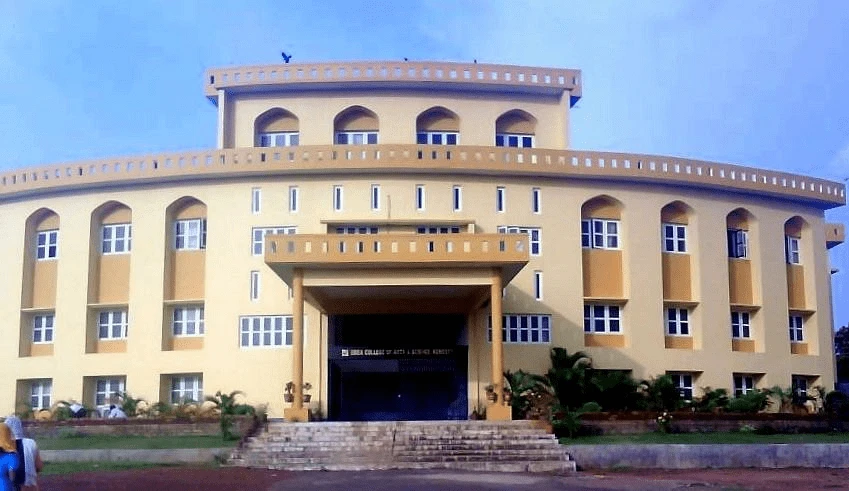
In this preview: 1 photo · 0 videos
EMEA College of Arts and Science Kondotty is a Government-Aided private college with Minority status. This means it is a private institution that receives government funds specifically for staff salaries and infrastructure, but only for its government-aided courses.
The college does not have a regular boys' hostel. It only operates a sports hostel dedicated to student-athletes. Male students typically arrange accommodation in private hostels or paying guest (PG) facilities available in the Kondotty area.
The college is located exceptionally close to the airport, situated less than 1 kilometer from the main entrance of Calicut International Airport, making it highly accessible for students traveling by air.
Direct campus placements for B.Sc Microbiology graduates are reported to be rare. Most students from this program typically choose to pursue a Master of Science (M.Sc) degree or seek employment independently in sectors like diagnostic laboratories and hospitals.
The college enforces a formal dress code, which includes a prescribed uniform. Student reports indicate that the college management is relatively strict about adherence to this dress code policy.
Share what future students should know about EMEA College of Arts and Science Kondotty.
Student voices are not rewritten by colleges. We remove spam and abuse.
Wider admission question? Community PulseWhat should future students know?
Tell us which course you're considering. We'll help you work out the next step.
Get instant Partner access after mobile verification. Your public edits are reviewed before they go live.
Claim this college
 Auditorium
 Cafeteria
 Campus Shuttle
 Computer Labs
 Hostel
 Medical
 Science Labs
 Sports Complex
 Study Library