Loading Admission Guardian content
Loading Admission Guardian content

Provisional score based on available data. It may change as more information is verified.
Find a program, read its fee details and explore the admission requirements.
Summary of the programs shown below. First-year fee. Check the note beside each amount for inclusions and exclusions.
| Course | Stream | Fees |
|---|---|---|
| Bachelor of Commerce [B.Com] | Commerce | 10075 |
| Bachelor of Arts [BA] | Arts | 15275 |
| Bachelor of Business Administration [BBA] | Management | 15275 |
| Bachelor of Computer Applications [BCA] | Computer Applications | 21575 |
| Bachelor of Science [B.Sc] | Science |
Specializations
Eligibility: 10+2
Specializations
Eligibility: 10+2
Specializations
Eligibility: 10+2
Specializations
Eligibility: 10+2
Specializations
Eligibility: 10+2
Field Marshal KM Cariappa College isn't a flashy, high-tech campus. It's something else entirely—a solid, no-nonsense government institution set in the misty hills of Coorg, where the total cost of a three-year degree can be less than a single semester at a private college. If you're looking for a disciplined, affordable education with qualified teachers and a focus on fundamentals over frills, this 1949-vintage college, now a constituent part of Kodagu University, has been serving that purpose for generations. Just don't expect corporate recruiters to be lining up at the gate.
This is a comprehensive arts, science, and commerce college that's fully adopted the NEP 2020 framework. The academic offering is broad, designed to serve the local district's needs. You've got your standard B.A., B.Sc., and B.Com. programs, but with some interesting twists. The B.A. includes Travel & Tourism and Women’s Studies. The B.Sc. roster has added Data Science alongside the traditional Physics, Chemistry, and Microbiology.
The BCA and BBA programs are the more professionally oriented options, and they tend to draw slightly higher cutoffs. At the postgraduate level, the M.A. in Kodava language is a unique offering you won't find just anywhere, reflecting the college's deep roots in the region.
Faculty quality is consistently highlighted as a strength. About 70% of the permanent science staff hold PhDs, and students describe them as helpful and down-to-earth. The system runs on the Kodagu University semester schedule, and grading follows the Choice Based Credit System (CBCS). It's a traditional, lecture-based academic culture—structured, predictable, and focused on the syllabus.
Let's be direct. If your primary goal is a high-paying, on-campus placement offer from a brand-name MNC, this isn't the college for you. The placement cell exists, but its reach is limited. The official placement percentage is vague; the working number from student reviews is about 30%. That's the reality for a government constituent college in a semi-urban location.
The highest package talked about for 2023-24 is in the ₹4.5–5 LPA range, but that's an outlier. The average is firmly in the ₹2.5–3 LPA bracket. Recruiters are a mix of IT service firms like Infosys, Wipro, and TCS (often through pooled drives with other colleges), local banks like Canara Bank, and regional companies in hospitality and finance. BSW students find opportunities with NGOs, and BCA students have a marginally better shot at IT roles.
Most students here have a different trajectory. They use the low-cost, quality education as a foundation for competitive exams (government jobs, teaching) or for pursuing higher studies like an M.Sc. or MBA elsewhere. The college's value isn't as a placement factory; it's as an affordable launchpad.
This is where FMKMCC shines. The fees are a fraction of what you'd pay anywhere private. We're talking about a full three-year B.A. degree for roughly ₹12,000 to ₹25,000 total. A B.Sc. will run you about ₹20,000–36,000 for all three years. Even the more expensive BCA program totals around ₹63,000 for the entire duration.
Hostel fees are incredibly subsidized at ₹5,000–8,000 per year, though you pay separately for the mess (around ₹2,000–3,000 monthly). The catch? There are only 112 hostel beds for girls and 540 for boys, so getting a seat isn't guaranteed.
Given its status, the college is a hub for government scholarships. Students can access the Karnataka State Scholarship Portal (SSP), the Central NSP, and all reserved category scholarships. For a student from the region, it's possible to graduate with virtually zero tuition debt.
The process is straightforward and merit-based. There are no entrance exams for undergraduate courses. Admission is strictly based on your Class 12 marks, processed through the Karnataka state's UUCMS portal.
Cutoffs vary by program and category. For the 2023 cycle, the more sought-after B.Com and BCA programs required around 75-85% for the General category. For B.A. and many B.Sc. combinations, the cutoff can drop to the 50-60% range. Reservation follows Karnataka government norms, with quotas for SC, ST, OBC, EWS, and the Hyderabad-Karnataka region.
For postgraduate courses, it's mostly merit-based again, though the MBA in Tourism may require KMAT or PGCET scores. The application window typically opens in May, with counseling and classes starting by August.
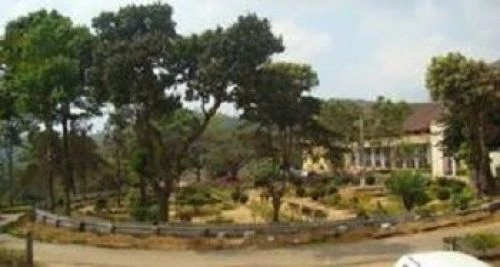
You have to adjust your expectations here. The main academic building is a colonial-era stone structure with high ceilings. Students call it a "mixture of modern and the 90s." Some classrooms feel dated and need renovation, while labs for subjects like Microbiology and Computer Science have functional, if sometimes aging, equipment. Wi-Fi is available in specific zones like the library, but it's not campus-wide high-speed internet.
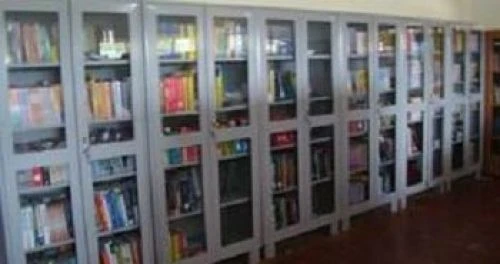
The library is a solid resource with over 45,000 books and digital access through N-LIST. Where the infrastructure genuinely excels is in sports. There's a large playground and an indoor sports complex. The college has a strong tradition in Hockey and Athletics—alumnus M.P. Ganesh, former captain of the Indian Hockey Team, is a testament to that.
Hostel life is disciplined. Wardens enforce rules, including the 75% attendance mandate. The buildings are basic and old, but they're clean and incredibly cheap. The college canteen? Students are blunt: the food is average and repetitive. The real luxury is the environment—the campus is surrounded by greenery and, quite often, literal clouds.
The consensus is clear: this is a "value for money" institution. The positives are consistent. The natural setting is unbeatable. The faculty gets high marks for being qualified and accessible. The affordability is a massive relief for families. And extracurriculars like NCC, NSS, and sports are actively encouraged and well-supported.
But students are equally vocal about the drawbacks. The infrastructure is showing its age. The administrative office can be slow, and delays in university result declarations are a common grievance. The most frequent advice to prospective students is about placements: don't come here expecting them. You'll need to be proactive about your own career path, whether that's through off-campus drives, competitive exams, or further studies.
As one B.Sc. student put it, "It is a mixture of modern and 90s." Another alumnus noted, "The placement cell is almost non-existent for Arts students." They're not angry, just factual. It's a trade-off they understood when they enrolled.
It depends entirely on what you're looking for. FMKMCC is an excellent, almost singular choice for a specific type of student. If you are from the Kodagu region or surrounding districts, want a respected, traditional bachelor's degree from a government institution, and have a tight budget, it's incredibly hard to beat. The cost-to-education ratio is outstanding. It's also a good fit if you plan to use your undergraduate years to prepare for civil service or other competitive exams, benefiting from the disciplined environment and low financial pressure.
However, if your primary focus is on cutting-edge campus infrastructure, a vibrant metropolitan social life, or a strong pipeline to corporate placements, you will likely be disappointed. This isn't that kind of college. It's a foundational institution, proud of its history and its role in serving its community. For the right student, that’s more than enough. For others, it's important to look elsewhere with eyes wide open. Check the latest details directly on the college website and the Kodagu University portal for the most current information.
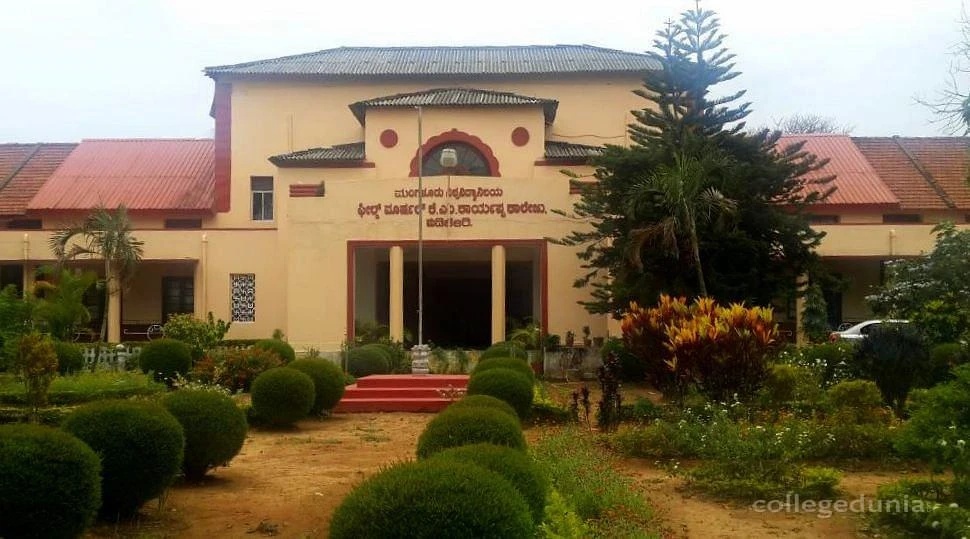
In this preview: 5 photos · 0 videos
Field Marshal KM Cariappa College (FMKMCC) is a government-managed institution. It operates as a Constituent College of Kodagu University.
The placement record at FMKMCC is average, with approximately 30% of students securing jobs through campus placements. Many students find employment through off-campus recruitment drives or opt to pursue higher education such as M.Sc or MBA degrees.
The annual hostel fee at FMKMCC is very affordable, typically ranging between ₹5,000 to ₹8,000. Please note that this fee does not include mess charges, which are billed separately on a monthly basis.
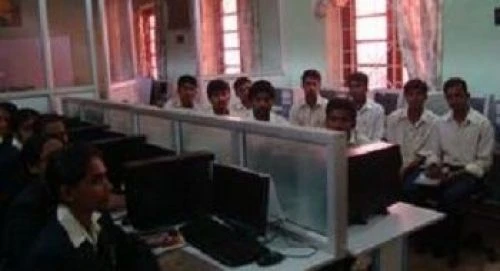
Yes, the Bachelor of Computer Applications (BCA) program is considered a strong offering at FMKMCC. It is one of the college's most popular courses, featuring dedicated computer labs and receives slightly better placement support compared to other academic streams.
As of 2023, Field Marshal KM Cariappa College is affiliated with Kodagu University. The college has shifted its affiliation from Mangalore University to this newly established state university.
Share what future students should know about FMKMCC.
Student voices are not rewritten by colleges. We remove spam and abuse.
Wider admission question? Community PulseWhat should future students know?
Tell us which course you're considering. We'll help you work out the next step.
Get instant Partner access after mobile verification. Your public edits are reviewed before they go live.
Claim this college
 Auditorium
 Cafeteria
 Hostel
 Medical
 Sports Complex
 Study Library