Loading Admission Guardian content
Loading Admission Guardian content

Provisional score based on available data. It may change as more information is verified.
Find a program, read its fee details and explore the admission requirements.
Summary of the programs shown below. Fee amounts are not listed. Contact the college for its current fee schedule.
| Course | Stream | Fees |
|---|---|---|
| Diploma in Engineering (Polytechnic) | Engineering | |
| Post Graduate Diploma in Industrial Engineering [PGDIE] | Engineering | |
| Diploma | Vocational Courses |
Specializations
Specializations
Specializations
Forget the sprawling campuses and the B.Tech craze for a moment. In the industrial heart of Yeshwanthpur, a different kind of technical education has been quietly shaping India's manufacturing backbone since 1968. The Foremen Training Institute, now officially the National Skill Training Institute (NSTI) Bangalore, isn't about degrees. It's about precision. It's where you learn to operate a German lathe, program a CNC machine, or manage a cloud server, all for a fee that's less than a month's rent in the city. This is a government-run powerhouse for creating master trainers and technical supervisors, and its reputation in core industries is arguably stronger than many private engineering colleges. If your goal is hands-on, shop-floor expertise or a stable career as a vocational instructor, this might be the most consequential educational decision you'll make.
Don't come looking for a B.Tech. NSTI Bangalore's identity is built on advanced vocational training and, crucially, the "training of trainers." Its academic model is distinct, focused on creating industry-ready technicians and certified instructors for the national ITI network.
The Craft Instructor Training Scheme (CITS) is the institute's historic flagship. This one-year program is essentially a mandatory certification for anyone aiming to become an instructor in government or private ITIs. Trades like Electrician, Fitter, Machinist, and Mechanic Motor Vehicle are perennially in high demand. The intake is modest, around 25-50 per trade, which keeps the training focused. The newer Computer Software Applications (CSA) trade under CITS is also gaining traction.
Then there's the Advanced Diploma in IT, Networking and Cloud Computing (ADIT), a two-year program run in collaboration with IBM. It's a different beast altogether, catering to the tech sector with a curriculum covering AI, predictive analytics, and cloud platforms. It includes a five-month industry internship, often with IBM itself or other tech firms. This program represents the institute's successful pivot to modern digital skills.
Beyond these, the institute offers basic Craftsmen Training Scheme (CTS) courses and highly specialized short-term programs for employees of giants like BEL and HAL. The faculty, many with 15+ years of shop-floor experience and some with legacy training from Germany, is the program's biggest asset. The pedagogy is relentlessly practical.
The placement story here has two clear tracks. For CITS graduates, the primary goal is often to clear state government exams to become ITI instructors—a stable, pensionable job. The institute reports about 70% placement support for this group, with many also finding roles as technical supervisors. For ADIT graduates, the landscape is the private IT sector, with a reported 90% placement rate.
Packages reflect this split. ADIT students in cloud support or networking roles with firms like IBM or Wipro have secured the highest packages, reported between ₹6.5 to ₹8 LPA recently. The average across all programs tends to sit in the ₹3.5 to ₹4.5 LPA range, which is a decent starting point given the minuscule tuition fee.
Top recruiters are a mix of prestigious public and private names: BEL, HAL, BHEL, ISRO (for technical assistant roles), Indian Railways, Toyota Kirloskar, Tata Motors, Bosch, and IBM. The placement cell, however, is often described by students as more of a facilitator than a proactive driver. You get access to these companies, but the onus to prepare and seize the opportunity is largely on you. That's a common trade-off in government institutes.
This is where NSTI Bangalore stands in a league of its own. As a central government institute, its fee structure is almost symbolic. For the 2024-25 session, General category students pay roughly ₹2,200 to ₹2,500 per year in tuition and fees. SC/ST students pay about ₹700 to ₹900. Yes, that's annual, not monthly.
Hostel accommodation costs a mere ₹100 per month for room rent. The major variable is food, with mess charges ranging from ₹2,500 to ₹3,500 per month depending on the contractor. Even so, the total annual cost for a CITS student, including food and stay, is typically under ₹45,000. Scholarships for SC/ST/OBC and minority students are available through the government's National Scholarship Portal (NSP). The value proposition is, simply put, unmatched.
Admission to the CITS and ADIT programs is centralized and strictly merit-based. There is no management quota. The gateway is the All India Common Entrance Test (AICET), conducted by the Directorate General of Training (DGT).
The application window usually opens in May-June. After the exam, an online centralized counseling process allocates seats based on merit rank and trade preference. Competition is keen for high-demand trades like Electrician and CSA. For the 2024 cycle, a score above 75 out of 100 was considered safe for the General category in popular trades, while the cutoff for reserved categories was around the 50-mark range. It's a transparent, no-nonsense process—your rank gets you your seat.
Set on about 30-35 acres, the campus is functional and industrial, mirroring its mission. The hostels are basic—rooms are typically shared between 2-3 students, and the buildings show their age. Reviews often mention that while the environment is safe and green, the hostel facilities, particularly washrooms, are in need of renovation. It's spartan, but it's clean and incredibly cheap.
The academic infrastructure, however, tells a different story. The machine shops and CNC labs are considered among the best in South India, filled with high-end equipment, including legacy German machines. The library holds over 20,000 technical volumes. Wi-Fi is reliable in the ADIT lab and library but can be spotty elsewhere. The canteen provides subsidized, if somewhat repetitive, South Indian meals.
Life here is disciplined. The schedule runs from 9:00 AM to 5:30 PM, mimicking a factory shift. There aren't typical college fests or a vibrant social scene. The location on the Bangalore-Tumkur Road, however, is a major plus for industry exposure and connectivity, with the Yeshwanthpur Metro and railway junction nearby.
The consensus from student forums and review sites is strikingly clear on the trade-offs.
The Positives: The phrase "value for money" is used constantly. The access to premium machinery and high-quality instruction for the fees paid is seen as unbeatable. The "FTI" legacy certificate carries immense respect in manufacturing circles at companies like Bosch or Toyota. Students appreciate the strict discipline, feeling it instills a professional work ethic. The Bangalore location is a huge advantage for networking and internships.
The Negatives: The slow pace of government bureaucracy frustrates many, whether it's for getting certificates or resolving administrative issues. The aging hostel infrastructure is a common gripe. While placement opportunities exist, students wish for a more proactive, corporate-style training and placement cell. Food in the mess is often described as monotonous.
One paraphrased Quora review sums it up: "If you want to learn how a machine actually works, come here. If you want a fancy campus and fests, go elsewhere." Another on Reddit called the ADIT course "a hidden gem" for its blend of IBM certification and government backing.
The answer depends entirely on your career goals. NSTI Bangalore is an exceptional, niche institute that is absolutely worth it for a specific audience. If you are aiming to become a government ITI instructor—a job with high stability and respect—the CITS program is practically the gold-standard route. If you are a student from a modest background seeking high-quality technical training in machining, fitting, or welding with direct industry linkages, the value is incredible. The ADIT program is a smart, affordable gateway into the IT infrastructure sector with a strong brand partner in IBM.
However, if you're seeking a conventional "college experience" with a broad-based engineering degree, campus festivals, and a corporate-driven placement cycle, this is not the place. The environment is disciplined and spartan, the courses are specialized, and you must be self-driven. For the right student, though, NSTI Bangalore isn't just a good choice; it's a strategic one that offers a skill set and a legacy reputation that money often can't buy elsewhere. You can find the latest official information on their portal.
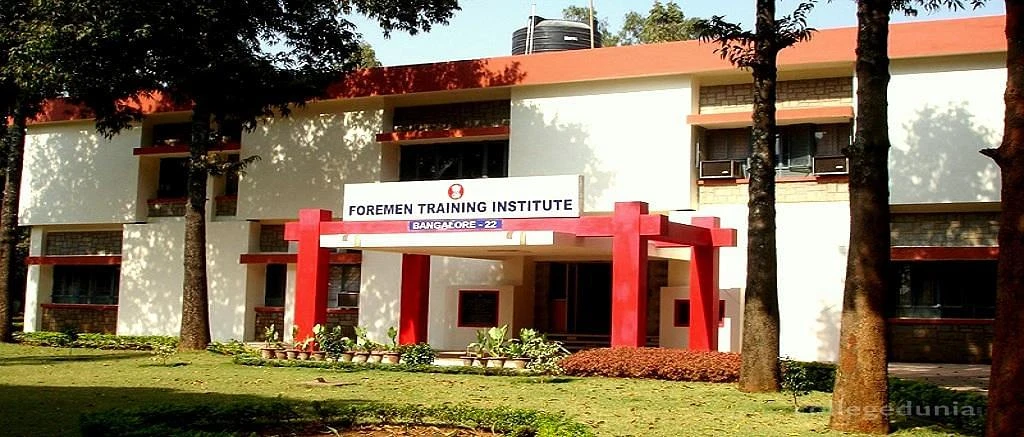
In this preview: 1 photo · 0 videos
Yes, the Foremen Training Institute (FTI) Bangalore is the same as NSTI Bangalore. The institute was renamed, but it operates from the same campus and under the same administration.
No, NSTI Bangalore does not offer a B.Tech degree. The institute provides Advanced Diplomas (ADIT), CITS (Instructor Training) programs, and various short-term technical courses instead.
Yes, according to DGT norms, completing the CITS (Crafts Instructor Training Scheme) certification is now mandatory for recruitment as an instructor in most Government and Private ITIs across India.
Placements for the Advanced Diploma in IT (ADIT) course are excellent. Many students secure roles in cloud support, networking, and cybersecurity with technology firms based in Bangalore.
Generally, there is no upper age limit for admission to most courses at NSTI Bangalore. This policy makes it a popular choice for industry professionals seeking to upskill.
Share what future students should know about Foremen Training Institute.
Student voices are not rewritten by colleges. We remove spam and abuse.
Wider admission question? Community PulseWhat should future students know?
Tell us which course you're considering. We'll help you work out the next step.
Get instant Partner access after mobile verification. Your public edits are reviewed before they go live.
Claim this college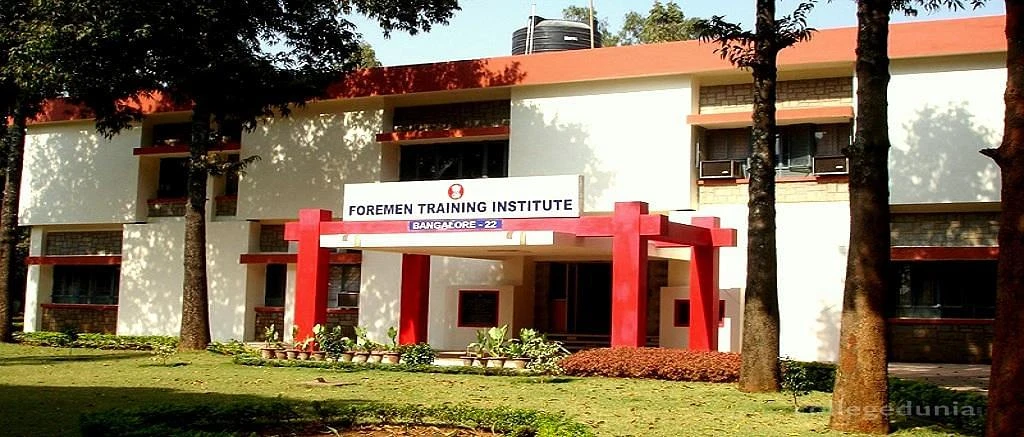
 Auditorium
 Cafeteria
 Computer Labs
 Science Labs
 Sports Complex
 Study Library