Loading Admission Guardian content
Loading Admission Guardian content
Selected ranking categories, with the recorded year beside each result. Open all records for the complete history.
8 published records · Lower numeric ranks are stronger
TOI
B.Tech
#592020
Find a program, read its fee details and explore the admission requirements.
Summary of the programs shown below. Fee periods can differ by program. Check the note beside each amount before comparing costs.
| Course | Stream | Fees |
|---|---|---|
| Bachelor of Technology [B.Tech] | Engineering | 119000 |
| Master of Technology [M.Tech] | Engineering | 119000 |
Specializations
All accepted exams
Eligibility: 10+2
Specializations
All accepted exams
Eligibility: Graduation
3 exams with cutoff data available
 Atul Ltd
 Capgemini
 Crest Data Systems
 EInfochips
 Godrej & Boyce
 Infosys
 Jindal Power and Steel
 L&T Infotech
 MG Motor India Pvt. Ltd.
 Nayara Energy
 Nirma
Nirma![Reliance Industries Limited [RIL]](https://assets.admissionguardian.com/imgproxy/insecure/w:64/h:64/rt:fit/el:0/f:avif/q:82/sm:1/plain/local%3A%2F%2F%2Fimages%2Frecruiter_logos%2Freliance-industries-limited-ril-logo.webp) Reliance Industries Limited [RIL]
Reliance Industries Limited [RIL] Spec India
 SuperGas
 Tata
Tata TBEA
TBEA TCS
TCS Tech Mahindra
 Torrent Power
 Universal Hunt
 Volansys
 Wipro
WiproIf you're looking at engineering colleges in Gujarat's Charotar region, G H Patel College of Engineering & Technology (GCET) is a name that comes up consistently. Established in 1996 and now part of the CVM University ecosystem in Vallabh Vidyanagar, it's a private institution with a sprawling 10-acre campus and a focus on core engineering disciplines. The college has built a reputation for solid academics and decent infrastructure, but student conversations often pivot to a single, critical question: do the placements live up to the promise? The data shows a mix of official optimism and on-the-ground caution, making it a college that requires a closer, more nuanced look beyond the brochure.
GCET offers a fairly standard spread of engineering programs, with a total annual intake of around 809 students across UG and PG levels. The B.Tech portfolio is the main draw, with 1018 seats spread across eight specializations. You've got the usual suspects—Computer Science, Mechanical, Civil, Electrical, Electronics & Communication (listed as Communications Engineering), and Information Technology. They've also added more contemporary tracks like Mechatronics, Computer Science and Design, and Computer Science and Engineering (Internet of Things). The M.Tech program has 192 seats across seven specializations, and the college emphasizes its doctoral research activities.
Academically, the schedule is a full one. Classes run from 10:30 AM to 5:30 PM, with a mid-semester and an end-semester exam each term. The college claims a 90% pass percentage for semester exams, which suggests the academic pressure is real but manageable. Where GCET tries to stand out is with its faculty profile. The college states that almost all of its 115 faculty members hold PhDs, many from reputed institutes like IITs and NITs, and have 10-12 years of experience. That's a strong claim on paper. In practice, student reviews confirm many teachers are knowledgeable, but there's a recurring note about teaching style—some are praised, while others are criticized for being overly reliant on PowerPoints and rushing through theory. It's a mixed bag, but the underlying academic foundation seems sturdy. They also have an MoU with Texas Instruments India and are involved in industrial consultancy, which adds a layer of potential industry exposure.
This is the section where you need to read between the lines. The official narrative and the student sentiment from platforms like CollegeDunia and Shiksha don't always align perfectly, and that gap is telling.
Let's start with the numbers the college promotes. For the 2024-2025 batch, the highest package reported is ₹13.20 LPA. In previous years, figures like ₹25 LPA and ₹18 LPA have been mentioned but are unverified. The estimated average package for the latest batch is around ₹5.04 LPA. In terms of volume, the placement cell reports 150 offers from 50 companies in 2024-25, which is an increase from 273 offers from 72 companies in 2023-24. The top recruiter list is respectable, featuring names like TCS, Infosys, IBM, Tech Mahindra, Cognizant, Reliance, Adani, L&T, and Capgemini. For core branches, companies like Torrent Power, MG Motors, Atul Ltd., and Alstom visit.
Now, the student reality check. While many reviews acknowledge that companies do visit, the consistency and quality of offers are frequently questioned. A stark review claims "just approximately 10-15% of students are placed," with companies offering low packages tied to long bonds of 2.5-3 years. Other reviews mention placement rates of 40% or state that "almost all students who opt for placements get it." This wild inconsistency suggests placement success varies dramatically by branch, academic performance, and perhaps even by year. The median salary figure floating around is ₹2,54,737, which is closer to the lower end of the spectrum. The truth likely sits in the middle: core branches might see decent, stable recruitment, while mass-recruiter IT placements could be inconsistent. The college's own NIRF data submission (if they participate) would clarify, but it's not highlighted. The verdict? Don't bank on the highest package figure. Plan for self-driven upskilling and see campus placements as a potential boost, not a guarantee.
GCET's fee structure has a wide range, largely dependent on the branch of engineering and the quota. For B.Tech programs in 2026, annual tuition fees range from ₹1,19,000 to ₹2,38,000. Over four years, the total cost can be anywhere from ₹4.76 lakhs to ₹12.78 lakhs. Management quota seats can cost ₹1.70-2.00 lakhs per year, and NRI quotas are higher. Hostel and mess fees add another ₹46,000 to ₹67,000 per year. There are additional semester exam fees (₹1,500) and minor charges for ID cards.
The good news is the array of scholarships, which significantly improve affordability for eligible students. The flagship is the Gujarat government's Mukhyamantri Yuva Swavalamban Yojana (MYSY), which provides ₹1,00,000 per annum for B.Tech and ₹50,000 for M.Tech to students with 80%+ in 12th standard and a family income under ₹6 lakhs. It also includes a ₹12,000 hostel fee waiver. The Charutar Vidya Mandal (CVM) offers merit-based scholarships of 20% to 35% off on fees based on your ACPC rank. There's also a Tuition Fee Waiver Scheme (TFWS) for the top three merit students per class, specific scholarships for SC/ST/OBC categories, and even a dedicated L&T Build India Scholarship for M.Tech Construction students. If you have the grades, the financial burden can be substantially reduced.
Admission to GCET's B.Tech programs is controlled by the state's centralized Admission Committee for Professional Courses (ACPC). You need to have passed 10+2 with Physics and Mathematics as compulsory subjects and a minimum aggregate of 45% (40% for reserved categories). The selection is merit-based, combining 60% weightage from your 12th board marks and 40% from your JEE Main score. Alternatively, you can use your GUJCET score. You don't apply directly to GCET; you register for ACPC counseling and list your college preferences.
Cutoff ranks fluctuate each year based on applicant pool and seat availability. For example, the GUJCET cutoff for the Mechatronics branch has historically ranged between ranks 1070 and 12060 for the general category. A JEE Main cutoff score of 107 out of 360 was noted back in 2015, but this is outdated. The key is to perform well in either JEE Main or GUJCET and have strong board marks. The application window for ACPC counseling typically opens in June-July. Management and NRI quotas operate outside this central process, with direct applications to the college at a higher fee.
GCET's 10-acre campus in the educational township of Vallabh Vidyanagar provides a focused, if somewhat secluded, environment. The infrastructure receives generally positive marks. Academically, labs are described as well-equipped, with 8-9 programming labs featuring i7 computers. The two-floor library houses over 34,000 volumes and 132 periodical subscriptions. However, a few students note that the library doesn't always have the latest editions of books. Classrooms have smart boards, but a common complaint is the lack of air conditioning.
The hostel situation is a tale of two experiences. The infrastructure itself is praised: rooms are big, clean, renovated, and come with AC options, study tables, 24/7 hot water, and—importantly—24/7 "true 5G" Wi-Fi. But the mess food is a major pain point. Reviews range from "good enough" and "above average" to "disgusting," "no taste," and complaints about monotonous menus heavy on potatoes. Some also mention a lack of medical facilities and sports amenities within the hostel premises.
For recreation, the college claims extensive sports facilities including a 400m track, cricket ground, tennis/basketball courts, and indoor halls for badminton and table tennis. They have a gym and have produced many national-level athletes. Yet, some student reviews contradict this, flatly stating "no sports ground available in the college." This discrepancy is odd. The campus has a large, centrally air-conditioned auditorium (the largest in Anand district, they say), a canteen with affordable food, and hosts an annual tech fest called "Imaze." Clubs like the IEEE student chapter and various youth clubs are active. The social calendar is moderately busy with 1-3 events per month. It's a campus that provides the basics and then some, but with clear inconsistencies in service delivery, particularly regarding food and some amenities.
Synthesizing the voices from review platforms paints a picture of a college with clear strengths and equally clear frustrations.
Students consistently praise the qualified faculty and strong academic curriculum that helps make them industry-ready. The modern infrastructure, especially the labs and hostels (excluding the food), gets thumbs up. The availability of generous government and institutional scholarships is a huge plus, making quality education accessible. The overall campus atmosphere and club activities are seen as positive.
However, the negatives are sharp and repeated. Placement uncertainty is the biggest concern, with many feeling the official statistics don't reflect the struggle a significant portion of the batch faces. Teaching quality is hit-or-miss; while many professors are great, others are panned for being theoretical, unresponsive, and just "reading from PPTs." The mess food quality is a near-universal grievance. Infrastructure complaints focus on the lack of AC in classrooms, sometimes spotty Wi-Fi, and the aforementioned library book editions. There's also a sentiment among some that for the fees charged, the return on investment—especially in placement outcomes—can be questionable. One review summed it up neatly: "Strong Academics, But Placement Needs Improvement."
GCET is a solid, mid-tier private engineering college with a good academic foundation and infrastructure. It's best for students who are self-starters, particularly those eligible for the MYSY or CVM scholarships, which make the cost very reasonable. If you're in a core branch like Chemical or Mechanical, and you're proactive about your studies and skill development, you can get a decent education here and potentially secure a stable core-engineering job.
However, you should be cautious if your primary goal is a high-paying IT placement from campus drives. The placement record is inconsistent, and banking on the top package figures would be a mistake. The college demands a pragmatic approach: use its academic resources and faculty, but take charge of your own coding skills, internships, and job search. If you're looking for a luxurious campus life or guaranteed top-tier placements, you might want to look at higher-ranked institutions. But for a cost-effective, academically sound engineering education in Gujarat—especially with financial aid—GCET remains a viable and often practical choice.
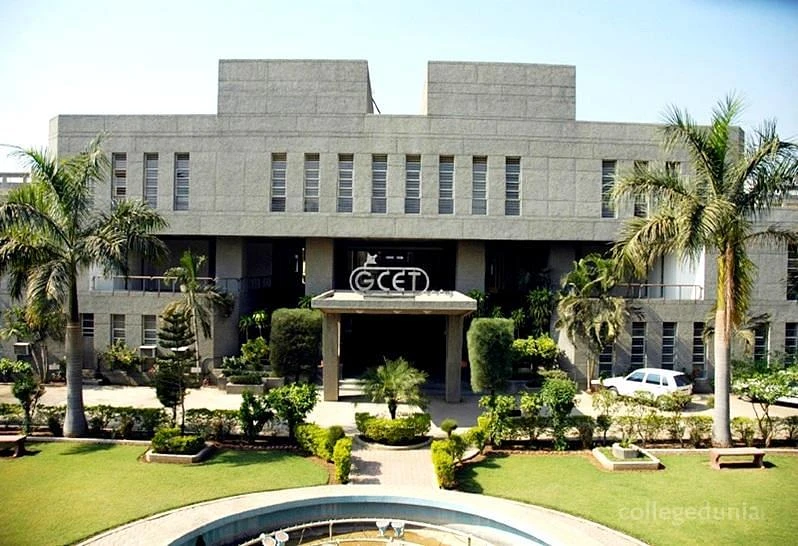
In this preview: 1 photo · 0 videos
The annual tuition fees for B.Tech programs at GCET for the 2026 academic year range from ₹1,19,000 to ₹2,38,000, leading to a total 4-year cost between ₹4.76 lakhs and ₹12.78 lakhs. Significant scholarships are available. The Gujarat government's Mukhyamantri Yuva Swavalamban Yojana (MYSY) provides up to ₹1,00,000 per year for eligible students. Additionally, the Charutar Vidya Mandal (CVM) offers merit-based scholarships covering 20% to 35% of tuition fees based on ACPC rank.
For the 2024-2025 academic batch, the highest package offered at GCET was INR 13.20 LPA. The estimated average package for that year is around INR 5.04 LPA. The placement cell reported 150 job offers from 50 companies during that cycle. Top recruiters include TCS, Infosys, IBM, Reliance, and L&T, though student reviews suggest placement success can vary significantly by branch and individual performance.
Admission to GCET's B.Tech programs is merit-based and conducted through the centralized ACPC (Admission Committee for Professional Courses) counseling. Eligibility requires passing 10+2 with Physics and Mathematics, securing a minimum aggregate of 45%. The selection criteria combine 60% weightage from 12th board marks and 40% from entrance exam scores. The accepted entrance exams are JEE Main and GUJCET.
GCET provides separate hostels for boys and girls with renovated rooms that are clean and adequately furnished. Amenities include AC options, 24/7 hot water and electricity, and 24/7 high-speed Wi-Fi. However, reviews on the mess food are highly mixed, ranging from descriptions of "good enough" and "above average" to criticisms like "disgusting" and lacking variety, with some students reporting repetitive menus.
Student sentiment is generally positive about the faculty's qualifications, with many professors holding PhDs from reputed institutes, and the industry-relevant curriculum. Campus life is viewed as good with active clubs and annual fests like "Imaze." However, a common critique is that some faculty rely heavily on PowerPoint-based, theoretical teaching. Another frequent complaint is the lack of air conditioning in classrooms across the college.
Share what future students should know about GCET.
Student voices are not rewritten by colleges. We remove spam and abuse.
Wider admission question? Community PulseWhat should future students know?
Tell us which course you're considering. We'll help you work out the next step.
Get instant Partner access after mobile verification. Your public edits are reviewed before they go live.
Claim this college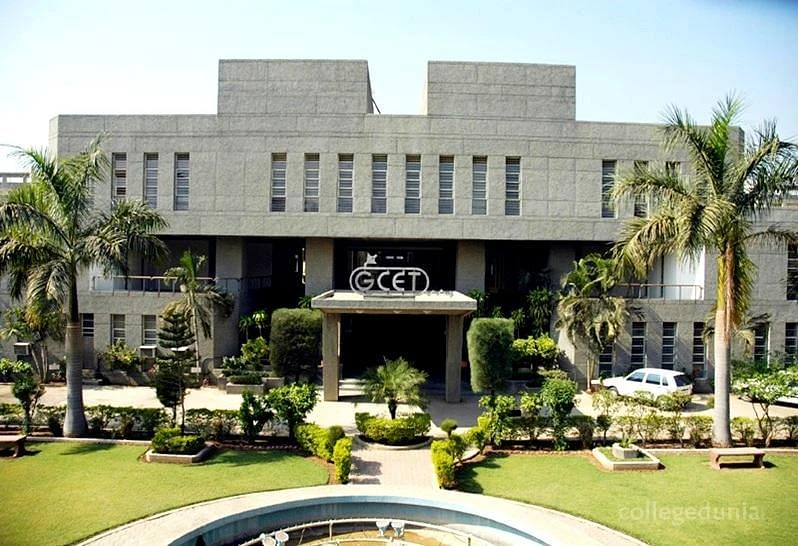
 Auditorium
 Cafeteria
 Computer Labs
 Gym
Gym Hostel
 Medical
 Science Labs
 Sports Complex
 Study Library