Loading Admission Guardian content
Loading Admission Guardian content

Provisional score based on available data. It may change as more information is verified.
Find a program, read its fee details and explore the admission requirements.
Summary of the programs shown below. First-year fee. Check the note beside each amount for inclusions and exclusions.
| Course | Stream | Fees |
|---|---|---|
| Bachelor of Engineering [BE] | Engineering | 99000 |
| Master of Technology [M.Tech] (Computer Science and Engineering) | Engineering | 104592 |
| Master of Computer Applications [MCA] | Computer Applications | |
| Diploma in Engineering (Polytechnic) | Engineering | |
| Master of Business Administration [MBA] | Management |
Specializations
All accepted exams
Eligibility: 10+2
Specializations
All accepted exams
Eligibility: Graduation
Specializations
Eligibility: Graduation
Specializations
Eligibility: 10th
Specializations
Eligibility: Graduation
 Adani group
 ADCC Infocad Ltd
 Adobe
Adobe Ashok Leyland
 Bitwise
 Bosch Limited
 Bridgestone
 Capgemini
 Cummins India Ltd
 Cybage Software
 Delta Partners
 Ericsson India Pvt Ltd
 GlobalLogic
 Godrej & Boyce
 Godrej Infotech
 HCL Technologies
 HSBC Bank
 IBM
IBM Idea Cellular
 Indian Army
 Infocepts
 L&T Infotech
 Mahindra & Mahindra
 Mercedes Benz (India) Ltd.
 Novatech Software
 NTT DATA
 Paramatrix
 Persistent Ltd
 Reliance
 Samsung
 Smart Data
 Solar Semiconductors
 Syntel
 TATA Technologies
 TCS
TCS Tech Mahindra
 Think Analytics
 Think and Learn
 Triveni Turbines
 UltraTech Cement
 Videocon
 Wipro
Wipro Zensar
If you're looking at engineering colleges in Nagpur, the Raisoni Group is a name you'll hear a lot. And within that group, G H Raisoni Academy of Engineering & Technology (GHRAET) — often called the Wadi campus — presents a specific kind of proposition. It's the younger, more affordable sibling to the flagship Hingna Road campus. With an A+ NAAC grade and recent autonomous status, it's trying to carve its own identity. But talk to students, and you'll hear a consistent theme: this is a college where your branch matters immensely, and the advertised 16 LPA package is a distant dream for most. The reality is a functional campus, a decent shot at an IT job through mass recruiters, and a constant, low-grade friction with management over fines and facilities. It's a pragmatic choice, not a premium one.
The academic offering here is standard for a mid-sized private engineering college, with one notable exception. The B.Tech in Fire Engineering is a unique specialization for the region and draws a specific crowd. Intake varies, but CSE and its variants (AI, Data Science) get the lion's share of seats—anywhere from 120 to 180 for CSE alone. That's a clear market signal. The other branches—Mechanical, Civil, ETC—have smaller batches, typically 60 seats or fewer.
Academically, the college operates on a Choice Based Credit System (CBCS). You can pick electives, which is a plus. They've also signed MoUs with big names like TCS (Ion), Infosys Springboard, and Amazon AWS Academy. On paper, that looks great. In practice, these often translate to access to online learning portals or guest lectures, not guaranteed internships or jobs. Faculty-wise, you're looking at a mix. About a quarter to a third hold PhDs. The consensus from students is that professors are approachable and not overly strict, but there's a heavy reliance on local notes and textbook teaching. A deep research culture isn't really the selling point. They do have a dedicated "Dean of Industry-Institute Interaction," which is an interesting administrative role aimed at bridging that gap.
This is where you need to read between the lines. The official brochure might highlight a highest package of 16 LPA. What it often doesn't say is that this figure is usually a group-wide statistic or an off-campus achievement by an exceptional student. For the average Wadi campus student, the working number is the median package of around ₹3.1 LPA. The average hovers between ₹3.5 and ₹4.5 LPA.
The placement process is centralized through the Raisoni Group's cell, and this is a major point of student grievance. There's a strong perception that students from the flagship Hingna campus get first preference during company visits. The official placement percentage claim is 80-90%, but student reviews consistently peg it lower: maybe 75% for CSE/IT, and as low as 50-60% for core branches like Mechanical or Civil.
Recruiters are the usual suspects for a college of this tier: TCS, Infosys, Wipro, Capgemini, and Cognizant lead the charge. You'll also see Tech Mahindra, Accenture, and occasionally an Adani or L&T. The sector split tells the story: about 70% of offers are in IT/Software. Core engineering and sales make up the rest. If you're in CSE, you have a decent chance at a mass recruiter job. If you're in Mechanical hoping for a design role, you'll likely need to hustle off-campus. That's the unvarnished truth.
Fees are approved by the state's Shikshan Shulka Samiti. For the 2024-25 batch, an Open category student can expect to pay between ₹1.1 and ₹1.38 lakhs per year in tuition. There's a significant subsidy for reserved categories: OBC fees are around ₹75-85k, and SC/ST students pay only development fees of ₹15-20k.
But tuition is just part of the story. Hostel and mess fees add another ₹90,000 to ₹1.25 lakhs per year, depending on whether you opt for AC accommodation. Throw in exam fees, library deposits, and other incidentals, and the total 4-year cost for a hostelite in the open category lands between ₹6.5 and ₹8.5 lakhs.
Financial aid is available through state government schemes like MAHADBT and the Economically Backward Class (EBC) scholarship. The college itself offers a Raisoni Merit Scholarship, which can grant up to a 20% fee waiver for students with high MHT-CET scores. It's worth applying for these—every bit helps.
Admission is primarily through the Maharashtra state entrance exam, MHT-CET. JEE Main scores are also accepted for the All India quota seats. The process is centralized; you go through the DTE Maharashtra's CAP rounds.
Cutoffs are branch-specific and reflect the market demand. For the 2024 session:
The unique Fire Engineering program usually has a cutoff in the lower-middle range, similar to Mechanical.
If you miss the CAP cutoff, there's the Management Quota. Roughly 20% of seats are reserved for this. Admission here is still based on merit (you need a valid CET/JEE score), but the process involves higher fees. Don't expect a true "donation-based" direct admission without a valid entrance score; the system is more regulated than that.
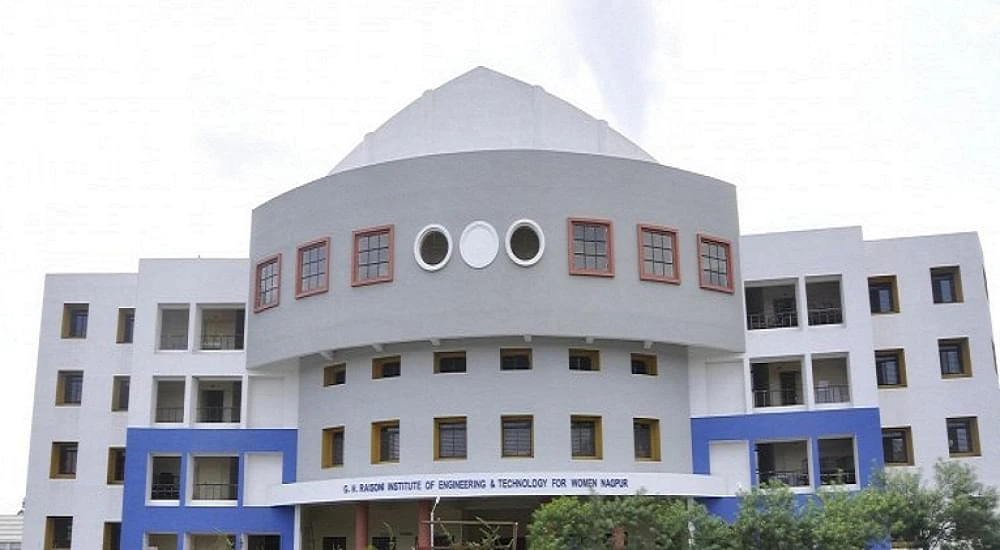
The campus is part of the larger Shraddha Park integrated complex, spread over 4-7 acres. It's not sprawling, but it's functional. The location is industrial, off the Amravati Highway, about 12 km from Nagpur Junction. The Lokmanya Nagar Metro station is roughly 5 km away, which improves connectivity.
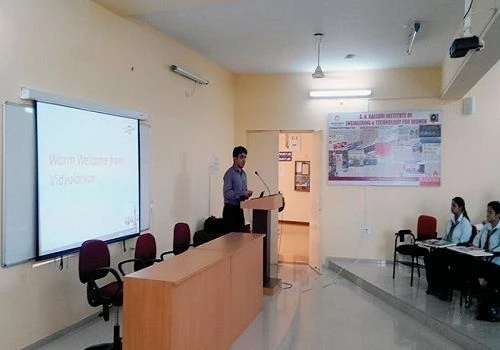
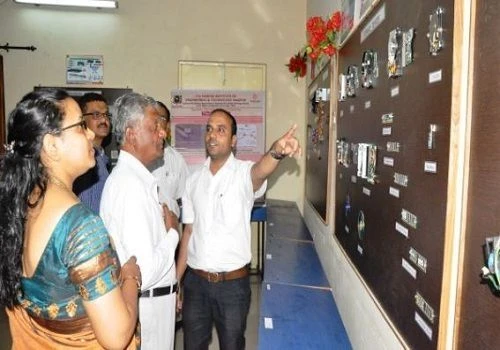
Infrastructure is a mixed bag. The college invests in its tech branches—you'll find an Apple Lab, an Nvidia AI Lab, and well-equipped computer labs. For core engineering, the labs are described as "average" with some older equipment. The library has a decent collection of over 25,000 books and digital access to journals.
The hostel is a frequent topic in reviews. It's safe and has separate wings for boys and girls, but rooms are often called "cramped." The mess food is a universal point of complaint—edible but monotonous. Wi-Fi is available but reportedly inconsistent in the hostels. Sports facilities include a small ground and basic indoor options.
Social life, however, is a bright spot. The college is known for being "event-heavy." The annual fest, Antaragni, is a major highlight and brings a vibrant atmosphere to the campus. There are multiple small canteens and kiosks with subsidized food, which become the default hangout spots.
Synthesizing opinions from platforms like CollegeDunia, Shiksha, and student forums gives you a clear, if sometimes harsh, picture.
The Positives:
The Negatives:
GHRAET, the Wadi campus, is a college of compromises. It's not the flagship, and it doesn't pretend to be. Its value proposition is straightforward: for a student with a CET percentile in the 70s or 80s, it offers a relatively affordable private engineering degree in Nagpur with a credible, if not spectacular, shot at an IT job.
It's best for students targeting computer science, AI, or data science, who are comfortable with the likelihood of a 3-4 LPA offer from a mass recruiter. The unique Fire Engineering program is also a genuine differentiator for those interested in that niche. For students passionate about core branches like Mechanical or Civil, the prospects here are thinner; you'd be banking almost entirely on your own off-campus efforts.
The A+ NAAC grade and autonomous status are legitimate quality markers that shouldn't be ignored. But the student experience is marred by administrative nitpicking (the "fine culture") and the palpable hierarchy within the Raisoni Group. If you can get into the Hingna campus (GHRCE, DTE Code 4116) with your score, that's objectively the better choice. If Wadi is your landing spot, go in with clear eyes: focus on your skills, leverage the industry MoUs for self-learning, and manage your expectations around placements. It's a practical launchpad, not a destination.
For the latest official information, always refer to the college website and verify placement data through the NIRF disclosures.
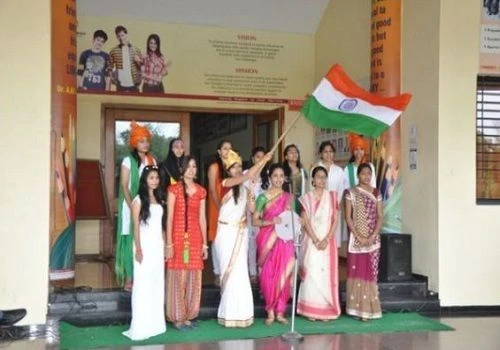
In this preview: 5 photos · 0 videos
No. G H Raisoni College of Engineering (GHRCE) on Hingna Road is the flagship autonomous institution of the group. It consistently has higher MHT-CET cutoffs, a stronger placement record with higher average packages, and is generally perceived as the premium choice. Students at the Wadi campus (GHRAET) often report feeling secondary during centralized placement drives.
Yes. G H Raisoni Academy of Engineering & Technology (GHRAET/GHRCEM) has recently been granted autonomous status by the University Grants Commission (UGC). This allows the college to design its own curriculum, update syllabi more frequently, and conduct its own examinations, though its degrees are still awarded under the umbrella of Rashtrasant Tukadoji Maharaj Nagpur University (RTMNU).
The DTE code for G H Raisoni Academy of Engineering & Technology (the Wadi campus) is 4142. It is crucial to use this code during the DTE Maharashtra CAP counseling to ensure you are applying for the correct campus, as the flagship Hingna campus has a different code (4116).
Yes, but with a key condition. Approximately 20% of seats are reserved under the Institute Level/Management Quota. Admission through this quota is still based on merit, meaning you must have a valid score from MHT-CET or JEE Main. The process involves higher processing fees compared to the CAP rounds, but it does not typically involve a pure "donation" without an entrance exam score.
Hostel life at the Wadi campus is considered average. The hostels are safe with separate wings for boys and girls, but common complaints include cramped room sizes and a lack of variety in the mess food. The social atmosphere is active, especially during college events, but the infrastructure and amenities are often described as just functional, not luxurious.
Share what future students should know about GHRAET.
Student voices are not rewritten by colleges. We remove spam and abuse.
Wider admission question? Community PulseWhat should future students know?
Tell us which course you're considering. We'll help you work out the next step.
Get instant Partner access after mobile verification. Your public edits are reviewed before they go live.
Claim this college
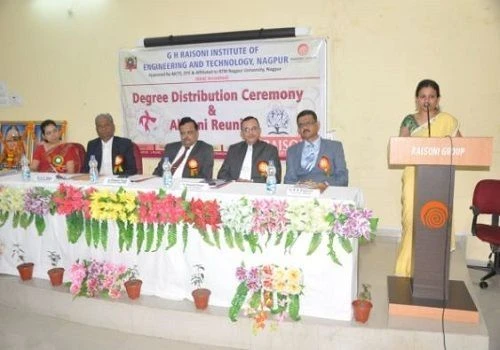
 Auditorium
 Cafeteria
 Computer Labs
 Gym
Gym Hostel
 Science Labs
 Sports Complex
 Study Library