Loading Admission Guardian content
Loading Admission Guardian content

Selected ranking categories, with the recorded year beside each result. Open all records for the complete history.
5 published records · Lower numeric ranks are stronger
Find a program, read its fee details and explore the admission requirements.
Summary of the programs shown below. Fee periods can differ by program. Check the note beside each amount before comparing costs.
| Course | Stream | Fees |
|---|---|---|
| Master of Computer Applications [M.C.A] | Computer Applications | 51000 |
| Master of Technology [M.Tech] | Engineering | 70000 |
| Master of Business Administration [MBA] | Management | 80641 |
| Bachelor of Technology [B.Tech] | Engineering | 101000 |
| Bachelor of Technology [B.Tech] {Lateral} | Engineering | 101000 |
All accepted exams
Eligibility: Graduation + MAH MCA CET
Specializations
All accepted exams
Eligibility: Pass in Graduation + GATE
Specializations
All accepted exams
Eligibility: Graduation + MAH MBA CET
Specializations
All accepted exams
Eligibility: 10+2 with 45%
Specializations
All accepted exams
Eligibility: 10+3 with 45% marks
6 exams with cutoff data available
 Amazon
 Aspiring Minds
 Bajaj Allianz
 Bitwise
 BKT
BKT Bosch Limited
 CEAT
CEAT Cognizant
 Ethios Web Promoters
 Force Motors Ltd.
 GODREJ Pvt. Ltd
 Grind Master Machine Tools Pvt Ltd.
 HSBC
HSBC IBM
IBM Infosys
 Mphasis
 NRB Bearing
 Persistent Systems Limited
 Red Hat India Pvt Ltd
![Reliance Industries Limited [RIL]](https://assets.admissionguardian.com/imgproxy/insecure/w:64/h:64/rt:fit/el:0/f:avif/q:82/sm:1/plain/local%3A%2F%2F%2Fimages%2Frecruiter_logos%2Freliance-industries-limited-ril-logo.webp) Reliance Industries Limited [RIL]
Reliance Industries Limited [RIL] SAP
SAP Siemens
 Syntel
 Tata Motors
 Tata Steel
 TCS
TCS Tech Mahindra
 Triveni Turbines
 Varroc Group
 Videocon
 Wipro
WiproGS Mandal's Marathwada Institute of Technology (MIT) in Aurangabad is a study in contrasts. On one hand, it boasts a sprawling, green campus and the coveted 'Autonomous' status, which lets it update its curriculum faster than many peers. On the other, its placement story is dominated by a single, staggering 80 LPA outlier that overshadows a median package hovering around 3.5 Lakhs. For students in Maharashtra's Marathwada region, MIT often represents the top local choice for infrastructure, but choosing it requires a clear-eyed view of what you're signing up for—especially if your branch isn't Computer Science.
MIT offers a fairly standard spread of B.Tech programs, with intakes ranging from 60 to 120 per branch. The Computer Science and Engineering (CSE) stream is the most sought-after, but the institute also runs less common specializations like Agricultural Engineering and Plastic and Polymer Engineering. For postgraduates, there are M.Tech programs in Structural Engineering and Computer Science, alongside MBA and MCA degrees.
The autonomous status is a genuine academic advantage. It allows the college to tweak its syllabus more frequently than non-autonomous colleges tied to a rigid university calendar. They've introduced an Honors and Minor system—if you maintain a CGPA above 6.75, you can add an Honors in your main branch or a Minor in something like AI alongside a core Mechanical degree. That's a decent option for high performers. Faculty strength is around 150, with a notable concentration of PhDs in the Civil and Mechanical departments, which aligns with the institute's older, core engineering roots.
Industry tie-ups, on paper, look impressive. MoUs with names like Cloudera for Big Data, Celonis for process mining, and Red Hat Academy for open-source certifications suggest an effort to stay current. Whether every student deeply benefits from these partnerships is another question, but they do provide a framework for certifications and occasional workshops.
This is where you need to separate the headline from the fine print. The college's placement record is famously anchored by one data point: an 80 LPA offer from Atlassian to a student in the 2022-23 batch. That's a phenomenal, life-changing outcome. But it's also a massive outlier, and treating it as representative is misleading.
The more realistic numbers come from the official NIRF report. For the 2024 cycle, the median package for four-year UG programs was 3.50 LPA. For two-year PG programs, it was 2.95 LPA. The average package, as per recent reports, sits between 3.4 and 3.7 LPA. The highest package for 2024 was 12 LPA—still solid, but a world away from 80.
Recruiters are a mix of IT service giants and manufacturing firms. TCS, Infosys, Wipro, Capgemini, and Cognizant are regulars for CSE and related branches. For core roles, you see names like Reliance Industries, Tetra Pak, Asian Paints, and Grind Master.
Now, the reality check from student reviews. The official placement percentage claim is around 70-80% for CSE/IT streams. Across forums like Shiksha and Quora, alumni suggest the overall placement rate, especially when including core branches like Mechanical and Civil, is closer to 40-50%. One recurring piece of advice is stark: "If you are in CSE, you have a chance. If you are in Civil/Mech, you are on your own for jobs." The college facilitates internships, often with local industries in the Waluj MIDC area, but final job placement in core sectors is a tougher climb.
For a private autonomous institution, MIT's tuition fees are relatively moderate. B.Tech fees range from ₹1,02,000 to ₹1,28,000 per year, depending on the branch and quota. Over four years, you're looking at a total tuition cost of roughly ₹4.56 to ₹5.10 lakhs.
Hostel and mess fees add significantly to the cost. Boys' hostel fees range from ₹38,500 to ₹81,500 annually, while girls' hostel fees are between ₹41,500 and ₹61,000. Mess charges are an additional ₹30,000 to ₹40,000 per year. So, a student in a non-AC hostel can expect total annual expenses (tuition + hostel + mess) to start around ₹1.7-1.8 lakhs.
Financial aid is primarily through government schemes like EBC, SC/ST/OBC scholarships, and the Tuition Fee Waiver Scheme (TFWS), which the college implements. There are also some private scholarships, such as those from Endress+Hauser for postgraduate students.
Admission to the B.Tech programs is primarily through the state-level MHT-CET exam. JEE Main scores are also accepted for the All India Quota seats. The process is centralized, run by the Directorate of Technical Education (DTE) Maharashtra via the CAP rounds.
Cutoffs give you a sense of the competition. For the 2024 MHT-CET, the General Open category cutoff percentiles were:
The steep drop-off between CSE and core branches is evident. About 20% of seats are reserved for Institute-Level or Management quota admissions, which typically have a separate, often higher, fee structure.
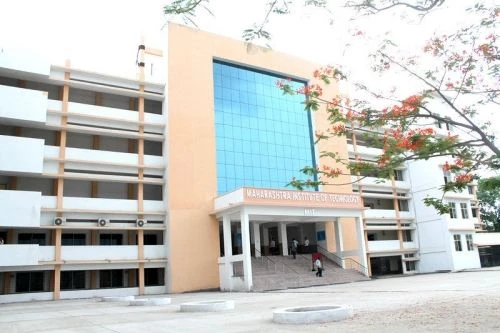
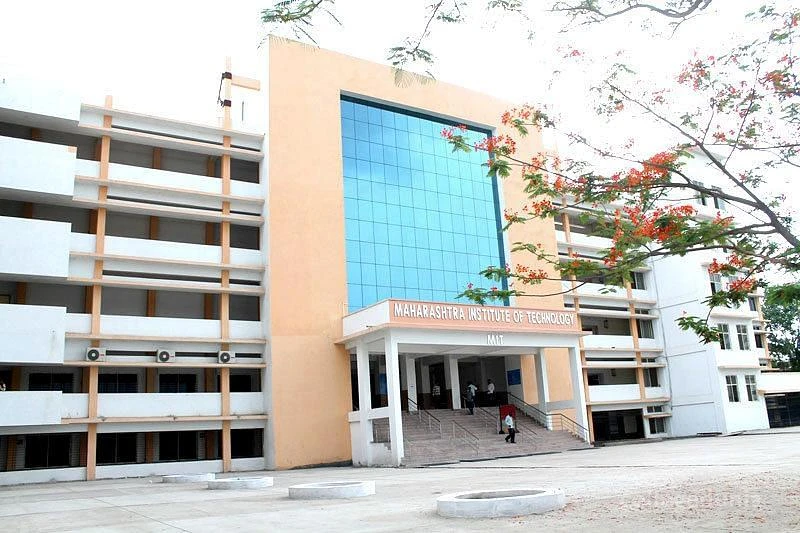
Infrastructure is MIT's strongest selling point, and students consistently rate it as the best in the region. The 13-acre campus is green and well-maintained. Facilities include a central library with over 85,000 volumes, a 24/7 study cubicle section, and well-equipped labs, some with NABL accreditation. There's a cricket ground, volleyball courts, and an indoor sports complex. A unique cultural space called 'Kalagram' promotes local arts.
The hostels are separate for boys and girls. Reviews rate them around 3.5/5. A common complaint isn't about the facilities themselves but about water scarcity—a regional issue that leads to limited supply hours. Campus-wide Wi-Fi is available, though students note speeds can be inconsistent in the hostel blocks.
Life here is described as disciplined, sometimes overly so. The 75% attendance rule is strictly enforced, with barring from exams as a consequence. The location on the Beed Bypass Road means it's well-connected by highway but a bit distant from Aurangabad's city center, making students reliant on college buses.
Synthesizing feedback from CollegeDunia, Shiksha, Reddit, and Quora paints a clear picture. The positives are emphatic: the campus is beautiful, the autonomous curriculum is seen as an advantage, and most faculty are considered approachable and supportive.
But the negatives are just as consistent. The gap between the marketed 80 LPA and the median 3.5 LPA creates a sense of disillusionment. Administrative processes are often called slow and bureaucratic, with mentions of "paperwork hell." The strict attendance policy feels "school-like" to many. And there's a palpable divide in experience between the CSE/IT students, who feel the college works for them, and core branch students, who feel they need to hustle independently for opportunities.
One paraphrased review sums up a common sentiment: "Don't be fooled by the 80 LPA package; that was one brilliant student who worked hard off-campus."
MIT Aurangabad is a solid regional player with a clear hierarchy of value. If you are a student from the Marathwada region looking for the best local infrastructure and an autonomous curriculum, and you've secured a seat in Computer Science, AI, or a related IT branch, MIT is a defensible choice. You'll get a decent education, campus life, and a shot at IT placements with the standard 3.5-4 LPA starting point.
However, if your interest lies in core engineering branches like Mechanical or Civil, temper your expectations. The placement support will be weaker, and you'll need to be far more proactive. Also, if you dislike a structured, rule-heavy environment, the strict attendance policies might chafe.
Ultimately, it's a college that serves its regional base well but asks for a realistic assessment of outcomes. It's not a tier-1 institute, but within its context and for the right branch, it delivers adequate value for the investment. Check the official MIT website for the most current details, but always cross-reference with recent student conversations online.
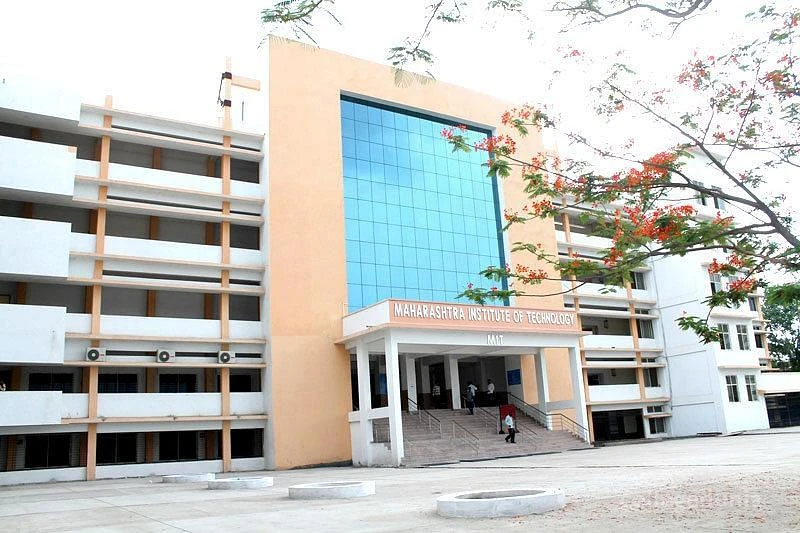
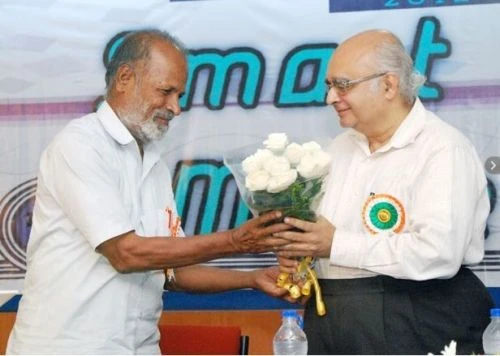
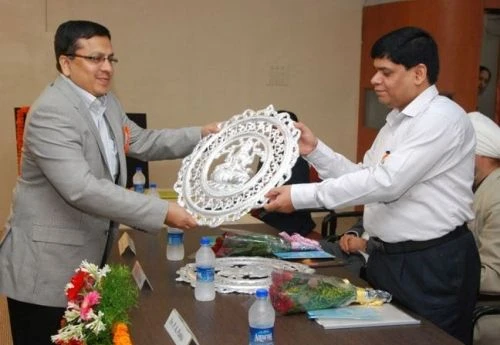
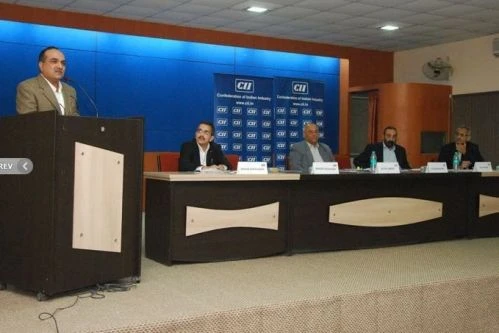
In this preview: 5 photos · 0 videos
GS Mandal's Marathwada Institute of Technology (MIT), Aurangabad is a Private, Autonomous college.
While the college may claim higher figures, the median placement package for Computer Science and Engineering (CSE) at MIT Aurangabad is consistently reported to be around 3.5 to 4.2 LPA.
Yes, attendance is compulsory at MIT Aurangabad. The official rule requires students to maintain a minimum of 75% attendance, and failing to meet this requirement can result in being barred from appearing for examinations.
Yes, the college provides internships. Completing an internship is a mandatory part of the B.Tech curriculum, and the institute often facilitates these through its tie-ups with local industries located in the Waluj and Chitegaon MIDC areas.
MIT Aurangabad is often preferred for its infrastructure and autonomous status. Jawaharlal Nehru Engineering College (JNEC), part of MGM, is considered a close competitor but is noted for having a slightly different social environment.
Share what future students should know about MIT.
Student voices are not rewritten by colleges. We remove spam and abuse.
Wider admission question? Community PulseWhat should future students know?
Tell us which course you're considering. We'll help you work out the next step.
Get instant Partner access after mobile verification. Your public edits are reviewed before they go live.
Claim this college
 Auditorium
 Cafeteria
 Campus Shuttle
 Computer Labs
 Gym
Gym Hostel
 Medical
 Sports Complex
 Study Library