Loading Admission Guardian content
Loading Admission Guardian content

Find a program, read its fee details and explore the admission requirements.
Summary of the programs shown below. Fee periods can differ by program. Check the note beside each amount before comparing costs.
| Course | Stream | Fees |
|---|---|---|
| Master of Business Administration [MBA] | Management | 113000 |
Specializations
All accepted exams
Eligibility: Graduation with 50%
1 exam with cutoff data available
If you're looking at MBA colleges in Kerala and your budget is tight, G. Karunakaran Memorial Co-Operative College of Management and Technology (GKMCMT) will almost certainly come up. It's a name that pops up in conversations about affordable, no-frills management education in the state's capital region. Established in 2010 and affiliated with the University of Kerala, this college operates on a simple premise: deliver a structured MBA program at a fraction of the cost of a big-name private B-school. And for a certain kind of student, that's exactly the right pitch. You won't find NAAC accreditation or NIRF rankings here, but you will find a functional campus, a curriculum tied to a state university, and a placement cell that gets a decent number of graduates into entry-level corporate roles, predominantly in banking. It's a pragmatic choice, not a glamorous one. The 8-acre campus in Karakulam is quiet—some would say isolated—which sets the tone for a focused, somewhat disciplined two years. Think of it as a working professional's MBA, just for fresh graduates.
This is a single-program college. GKMCMT offers a full-time, two-year MBA under the syllabus of the University of Kerala. That's the entire academic portfolio. The intake is 60 students per batch, which keeps things relatively small-scale. The program offers dual specializations, and the options are fairly standard: Finance, Marketing, Human Resource Management, Operations, Logistics & Supply Chain, and Systems/IT. The academic rhythm is dictated by the university calendar—four semesters, each with 16 weeks of instruction, culminating in university exams. The grading follows the University of Kerala's CGPA system.
Faculty strength is around 20, including core and visiting members, leading to a decent faculty-student ratio of about 1:12. The director and a handful of core faculty hold PhDs. Student reviews consistently highlight this as a strength; professors are described as accessible and particularly helpful in navigating the university's exam patterns. The academic culture is what you'd expect from a co-operative society-managed institution: structured, formal, and with an emphasis on discipline (the 75% attendance rule is strictly enforced). There's a "Connect with Corporates" program and MoUs with local co-operative banks for internships, but the academic heart of the experience is firmly tied to the university's framework.
This is where you need to read between the lines of the brochure. The college provides placement support, but temper your expectations about the roles and packages. The official claims for the 2024 batch cite a highest package of 7.8 LPA and an average of 6.2 LPA. Those numbers are unverified by external audits. The median is said to be 6 LPA. In reality, talking to alumni and scanning reviews on platforms like CollegeDunia and Shiksha paints a more nuanced picture.
The placement percentage for active seekers is likely in the 70-80% range. That's not bad. The catch is in the profile distribution. A significant chunk of these placements are in sales or retail banking roles—think Relationship Manager or Sales Executive—with starting salaries often reported by students to be closer to 3-4 LPA. That's a reality check. The top recruiters list is credible and features major names: ICICI Bank, HDFC Bank, Axis Bank, Federal Bank, Infosys, Wipro, and EY. The BFSI (Banking, Financial Services, and Insurance) sector is the dominant recruiter, followed by IT services.
So, the placement cell is active and gets companies to campus. If you're aiming for a foot-in-the-door role in a bank or a service-based IT firm, GKMCMT can facilitate that. But if you're dreaming of high-strategy consulting or product management roles from day one, this isn't the typical launchpad. The mandatory summer internship often sees students placed at the promoter's Peroorkada Service Co-operative Bank or similar local units.
Affordability is the undisputed flagship feature here. For the 2024-25 academic year, the MBA tuition breaks down to ₹62,000 for the first semester and ₹51,000 for each of the next three. That puts the total tuition fee for the two-year program at roughly ₹2,15,000 to ₹2,20,000. Add to that a one-time admission fee (₹500), annual exam fees (approx. ₹4,000), and a refundable caution deposit (₹5,000).
Hostel fees for the on-campus ladies' hostel are around ₹60,000 per annum, which includes mess charges. For boys, the college assists in finding off-campus PGs or private hostels, which would cost a similar amount. All in, a student can complete the two-year MBA with accommodation for approximately ₹3.4 lakhs. That's strikingly low for a management program in today's market.
Scholarships are available for SC/ST/OEC students as per Kerala Government norms. The management also occasionally offers merit-based fee concessions, but these are not widely advertised or guaranteed.
Admission is entrance-exam driven. GKMCMT primarily accepts scores from KMAT Kerala, which is the most common pathway for state MBA admissions. They also accept CMAT and CAT scores. There's no clear verification on whether MAT scores are accepted for the current cycle, so it's safer to focus on the first three.
The selection criteria are transparent: 80% weightage to your entrance exam score, 10% to a Group Discussion, and 10% to a Personal Interview. The cutoffs aren't sky-high, which aligns with the college's positioning. For KMAT 2024, the cutoff was set at 72 marks (out of 720) for the General and SEBC categories, and 54 marks for SC/ST candidates. That's a 10% and 7.5% score, respectively. It indicates that the primary filter is having a valid score, with the GD/PI serving as a formality for most. There is a management quota that offers some flexibility on the merit rank, but it still generally requires a valid entrance score. The application fee is ₹500.
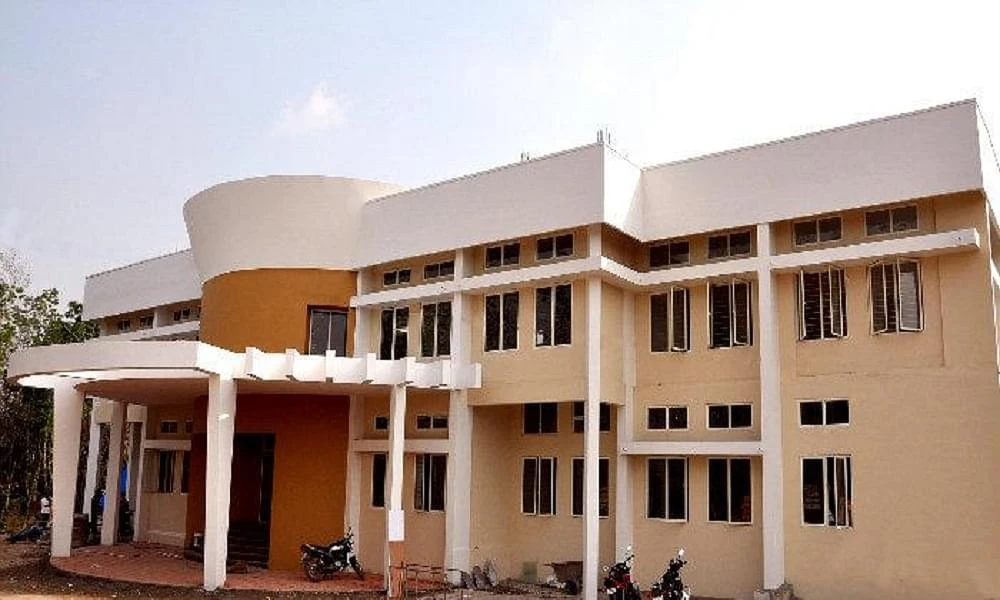
The campus is a 8-acre property in Karakulam, about 15-16 km from Thiruvananthapuram Central. It's green and quiet—reviews often use words like "picturesque" and "calm." The flip side of that is a sense of isolation from the city's social scene. College buses run on select routes, but commuting is a factor.
Infrastructure is functional. There's a library with over 5,000 books and digital access, a computer lab, a language lab, smart classrooms, a seminar hall, and a canteen. Sports facilities cover basics like badminton, volleyball, and indoor games. It's adequate, not luxurious.
Hostel life is gendered. The ladies' hostel is on-campus, described as secure with a 24/7 warden. For boys, there is no on-campus hostel; the college provides assistance in finding accommodation nearby. This is a significant point for out-of-town male students to consider. The overall student life is low-key. There are annual fests and cultural days, but they're modest compared to larger university festivals. This isn't a "party B-school." It's a place for attending classes, studying, and preparing for placements, with a disciplined atmosphere enforced by the management.
Synthesizing feedback from CollegeDunia, Shiksha, and local forums, a clear consensus emerges. GKMCMT is viewed as a value-for-money institution. The praise is consistent for faculty accessibility and the peaceful campus environment. The affordability is the biggest draw.
The criticisms are just as consistent. The location is seen as remote, limiting social and networking opportunities. While placements happen, there's frustration about the quality and diversity of roles, with a heavy tilt towards sales-focused positions in banking. The strict attendance policy (a hard 75%) is frequently mentioned as a negative by students who prefer more autonomy.
One paraphrased review sums it up well: "The college is good for those who are serious about academics but don't expect a high-flying corporate life immediately." Another noted, "Management is supportive, but the placement cell needs to bring in more diverse roles beyond sales." The social life is acknowledged to be limited. The student body is largely local or from within Kerala, creating a familiar but not particularly diverse peer group.
It depends entirely on your profile and expectations. GKMCMT is worth serious consideration if you are a cost-conscious student from Kerala or South India, you have a moderate entrance score (KMAT/CMAT), and your primary goal is to obtain an affordable, recognized MBA degree to secure an entry-level job in the BFSI or IT services sector. It's a solid, no-nonsense platform for that specific objective. The return on investment can be good given the low fee outlay.
You should probably look elsewhere if you are seeking a nationally competitive B-school brand, a vibrant campus life with extensive networking, accreditation (NAAC/NBA), or placement into high-profile roles in consulting, finance, or product management. The college's strengths are its affordability and functional support system, not its brand equity or placement glamour. It's a pragmatic stepping stone, not a destination in itself. For the right student, that's enough.
In this preview: 1 photo · 0 videos
G. Karunakaran Memorial Co-Operative College of Management and Technology (GKMCMT) is a self-financed institution operating under the co-operative sector. It has a semi-government influence but follows a private fee structure.
The total approximate cost for a two-year MBA at GKMCMT is around ₹3.4 Lakhs. This includes roughly ₹2.2 Lakhs for tuition fees and an additional ₹1.2 Lakhs for hostel accommodation over the duration of the program.
While the college's official documents prioritize KMAT, CMAT, and CAT scores, the acceptance of MAT scores for the current admission cycle remains unverified. Prospective students should contact the admissions office for the most accurate and updated information.
Placements for students specializing in Finance are particularly strong in the banking sector. Major recruiters include banks like ICICI, Axis, and HDFC, offering roles such as Relationship Manager or Assistant Manager.
No, G. Karunakaran Memorial Co-Operative College of Management and Technology does not have an on-campus boys' hostel. Only a ladies' hostel is located on campus. The college administration assists male students in finding suitable accommodation nearby.
Share what future students should know about G. Karunakaran Memorial Co-Operative College of Management and Technology.
Student voices are not rewritten by colleges. We remove spam and abuse.
Wider admission question? Community PulseWhat should future students know?
Tell us which course you're considering. We'll help you work out the next step.
Get instant Partner access after mobile verification. Your public edits are reviewed before they go live.
Claim this college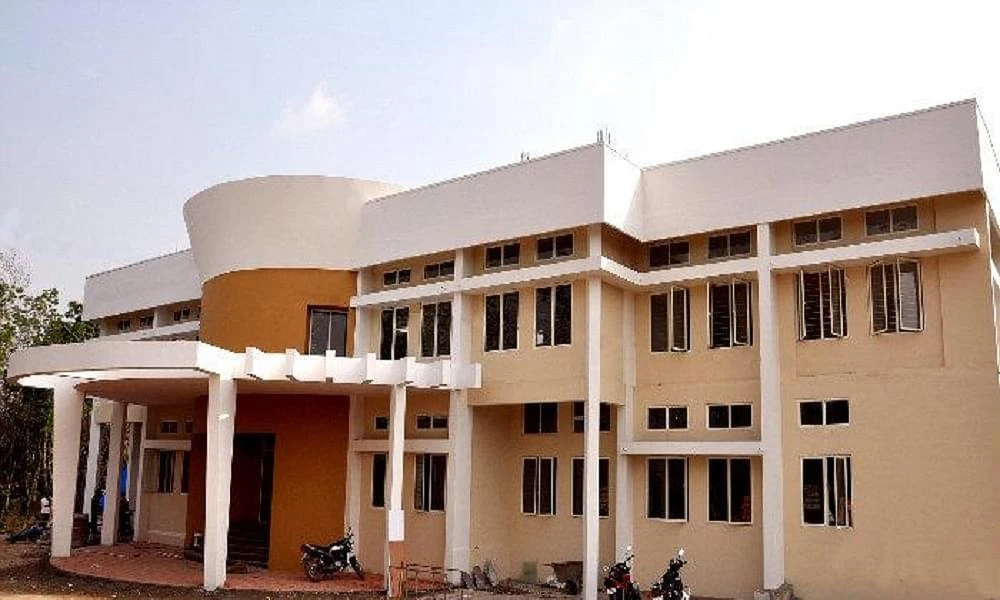
 Auditorium
 Cafeteria
 Computer Labs
 Hostel
 Medical
 Science Labs
 Sports Complex
 Study Library