Loading Admission Guardian content
Loading Admission Guardian content
Find a program, read its fee details and explore the admission requirements.
Summary of the programs shown below. Fee amounts are not listed. Contact the college for its current fee schedule.
| Course | Stream | Fees |
|---|---|---|
| Bachelor of Technology [B.Tech] | Engineering |
Specializations
Eligibility: 10+2
If you're looking at engineering colleges in South Odisha and your JEE Main rank isn't opening doors at government institutions, Gandhi Institute of Industrial Technology (GIIT) in Berhampur is a name you'll encounter. It's a private, affordable option that promises a B.Tech degree and a shot at IT placements. But the real story is more nuanced. It's a college defined by its practical constraints and its specific value proposition: a low-cost, disciplined environment where self-motivated students, particularly in Computer Science, can leverage decent labs and industry workshops to land a job with a mass recruiter. Don't expect a vibrant campus life or groundbreaking research. Do expect a no-frills education that gets the basics done, for a price that's hard to beat in the region.
GIIT Berhampur is strictly an undergraduate engineering college. Its academic identity is tied directly to its affiliating university, BPUT, which dictates the curriculum, semester schedule, and the 10-point CGPA grading system. The focus is squarely on delivering the standard B.Tech programs.
The annual intake tells you where the institutional priority lies. Computer Science & Engineering (CSE) takes the lion's share with 90-120 seats, followed by Information Technology (IT) with 30-60. The core branches—Electronics & Communication (ECE), Electrical & Electronics (EEE), and Mechanical Engineering (ME)—have a more modest intake of 30 seats each. That's a clear market signal. The college has developed some electives in Industry 4.0, Data Science, and Cloud Computing within the CSE/IT streams, and has MoUs with training platforms like Spoken Tutorial (IIT Bombay) and NPTEL to supplement the BPUT syllabus.
Faculty strength is reported at around 45-55 across departments. While specific NAAC accreditation details aren't prominently available, the teaching corps is a mix of experienced lecturers and a smaller percentage of PhD holders, estimated around 15-20%. The academic culture, as students describe it, is "school-like." There's a strong emphasis on discipline and attendance, which can be a pro for some and a con for others trying to carve out time for competitive exam prep or self-learning.
This is where you need to read between the lines of the brochure. The placement cell is centralized for the Gandhi Group of Institutions, which includes its sister college GATE on the same campus.
The official claims are optimistic: 90%+ placement rates and a highest package of 20 LPA. The ground reality, pieced together from student reviews on platforms like CollegeDunia and Shiksha, is more measured. That 20 LPA figure is widely regarded as an outlier—likely an off-campus achievement or a group-wide marketing highlight. The typical highest package for on-campus roles sits closer to ₹7-9 LPA.
The working average package for the 2024-25 cycle is between ₹3.5 and ₹4.2 LPA, with a median around ₹3.2 LPA. Placement percentage also gets a reality adjustment. While CSE and IT see better rates, possibly hitting 80%+, the overall figure across all branches is more realistically in the 60-70% range for on-campus offers.
Recruiters are predominantly from the IT services sector. You'll see the familiar names: TCS, Infosys, Wipro, Cognizant, and Capgemini. Occasionally, companies like Mindtree, Hexaware, or EA Sports visit. Core engineering placements are limited, with a few opportunities in companies like Reliance BP Mobility or through local industrial visits to units like HAL in Sunabeda. The consensus from alumni is clear: "If you are in CSE, you will get a job in TCS or Wipro if you have 7+ CGPA. Don't expect more from the college." Internships are mostly student-driven, often secured via platforms like Internshala during the 6th or 7th semester.
Affordability is GIIT's strongest card. For the 2025-27 period, the total annual cost for a B.Tech student, including hostel and mess, is estimated between ₹1.3 lakh and ₹1.5 lakh. Breaking that down, tuition fees are approximately ₹75,000-85,000, hostel and mess charges are ₹44,000-50,000, and other development fees add another ₹10,000-15,000. Over four years, you're looking at a total cost of roughly ₹5.5 to ₹6.2 lakhs.
That's a very competitive price for a private B.Tech degree. To make it accessible, the college and state government offer several scholarship avenues. Odisha domicile students can apply for the state's Medhabruti merit scholarship and the Prerana scholarship for SC/ST/OBC/SEBC categories. There's also the Tuition Fee Waiver (TFW) scheme for students with a family income below ₹8 LPA, allotted through the OJEE counseling process.
Admission to the B.Tech programs is primarily through two entrance exams: JEE Main and the state-level Odisha Joint Entrance Examination (OJEE). For students from Odisha, OJEE is the most common route.
The cutoffs aren't steep. For the popular CSE branch, the JEE Main rank for the General category typically floats between 4,00,000 and 8,00,000—it's highly variable year-to-year. This accessibility is the college's niche. It's for students whose ranks don't secure a seat in government colleges like VSSUT, OUTR, or even the local PMEC Berhampur, but who still want an AICTE-approved degree.
The process is straightforward: register for OJEE counseling, fill in your choices (GIIT Berhampur has a specific institute code, historically around 214), and await seat allotment based on your rank. The application windows generally follow the national and state calendars (JEE Main: Feb-May, OJEE: April-July). The college also reserves a small management quota (around 15% of seats) for direct admission based on 10+2 merit in PCM/PCB subjects.
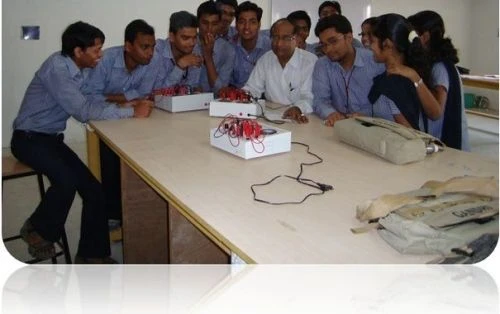
The campus spans about 10 acres adjacent to NH-16, which makes commuting feasible for day scholars. The infrastructure is functional. Reviews note that the labs for CSE (including a Cloud Computing lab) and the mechanical workshop are well-equipped, though some equipment is reported as "functional but aging." The library has a digital section and over 25,000 volumes, with subscriptions to key journals. Campus Wi-Fi exists, but students often complain about inconsistent speeds, especially in hostels.
Hostel life is a mixed bag. There are separate blocks for boys and girls with a capacity for over 500 students. Rooms are basic, usually on a four-sharing basis. The most consistent criticism across all student reviews is about the hostel food. Rated poorly for variety and quality, it's frequently cited as the biggest downside of campus living.
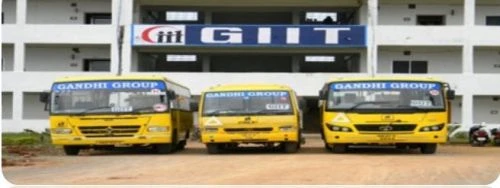
Social and extracurricular life is limited. The college has a large playground for cricket and football, and indoor facilities for table tennis and carrom. However, fests and cultural events are described as small-scale and often organized jointly with the sister institute GATE. The atmosphere is academically focused and disciplined, with a fleet of buses connecting the campus to Berhampur city, Chatrapur, and Gopalpur.
Scouring forums like Quora and Reddit's r/Odisha reveals a clear, consolidated student sentiment. GIIT is seen as a pragmatic "middle-tier" choice, not a dream destination.
The positives are consistent: cost-effectiveness is the top pro. The location near the highway is convenient. Students in CSE acknowledge the college's focused efforts on IT placements, coding workshops, and hackathons. Some appreciate the structured, disciplined environment that keeps them on track.
But the negatives are just as vocal. There's significant frustration with management rigidity—a "fine culture" for minor infractions like attendance shortfalls. The gap between official placement claims and the reality of mostly IT service roles is a point of contention. The hostel food, as mentioned, is a perennial complaint. And if you're looking for a vibrant campus life, you'll be disappointed; social activities are minimal.
A telling paraphrased quote sums up the self-starter attitude needed: "Labs are actually good. If you are self-motivated, you can learn a lot here because the crowd is less competitive than Bhubaneswar colleges."
GIIT Berhampur is a college of specific purpose. It's not worth it if you have the rank for a reputable government engineering college in Odisha, or if you're seeking a vibrant, research-oriented campus experience. You'll likely find the environment too restrictive and the opportunities too limited.
It is worth serious consideration for a particular student profile: those from the region or with budget constraints, who have a JEE Main/OJEE rank in the 4-8 lakh range, and who are aiming for a B.Tech degree—preferably in CSE or IT—as a straightforward launchpad into the IT workforce. If you're self-driven, can look past mediocre hostel food, and are content with a disciplined, no-frills academic routine focused on securing a job with a major IT services firm, GIIT delivers that at a very reasonable total cost. Think of it as a practical, affordable tool for a specific job, not a transformative university experience. Your ROI hinges almost entirely on your own motivation within its structured framework.

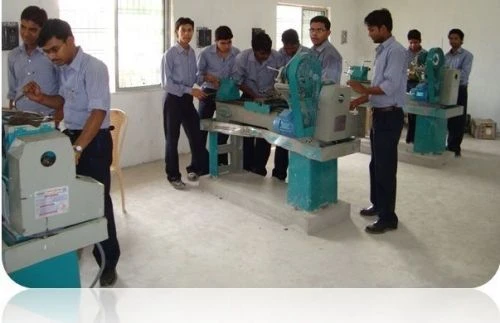

In this preview: 5 photos · 0 videos
No, PMEC (Parala Maharaja Engineering College) is generally considered a superior choice. As a government college, it has higher prestige and lower fees compared to GIIT, which is often viewed as a secondary option.
GIIT and GATE (Gandhi Academy of Technology and Engineering) are sister institutes operating under the same Tarini Trust and share a campus. The primary difference is their establishment date, with GIIT being founded in 2008 and GATE following in 2009.
While a 20 LPA package may be cited, it is likely an off-campus achievement of a single student or a marketing figure representing the entire Gandhi Group's centralized placements. The average placement package for students is closer to 4 LPA.
Yes, the college generally allows and supports exam preparation, with facilities like the library available. However, students must navigate the strict 75% attendance rule, which can make dedicated self-study time challenging.
The campus is officially an "Anti-Ragging" zone. Recent reports indicate that while minor introductory interactions may occur, serious ragging is not a major issue due to strict supervision by hostel wardens.
Share what future students should know about GIIT.
Student voices are not rewritten by colleges. We remove spam and abuse.
Wider admission question? Community PulseWhat should future students know?
Tell us which course you're considering. We'll help you work out the next step.
Get instant Partner access after mobile verification. Your public edits are reviewed before they go live.
Claim this college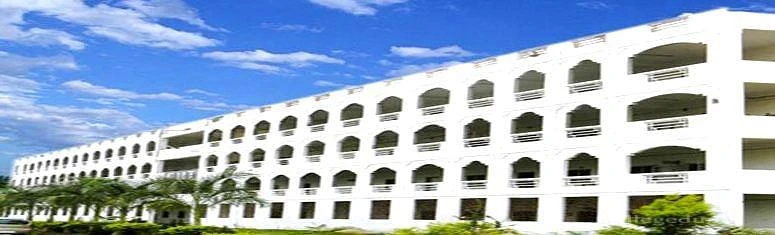

 Auditorium
 Cafeteria
 Computer Labs
 Gym
Gym Hostel
 Medical
 Science Labs
 Sports Complex
 Study Library