Loading Admission Guardian content
Loading Admission Guardian content
Provisional score based on available data. It may change as more information is verified.
Find a program, read its fee details and explore the admission requirements.
Summary of the programs shown below. First-year fee. Check the note beside each amount for inclusions and exclusions.
| Course | Stream | Fees |
|---|---|---|
| Bachelor of Arts [BA] | Arts | 2870 |
| Bachelor of Arts [BA] {Hons.} | Arts | 3170 |
| Bachelor of Science [B.Sc] | Science | 3310 |
| Bachelor of Science [B.Sc] {Hons.} | Science | 3660 |
| Bachelor of Computer Applications [BCA] | Computer Applications | 24200 |
Specializations
Eligibility: 10+2
Specializations
Eligibility: 10+2
Specializations
Eligibility: 10+2
Specializations
Eligibility: 10+2
Specializations
Eligibility: 10+2
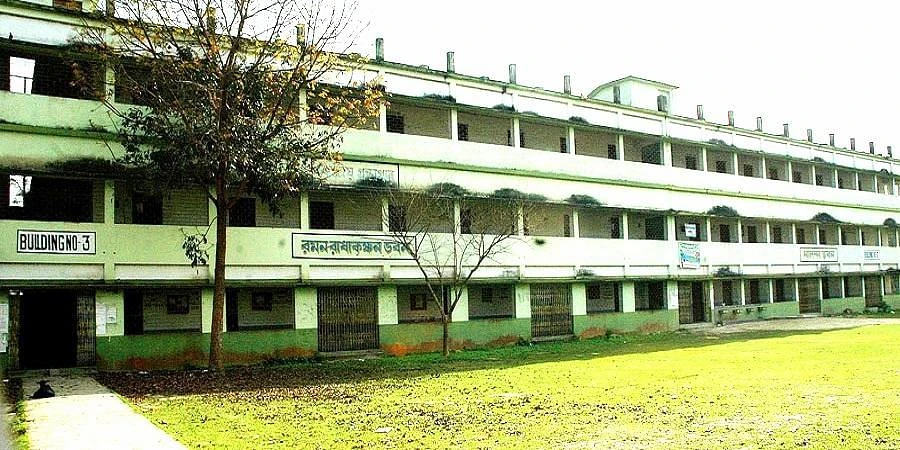
Gangarampur College is one of those institutions where the story isn't in the glossy brochures, but in the quiet, determined work happening on a 13.72-acre campus by the Punarbhaba River. Established in 1981 and affiliated with the University of Gour Banga, this public college serves as a crucial educational hub for Dakshin Dinajpur and surrounding areas in West Bengal. It's a place of stark contrasts: a faculty rating that suggests solid teaching, against student complaints about administrative chaos. A sprawling green campus with statues of Tagore and Nazrul, but a hostel that's been left to the forest. For thousands of students each year, it represents an accessible, affordable path to a degree—especially in the arts and sciences—with the understanding that what you get out will largely depend on what you put in. The college holds a NAAC Grade 'B++' accreditation, which is a decent outcome for a state-run institution, and its fees are so low they redefine the concept of value for money. But you have to look past the official claims to understand the real student experience here.
Let's be clear about scale. With a combined intake capacity pushing 4,700 students, this isn't a small liberal arts college. It's a workhorse of undergraduate education, heavily tilted towards the humanities. The numbers tell the story: for the 2026-27 session, the college plans to admit 1,448 students for B.A. (General) and another 374 for B.A. (Honours). That's a huge commitment to arts education in a region that needs it.
The B.Sc. programs are more modest in size but cover the essential bases—Honours in Mathematics, Physics, Chemistry, and Botany, plus Pure and Bio streams. The B.Com programs, both Honours and General, offer a surprisingly wide range of specializations like Cost Accountancy, Management, Human Resources, and even Law and Marketing within the General stream. The BCA is the outlier, a self-financed course with a much higher fee (₹12,000 annually) and a smaller batch of 30.
Academically, the college follows the University of Gour Banga's calendar and system. The faculty rating of 4.28, sourced from student reviews, is a strong positive signal. Students consistently mention that the teaching staff is knowledgeable and the lecture style is good. Classes typically run from 11 AM to 5 PM. The college conducts Quarterly Efficiency Tests, seminars, and assignments, which is a fairly standard practice. Don't expect cutting-edge industry tie-ups or MoUs here—the focus is on delivering the affiliated university's curriculum effectively to a large student body.
This is where you need to separate the official narrative from the ground-level chatter. The college claims an 80% placement rate, with a highest package of ₹5.5 LPA and an average of ₹3 LPA for 2023. Top recruiters listed include big names like TCS, Wipro, IBM, Reliance Jio, and Paytm, along with pharma companies like Cipla and Lupin for science grads.
And then you read the student reviews. The variation is wild—some say 75-85%, others claim 25-30%, and several are blunt: "There are no placements of any kind here." The most consistent thread is that placement support is minimal, especially for students in the massive Arts faculty. The onus is squarely on the student to seek out opportunities. The official numbers likely reflect a small subset of students, perhaps from BCA or B.Com, who secure roles as Assistant Accountants, Audit Officers, or in IT support. Botany graduates might find paths in pharma or food industries, but again, largely through independent effort.
Internship stats mirror this. The college says around 80% of students get internships, but reviews counter that opportunities are scarce and self-sought. The median package figure of ₹2.7 LPA feels more realistic than the average. For a college with fees this low, even a ₹2-3 LPA starting salary isn't a disaster, but you cannot bank on the college's placement cell to hand you a job. You'll be building your own resume.
If there's one unambiguous win for Gangarampur College, it's affordability. These fees are from a different era. For the 2026-27 academic year, the annual charge for a B.A. (Honours) is ₹1,920. A B.Sc. (Honours) is ₹2,165. B.Com (General) is a mere ₹1,415. Even looking at total program costs for 2025-26, a three-year B.A. (Hons) degree can cost between ₹7,120 and ₹8,170 in total. The BCA program, at ₹72,200 for three years, is the premium offering, but still incredibly cheap by national standards for a computer applications degree.
Other mandatory fees are small—registration fees of ₹200, admission fees around ₹150. Hostel and mess fees aren't available, which aligns with the reported non-functional hostel. The lack of a living-cost burden for out-of-town students is, ironically, a problem because the hostel doesn't work.
Where the college tries to compensate is through scholarships. The list is extensive: Swami Vivekananda Scholarship, Oasis, Central Sector Scheme, National Scholarships, a Disability Stipend (₹1500/year), state merit-cum-means scholarships, and even support from the Jindal Foundation and the college's own IQAC. They also offer free studentships and a Students' Aid Fund for the meritorious and needy. For students from economically challenged backgrounds in this region, this financial ecosystem is probably the college's most vital function.
The process is straightforward and purely merit-based. There's no entrance exam. Eligibility requires 40-50% aggregate marks in your 10+2 exam, with relevant subjects and a pass in English. Reserved category students get a 5% relaxation. There's a quirky but important clause: if you completed your 12th grade in an earlier year, a deduction of 5-10% from your total merit score may be applied for the 2026-27 admissions cycle. So, fresh graduates have a slight edge.
The application window typically opens in August and runs through September. You apply online through the college's official website. With intakes in the thousands for arts programs, the cutoffs aren't about fierce competition for a few seats, but about meeting the baseline requirement. There's no management or NRI quota—it's a transparent, marks-based system.
The infrastructure is a classic mixed bag. On the positive side, students repeatedly praise the labs—92 of them have been upgraded, and they're described as clean, spacious, and in very good condition. The chemistry lab gets specific mentions. The library has a dedicated block with reprographic services and a net center with computers for e-resources. The campus itself is green, well-maintained, and features statues of Kazi Nazrul Islam and Rabindranath Tagore.
Sports facilities are decent for a college of this type: outdoor options for badminton, volleyball, kho-kho, kabaddi, and cricket, plus indoor games like table tennis and carrom. There's a gymnasium. A canteen and an ATM are present on campus. Wi-Fi is officially available throughout, though some students gripe about dead zones in departments or outer areas. The bandwidth is 200 Mbps, and ICT classrooms have projectors.
Now, the big negative: the hostel. The brief states it clearly—the hostel is abandoned, unused, and in very bad condition, "surrounded by deep forest." Multiple student reviews simply state there is no hostel facility. This is a major drawback for any student not from the immediate area. Also noted is the lack of a medical facility.
Social life gets good marks. The college organizes annual festivals and sports programs, and the student unions are considered active and positive. For a day-scholar college, it manages to foster a decent campus atmosphere.
Synthesizing the feedback from various platforms paints a consistent picture of a college with clear strengths and frustrating weaknesses.
The Good:
The Not-So-Good:
The takeaway? Students come for the low-cost, quality classroom instruction from good teachers. They stay for the degree and the campus community. They leave knowing the job hunt is their own responsibility.
Gangarampur College is a very specific proposition. It's not for everyone, but for the right student, it serves a critical purpose.
It's worth serious consideration if: You are a budget-conscious student from the region or West Bengal, looking for an ultra-affordable path to a respected undergraduate degree (especially in Arts or core Sciences). You value good classroom teaching above all else and are a self-starter who doesn't expect hand-holding for placements. You will be a day-scholar or can arrange your own local accommodation. You plan to use the degree as a foundation for competitive exams, higher studies, or are confident in networking for your own job opportunities.
You should probably look elsewhere if: You require hostel accommodation. You expect robust campus recruitment, internship support, or a strong industry-connected curriculum. You are seeking a nationally ranked institution with premium infrastructure and a bustling residential campus life. Your career plan is heavily dependent on college placement cell performance.
In essence, Gangarampur College is a classic regional government college. It provides accessible education of reasonable quality at a price almost anyone can afford. Its flaws—particularly in placements and administration—are real and significant. But for thousands of students each year, its existence makes higher education a possibility. That's its real value.
In this preview: 1 photo · 0 videos
Gangarampur College offers Bachelor of Arts (B.A), Bachelor of Science (B.Sc), Bachelor of Commerce (B.Com), and Bachelor of Computer Applications (BCA) in both Honours and General streams. Admission is strictly merit-based. You need a minimum of 40-50% aggregate marks in your 10+2 examination with relevant subjects, including English. Reserved category candidates get a 5% marks relaxation. There are no entrance exams.
For the 2026-2027 session, the annual academic charge for the self-financed BCA program is ₹12,000. For B.Sc (Honours), it's ₹2,165 per year, and for B.Sc (Pure) or (Bio) streams, it's ₹1,990 per year. Looking at total program costs, the entire 3-year BCA degree was around ₹72,200 for the 2025-2026 cycle, while a 3-year B.Sc degree ranged from ₹8,590 to ₹9,640. Fees are subject to minor revisions.
Official reports cite an 80% placement rate with a highest package of ₹5.5 LPA and an average of ₹3 LPA (2023). Recruiters like TCS, Wipro, IBM, Reliance Jio, and Paytm are listed. However, student reviews present a different reality, often describing placements as poor or minimal, especially for Arts students. Many alumni emphasize that securing a job is largely an independent effort, with the college providing limited support.
The college has a hostel building, but it is reported to be abandoned, unused, and in very poor condition. Most student reviews state there are no functional hostel facilities. The campus infrastructure has positives: well-maintained labs, a library block, sports facilities (indoor & outdoor), Wi-Fi (with some coverage gaps), and a green, spacious campus. A canteen and ATM are available, but a medical facility is not provided.
The college offers a wide range of financial aid options. These include government scholarships like Swami Vivekananda Scholarship, Oasis, Central Sector Scheme, and National Scholarships. There's also a Disability Stipend (₹1500/year), State Merit-cum-Means scholarships, and private scholarships like the Jindal Foundation Scholarship. Internally, the college provides IQAC Scholarships, free studentships for meritorious needy students, and financial assistance through a Students' Aid Fund.
Share what future students should know about Gangarampur College.
Student voices are not rewritten by colleges. We remove spam and abuse.
Wider admission question? Community PulseWhat should future students know?
Tell us which course you're considering. We'll help you work out the next step.
Get instant Partner access after mobile verification. Your public edits are reviewed before they go live.
Claim this college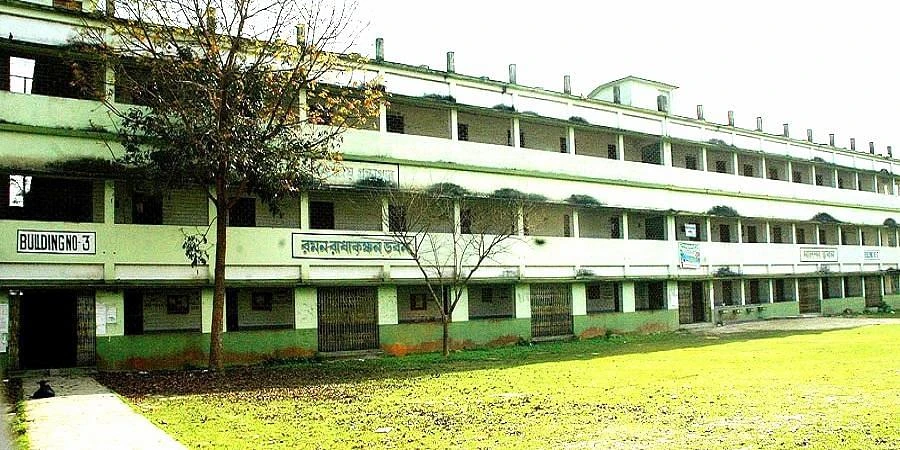
 Cafeteria
 Computer Labs
 Science Labs
 Sports Complex
 Study Library