Loading Admission Guardian content
Loading Admission Guardian content
Provisional score based on available data. It may change as more information is verified.
Selected ranking categories, with the recorded year beside each result. Open all records for the complete history.
12 published records · Lower numeric ranks are stronger
NIRF
B.Tech
#1632020
IIRF
Engineering · public
#1042025
Outlook
Engineering · private
#1042025
IIRF
B.Tech · public
#1092023
Find a program, read its fee details and explore the admission requirements.
Summary of the programs shown below. First-year fee. Check the note beside each amount for inclusions and exclusions.
| Course | Stream | Fees |
|---|---|---|
| Master of Technology [M.Tech] | Engineering | 109600 |
| Bachelor of Technology [B.Tech] | Engineering | 120700 |
| Master of Computer Applications [M.C.A] | Computer Applications | 122100 |
| Bachelor of Technology [B.Tech] {Lateral} | Engineering | 124150 |
| Master of Business Administration [MBA] | Management | 126100 |
Specializations
All accepted exams
Eligibility: Pass in Graduation + WBUT PGET
Specializations
All accepted exams
Eligibility: 10+2 with 45% + WBJEE
All accepted exams
Eligibility: Graduation with 50% + WB JECA
Specializations
All accepted exams
Eligibility: 10+3 with 45% + WBJEE
Specializations
All accepted exams
Eligibility: Graduation with 50% + MAT
4 exams with cutoff data available - showing recent entries
 Accenture
 Adani group
 Alumnus Software Ltd
 Amazon
 Axis Bank
 Berger
 Birlasoft
 Capgemini
 Coca-Cola
 Cognizant
 CTS SMC
 Cummins India Ltd
 Dabur India Ltd.
 Domino's Pizza
 Emami Limited
 Ericsson India Pvt Ltd
 Genpact
 Haldia Petrochemicals Ltd
 Hitachi consulting
 HSBC Bank
 Huawei
 IBM
IBM Infosys
 ITC
ITC Johnson Controls
 Just Dial
 L&T Infotech
 LINDE
LINDE Linde Process
 MindTree
 Nestle India
 Parle Agro
 Paytm
Paytm Pinnacle Infotech Solutions
 Sanmar Group
 Simplex Infrastructure ltd
 Simplex Infrastructures Limited
 Syntel
 Tata Consultancy Services
 Tata Power
 TCS
TCS Tech Mahindra
 Unimark Remedies Ltd
 VA Tech Wabag Ltd.
 Vivo
Vivo Voltas
 Wipro
Wipro Wipro Technologies
Haldia Institute of Technology isn't just another private engineering college in West Bengal. For students who miss the cut at Jadavpur University or Heritage Institute of Technology, HIT often becomes the default—and surprisingly compelling—choice. It’s the self-proclaimed "King of Private Colleges" in the state, a title that holds weight not just because of its 37-acre enclave campus, a rarity outside Kolkata, but because of its genuine placement pipeline into the Haldia industrial belt. You get a proper university feel here, complete with sprawling grounds and massive fests, but you trade city life for an industrial town. That’s the HIT bargain in a nutshell.
HIT runs on the MAKAUT semester system, but its autonomous status gives it some wiggle room in curriculum design. The academic portfolio is broad, with a clear hierarchy. Computer Science & Engineering (CSE) is the undisputed king, with an intake pushing 300 students and the most competitive cutoffs. Its newer specializations—AI & ML, Data Science, Cyber Security—are drawing significant interest. But the real academic differentiator for HIT is its strength in core engineering, a rarity among private colleges. Chemical Engineering, fueled by proximity to the Haldia Petrochemicals complex, is a hidden gem. Food Technology is another unique offering in the region.
Faculty strength sits around 250 full-time members, with about a third holding PhDs. That’s a decent ratio for a private institution. The academic culture, as described by students, is fairly standard—lectures, labs, and a strictly enforced 75% attendance rule in some departments like ECE and Mechanical, which can be a point of contention. The library is well-stocked, and digital access to journals like IEEE and Springer is provided.
This is where HIT’s location becomes its biggest asset. While most private colleges in Bengal are IT service company feeders, HIT has a legitimate core placement story. The official placement percentage for the 2024 batch was 89.48%. Student reviews suggest a more nuanced reality: for CSE and IT, 90%+ placement is achievable, but for other branches, a working figure of 75-80% is more commonly cited.
The package spectrum is wide. On-campus, the highest offers typically range from ₹14 to ₹27 LPA from companies like ThoughtWorks and Synopsys. The average package clusters around ₹5.5 to ₹6.0 LPA, with a median of ₹5.0 LPA as confirmed by NIRF data. The eye-catching ₹33-45 LPA figures you might see are almost exclusively off-campus placements secured by students at companies like Amazon and Google—a testament to individual hustle, not the college’s recruitment drive.
Top recruiters tell the dual story: TCS, Infosys, Wipro, and Cognizant are the mass IT recruiters. Then you have the core industrial giants: Haldia Petrochemicals (HPL), Adani Wilmar, Tata Steel, L&T, and Mitsubishi Chemicals. For Chemical, Food Tech, and Mechanical students, this access is invaluable. Internship placement is strong at around 87%, with stipends from ₹10,000 to ₹25,000 per month.
HIT’s affordability is a major part of its appeal. The total four-year B.Tech tuition fee is roughly ₹5.78 lakhs. The first semester is higher (₹93,950) due to one-time charges, with subsequent semesters costing between ₹68,750 and ₹71,250.
Hostel rent is ₹12,000 per semester, so ₹24,000 annually for non-AC accommodation. Mess charges are extra, running about ₹2,000-₹2,500 per month. AC hostel rooms are an optional premium at ₹85,000-₹90,000 per year. All in, a four-year engineering degree as a hosteller (non-AC) will cost approximately ₹7.5 to ₹8.0 lakhs, including basic food. As a day scholar, you’re looking at around ₹6.0 lakhs. Compared to peers in Kolkata, that’s a significant saving.
Scholarship support is available. The college supports the West Bengal Student Credit Card scheme fully. There’s also the state government’s SVMCM (Swami Vivekananda Merit-cum-Means) scholarship, the central TFW (Tuition Fee Waiver) scheme for 5% of seats, and merit-based scholarships like the Sitaram Jindal.
Admission is primarily through entrance exams. For 80% of the B.Tech seats, the West Bengal Joint Entrance Examination (WBJEE) is the key. The remaining seats are split between JEE Main (10% for All-India candidates) and Management Quota (10%).
The WBJEE 2024 Round 1 cutoffs for the General category give a clear picture of demand:
If your rank is outside these ranges, the management quota is an option, though it involves higher fees. The application window for WBJEE typically opens in December/January. Management quota admissions usually start after the main counseling rounds, around May/June. Diploma holders can seek lateral entry into the second year via JELET.
This is HIT’s signature selling point. The 37-acre green campus feels like a traditional university—a stark contrast to the urban, building-centric campuses of many Kolkata private colleges. There are large playgrounds for cricket and football, a gymnasium, basketball, and volleyball courts. The fests are a big deal; "Prayukti" (tech) and "Riviera" (cultural) draw crowds and are a major part of the social calendar.
Infrastructure is a mixed bag. The Aryabhatta Central Library and departmental labs are well-regarded. The HIT-AICTE IDEA Lab offers modern prototyping tools like 3D printers. Wi-Fi is campus-wide but reported as reliably strong in labs and spotty in some hostels.
Hostels are the biggest pain point. There are 14 of them (10 for boys, 4 for girls). First-year hostels are generally decent and guaranteed. For seniors, it’s a different story. Overcrowding often forces students into off-campus Paying Guest (PG) accommodations, which is a consistent complaint. The mess food is described as standard, monotonous college fare—edible but not a highlight. There’s an on-campus multi-cuisine restaurant that becomes a frequent refuge.
The student sentiment, pieced together from platforms like Reddit, Quora, and Shiksha, is remarkably consistent. The consensus is clear: HIT is the best bet for a holistic, campus-centric engineering life if you can’t get into a top-tier government college.
The Good: Students overwhelmingly praise the "real college life"—the space, the fests, the community. The placement record, especially for chemical and food tech, is repeatedly highlighted as a genuine advantage. The fee structure is seen as fair, even cheap, compared to alternatives. The alumni network in core industries is considered strong and helpful.
The Not-So-Good: Location is the most frequent drawback. Haldia is an industrial town, not a metropolitan center. Weekend trips to Kolkata are possible but involve planning. The strict attendance policy irks many. Administrative processes, from getting documents to dealing with the office, are universally described as slow and bureaucratic. And, as noted, the hostel situation for seniors is a legitimate concern.
One Reddit user summed it up: "If you want a real college life with grounds and fests, come to HIT. If you want Kolkata malls and weekend parties, stay away."
Haldia Institute of Technology presents a very specific value proposition. It’s not for everyone. If your priority is living in Kolkata, with easy access to IT internships and a cosmopolitan social scene, colleges like Heritage or IEM might suit you better, despite their higher fees and cramped campuses.
But if you value a traditional campus experience, want to study core engineering (especially Chemical, Food Tech, or Mechanical) with a direct line to related industries, and need to keep costs down, HIT is arguably the strongest choice in the state. Its placement record is real, particularly for those non-CS branches. You’re trading urban convenience for a more immersive, self-contained college life. For the right student—one who is focused, doesn’t mind a quieter town, and wants a solid return on a reasonable investment—HIT Haldia isn’t just a fallback option. It’s a strategically smart one.
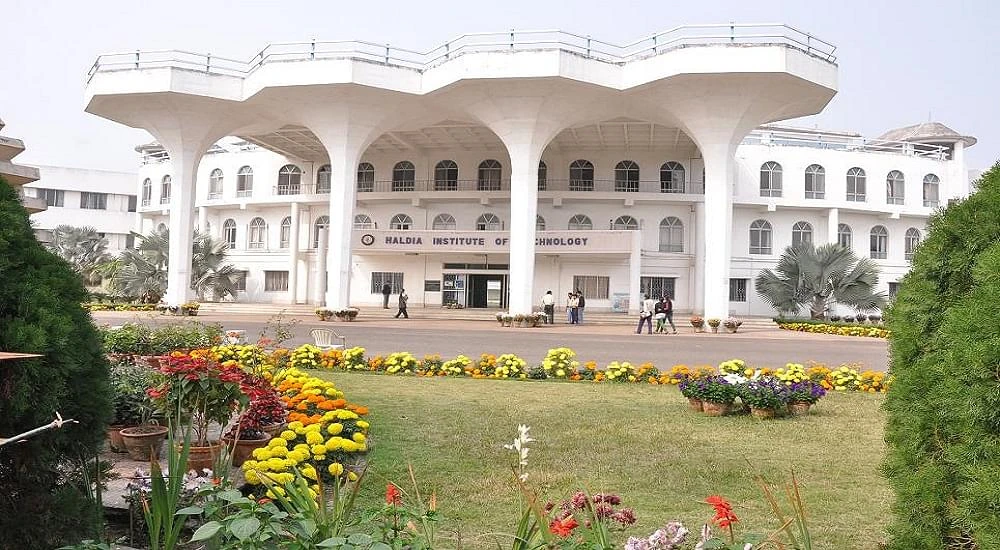
In this preview: 1 photo · 0 videos
Heritage and IEM are in Kolkata, offering better exposure to IT hubs. However, HIT Haldia has a superior campus, lower fees, and better placements for core branches like Chemical and Mechanical Engineering.
It is unlikely for the General category in the initial counseling round, where the cutoff is around 7,000. However, it may be possible in the Mop-up round or through the Management Quota.
Placements for Chemical Engineering at HIT are excellent. Located in a major industrial hub, the institute is a preferred recruiting ground for companies like Haldia Petrochemicals, MCPI, and Adani.
No, hostel accommodation is not mandatory. However, it is highly recommended for first-year students to help build a social circle. Many senior students opt for private paying guest (PG) accommodations nearby.
Students report that the "ragging era" is over. The institute maintains a strict anti-ragging cell, and seniors are generally described as helpful mentors rather than participants in ragging.
Share what future students should know about Haldia Institute of Technology.
Student voices are not rewritten by colleges. We remove spam and abuse.
Wider admission question? Community PulseWhat should future students know?
Tell us which course you're considering. We'll help you work out the next step.
Get instant Partner access after mobile verification. Your public edits are reviewed before they go live.
Claim this college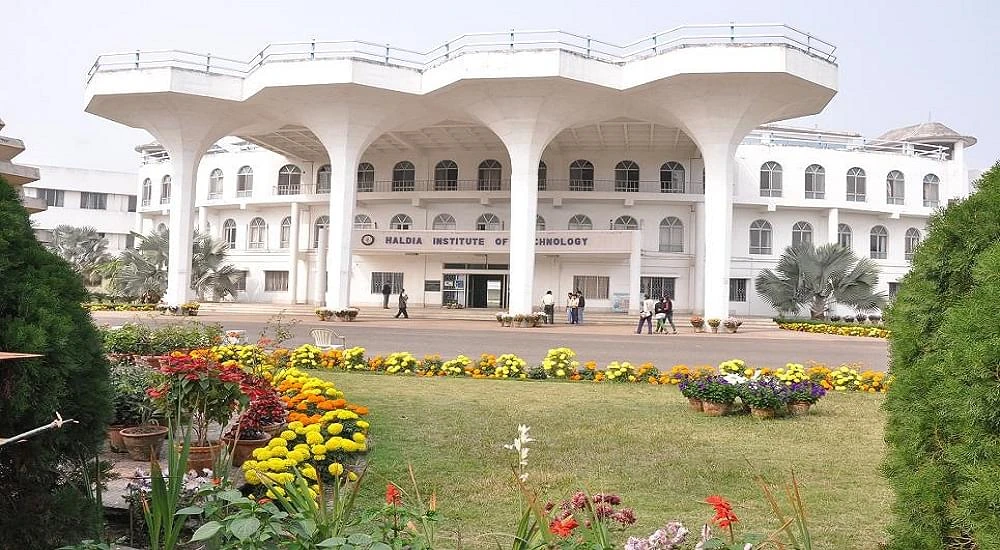
 Bank & ATM
 Cafeteria
 Computer Labs
 Gym
Gym Hostel
 Medical
 Science Labs
 Sports Complex
 Study Library