Loading Admission Guardian content
Loading Admission Guardian content

Provisional score based on available data. It may change as more information is verified.
Find a program, read its fee details and explore the admission requirements.
Summary of the programs shown below. First-year fee. Check the note beside each amount for inclusions and exclusions.
| Course | Stream | Fees |
|---|---|---|
| Bachelor of Technology [B.Tech] | Engineering | 13500 |
| Master of Technology [M.Tech] (Textile Technology) | Engineering | 19000 |
| Bachelor of Technology [B.Tech] {Lateral} (Jute & Fibre Technology) | Engineering | |
| Ph.D. (Textile Technology) | Engineering | |
| Post Graduate Diploma in Jute Technology and Management | Engineering |
Specializations
All accepted exams
Eligibility: 10+2 with 45% + WBJEE
Specializations
Eligibility: Graduation
Specializations
All accepted exams
Eligibility: Dip in Engg + JELET
Specializations
Eligibility: Post Graduation
Specializations
2 exams with cutoff data available
If you're looking at engineering colleges in West Bengal with a WBJEE rank in the 4,000 to 8,000 range, you'll find the usual suspects. But there's one option that doesn't show up on most generic lists, and it offers something almost unheard of in 2025: near-guaranteed job placement. That's the Institute of Jute Technology (IJT), officially the Department of Jute and Fibre Technology at the University of Calcutta. It's a niche, government-run department where you can get a B.Tech for less than ₹60,000 total. The catch? Your entire academic universe revolves around jute, flax, and technical textiles. For the right student, it's not a compromise—it's a strategic backdoor into a stable, in-demand career with a prestigious university tag.
This isn't a general engineering college. It's a highly specialized center built around the 'Golden Fibre'—jute—and its allied industries. The academic focus is razor-sharp, which is its greatest strength and its main limitation.
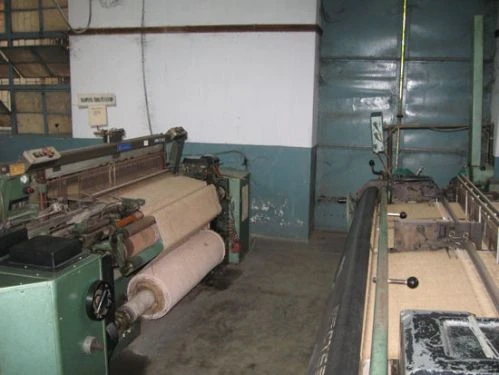
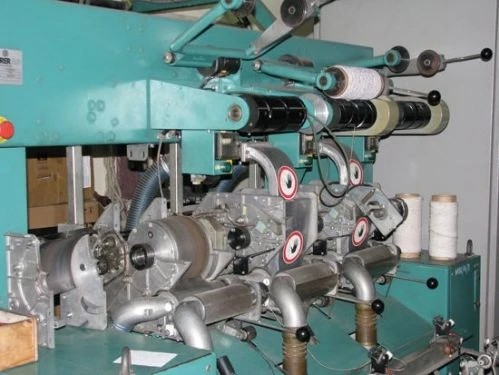
The undergraduate B.Tech in Jute and Fibre Technology is the cornerstone. With an intake of 60, the four-year program drills deep into the spinning, weaving, and chemical processing of natural fibres like jute, flax, ramie, and hemp. You'll work on machinery that includes a functioning miniature jute mill. The faculty, around 15-20 core members, are a highlight. Over 80% hold PhDs, many from IITs, and they're not just academics—they're connected legends in the jute industry. Professors like Ashis Kr. Samanta (textile chemistry) and Sunil Kr. Sett (jute spinning) have decades of practical insight.
For postgraduates, the M.Tech in Textile Technology specializes in technical textiles like geotextiles and agro-textiles. There's also a one-year Post Graduate Diploma in Jute Technology and Management (PGDJTM), which is popular with B.Sc. graduates and often has industry-sponsored seats. The system follows the University of Calcutta's semester pattern with a strict 75% attendance rule. The grading is a 10-point CGPA, converted simply by multiplying by 10.
The vibe is academic and industry-focused. Don't expect a sprawling campus with endless clubs. You're here to become a specialist.
This is where IJT stands apart. The official placement percentage is 90-100%, and talking to students, that figure holds up. Why? The supply-demand equation is inverted. There are only about 60 B.Tech graduates a year nationwide from this specific field, while dozens of jute mills and textile giants need trained technologists.
The packages, however, are modest by IT or core CS standards. The average sits between ₹3.5 to ₹4.5 LPA, with a median around ₹4 LPA. The highest domestic package cited for 2024 was ₹12 LPA, with some unverified mentions of ₹15 LPA for overseas roles in the Middle East. You won't get rich quick, but you will very likely get placed.
Recruiters split into clear sectors. About 60% of roles are in core textile/jute with companies like Glanster, Ludlow Jute, Cheviot, Birla Jute, Reliance Industries, and Aditya Birla Group's Jaya Shree Textiles. Another 30% come from IT mass recruiters like TCS, Wipro, Cognizant, and Infosys who visit the broader University of Calcutta campus. The remaining 10% are in government bodies like the Jute Corporation of India or research at institutes like ICAR-CRIJAF.
The reality check is straightforward. If you want a guaranteed job in manufacturing or technical management within the natural fibre sector, this is arguably the best place in the country. If your primary goal is a ₹20 LPA+ coding job, you'll be fighting an uphill battle against self-study, as the curriculum won't help you there.
The affordability is staggering, a direct benefit of its status as a University of Calcutta department. The total estimated cost for the entire four-year B.Tech program is between ₹55,000 and ₹60,000 in tuition fees. That's roughly what one semester costs at many private colleges.
Scholarships are primarily state-government schemes like the Swami Vivekananda Merit-cum-Means (SVMCM) scholarship and Kanyashree for girls. Students in the PGDJTM program may also access industry-sponsored stipends.
Admission is centralized through the West Bengal entrance system. For the B.Tech program, your WBJEE (West Bengal Joint Entrance Examination) rank is everything.
The 2024 cutoff ranks tell a specific story. The closing rank for the General (All India) category in Round 2 was 4,348. For Home State (General) candidates, it was 7,995. For SC candidates, ranks went up to around 28,000. These ranks are notably higher than for many other textile engineering programs, a testament to the pull of the University of Calcutta brand and the placement security.
Lateral entry into the second year is possible via JELET. For the M.Tech program, a valid GATE score or performance in the university's PGET is required. The PG Diploma has its own CU entrance exam and interview.
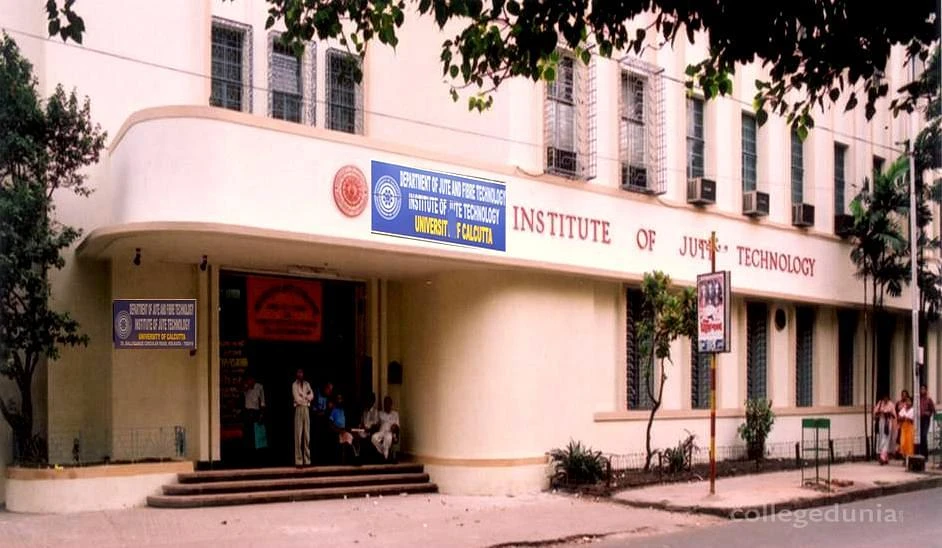
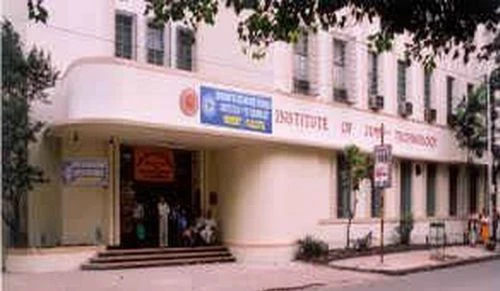
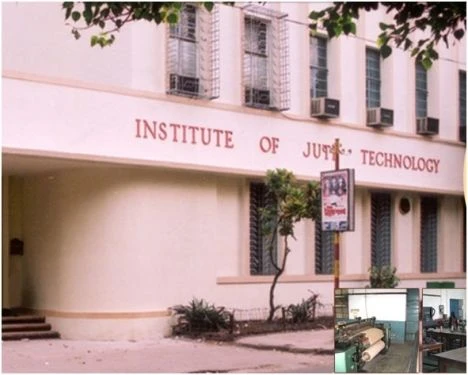
Manage your expectations. The institute is housed within the Ballygunge Science College campus of Calcutta University. It's an urban, academic setting, not a residential university campus.
The infrastructure is functional and specialized. The labs, including the miniature jute mill and textile testing facilities, have the equipment needed for the trade, though students often note the machinery has a vintage, industrial feel. The library holds over 11,250 volumes, and students get access to the university's central digital resources. Wi-Fi is available but can be inconsistent.
Hostels are basic and extremely affordable. Rooms are typically shared between 2-3 students. The catch is availability—seats are limited and allotted based on merit and distance from home, so not all first-year students get a room. The canteen serves cheap, basic Bengali fare (think fish thali). Social life within the department is quiet. For festivals and a bigger college experience, you need to travel to the main University of Calcutta campuses.
The consensus from forums like Quora and Reddit is remarkably consistent. The positives are powerful: "You can complete a B.Tech for the price of a smartphone" is a common refrain. The 100% placement rate in the core sector is repeatedly confirmed. Students value the faculty's deep industry connections and the weight their recommendations carry. Being part of the University of Calcutta system opens doors to its libraries, networks, and prestige.
But the negatives are just as clear. The branch is hyper-specialized. If you don't develop a passion for fibres, you might feel stuck. The administrative processes are described as slow and bureaucratic, typical of older government institutions. The campus life and infrastructure are routinely rated as average or below, with comments about aging buildings. You have to be self-driven if you aim for IT placements, as the curriculum offers no support.
One representative online verdict sums it up: "If your WBJEE rank is around 8k and you want a government-affiliated tag with 100% placement security, JFT-CU is a hidden gem. But don't expect a fancy private college campus life."
IJT is not for everyone. It's a specialist institution for a specific career path. If you're a student with a WBJEE rank between 4,000 and 8,000 who values job security, ultra-low cost, and a respected university degree over campus glamour, it's an exceptional choice. It's perfect for someone interested in manufacturing, technical management, or the sustainable textiles industry, especially within Eastern India's massive jute sector. The near-guaranteed placement is its superpower.
However, if you're unsure about committing to textiles, dream of a vibrant campus life with dozens of clubs, or are solely targeting high-paying software roles, you'll likely feel constrained here. In that case, a more general engineering college would be a better fit. IJT is a pragmatic, high-value proposition for a particular kind of pragmatic student.
For official information, visit the Institute of Jute Technology website. To understand the broader university's standing, you can check the University of Calcutta's NIRF ranking.
In this preview: 5 photos · 0 videos
Yes, Jute Technology is a strong career option for those seeking job security in core manufacturing. It is a niche field with high demand in regions like West Bengal and Bangladesh, as well as in the growing global market for eco-friendly packaging.
Yes, students from IJT can secure IT jobs. Major mass recruiters like TCS and Cognizant visit the University of Calcutta campus for placements and allow Jute Technology students to participate in their recruitment processes.
There is no difference; they are the same institution. The Institute of Jute Technology (IJT) was the original name. It is now formally integrated into the University of Calcutta as the Department of Jute and Fibre Technology (DJFT).
Hostel seats at IJT are limited. Accommodation is allotted based on merit and the distance of a student's home from the institute. While not guaranteed for the first year, most students are able to secure hostel accommodation by their second year.
Placement profiles differ. While Jadavpur University may offer higher salary packages in IT and core engineering fields, IJT boasts a very high placement-to-student ratio within its specific jute technology niche, with placement rates often reaching 100%.
Share what future students should know about IJT.
Student voices are not rewritten by colleges. We remove spam and abuse.
Wider admission question? Community PulseWhat should future students know?
Tell us which course you're considering. We'll help you work out the next step.
Get instant Partner access after mobile verification. Your public edits are reviewed before they go live.
Claim this college
 Auditorium
 Cafeteria
 Computer Labs
 Medical
 Science Labs
 Sports Complex
 Study Library