Loading Admission Guardian content
Loading Admission Guardian content

Find a program, read its fee details and explore the admission requirements.
Summary of the programs shown below. Fee periods can differ by program. Check the note beside each amount before comparing costs.
| Course | Stream | Fees |
|---|---|---|
| Master of Business Administration [MBA] | Management | 27000 |
| Bachelor of Technology [B.Tech] | Engineering | 41000 |
| Master of Computer Applications [M.C.A] | Computer Applications |
Specializations
All accepted exams
Eligibility: Graduation with 50% + CMAT
Specializations
All accepted exams
Eligibility: 10+2 with 45% + AP EAMCET
All accepted exams
Eligibility: Graduation with 50% + APICET
2 exams with cutoff data available - showing recent entries
 .Investis
 Aditya Birla Group
 Aditya Birla Minacs
 Aqua Pure Plus
 CA Technologies
 Capgemini
 CMC Limited
 CSS Corp
 efftronics
 Efftronics Systems Pvt. Ltd
 Glenwood Systems
 HCL
HCL HCL Technologies
 Hindustan Copper Limited (HCL)
 IBM
IBM Infosys
 KK Precision Components
 LIC
LIC Mphasis
 Phoenix Hospital
 PhonePe
 Pompeii Technologies
 Serco
Serco Softech India Pvt Ltd
 Syntel
 TCS
TCS Wipro
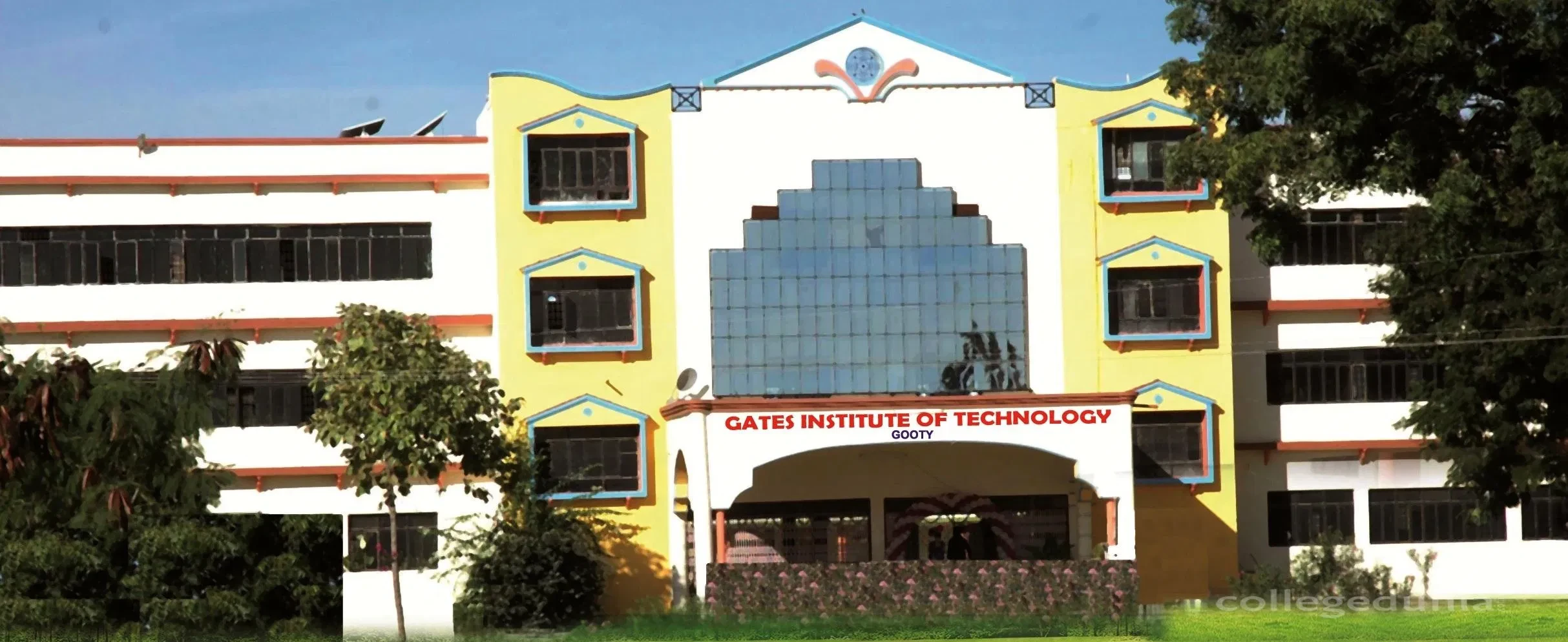
WiproGates Institute of Technology (GIT) in Anantapur is a private autonomous college that’s been around since 2001, and it’s built a reputation as a solid, if not spectacular, option for engineering and management in Andhra Pradesh. It’s got the official stamps of approval—NAAC ‘A’ grade, AICTE approval, and autonomous status from JNTUA—which gives it some academic flexibility. The campus is a 20-acre space with modern labs and a digital library. But the real story here, as with many private colleges, is the gap between the official brochure and the student experience, especially when it comes to placements. The college claims an 85% placement rate and a highest package of INR 9 LPA for 2024. Dig into student reviews on platforms like CollegeDunia and Shiksha, and you’ll hear a more nuanced tale of sales-based roles, startup recruiters, and a placement reality that feels more volatile. That’s the core tension at GIT: decent infrastructure and faculty support, set against the challenging job market for tier-2 and tier-3 engineering graduates.
GIT offers a standard suite of programs for a technical institute in the region: B.Tech, M.Tech, MBA, MCA, and diplomas. Being autonomous is a plus—it means the curriculum can be tweaked faster than at affiliated colleges, though students sometimes mention some subjects feeling outdated. The B.Tech specializations are where the demand is: Computer Science and Engineering, Artificial Intelligence, Data Science, along with core branches like Civil, Mechanical, ECE, and EEE. The M.Tech is offered in four domains, and the MBA is a general management program.
Faculty are noted as a strength in many student reviews. The institute claims an average of 12 years of teaching and industry experience for its lecturers, and that seems to track with feedback praising supportive faculty who help with projects. There’s a stated collaboration with the University of California and the University of Melbourne for research and internships, which is a good line on paper, though the on-ground impact for the average undergraduate isn’t detailed in the available data. The academic culture seems focused on traditional teaching supplemented by a range of certification courses in areas like Full Stack Development and Cybersecurity, which is a pragmatic move.
This is the section that requires the most careful reading. The official numbers present a certain picture. The highest package for 2024 is listed at INR 9 LPA, up from INR 8 LPA in 2023. The average package is cited as INR 3 LPA for 2024, with a median of about INR 3.75 Lakhs. The placement percentage is officially 85%, and there’s an unverified claim of 72 out of 72 students (100%) placed in 2024. The recruiter list is long and features familiar IT service names: Infosys, Wipro, TCS, Accenture, Cognizant, Tech Mahindra, HCL, Capgemini, and a slew of others like KPIT and Sopra Steria.
Now, the student sentiment provides essential context. Reviews consistently mention a discrepancy. Phrases like “more than 50%” or “mostly 80%” get used, and there are more stark reports from alumni online about only a small fraction of their batch landing on-campus roles, especially in core engineering branches or during economic downturns. The roles are heavily skewed towards IT and sales-based positions. The 30% internship stat for one course also hints that pre-placement opportunities aren’t universal.
So, what’s the reality check? If you’re in CSE, AI, or IT, and you’re in the top academic quartile of your batch, you have a decent shot at the TCS/Infosys/Wipro tier with packages in the INR 3-4.5 LPA range. The INR 9 LPA outlier is just that—an outlier. For mechanical or civil students, the path is tougher, and off-campus hustle becomes more critical. The college provides a platform and brings companies, but it’s not a placement guarantee. That’s a crucial distinction.
The tuition fees at GIT are relatively moderate for a private autonomous institution. The total tuition for the four-year B.Tech program is ₹1,60,000, which breaks down to ₹40,000 per year. The MBA and MCA programs cost ₹70,000 total for two years, and M.Tech is ₹80,000.
Where the cost can add up significantly is the hostel. The institute offers a wide range of options. The most economical is a four-seater non-AC room at ₹55,000 per year (for both boys and girls). On the higher end, a single-seater AC room costs ₹1,20,000-₹1,25,000 annually. These fees are inclusive of mess charges, water, electricity, and maintenance. There’s also a one-time admission fee of ₹10,000 and an annual examination fee of ₹5,000.
A rough total cost for a B.Tech student opting for the basic hostel would be:
Financial aid comes primarily through government fee reimbursement schemes for eligible students. The college also mentions merit-based scholarships and academic excellence awards, though specific details and amounts aren’t specified in the brief.
Admissions at GIT are governed by the Andhra Pradesh state counseling processes. For B.Tech, the key is the AP EAMCET rank. The cutoffs are not highly competitive, which aligns with the institute’s positioning. For example, the 2024 B.Tech cutoff for Civil Engineering went up to a rank of ~129,464 for males, and for Mechanical, ~124,683. The cutoff for the newer Artificial Intelligence specialization was around 82,581. This means students with moderate EAMCET ranks have a realistic chance.
For MBA and MCA, the gateway is the APICET. Sample cutoffs from 2025 show an MBA seat for the SC category at rank 27,703, and MCA overall ranks between 10,648 and 30,568 in Round 1. The college states a preference for CAT, MAT, or XAT scores for MBA, but the primary mechanism is APICET. M.Tech admissions require a GATE or AP PGECET score.
A significant 30% of B.Tech seats are reserved under the Management Quota (Category B). The selection process after counseling involves document verification and, for MBA, often a Group Discussion or Personal Interview round. Application windows follow the state schedule—for instance, AP EAPCET applications for 2026 were noted as July 6-29.
The 20-acre campus in Anantapur gets generally positive marks for its environment and infrastructure. Academically, there are 55 labs, high-speed Wi-Fi, e-classrooms, and a digital library with over 42,000 books. The entire campus runs on solar power, which is a notable infrastructure feature. There’s a canteen, a dispensary, and college bus transport (though some students have complained about its management).
Hostel life is a mixed bag. The boys’ hostel is on-campus, while the girls’ hostel is located in Gooty. With a capacity of 800, rooms typically house 4-5 students and are described as spacious enough. Amenities are good: 24/7 power, water, free Wi-Fi, gym, common rooms, and laundry. The biggest point of contention is the food. Reviews are split—some say it’s good compared to other colleges, others call it average or poor. That’s pretty standard for hostel feedback anywhere.
Where GIT seems to shine is in student activities. There’s a long list of active clubs: Euphoria (cultural), Python Club, Speaking Club, Women Empowerment Club, Debate Club, Entrepreneur Club, and more. They organize fests like GATES FEST. This active club culture suggests a social life that’s more vibrant than the academic grind, which is a big plus for student development.
Synthesizing the student sentiment is key to understanding GIT. The positives are consistent: a good, green campus; well-maintained labs and infrastructure; and faculty that are generally supportive and accessible. The club culture and events are frequently praised for breaking the monotony and building skills.
The negatives focus on a few critical areas. First, placement uncertainty is the dominant theme. Students feel the official percentages don’t always match the batch experience, with reliance on mass recruiters and sales roles. Second, while faculty are supportive, some reviews wish for more practical, industry-relevant teaching as opposed to theoretical focus. Third, administrative hiccups—like managing bus schedules or academic deadlines—can be a friction point. The hostel food, as mentioned, divides opinion.
The takeaway from reviews is that GIT is what you make of it. It provides adequate resources and a platform. Students who are proactive, engage with clubs, work on side projects, and prepare diligently for placements tend to have a better experience. Those expecting a guaranteed high-paying job straight out of college might be disappointed.
Gates Institute of Technology is a competent, mid-tier private engineering college. Its autonomous status and NAAC ‘A’ grade are legitimate marks of quality. The infrastructure is good, faculty support is generally reported as strong, and the fee structure is reasonable for what’s offered.
It’s best for students with moderate AP EAMCET ranks (likely beyond 80,000) who are looking for a structured engineering education in Andhra Pradesh without exorbitant costs. If you’re aiming for computer science or IT, and you’re a self-starter willing to leverage the clubs and certification courses to build your resume, GIT can be a sensible choice. The placement cell will get you interviews, primarily with IT service companies, but landing the job is on you.
Who should look elsewhere? If you have a top-tier EAMCET rank that could get you into a premier government college like JNTUA itself, that’s almost always a better path. Similarly, if your primary goal is campus placement into product-based companies or very high packages, the odds at GIT are long. It’s a college for realistic expectations—a place to get a decent degree, develop some skills, and start a career, often with a first job in the INR 3-4.5 LPA range. For many students in the region, that’s a valid and worthwhile outcome.
The total tuition fee for the complete 4-year B.Tech program is ₹1,60,000. For the 2-year MBA program, the total tuition is ₹70,000. Remember, these are just tuition fees. You must add a one-time admission fee of ₹10,000, an annual examination fee of ₹5,000, and your chosen hostel fees. Hostel costs range from ₹55,000 per year for a basic four-seater non-AC room to over ₹1,25,000 for a single-seater AC room, with mess charges included.
The highest package offered in 2024 was INR 9 LPA. The average package for the same year was around INR 3 LPA, with a median package of approximately INR 3.75 Lakhs. Official placement claims are around 85%, but student reviews often suggest more variable outcomes, especially outside of computer science branches. Major recruiters include Infosys, Wipro, TCS, Accenture, and Cognizant.
For B.Tech, you need a valid rank in the state-level AP EAMCET. For lateral entry into the second year of B.Tech, AP ECET scores are considered. For the MBA program, the primary entrance exam is the APICET. The college also states a preference for candidates with national-level scores like CAT, MAT, or XAT, but admission is primarily routed through the state counseling based on APICET.
GIT has separate hostels for boys (on-campus) and girls (located in Gooty). Rooms typically accommodate 4-5 students and come with basic furniture, free Wi-Fi, and 24/7 power and water. Amenities include a gym, common rooms, and laundry. Feedback on food quality is mixed—some students find it acceptable or good compared to other colleges, while others describe it as average or inconsistent. It's a common point of debate in student reviews.
The college has a vibrant extracurricular scene with numerous student-run clubs. These include cultural clubs like Euphoria, technical clubs like the Python Club and Gates Idea Lab, and development-focused clubs like the Speaking Club, Debate Club, Women Empowerment Club, and Entrepreneur Club. The college organizes annual fests and events, providing ample opportunities for students to engage beyond academics.
Share what future students should know about GIT.
Student voices are not rewritten by colleges. We remove spam and abuse.
Wider admission question? Community PulseWhat should future students know?
Tell us which course you're considering. We'll help you work out the next step.
Get instant Partner access after mobile verification. Your public edits are reviewed before they go live.
Claim this college Auditorium
 Cafeteria
 Campus Security
 Computer Labs
 Gym
Gym Hostel
 Medical
 Science Labs
 Sports Complex
 Study Library